I haven't but I think the guy who makes Thunderbuckers actually worked at Gibson and made the original Tbird pickups years ago, but I'm not totally sure about that. The pickups really have that Quadrophenia tone and Entwistles live tone of those years.Has anybody ever compared Thunderbuckers and the Lulls?

Enjoy the benefits of a premium membership!
Upgrade Account
-
TalkBass has been independent since 1998. Add your voice.
Create a free account to reply to discussions, view embedded media, and browse with fewer display ads.
Join free Log in
Want zero display ads or expanded classifieds tools? Compare plans.
You are using an out of date browser. It may not display this or other websites correctly.
You should upgrade or use an alternative browser.
You should upgrade or use an alternative browser.
Bass/Amp Combo for John Entwistle tone?
- Thread starter fetfet
- Start date
More options
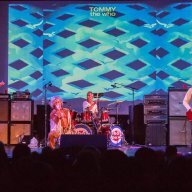
Who Replied?The guy in this tribute band has got great Entwistle tone, IMHO. Looks like Sunn amps, maybe?
Yes , I know this guy. Those are the exact Sunn amps OX used. He really copies every detail exact. He also does a great Jake Bruce. Eye for detail and perfection all the way.

The guy in this tribute band has got great Entwistle tone, IMHO. Looks like Sunn amps, maybe?
IMO they're better than the current Who. Thanx for posting.
FWIW I saw Entwhistle in a bar, The Diamond in Toronto, with Henry Small fronting. Seeing and hearing only a couple of meters away the guy who had so much influence on me was an amazing treat.
Until then I hadn't known about his "typewriter technique", which reminded me of the way the hammer hits the strings inside a piano. It was very different from the way most players pluck strings.
Last edited:
Up io Tommy and Live At Leeds it was a passive bass into a tube amp. There was a bass head and a treble head. As many as 4 412s and 2 415s. For Who's Next it was the Thunderbird/Sunn combination .
Up io Tommy and Live At Leeds it was a passive bass into a tube amp. There was a bass head and a treble head. As many as 4 412s and 2 415s. For Who's Next it was the Thunderbird/Sunn combination .
Entwistle said he used his Frankenstein P bass to record Tommy and Who's Next and switched to Thunderbirds for Quadrophenia.
"“I used Frankenstein through Hiwatts for the whole of ‘Tommy’, ‘Live At Leeds’ and ‘Who’s Next’ but by ‘Quadrophenia’ and Who By Numbers I was playing Gibson Thunderbirds. I felt I was getting stuck in a rut, using all the treble."

I used to cop what I thought was a good Ox tone using a RIC 4003, both p/u's on full, treble cranked on my Sunn combo amp, round wound strings and plucking aggressively right over the neck. Not perfect, but close enough for RnR!
Fishheadjoe
Fishheadjoe
Gaolee
Official leathers tester and crash dummy
I can get very close with one of the more unlikely rigs. It's an EB-2d with a Dimarzio One pickup and an Acoustic Control 126 combo. No pedals. Just plug in, scoop the EQ as far as it will go, hit the bright switch on the amp, and play. I haven't done it for a while, but the last time I did it was eerie how close it was. Maybe there was some strange planetary alignment going on, because an EB-2 should never, ever sound like Entwhistle. It sure did, though.
Tommy does sound like a Precision. "Won't Get Fooled Again" has little treble and he played a Fenderbird or Thunderbird live in 1972 when on tour in the States.Entwistle said he used his Frankenstein P bass to record Tommy and Who's Next and switched to Thunderbirds for Quadrophenia.
"“I used Frankenstein through Hiwatts for the whole of ‘Tommy’, ‘Live At Leeds’ and ‘Who’s Next’ but by ‘Quadrophenia’ and Who By Numbers I was playing Gibson Thunderbirds. I felt I was getting stuck in a rut, using all the treble."
I'm not gonna claim a Rickenbacker 4001 into a '72 Fender Bassman 10 combo with the channels bridged and every knob cranked to 10 sounds like Entwistle, but it really did scratch that itch for me for a long time. Instant "Boris The Spider" tone. No pedals needed.
Reading all this info about his technique makes it sound like most of his style was almost pure tapping. I know everyone's said that the "typewriter" style was the right hand, but it's an interesting point none the less.
Reading all this info about his technique makes it sound like most of his style was almost pure tapping. I know everyone's said that the "typewriter" style was the right hand, but it's an interesting point none the less.
Most of his style was standard fingerstyle or pick. He didn't do much tapping and the typewriter technique was mainly reserved for solos.

The essence of Entwistle's sound came from using Rotosounds with his particular relatively gentle tapping/plucking style, near the bridge pickup, with his wrist between 45% and parallel to the neck. I used to have an instructional video of his where he explained and demonstrated it. Personally, I'd go with 45-105 Rotos for a bit higher tension and a bit more sustain, and I'd choose the T-bird over the P, but go with what feels good to you.I have an intense craving for John Entwistle's tone, and I know he used a multitude of basses and amps, but I'd like to cop al least one of these tones. So in the poll i'm posting some Bass and Amp combinations that he used, and it's up to you do decide which is the most classic. Right now i have an Epi T-Bird and a Squier precision running thru a fender 15w practice amp. I plan to put Rotosound 40-100 strings on the bass..
They do seem to have re-issued that old instructional VHS tape on DVD, and Walmart has it on sale:
John Entwistle: Bass Guitar Master Class - Walmart.com
If you want to cop the Ox's sound, that's a much better investment than a new bass or a new amp!
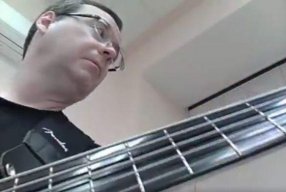
Entwistle described his right hand technique in an interview thus: "I half pluck and half tap the string. That way, I can get in more notes without blurring". That may have been what eventually became the "typewriter" technique mentioned earlier.
To my ear, the classic Entwistle sound is the Fenderbird into Sunn stacks. He would often refer to his basses as "bass guitars -- it's a guitar too and needs that trebley tone". It was the pursuit of that sound that led him into partnership with Rotosound and the quest for bright roundwound strings.
To my ear, the classic Entwistle sound is the Fenderbird into Sunn stacks. He would often refer to his basses as "bass guitars -- it's a guitar too and needs that trebley tone". It was the pursuit of that sound that led him into partnership with Rotosound and the quest for bright roundwound strings.

In 2006, after I got back from Iraq I flew out to Alembic in CA. I had ordered an Entwistle "Exploiter" Series II replica two days before I left, and was there to finalize the final details of it.
As I sat with Susan Wickersham for this purpose, I asked her about John's Alembics. She told me that when they completed them and got ready to ship them, they were set with the action that he liked, which was, as others here have noted, was insanely low. She also told me about the time they'd completed a bass for John when the Who was on tour and in CA, and that they were going to deliver the bass to him there. They had the action set how he liked it, and no one at Alembic could play it without horrible buzzing, fret noise, etc. So, they go to see John at the gig, taking and employee with tools in case it needed adjustment.
They get there, give John the bass, and he plugs it in. I forget which tune he began to play, but he played it without any problems whatsoever. Clearly his light right hand technique made all the difference in the world with action that low.
As for my replica ... It is at the same time the same and different. My action isn't like John's, and there are some differences (nut width, pickup and control layout/placement, pan pot instead of selector switch, gold plated hardware, inlaid logo, sterling silver wire for the shaprs and flats, etc.). If you like John's Alembic tone, you can buy a cheaper Alembic and come relatively close. One thing about Alembics, though (I own three) is that it is very unforgiving of sloppy technique. Every mistake you make will be amplified, in spades. This being said, you will be rewarded with clear notes - everyone you play will be heard clearly. I've had other people tell me this when I play my Alembics.
As I sat with Susan Wickersham for this purpose, I asked her about John's Alembics. She told me that when they completed them and got ready to ship them, they were set with the action that he liked, which was, as others here have noted, was insanely low. She also told me about the time they'd completed a bass for John when the Who was on tour and in CA, and that they were going to deliver the bass to him there. They had the action set how he liked it, and no one at Alembic could play it without horrible buzzing, fret noise, etc. So, they go to see John at the gig, taking and employee with tools in case it needed adjustment.
They get there, give John the bass, and he plugs it in. I forget which tune he began to play, but he played it without any problems whatsoever. Clearly his light right hand technique made all the difference in the world with action that low.
As for my replica ... It is at the same time the same and different. My action isn't like John's, and there are some differences (nut width, pickup and control layout/placement, pan pot instead of selector switch, gold plated hardware, inlaid logo, sterling silver wire for the shaprs and flats, etc.). If you like John's Alembic tone, you can buy a cheaper Alembic and come relatively close. One thing about Alembics, though (I own three) is that it is very unforgiving of sloppy technique. Every mistake you make will be amplified, in spades. This being said, you will be rewarded with clear notes - everyone you play will be heard clearly. I've had other people tell me this when I play my Alembics.
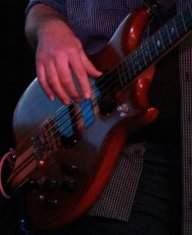
There are roughly 4 periods/configurations for "classic" Entwistle tones.
1) a Fender AVRI 1963 - when I bought it, I thought this bass would be a thump monster a la Jamerson. Turns out it got a very live pickup and cops a Leeds tone with rounds and any tube amp
2) Alembic Series I - my oldest bass and main player. Used it with Ashdowns and Trace-Elliotts. An Alembic Series I with everything wide open is what I consider "Classic" JAE tone
I agree with previous suggestions that the technique is as significant as the equipment. The aforementioned "John Entwistle bass guitar master class"tape is informative, although he's playing an Ibanez and not any of his classic basses in that tape. See also "Thunderfingers" or "An Ox's Tale" one of them has extensive and updated description of technique (can't remember which)
- Fender Precision + tube amp (e.g. live at Leeds)
- Fender-bird (e.g. Quadrophenia)
- Alembic + Sunn (e.g The Kids are Alright movie)
- Buzzard + Ashdown
1) a Fender AVRI 1963 - when I bought it, I thought this bass would be a thump monster a la Jamerson. Turns out it got a very live pickup and cops a Leeds tone with rounds and any tube amp
2) Alembic Series I - my oldest bass and main player. Used it with Ashdowns and Trace-Elliotts. An Alembic Series I with everything wide open is what I consider "Classic" JAE tone
I agree with previous suggestions that the technique is as significant as the equipment. The aforementioned "John Entwistle bass guitar master class"tape is informative, although he's playing an Ibanez and not any of his classic basses in that tape. See also "Thunderfingers" or "An Ox's Tale" one of them has extensive and updated description of technique (can't remember which)
Which is, in itself, a pretty strong statement about the relative importance of gear vs. technique for Entwistle's style....
I agree with previous suggestions that the technique is as significant as the equipment. The aforementioned "John Entwistle bass guitar master class" tape is informative, although he's playing an Ibanez and not any of his classic basses in that tape.
Which is, in itself, a pretty strong statement about the relative importance of gear vs. technique for Entwistle's style.
Or the equal importance of both?
Which is, in itself, a pretty strong statement about the relative importance of gear vs. technique for Entwistle's style.
Or the equal importance of both?
I think equipment is the last roughly 20% of your sound. The first 80% is technique and musical choices. Many would disagree with those ideas. I'm ok with that.
Another way equipment contributes to sound is the way the same or similar model bass will respond (in a tactile resonant way) to a particular technique. For example a Precision will feel different than an Alembic. So the tactile feedback will be similar with similar basses, which contributes to which techniques work well for a given playing platform. That also might be poppycock, but I don't think so.
I think I play basses that are similar to my heroes less to sound like them than to experience the same tactile feedback in an instrument as they did (or do). For better or worse, I pretty much sound like me no matter which bass I play. Occasionally you can hear echoes of my heroes.
I think equipment is the last roughly 20% of your sound. The first 80% is technique and musical choices. Many would disagree with those ideas. I'm ok with that.
Another way equipment contributes to sound is the way the same or similar model bass will respond (in a tactile resonant way) to a particular technique. For example a Precision will feel different than an Alembic. So the tactile feedback will be similar with similar basses, which contributes to which techniques work well for a given playing platform. That also might be poppycock, but I don't think so.
I think I play basses that are similar to my heroes less to sound like them than to experience the same tactile feedback in an instrument as they did (or do). For better or worse, I pretty much sound like me no matter which bass I play. Occasionally you can hear echoes of my heroes.
You will always sound like you, but you certainly sound different playing a P with rounds through a stack of Sunns verses an EB-2 with flats through a small combo. Equipment has a huge effect on sound, as evidenced by Entwistle's changes in tone over the years.


