• TalkBass has been independent since 1998. Add your voice.
    Create a free account to reply to discussions, view embedded media, and browse with fewer display ads.
    Join freeLog in
    Want zero display ads or expanded classifieds tools? Compare plans.

Bass Drivers v. PA Drivers

I will admit to a mad scientist black project at the store one day.

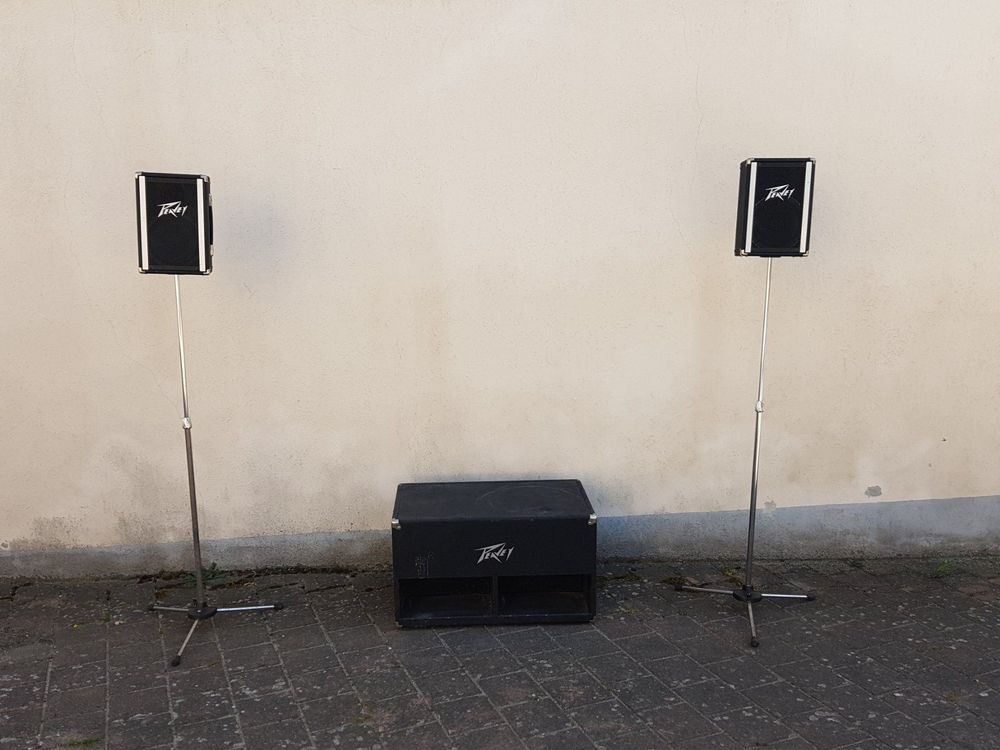
We took one of these . . .

1767916269701.png

Peavey Tri Flex. Miniature 2-way PA (coffee house special!) with a passive crossover to the satellites in the sub's back panel.

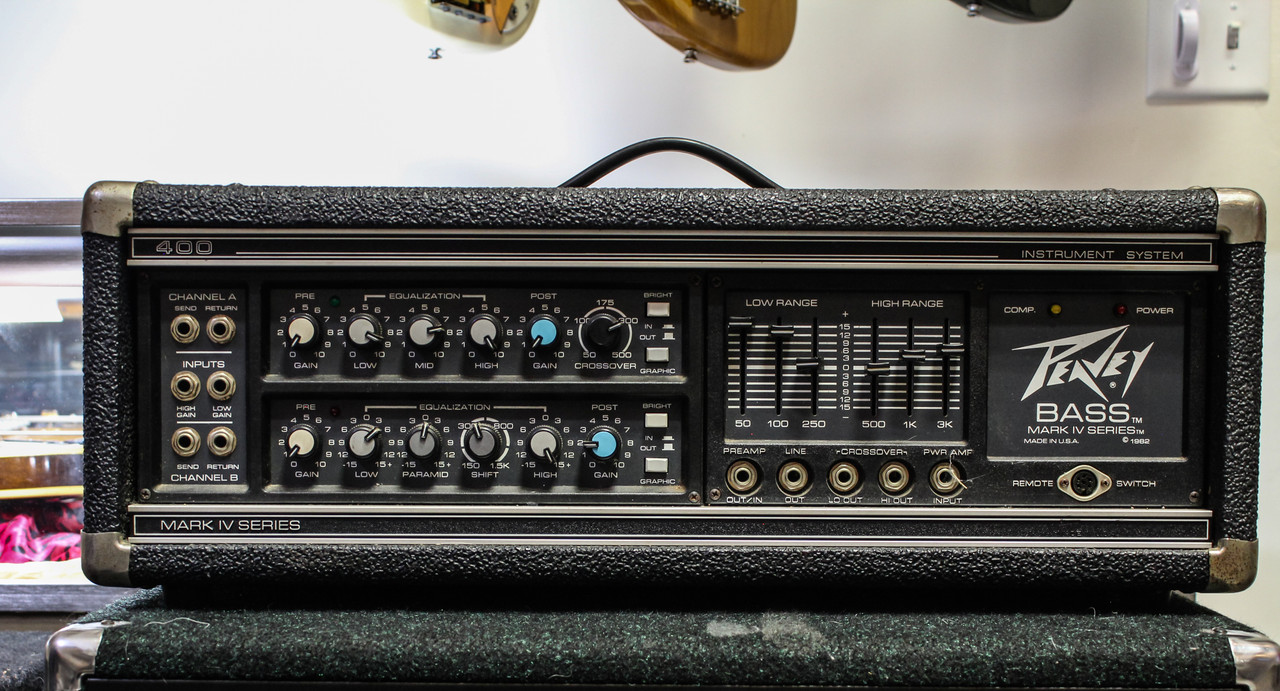
. . . and put one of these on top of the sub . . . .
1767916348577.png

Peavey Mk 4 Bass head

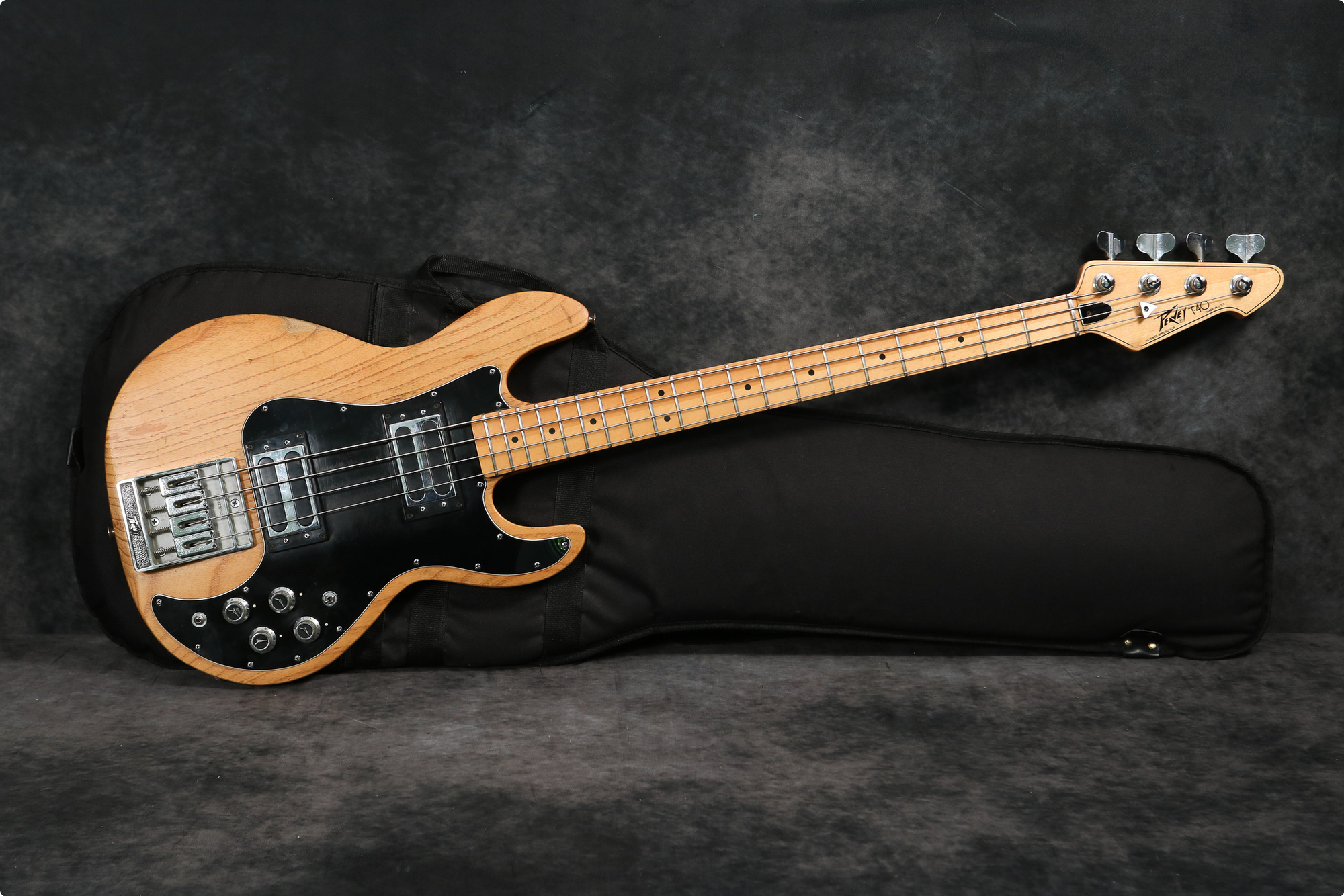
. . . . and plugged one of these into it . . . .

1767916399869.png

Peavey T40 bass

. . . . and amazingly, it worked just fine. Almost too good, to be honest about it.

Of course, this was skullduggery of the most evil kind. We promptly knocked everything back down, and took oaths to tell NO ONE we were ever responsible. Since it's past 25 years since this operation, I can now talk about it in the unclassified world.
 
Last edited:
Thank you, @agedhorse

Wait! I care about crossover and mid voicing, even though I do not understand it. What I do understand is that in my (our) craft as bass players we make massive use of "low mids." I think the subs don't help with this (maybe I am wrong but I don't think so). So now the question is whether those K12s and K10s can do an adequate job of handling those low mids.

Which also raises the question of where the crossover is. I still wonder if those K12s (and K10s) can really handle frequencies from 100-120 to, say, 400. Thank you.


Thank you, @Wasnex

These seem pretty close but it's far easier to achieve these ear-damaging loudnesses at 1000k Hz or 3000 than at 80. Where bass players make their money.
Except the CN number is not peak - which means they should outperform the QSC's (WRT SPL).
 
PA speakers sometimes carry "midbass woofers", which might sound like an OK specification for bass, but actually isn't. As you noted, PA speakers are usually/often used as "satellites" or in a line array, and are therefore dispensed with reproducing the low end. Midbass woofers are intended to be used from 80-200Hz up to approximately 2.5-3.5kHz, where the tweeter then takes over, with subs handling frequencies below. They would incur overexcursion if used "as is" with a bass guitar signal, and as agedhorse noted, their duty is to reproduce well (efficiently, powerfully and with as little colouration as possible, although pro audio is not as "hi-fi" as true hi-fi) a narrower frequency range. (Some speakers are intended to be usable alone, and they might carry woofers that are a bit more similar to bass guitar woofers, but might sound "dull" in the high mids).

In bass speakers, woofers are not low-pass filtered usually, and the tweeter is merely "added" over the woofer, with high-pass filtering only on the tweeter; it's not hi-fi by any means, but bass amplification isn't hi-fi usually. Reproduction in the high-mids will indeed be somewhat "unpredictable" due to the interaction between the woofer and tweeter (which also depends on the listening position), but this arrangement allows the user to dial in the amount of treble by dimming the tweeter as required. In PA speakers, the high-mid voicing of the woofer is not very important (although it shouldn't be too "non-linear", to make it easier to cross it over with a tweeter).

My opinion on the matter is that bass guitar amplification (and why not, guitar amplification) in many cases would greatly benefit from a more "PA" approach, with flatter response and proper crossovers and tweeters, and with mid/treble voicing taken care of by modelling and/or filtering and equalisation rather than by the woofers themselves. This would come with one big benefit: better polar dispersion, with the whole band, stage and possibly audience hearing the bass a bit more as it should be heard (and also programmability, with the option to tweak the response); on the other hand, this means that bassists need to approach their tone shaping and monitoring differently, since the narrow dispersion of mid-high frequencies of traditional cabinets means that bass players can dial in more high mids than appropriate to benefit from the added definition. I believe that this only works on stages with proper PA support; if an amp is expected to provide sound to the audience, this works poorly (and in fact, when the band's amps provide the sound to the audience, the sound is usually subpar and very position-dependent).

But after all, we are all seeing this trend, with bands investing in good PA speakers and then musicians just plugging in their Kemper or whatever modeller or just a regular preamp/DI into the mixer, and relying on IEMs or other personal monitoring. It is both more convenient and can sound better.
I agree in general with the PA type approach (I'm using a modeler and want my stage sound to match FOH relatively closely).

But ... in the same general way that a lot of guitarists use specific speakers as a part of producing the tone they are chasing, SOME bassists use similar approaches to attempting to arrive at their particular tonal nirvana - for instance, 8x10's, 6x10's, and 4x10's give off a certain tonal coloring through the way the drivers' sound waves interact.
Some of these bassists also prefer to mic their cabinets instead of (or in addition to) sending a DI signal to FOH.

The way low frequencies impact our bodies can feel different with different sized drivers - i.e. Phil Jones 8x5" drivered cabinet compared to a 1x15" cabinet (not sure how much of this effect changes as distance from the cabinets go up).
To SOME extent, this is part of why some bassists prefer 10" drivered cabs and some prefer 15" drivered cabs.
 
I agree in general with the PA type approach (I'm using a modeler and want my stage sound to match FOH relatively closely).

But ... in the same general way that a lot of guitarists use specific speakers as a part of producing the tone they are chasing, SOME bassists use similar approaches to attempting to arrive at their particular tonal nirvana - for instance, 8x10's, 6x10's, and 4x10's give off a certain tonal coloring through the way the drivers' sound waves interact.
Some of these bassists also prefer to mic their cabinets instead of (or in addition to) sending a DI signal to FOH.

The way low frequencies impact our bodies can feel different with different sized drivers - i.e. Phil Jones 8x5" drivered cabinet compared to a 1x15" cabinet (not sure how much of this effect changes as distance from the cabinets go up).
To SOME extent, this is part of why some bassists prefer 10" drivered cabs and some prefer 15" drivered cabs.
Of course. After all, it's like with cars. Some people like torquey NA V8s in a big fat car, others love the feeling of a small engine in a nimble car being revved up to high rpms with a turbo. Some people like both and use both. Others make do with an "econobox" because we're not made of money and practicality is a thing. :D
 
The Berg might sound better, but that's subjective and somebody else may feel it sounds worse. I suspect the Berg will go louder as a bass cab than a pair of the QSCs but then I currently use the QSCs and I don't think I've ever come close to their limits. We live in a heydey of great gear my friend and there are some excellent new non-amp solutions, some excellent modern backline amps/cabs and if you don't like anything new then all the old stuff still exists.
 
  • Like
Reactions: Kevlanco and Wasnex