
Enjoy the benefits of a premium membership!
Upgrade Account
-
TalkBass has been independent since 1998. Add your voice.
Create a free account to reply to discussions, view embedded media, and browse with fewer display ads.
Join free Log in
Want zero display ads or expanded classifieds tools? Compare plans.
You are using an out of date browser. It may not display this or other websites correctly.
You should upgrade or use an alternative browser.
You should upgrade or use an alternative browser.
Bass for bad back.
- Thread starter arginator
- Start date
More options
Who Replied?
I had something similar, herniated disc and pressure on the nerve was causing sciatic pain for about 3months. By far the lowest impact solution in my case was a K&M stand - no weight on my back or shoulder at all. Used that for about 3 months once I was able to play, and then transitioned back to using a strap. But, I still keep my Breedlove acoustic on a stand, it's fun to play upright style.Hey TalkBass-
I've been away for awhile, and in that time haven’t played much due to a bad back. I was diagnosed with spondylolisthesis (slipped vertebrae) and degenerative disc disease at my L5/S1 vertebrae, which are the lowest in the back. I just had surgery last week, in which they fused the vertebrae with rods and screws, and inserted an artificial disc. After going through the most excruciating pain I’ve ever experienced, I’m thinking about how to eventually get back in to playing when I’m ready for it. Which of course means I’m seeing a NBD in my future! (Any excuse is a good one, right?).
So what are your suggestions for basses that will be comfortable to play for someone with lower back issues? Currently I own a Fender Jazz 5 string and an Ibanez Hollow body. Before surgery, I had already decidedly that the Jazz is too heavy, and possibly too long of a reach now. The Ibanez is lighter and has a shorter scale, which is easier to reach. But the body is thicker, which causes my forearm to stick out more and put more stress on my back.
So I would assume I’d be looking for something light, with a short scale and thin body, like a Fender Mustang or Gretsch Junior Jet. Any other suggestions? Or better yet, does anyone have any suggestions on how to get back in to playing after back surgery?
Attachments

I have a bad lower back too. AT age 60 I expect that though. The lightest great sounding bass you will ever find is a limited edition rare sandblasted Precision. I happen to have one for sale. Look up sandblasted precision on talk bass. Its has alot of mods. FEATHER light and well balanced with classic precision tone. PM me for more info.


Ah .. this is lightweight because it has been chambered, come on ..


The suggestions here for building up core strength are key.
It may seem counter intuitive, but building up your abs really helps stabilize your back. It's helped me immensely.
I had L5/S1 disc surgery in October and will echo this. Won't solve all your problems, but made a huge difference in my quality of life.
I have a custom on the way from Maurizio at MUB, I have heard they are preposterously light but won't know for sure until it's in my hands on Tuesday
 - https://www.mauriziouberbasses.com/shop
He also makes short scale, medium scale, etc, but none of those are shown on the "available basses" page I linked.

Building your own is an option:
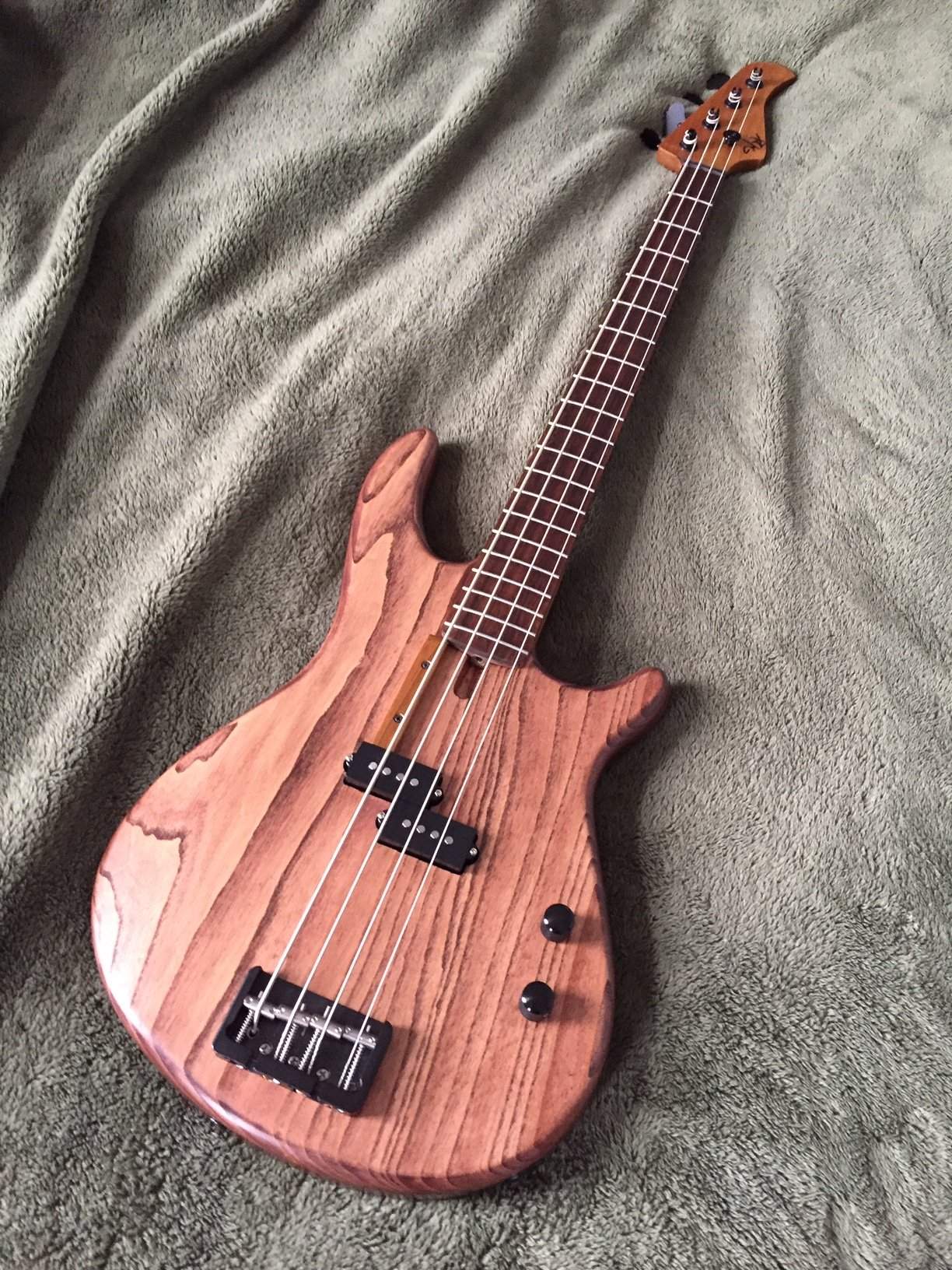
This thing is 6.6 pounds, balances beautifully. Made with Warmoth wood - roasted neck with graphite rods (that's lighter. Warmoth will tell you the weight of the bodies they have in stock, which is a huge benefit to building a light one.
All the hardware is aluminum (even the knobs). Hipshot will tell you the weight of all their hardware. Although it's not the cheapest option, I can tell you (from experience) it's far less expensive than another back surgery. I have heavier basses (that I built), but all are 8 pounds (that one is a 5 string) or under. Building yourself you have control over every piece of the bass - truly light basses can be built by focusing on every part's weight.
This thing is 6.6 pounds, balances beautifully. Made with Warmoth wood - roasted neck with graphite rods (that's lighter. Warmoth will tell you the weight of the bodies they have in stock, which is a huge benefit to building a light one.
All the hardware is aluminum (even the knobs). Hipshot will tell you the weight of all their hardware. Although it's not the cheapest option, I can tell you (from experience) it's far less expensive than another back surgery. I have heavier basses (that I built), but all are 8 pounds (that one is a 5 string) or under. Building yourself you have control over every piece of the bass - truly light basses can be built by focusing on every part's weight.
I also have an EBMM Sterling Classic that is around 8.5 lbs.Thank you, this is exactly what I need to hear! I’m glad you’ve been able to return to a relatively normal life. I’m on the same restrictions. Can’t believe you played a gig 10 days after surgery. My surgery was almost two weeks ago, and I’m still in too much pain to stand or sit for more than a few minutes at a time. Just for ***** and giggles, I strapped on my Jazz bass yesterday and played a bit. I lasted about a minute before I had to take it off. I’m attributing that to the fact that I’m still healing, so hopefully someday I’ll be gigging the Jazz Bass again.
But yes, before that happens I need to heal and strengthen my core. It’s also good to hear that you’re able to use basses that are in the same weight range as a standard P bass.
I'm in Canada, and for major non-emergency surgery, the wait times are ridiculous. Since I knew well in advance (8 months ahead) when mine would be, I spent the time losing weight, and working a lot on core strength and flexibility. It helped my recovery tremendously. I was up walking (slowly) the day after surgery, and was back home 2 days after. I gave up the oxy pain killers after about 4 days. Just take it slowly, and recover at your own rate. I still get a lot stiffness in my lower back, but it's way better than before the surgery. Unfortunately, our backs will never be like brand new again.
In both my bands, the guys were nice enough to let me sit while playing, which I needed for a few months after my bending & lifting restrictions were off. Get a nice tall folding stool with a back that you can just slide in and out of.
Good luck!


The problem with two-strap / both-shoulder straps is that the weight is still on the upper body. I have a product that takes the bass's weight and transfers it, through a lightweight frame, down to the waist. Thus, the weight is placed BELOW the upper body and back. DISCLOSURE: This is my product and company. Here is a link to pictures and a description on another thread (Bassists of the 60s, page 117, post# 2321). If someone wants more info or pictures just PM me.
Bassists of the '60's Club.
Bassists of the '60's Club.
Lot of bad backs. I have something similar going on with mine. But, I don't want even to know what it is. I can still function, every day some new painful spot. It does not matter. I gave up on playing out, not just because of the back, but because it become to be hassle dealing with people. And, it's expensive hobby. With all of these fly scare and sensitivity, I was just too lucky not to be professional musician.
Hey man. Sorry to hear about your back. It's no fun.
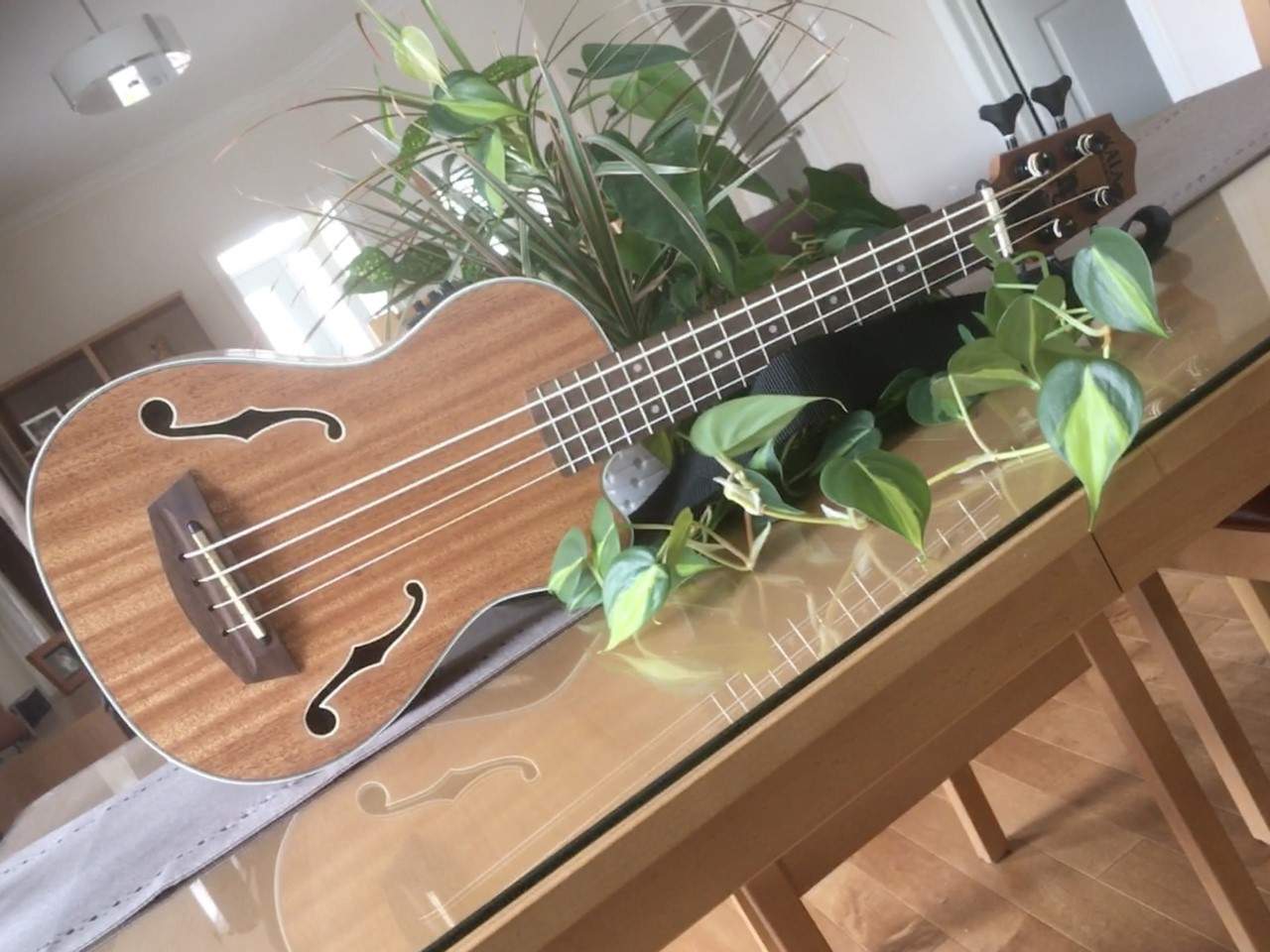
I bought a Kala Ubass Journeyman. Wanted to try something new. Very small scale, weighs nothing. I have lower back issues and this bass puts zero stress on my back.
Be forewarned though. While this thing sounds really good, it is a bit like playing a different instrument if you are use to long scale. It takes a while to get use to the ergonomics of it. But I'm glad I did. Really like the tone. I like that it feels like a whole other world, a whole other instrument.
Hope you back improves, man. Good luck.
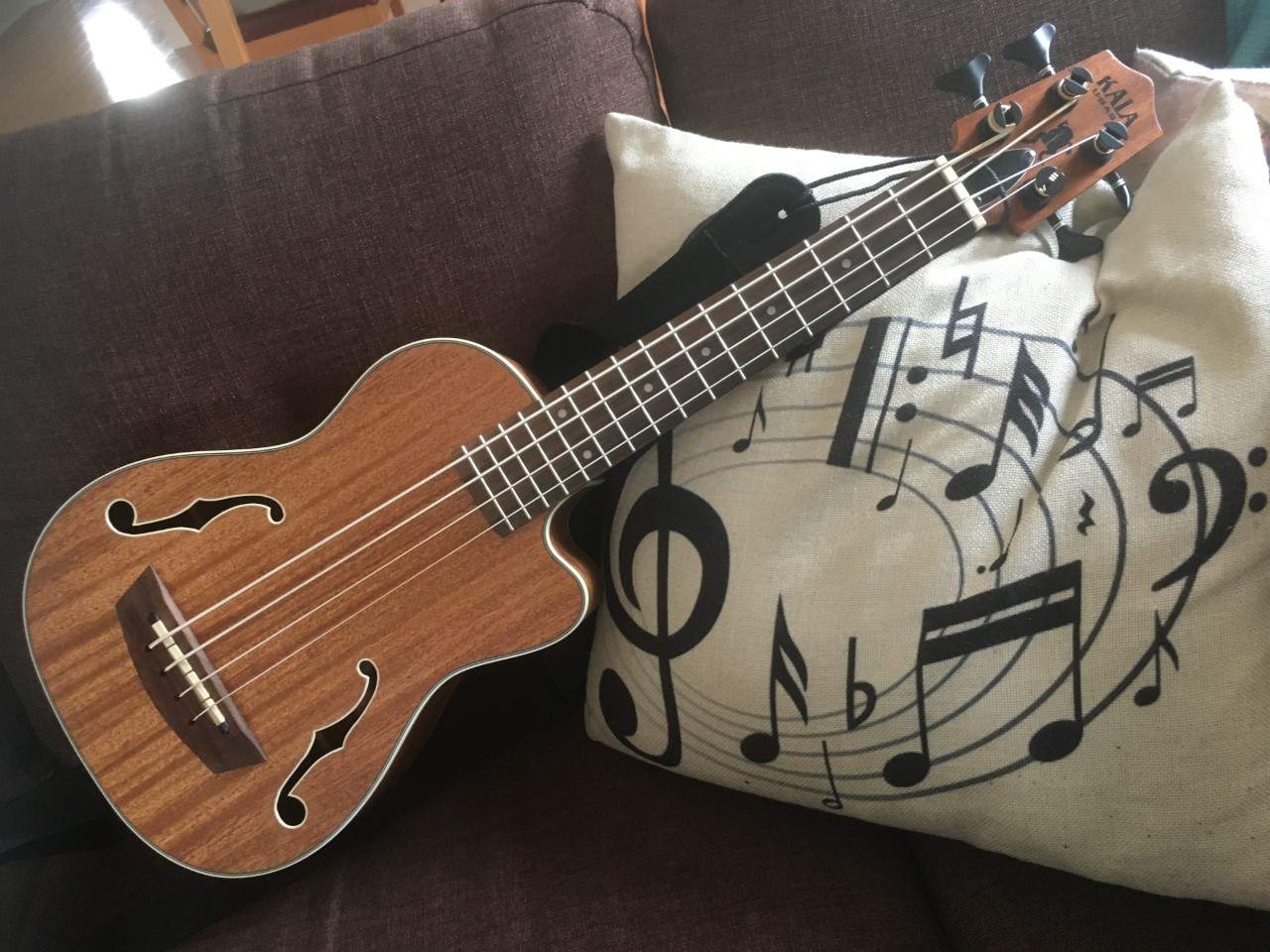
I bought a Kala Ubass Journeyman. Wanted to try something new. Very small scale, weighs nothing. I have lower back issues and this bass puts zero stress on my back.
Be forewarned though. While this thing sounds really good, it is a bit like playing a different instrument if you are use to long scale. It takes a while to get use to the ergonomics of it. But I'm glad I did. Really like the tone. I like that it feels like a whole other world, a whole other instrument.
Hope you back improves, man. Good luck.

- Apr 15, 2010
- 3,914
- 7,324
- Disclosures
- Spector Artist
Like I said, Eastwood has some cool light bass instruments...
I had a fusion of L5/S1 in 1976! It was successful, but maintaining core strength and flexibility is critical. Several years ago I got a Groove Gear strap that really helped. It was well worth the investment.
DuoStrap Neo
Yes yes yes! These are just great!
A brand new arrival, the Spector Banshee bass. Bass, 30” scale and the only weight quote I’ve seen is 7lbs. I’m waiting till I can actually get one measured and if that’s true I’m buying one for later on or ‘Ron, as we call it. That and a Gruv Gear duo strap and I should be good for a fair while.
My Ibanez SR300 is only about 7.5lbs, and the body is very thin. There are a LOT of thin bodied options out there. One comment that I wanted to make was with respect to scale. If the option you choose ends up being a full scale bass, you may want to consider tuning the whole bass down a step. That will essentially bring everything closer to you, making it essentially play like a short scale, without limiting your options strictly to short scale basses.

Upright. Other than moving it.
This is IMO the worst possible suggestion... I played upright for MANY years and this was one of the causes of my problems. And not just from moving it around.
This is IMO the worst possible suggestion... I played upright for MANY years and this was one of the causes of my problems. And not just from moving it around.
Maybe it depends on the specific issue. I have a range of spine problems, and after surgeries and 24/7 pain for the rest of my life, I actually like being able to lean on the thing while I'm playing. But having a guitar hanging off my neck for four sets ain't happening, no matter the weight.


