• TalkBass has been independent since 1998. Add your voice.
    Create a free account to reply to discussions, view embedded media, and browse with fewer display ads.
    Join freeLog in
    Want zero display ads or expanded classifieds tools? Compare plans.

Bass mastery

kewp

Guest
Mar 12, 2015
72
25
53
I've been playing bass for over 2 years. I am not currently working so I'm spending my days with very and unstructured practices.

I found this chart on line and thought I could use at as guide, giving myself the reward of scratching things off of it. What do you guys think? Is this a valid list of what all players should strive to learn? Would you add, remove, or move any of them???????
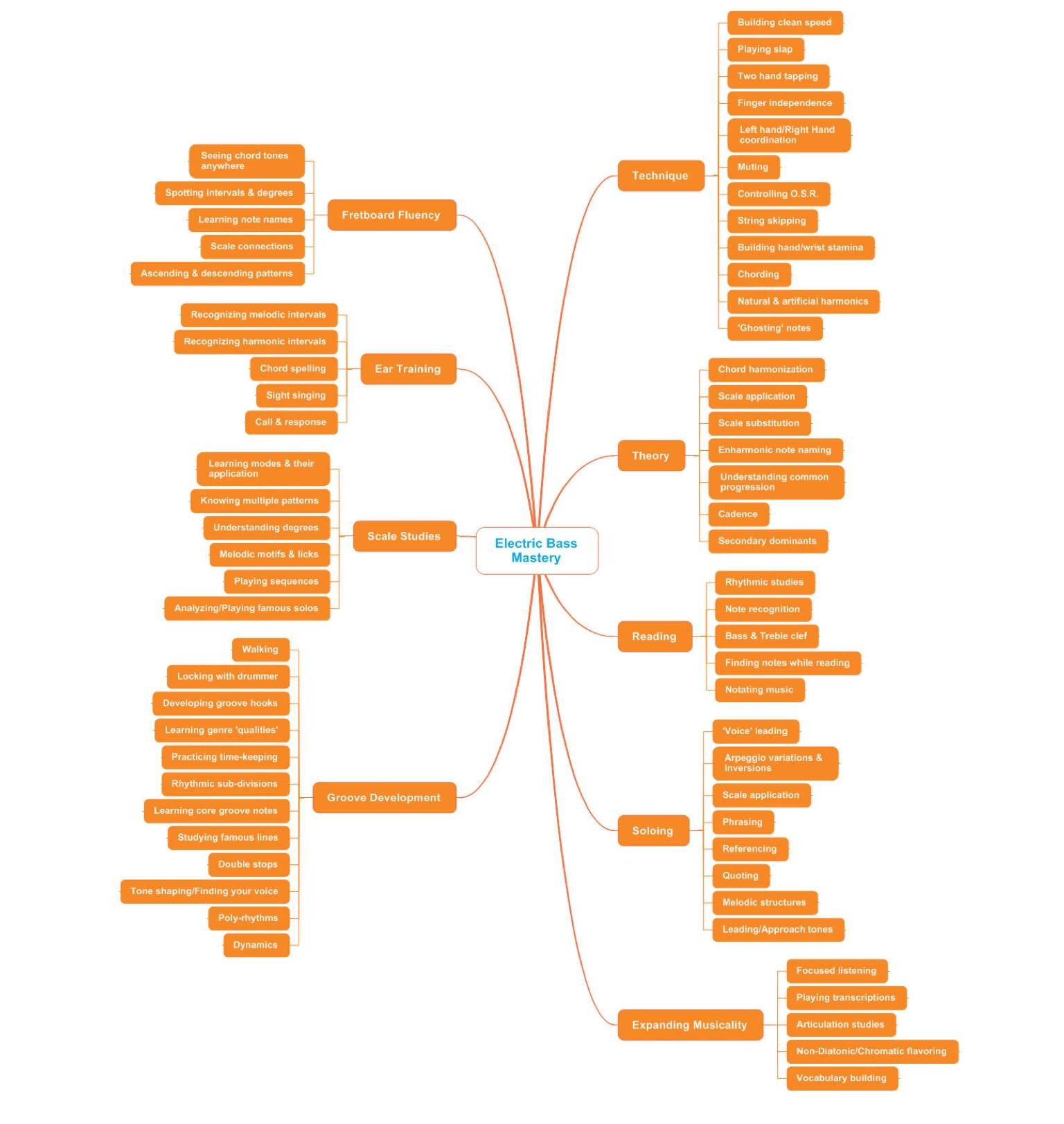

image.jpeg
 
Did not read all of the chart. Why? Too much, looks like a catch all list of "stuff". Way back in the day one of the things I taught was how to sell. Most of the systems out then would have something like the twenty five steps to the sale. Problem with this method was the sales person got bogged down in the steps. The one we decided upon had six steps. It was called the IMPACT system and was effective in selling big ticket items. Big ticket items are sold after a relationship has been developed and it normally does not happen over night.
  1. Investigate the prospect. Learn as much as you can about the prospect prior to your first visit.
  2. Meet the prospect. Identify the decision maker.
  3. Probe to find what he needs and wants.
  4. Apply your product to let the prospect see that you have something he could use.
  5. Convince the prospect your product will add a value he is not now receiving.
  6. Tie it up. Close the sale.
Six steps taken in order that build to a successful sale. OK let's now look at your list...

Look over the list and use it to peak your interest of what you would like to learn and or do, then decide on three things and go work on them. As you grow you will add new things to work on, my point; This monster is best eaten in small bites. Not so much in one setting that it makes you sick, or you loose interest, but, a little each day for the rest of your life.

Yes, I know you want us to tell you which three. IMO you know better than I which three you should be working on.

IMO and FWIW
 
Last edited:
  • Like
Reactions: csc2048b
Walking has nothing to do with groove study and everything with understanding how chords work together.

I totally disagree with this. If your walking doesn't swing it's not worth anything. People are way too hung up on notes. The notes are the least important aspect as you can play absolutely anything on the 2 and 4 (which was demonstrated by Gary Willis in one of his videos) and it will work fine. No one will even notice. Just come home from time to time.

Maintaining a good swinging feel is the top priority and that has EVERYTHING to do with groove. Listen to Eddie Gomez's playing on Chick Corea's "Humpty Dumpty" A lot of times, he is playing almost random notes and it is killin'. That quarter note pulse is the heartbeat.

Overuse of chord stuff is corny and boring. You may disagree with me, and that's fine. Everyone has a different approach to this music thing.

Anyway, having worked on nearly everything on this list at one point or another, I think it's a good and fairly comprehensive list. It's not a catch all, per se. It outlines things you really need to know to be a well rounded musician. You need to know all (or most) of them, but as was mentioned, they have to he addressed a few at a time.

The issues are that 1) you don't get to scratch anything off the list. You have to work on all the aspects at some point, pretty much constantly. 2) You have to know how to effectively approach each topic, which would probably require some type of instruction.

But I think overall, it would be good to use as a reminder of things you may have slacked up on.
 
Last edited:
It's certainly a comprehensive list but I an not sure about usefulness of the organization.
My first response was "music is a web, not a tree." Everything relates and connects to everything else.

thought I could use at as guide, giving myself the reward of scratching things off of it.

As a learning road map it leaves something to be desired.
2 years in, it would probably be better to pick a coordinated bass method
Like Ed Friedland's well loved Hal Leonard Bass Method
and reward yourself for completing chapters therein.
 
As an Amazon Associate, TalkBass may receive commissions from qualifying purchases made via links on this site.
It's certainly a comprehensive list but I an not sure about usefulness of the organization.
My first response was "music is a web, not a tree." Everything relates and connects to everything else.

As a learning road map it leaves something to be desired.
2 years in, it would probably be better to pick a coordinated bass method
Like Ed Friedland's well loved Hal Leonard Bass Method
and reward yourself for completing chapters therein.

I don't think that list is designed to teach you anything. It's just the atomic structure of music as performed on bass. The periodic table isn't going to teach you how to make bronze. How you tackle the topics is subject to however you want to approach it.

Hal Leonard is a good start. A good teacher is a better option, but since he's not working right now, maybe not the most practical,
 
Last edited:
As an Amazon Associate, TalkBass may receive commissions from qualifying purchases made via links on this site.
That chart would make my head hurt if I looked at it too long. Learning music is a fluid, constantly-changing ride--you're even acquiring a new skill or two when you "think" you're focusing on another one--you just can't put it in boxes like that, that you'd "check off". Just learn as much theory as you can, while also simply PLAYING as much as you can, with as many different people, and as many different styles of music as you can. It all comes together in mysterious ways, don't be too analytical. Sure, learn the "rules", but then remember to try and break them whenever you can to see what happens as well….
 
Before I delved seriously into bass, I took a foundations in music refresher course at our local community college then, bought a bunch of bass books and a metronome and had at it. There are no shortcuts, regardless of what instrument you choose so, start practicing. Once I thought I was starting to get the hang of it, I went to local clubs, watched and listened to local bass players, and stole any technique I thought would be useful and practiced what I had observed. Now, we have youtube so, there are no excuses for not improving.
 
I like the idea of the chart, but it could be intimidating to a beginner, and the term "mastery" is so broad. Pattituci and Prestia are both masters to me, but in very different things.

Try to play the music you love, that's how most everyone has done it. Take some lessons when you think would help you move past a plateau.
 
This is a great list for someone who is a teacher and knows what to teach first, how to teach it and how to apply previously learned material to everything that follows. For someone teaching themself, it doesn't say much of anything regarding exactly what you need to learn, what to learn first and how to use it correctly.
Also, do you plan on using this chart as a checklist over the next 20-30 years or more?
 
  • Like
Reactions: Spin Doctor
Since I have never evaluated your playing, I cannot suggest anything or exclude anything, except to find a teacher who will guide you along a path. A great teacher will break down concepts into digestible chunks and suggest a routine of elements to work on during a given period of time- and cycle through them over the course of a few months or a year. A master teacher might "check off" that you worked on an assignment, but will challenge you to always take things to another level. The path does not end- that "mastery" destination in the middle of the chart is an elusive, moving target.

I still practice concepts today that I began working on 30+ years ago and consider none of it mastered, but I am a much different player today because of it.
 
  • Like
Reactions: Spin Doctor