From the 1972 Trouble Man soundtrack
Marvin Gaye - Trouble Man
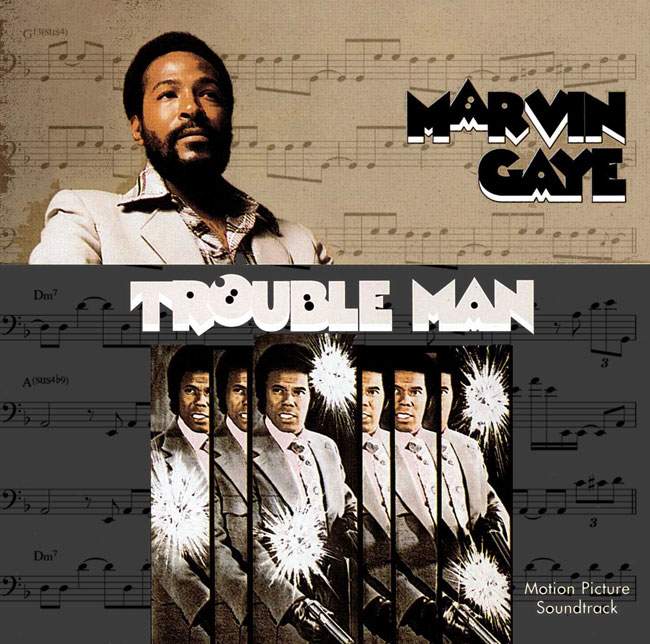
Marvin Gaye - Trouble Man

TalkBass has been independent since 1998. Add your voice.
Create a free account to reply to discussions, view embedded media, and browse with fewer display ads.
Join free Log in
Want zero display ads or expanded classifieds tools? Compare plans.
Dynamite track.
Hall and Oates "Sara Smile" was from '76. I distinctly recall this as I was a freshman in college. I remember hearing this tune on my orientation weekend.
Is it Ronnie Baker or Lee Sklar on this??? I always assumed Sklar...recently, I have heard Baker's name popup.
"She's Gone" is a stone cold Classic!
According to Lee himself, Scott Edwards did Sara Smile:
It's a common mistake. There are articles all over the Web claiming (some boldly) that it's well known that Sklar played on Sara Smile and even Aidan Hampton incorrectly included the song in his Sklar transcription book. (I am not criticizing Aidan -- I own and love a few of his books!)
Deodato did it better. Not knockin' it, just pointing out the OG of this genre and sound.90s acid jazz from the UK (FatBoy Slim's band)
Freak Power - Rush
Bass: Dale Davis
Contributed by Yuval Nov
View attachment 4691334
Donations to lessons.be are quick & easy to make. just a reminder.
Donations to lessons.be are quick & easy to make. just a reminder.
I'll second that!

Bernard Reed was credited as a bass player on Tyrone Davis albums in the 70s. I couldn't find info on earlier recordingsBTW I believe the bass player was Bernard Reed (and Wayne Bennett said he played guitar on it).
Bernard Reed was credited as a bass player on Tyrone Davis albums in the 70s. I couldn't find info on earlier recordings
He's posted it (and Turn Back The Hands of Time, etc) on his Facebook page as being him... He's still alive. Just had his 77th birthday a few days ago. Bernard Reed
1. I'm pretty sure hat's not a harmonic choice. Just an open string used to approach the next chord. Harmonically it would make sense if you look at the chords outside the context of the scale. In measure 4 you could see the A# (you wrote) as the 5 of the 7 of the chord. A# -> D#. He does that a few times.I would like to ask (just to start) Bernard Reed about his use of "interesting" notes:
1. His use of A natural with E major chord, instead of diatonic A# in Measure 1, while playing A# in the same note structure in M4.
2. His use of F natural with C#min7.