• TalkBass has been independent since 1998. Add your voice.
    Create a free account to reply to discussions, view embedded media, and browse with fewer display ads.
    Join freeLog in
    Want zero display ads or expanded classifieds tools? Compare plans.

Bass traps: need some education

Apr 10, 2016
3,505
1
4,667
Ukraine
Hi,

I'm setting up a new studio/rehearsal space and once I placed the drum kit, the bass started to sound really very boomy.

I get the impression that this is both floor and wall coupling, the drum kit is in the corner and in there all the lows are amplified, being reflected in the corner (I can hear it).

I do have a Auralex pad and an elevating amp stand, but I think, I really need a bass trap in the corner as well. I hear how it reflects and amplifies the low frequencies.

So, where do I start? Something like this to place in that corner? Something like this, but higher? A different design?
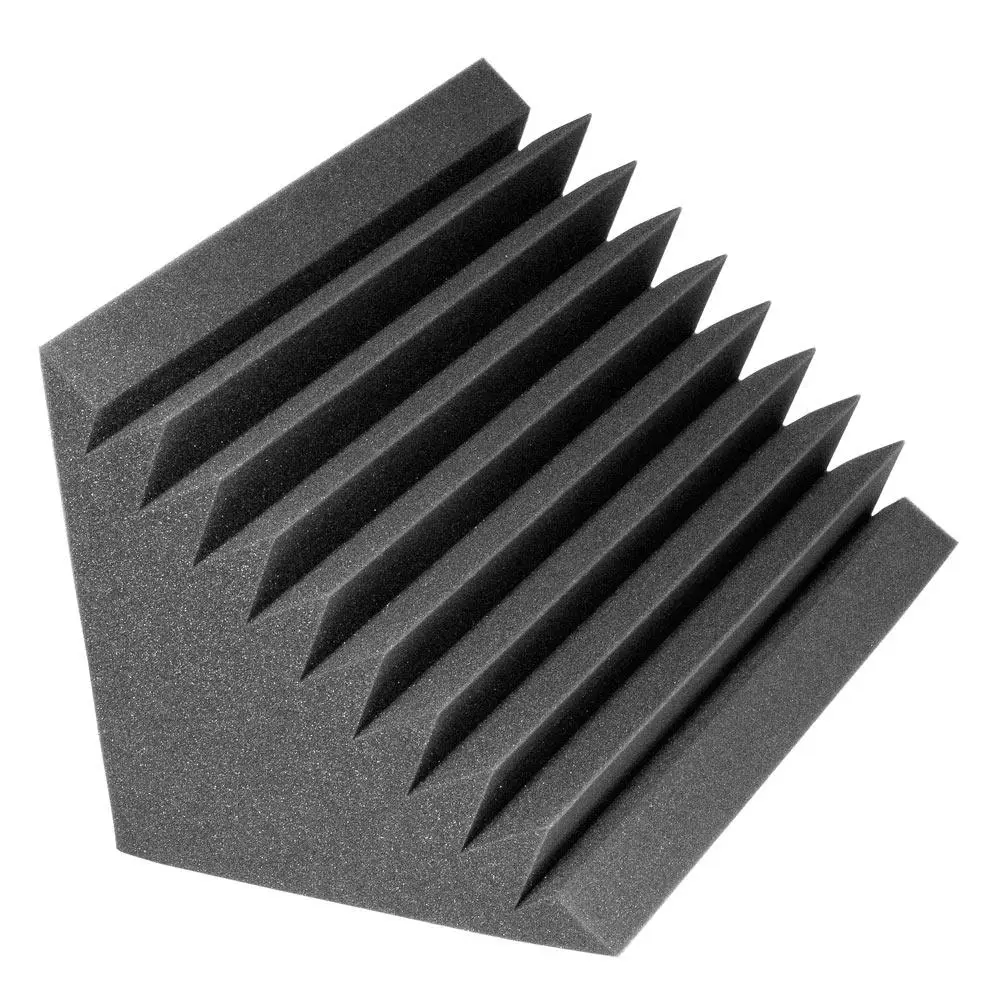
image.png


Should I be looking for specific materials or specific vendors are better than the rest?
Can anyone educate me a bit in those to understand, what do I need?
Many thanks
 
  • Like
Reactions: Bassic_desires
Primeacoustic make panels, diffusers and offer kits for rooms. Their website has lots of examples of installation options for different sized and configured rooms and will give you a good idea of what’s used where and how it use it.
 
  • Like
Reactions: Aloe
If you can get the drum kit out of the corner, make that happen, that will help.

I have found rigid fiberglass/rockwool panels offer the best bang for the buck, the thicker you can afford the better.

Ethan Winer's site (and his real traps brand) has been a trove for technical explanations.

It is possible to DIY these things if you have basic woodworking experience. I suck at such things, and went with ATS panels a decade and a half ago, and have had great experience with them.

I have also had good results simply buying rolls of fiberglass insulation from Home Depot, leaving them in the plastic, and stacking them in corners. Ugly, but it works
 
  • Like
Reactions: Aloe
Hi,

I'm setting up a new studio/rehearsal space and once I placed the drum kit, the bass started to sound really very boomy.

I get the impression that this is both floor and wall coupling, the drum kit is in the corner and in there all the lows are amplified, being reflected in the corner (I can hear it).

I do have a Auralex pad and an elevating amp stand, but I think, I really need a bass trap in the corner as well. I hear how it reflects and amplifies the low frequencies.

So, where do I start? Something like this to place in that corner? Something like this, but higher? A different design?

View attachment 7014696

Should I be looking for specific materials or specific vendors are better than the rest?
Can anyone educate me a bit in those to understand, what do I need?
Many thanks

These foam things that they call bass traps really don't work well for anything under 500Hz. How they get away with calling them bass traps i don't know.

Proper bass traps are denser material, preferably have an air-gap between the material and the wall, and are generally thicker than standard acoustic panels. If you can't get proper bass traps, these will help with general room treatment and higher frequencies. They're better than nothing. But, they're not bass traps and won't help if you're having low-end issues.


Bass trapping is an area where it's almost impossible to have too much in the vast majority of spaces and use cases. Vertical corners are easier to treat, but horizontal corners at the wall-ceiling intersection are also viable if you can't make use of a vertical corner. Also, as mentioned by @FullumMusic be sure that you're actually getting a bass trap and not an upper bass to lower midrange absorption device. You can build or purchase broadband panels using OC703 and straddle them across corners. You can also place two of these types of panels directly on each wall butted together into the corner. They both work roughly as well in terms of performance. The former takes up more floor space but uses half the material, and the latter takes up less floor space but uses twice the material. Another option is to build a suprechunk corner trap. There are many guides online for how to do this. A superchunk is one application where more dense insulation products like OC703 or rockwool are NOT preferable to regular pink fluffy fiberglass. Lastly, RealTraps and GIK both make a variety of bass traps with high performance values. I'm moderately happy witih my GIK corner traps, though the construction quality leaves a bit to be desired.
 
Back in the day when we moved into this house I built my studio upstairs in a very large bedroom. I wondered about knocking sound down? The floor was mostly new carpet but, I wondered about the walls? My dad was a carpet / floor installer and I worked with him a bunch after I got out of work. Hm, wonder about padding? New style padding was Foam not the old heavy clay type. I went to the folks house and looked around. In the corner of the shop was a big roll of foam carpet padding. Viola!

I waited till my dad got home and asked him if I could have it. Sure, help yourself, so I did. It was red, why not? I used it where I thought it would work best +. To this day it's still there doing what I intended for it to do. Never needed to change it.

If the floors and walls are hard, sound proofing can be a challenge. You can also put "knock downs" on the ceiling. I've seen blankets used on opposing walls help to.
 
I have some of these:

These provide a good example of something discussed earlier, and I appreciate any manufacturer that provides data along with use case examples. Per the manufacturer's data, if you place two of these vertically in a corner they will not act as an effective bass trap, but rather as an upper bass to lower midrange trap working mostly in the octave between 125hz and 250hz. Performance below 125hz, where you'd benefit most from bass trapping in many cases, falls rapidly. Meanwhile, performance above 250hz is so high that it might be destructive to the overall reflection characteristics of the room in an area you likely don't want to over-dampen if the space is to be used for tracking. In this configuration the performance is pretty low and emphasizes absorption in frequency ranges that are easily treated with other products. The manufacturer also shows an example using four of these units clustered in a corner and the performance is significantly improved in what you'd want from a bass trap. Absorption down to 63hz that steeply declines above 250hz. If those numbers are accurate then a cluster of four in a corner would make for an excellent product in most cases but may come with the drawback of using too much floor space. This illustrates how much more difficult it is for many studio spaces to effectively treat bass frequencies, particularly if the floor space is limited and you can only sacrifice so much of it for treatments while still maintaining functionality.
 
  • Like
Reactions: Aloe and trothwell
These foam things that they call bass traps really don't work well for anything under 500Hz. How they get away with calling them bass traps i don't know.
^^^This^^^
A couple years ago, I researched about every DIY YTube vid on making bass traps. No problem - easy DIY weekend project - some insulation, 2x4's, an appropriate fabric, and away we go!

Then I found a video by an expert.

Check out Dennis with Acoustic Fields on YT.

Long story short, there is no real, effective DIY solution, like foam blocks, acoustic panels and rockwool insulation. It is deep science, and any room needs detailed analysis before you even begin constructing a true BASS trap.
So, I simply bought some foam blocks, acoustic panels and did my best. It's a damned good listening space, but all I'm really doing is controlling mid/high frequency reflections. And it's very, very good. But, in terms of controlling the actual offending low frequencies in you space, it is more than the average musician can bear financially, never mind understanding and overcoming the sheer chaos of acoustic issues and engineering to truly get a grip on unruly bass frequencies.

Give it your best shot, just don't drive yourself insane chasing bass traps with foam blocks and DIY videos.
 
The auralex foam corner pieces absolutley do work significantly under 500hz. I have a few of them and the difference with / without them is night and day. I'd call them a decent compromise. Are they the best quality option? No. Do they sorta work and are they easy to install and relatively cheap? Yes.
 
  • Like
Reactions: Aloe
The auralex foam corner pieces absolutley do work significantly under 500hz. I have a few of them and the difference with / without them is night and day. I'd call them a decent compromise. Are they the best quality option? No. Do they sorta work and are they easy to install and relatively cheap? Yes.
I haven't watched the videos linked above, but I suspect/hope they make a distinction between a reputable company like Auralex, and the random bits of foam masquerading as measured acoustic treatments that you can find on Amazon and the like.
 
  • Like
Reactions: And I
I made some of my own from patterned ceiling panels. The panels were quite big so I cut them to the sizes I wanted, put boards around them and stuffed the back of them with acoustic foam which is about 2.5" deep. I have no idea what frequencies they attenuate but I do know they made the room much better. The main thing for an amateur like me is that they cost so little. Here in NZ so called professional bass traps will cost around $300 each and they are about half the size of my larger ones... in total I spent $120 on some wood as the panels and foam cost me nothing.

I've had a couple of drummers say that their kit sounds so much better in my studio than at their home.

This is the large panel, one in each of the main corners.
1000001510.jpg


This is the foam....
1000001511.jpg


And here you can see a few of them with three more out of shot.
1000001509.jpg
 
IMG_2025.jpeg
IMG_2024.jpeg
IMG_2022.jpeg
Acoustic Panels | Bass Traps | Sound Diffusers - GIK Acoustics Is where I got my stuff. I also took them up on their free acoustic advice and it was worth it. I started out kinda half assing stuff myself before I was willing to talk to them, but I’m glad I did. I went through a few rounds of treating and measuring with REW. Takes a while to learn what’s really going on in an oddly shaped room like mine.
 

Latest posts