I’ve owned instruments with basswood bodies and never had a structural stability or durability issue with any of them. Go figure.

Enjoy the benefits of a premium membership!
Upgrade Account
-
TalkBass has been independent since 1998. Add your voice.
Create a free account to reply to discussions, view embedded media, and browse with fewer display ads.
Join free Log in
Want zero display ads or expanded classifieds tools? Compare plans.
You are using an out of date browser. It may not display this or other websites correctly.
You should upgrade or use an alternative browser.
You should upgrade or use an alternative browser.
Basswood?
- Thread starter basspraiser
- Start date
More options
Who Replied?

Janka 420 hardness for Basswood.
If you decide you want to change out your pickguard or bridge or change your strap pins to the strap locks you risk stripping out screws pretty easily, the second or third owner will have to be even more careful.
I have bought used basses (15 to 30 years old) with stripped (bridge, pickguard, strap pin) screws in Alder, Poplar and Mahogany bodies which are all harder than Basswood.
Regarding stripped screw holes, I would be of the opinion that most of those were caused by cross-threading and/or over-tightening. I learned this the hard way, but it did teach me to turn the screwdriver counter-clockwise until the screw "drops" into the thread, then tighten only slightly past where the driver stops. By the way, I was just a 13 year old and the bass body was maple.

Funny how that happensI’ve owned instruments with basswood bodies and never had a structural stability or durability issue with any of them. Go figure.

I was having a little trouble with mine though...

My 20 year old basswood Fender Jazz Bass Special has no indication of loose screws or any issues from soft wood, just like my walnut Alembic does not.Janka 420 hardness for Basswood.
Too soft to hold bridge screws very well.
Too soft to hold pickguard screws very well.
Too soft to hold strap pins very well.
Not great for a manufacturer to choose a wood that the end customer will have to be very careful of, for the life of the instrument.
If you decide you want to change out your pickguard or bridge or change your strap pins to the strap locks you risk stripping out screws pretty easily, the second or third owner will have to be even more careful.
I have bought used basses (15 to 30 years old) with stripped (bridge, pickguard, strap pin) screws in Alder, Poplar and Mahogany bodies which are all harder than Basswood.
Poplar 540 Janka
Alder 590 Janka
Mahogany 1040 Janka
Last edited:
It’s miserable when you have to adjust a truss rod like that though.

- Jun 30, 2010
- 49,588
- 221,963
- Disclosures
- musician/artist/owner - Gildaxe
My 20 year old basswood Fender Jazz Bass Special has no indication of loose screws or any issues from soft wood, just like my walnut Alembic does not.
Exactly -
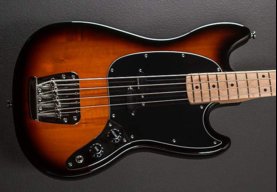
Two of my favorite guitars ever: my Squier Mustang Bass and my Japanese 60s Esquire are/were basswood. I got no to complaints. The Esquire was really soft and dinged easily, the Bass, not so much.

Yeah, I called it base-wood when I was alone & then one day the local luthier was saying baas-wood. So I looked it up & sure enough it's the fish.
i didn't know that, but i plan on continuing to call it basewood as i play the base, not a fish

Bongos are basswood. They seem to hold up petty well. The bridge and pickguard on mine are still attached.
MusicMan actually did a study & found that basswood has the best resonance of any wood they deemed usable for a bass build, which is why they build them with it. That’s interesting, too. Most people are under the impression that a dense wood has more resonance, but it’s not the case.
The complaints about stripping the wood for screws seem to be pretty well founded. A softer wood, in theory, would be easier to do that with.
It has a good full tone. It’s a desirable weight. It’s not ugly, but it isn’t “interesting” looking, either. The finish can eliminate a lot of the dents & nings. Obviously nitrocellulose wouldn’t be a good option, but the Vintage Modified series has a lot of basswood models & they hold up well with a thick polyurethane coating.
Yeh, same with Wenge. When I was getting into Warwicks I kept pronouncing it 'Wenj'basswood is soft, but sounds good to me
The thing that bugs me is that it's pronounced like the fish & not like our instrument.
Later, I read that it is pronounced 'Wen-ge.'
It has a good full tone. It’s a desirable weight. It’s not ugly, but it isn’t “interesting” looking, either. The finish can eliminate a lot of the dents & nings. Obviously nitrocellulose wouldn’t be a good option, but the Vintage Modified series has a lot of basswood models & they hold up well with a thick polyurethane coating.
The finish on my VM Deluxe Active IV is nice and thick!
From trying quite a few instruments made from it I'd say that there seems nothing at all wrong with basswood.

It's a pronunciation issue. Someone explained that "basswood" sounds like "ass" and it went on from there. Tragic, I know…So...Basswood seems to get a pretty bad rap amongst bassistsand guitarists.
So.. Why does basswood get such a bad rep?

So...Basswood seems to get a pretty bad rap amongst bassistsand guitarists.
Well...I was at the plant of a very well respected organ builder this week (my son-in-law's church is getting their organ rebuilt by this company).
The owner / founder was saying that he ONLY uses basswood for certain parts of an organ which need to be "stable for 100 years or more"...
He loves the stability and consistency in characteristics of basswood
So.. Why does basswood get such a bad rep?
The owner even said it does effect sound in a good way.
Just curious why and how basswood gets such a bad wrap for guitars and basses?
I dont't know... I also always looked at basswood as an el cheapo option bot honestly... Some guitars are based on basswood and sound great. Aerodyne comes to mind... Also Satriani's JS Ibanez...
It is always about proper compensation. If you use a certain material you then select certain components to complement each other and I can absolutely see how it may and in fact does work.
Ultimately, it comes down to how the instrument plays in your hand. You will definitely be able to get a great bass tone from basswood just as much as with alder or ash or other variations.
My 50 cents on basswood is that when bass guitars are made of it, the guitars mostly feel too light in my arms and I get a feeling that the bass isn't sturdy and nicely fixed in my hands. The heavier attack on the guitar also makes the guitar move a bit more which I don't prefer. I also don't dig NYC Sados just for the same reason. Too "cardboardish". I much much more prefer the non-chambered Metro line.
Then again, this has nothing to do with the sound for which I can comfortably say that basswood is just fine for that.
The air you breathe is cheap too. That doesn't make it bad. Wood is cheaper when it grows aplenty next to where it is used. Stradivarius used wood from his region. His violins became legendary because of the sound holes he made in them, not because he used some rare wood others couldn't find.I dont't know... I also always looked at basswood as an el cheapo option but honestly...
As to weight, it is a pure feeling, a habit or a fear. Heavier guitars are not better, just heavier.
I dislike light, hollow-bodied acoustic guitars because I am not used to them. Others do marvellous things with them.
The air you breathe is cheap too. That doesn't make it bad. Wood is cheaper when it grows aplenty next to where it is used. Stradivarius used wood from his region. His violins became legendary because of the sound holes he made in them, not because he used some rare wood others couldn't find.
As to weight, it is a pure feeling, a habit or a fear. Heavier guitars are not better, just heavier.
Which is exactly what I said.
I would OTOH not bring Stradivarius into this discussion. Guy was a freak and the stories go as far as him planting the tree, watching it grow under special circumstances and then using it for making his instruments. Might be fiction, might be true. But we can't compare exclusively hand made stradi stuff with nowadays automated industry.
So - no, an alder guitar isn't de facto better than ash guitar or basswood guitar as much as a lighter guitar isn't de facto better then a heavier guitar.
the heaviness of the instrument does bring certain things into the game though such as string stability when being played. It does have way more to do with a heavy/thicker neck though. All in all it depends which one you prefer.
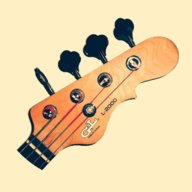
Basswood is not a cheap option.
A surely not cheap basswood bass is the music man bongo. You can find multiple k priced prs guitars in basswood too.
To be honest imho wood is relatively cheap whatsoever. I guess that the wood in a guitar impact only for a fraction of the cost.
A surely not cheap basswood bass is the music man bongo. You can find multiple k priced prs guitars in basswood too.
To be honest imho wood is relatively cheap whatsoever. I guess that the wood in a guitar impact only for a fraction of the cost.
If Leo used basswood in the 50's it would be the holy grail of tonewood.
But he didn't, so the internet knows it's a second rate wood ....
But he didn't, so the internet knows it's a second rate wood ....
By the way. I think that tonewood debate could be mildly relevant for cellos, violins and acoustic instruments only.
Electric guitars have always been industrially made with the wood that was lying around: alder and ash are nothing fancy but as basswood they do the job they're supposed to.
To me it's really peculiar and interesting to play on an instrument wich has never been though at as a luthier product. Fender was thinking at mass market when he designed its p bass and from the choice of wood to the bridge to all the instrument you can see that it has been thought with a strong practical mindset.
Electric guitars have always been industrially made with the wood that was lying around: alder and ash are nothing fancy but as basswood they do the job they're supposed to.
To me it's really peculiar and interesting to play on an instrument wich has never been though at as a luthier product. Fender was thinking at mass market when he designed its p bass and from the choice of wood to the bridge to all the instrument you can see that it has been thought with a strong practical mindset.