• TalkBass has been independent since 1998. Add your voice.
    Create a free account to reply to discussions, view embedded media, and browse with fewer display ads.
    Join freeLog in
    Want zero display ads or expanded classifieds tools? Compare plans.

Batteries or not?

Keep in mind that most active basses have battery powered preamps, but the pickups themselves are not battery powered. EMG is the best known supplier of battery powered pickups, if your active bass doesn't have them the pickups are probably passive. An active bass with a passive bypass definitely has passive pickups.

The one and only potential hassle with active pickups is bringing spare batteries to gigs, rehearsals and recording sessions just in case. I have two basses with EMGs and I check the battery voltage on both before heading out of the house. A fresh 9V cell usually measures slightly high...about 9.2V is common. Once the battery is down to 8V it's time to swap it out. I twice had weird behavior with the voltage dropping well below 8V with my NS Radius CR5 (once at home, once on a gig), but I'm pretty sure it was the preamp acting up, not the pickups themselves. That's why I always check the voltage.

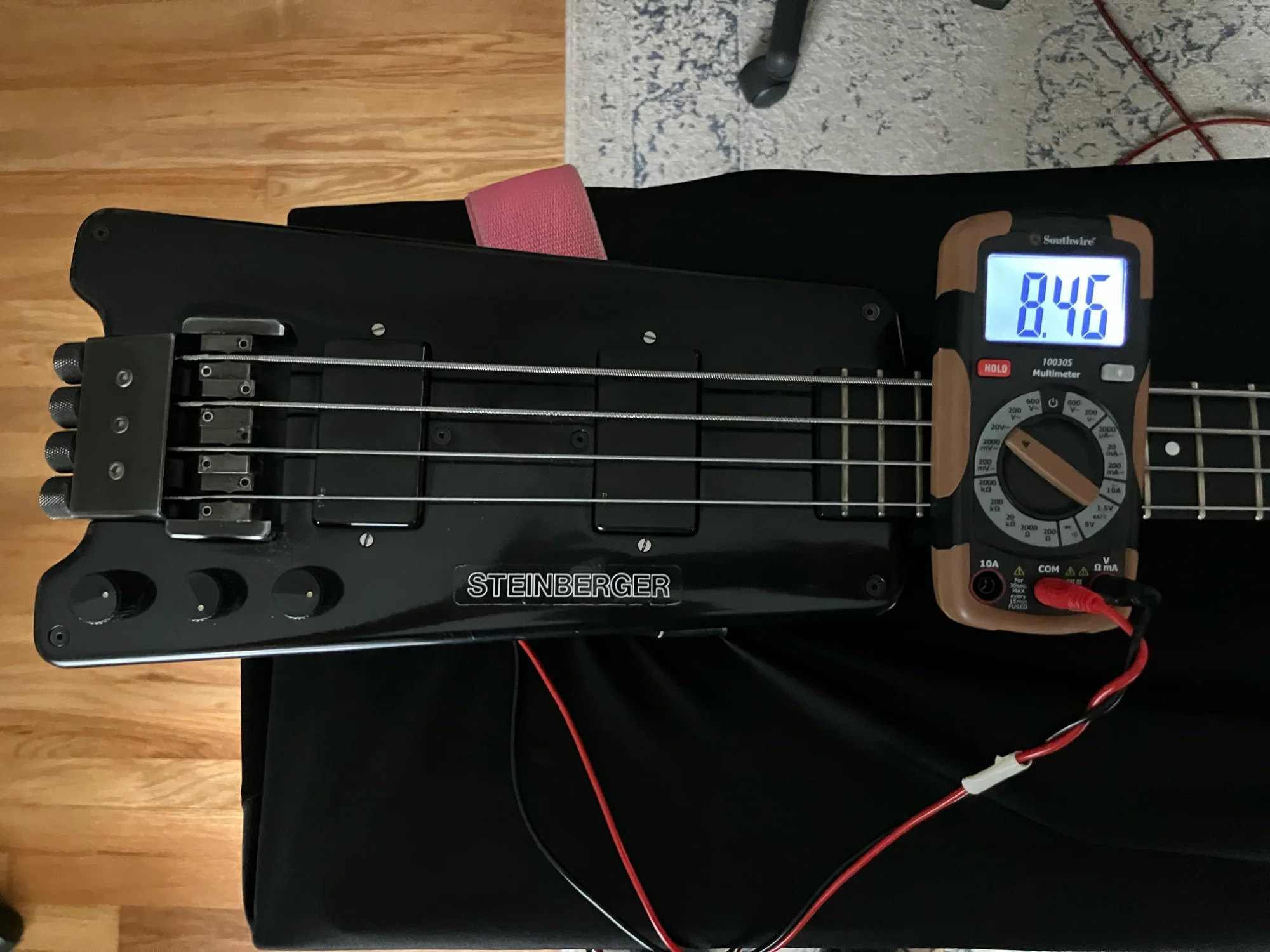
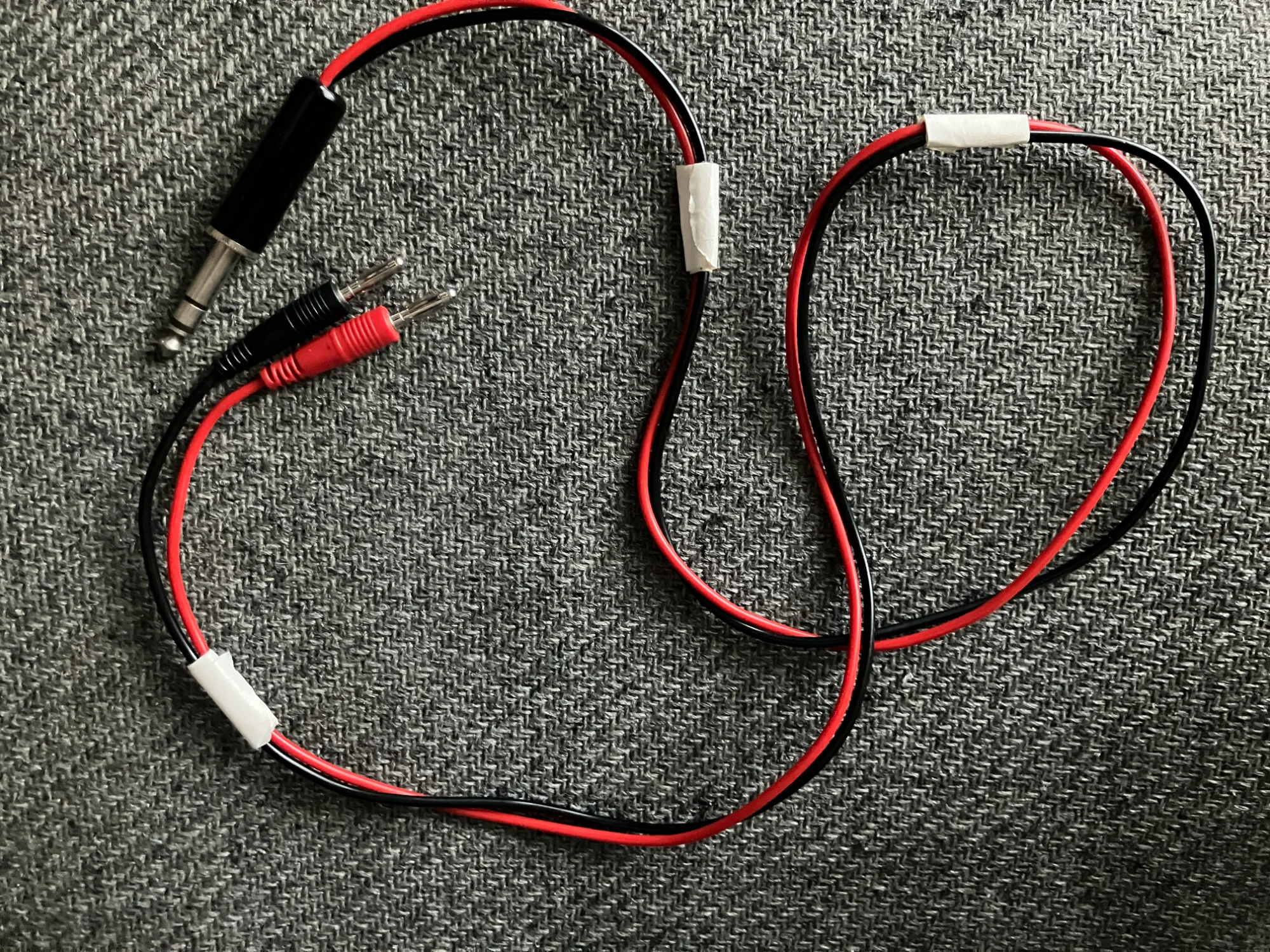
I use a DIY cable using a TRS 1/4" plug. Just plug it into the bass on one end and a multimeter on the other. No need to open up the battery cavity.
tempImagetdhuiy.webp


This Steinberger is good to go.

tempImageBwB1g5.webp
 
Last edited:
Me, personally, I like active EQ on a bass. You can easily fine-tune your sound without walking back to the amp or messing with a pedal. I find it really helpful when I play at a jam. I don't like adjusting the hosts amp settings. Plus you can adjust out the mud or boost big lows and add a little punch on top.
Or you are talking about emg active
Pickups without EQ. Ive had those too. It's usually a passive bass that they are added to. Single tone control. To me, not a good route. Active pickup without active controls.
 
My first Warwick 4 string bass had 1 x 9v battery, then I got a 5 string Warwick Thumb with a 18v preamp - two batteries (that bass was horrible to use on a 2 hour set - so heavy!!). Lots of dynamic range to…. input to a compressor (I joke, but not much)

These days I play a 4 string jazz bass and it it the lightest one I could find, with a nice shallow (for a Jazz bass) radius neck, it has the lowest output pickups of any Fender jazz - and in my opinion sounds more natural and versatile than all the active J basses I tried. It was also the cheapest American Jazz bass in the store. Also, once the scratch plate was removed, it looked great. So, ignore the marketing fluff and the random pricing.

But - that's just me - find the bass that you like your tone and playing when you play it! If it's got wizzzyFi9000 pickups or it's a rusty nail wrapped in mains flex, it doesn't matter - if it's good for you, it's good.
 
  • Like
Reactions: Nutmegger2209
I had a set of active EMG pickups in a jazz bass long ago. As I recall, it was never inconvenient, the batteries lasted a very long time, and it was nice to be free of excessive noise, hiss, etc. I also liked the tone I was getting from them. I would definitely consider them again if I was replacing pickups.
I heard that excessive noise was from not keeping volumes on the pickups, at equal levels?
 
My first Warwick 4 string bass had 1 x 9v battery, then I got a 5 string Warwick Thumb with a 18v preamp - two batteries (that bass was horrible to use on a 2 hour set - so heavy!!). Lots of dynamic range to…. input to a compressor (I joke, but not much)

These days I play a 4 string jazz bass and it it the lightest one I could find, with a nice shallow (for a Jazz bass) radius neck, it has the lowest output pickups of any Fender jazz - and in my opinion sounds more natural and versatile than all the active J basses I tried. It was also the cheapest American Jazz bass in the store. Also, once the scratch plate was removed, it looked great. So, ignore the marketing fluff and the random pricing.

But - that's just me - find the bass that you like your tone and playing when you play it! If it's got wizzzyFi9000 pickups or it's a rusty nail wrapped in mains flex, it doesn't matter - if it's good for you, it's good.
I heard the "lightest" is the Hofner violin bass?
 
EMG active pickups specially if they have ceramic magnets usually are more hi-fi . This becomes evident if you are have an E=C bass and you are using tapes - almost nylon guitar like with a piezo into a good buffer. I have EMG equipped tele Baritone also and if you use and acoustic amplifiers it, hardly sounds like an electric. I've also played a hollow body Aria ES-175 copy also with EMG and reminds me of Tuck Andress sound

Usually if you want to have more grunt they recommend you use the Ceramic-Steel models or if warmer the alnicos so a jazz bass will say JCS or JA. An additional X is usually for the extended headroom versions

I love them in certain applications. batteries inconvenient or not and those talking about waste should also probably not have a phone or anything throwaway. EMGs specially if you only power the pickup and use their passive tone and not their 3 or 2 band EQs will last a long time. I was getting 2 or more years with my Fender Gilmour Strat and yes it was my only strat and my 3rd electric guitar for a long time and was in use predominantly. I am going 2+years now with my Jazz 5 string JAX5 set + BTC on an 18v setup and the voltage is still over 16 volts and this will run as low as 8 but I probably will change at 15 or high 14.. in theory I should be able to run below 8 volts
 
Last edited:
Makes you wonder why phantom powered preamps aren't more of a thing. Active + no batteries.
Phantom power typically requires a balanced line to ride on, and IME is quite uncommon, but plain old external power has been done by Alembic for decades. I have one bass set up that way, but in my case I've just been using a battery in a box. I think that having to use something other than a standard 1/4" TS cable is a big turnoff to most players, probably.
 
Keep in mind that most active basses have battery powered preamps, but the pickups themselves are not battery powered. EMG is the best known supplier of battery powered pickups, if your active bass doesn't have them the pickups are probably passive. An active bass with a passive bypass definitely has passive pickups.

The one and only potential hassle with active pickups is bringing spare batteries to gigs, rehearsals and recording sessions just in case. I have two basses with EMGs and I check the battery voltage on both before heading out of the house. A fresh 9V cell usually measures slightly high...about 9.2V is common. Once the battery is down to 8V it's time to swap it out. I twice had weird behavior with the voltage dropping well below 8V with my NS Radius CR5 (once at home, once on a gig), but I'm pretty sure it was the preamp acting up, not the pickups themselves. That's why I always check the voltage.

I use a DIY cable using a TRS 1/4" plug. Just plug it into the bass on one end and a multimeter on the other. No need to open up the battery cavity.

View attachment 7569329

This Steinberger is good to go.

View attachment 7569326
Which contact (tip, ring, sleeve) is positive and which is the negative (battery lead)?
 
They're simply another choice. Some guys are skittish about them because of the 9v battery, but I played only active basses for many years: I simply changed batteries for New Years and Fourth of July, and I had no battery problems.

In most cases, as others above have pointed out, most of them are passive pickups with 9v-powered tone section, typically cut or boost in lows and highs, and some include a mids control as well. The 'tell' to this setup is that any bass rigged this way will have an 'active/passive' switch where you can play the bass without the powered tone controls (when you flip the switch to passive, usually one of the cut/boost controls becomes a passive tone). Poorly considered setups like this can amplify pickup noise along with the tone, but this usually only happens on modded basses, rare on a factory install.

The 'real' active electronics involve pickups with far fewer turns of wire, much lower output, and the circuit includes a built preamp to boost the signal strength to a normal output range so the bass works with an amp like any other bass. These would include most EMG's (each of those has a tiny preamp inside the pickup shell) or Alembic (where the pickup preamps are in the control cavity). These are typically very clean and hi-fi, and can sound thin for guys used to throatier pickups. These pickups are dead without a good 9v, can't use a active/passive switch with these.

All depends what tone you're looking for and how you want to get there from here. Personally, if I had EMG's in everything I own, it would be fine with me. Tone I like, EZ install, and quiet as a tomb.

But it's your call.
 
An active bass is simply a bass with an on-board, battery-powered pre-amp (and often lower-output pickups). Unless you really like the sound and features of a particular active bass and/or are in a position where having a pre on your board won't work out, I don't see a need to add fussing with batteries to the list of to-dos. But, as with all things, to each their own.
 
Which contact (tip, ring, sleeve) is positive and which is the negative (battery lead)

Ring is positive, sleeve is negative. When inserting a TS cable into the TRS jack of the instrument, the sleeve shorts to the ring and current flows through the circuit.

Here's a basic EMG wiring diagram showing this.

emg_1_0-3394203868.webp


The same cable can be used to check the battery in stompboxes that use the input jack as the power switch.
 
  • Like
Reactions: 11-11 and 31HZ
Just wondering about the benefits and hassles associated with pickups that require batteries.

Thoughts??
I only have one active bass (Aria Pro II LEB) and the batteries last for many years in it and the only time I had to change batteries at a gig was because I got lazy and didn't change the batteries when I first heard the signs (a bit of clipping when playing hard). Even then it was between sets so no biggie because I carried spares and a screwdriver.

For passive, my J-bass and P-bass both have similar output to the Aria and I switch between them all seamlessly.

However my Warwick fretless is passive, and is in dire need of a preamp because some twit changed the tone pot and cap rendering the tone control ineffective, and I have to use a Spark pedal get it up to an acceptable volume! That's a project planned for 2027 and I guess that means for passive, my answer is "it depends".
 
Just plug a stereo (TRS) cable into the jack, turn the multi-meter to DC voltage, and touch the leads to the ring and sleeve sections of the jack at the other end.
Don't I feel stupid for not having figured that out myself! That's way quicker than unscrewing the battery cover and less stress on the wires to the battery clips from hooking out the batteries to get the meter leads on them. It works a treat. It was worth being snookered by this bot post just for this tip! Thanks @jglunt !
 
  • Like
Reactions: jglunt
Your bass amp doesn't have an XLR or TRS input jack, that's why. Your stomp boxes don't either.

External preamps often provide both XLR and TS output jacks, so when connected to a mixer it can run off phantom.
so.............. we could in theory use one of these connectors and power it in a similar manner?
the issue would be more that unless it catches on itl be a niche thing that means that bass and that amp/front end/whatever part is next in line after the instrument that powers it will now be kinda married.
Meaning longevity and keeping it servicable, and versatility ie using it with any rig like most instruments becomes an issue
and then we get a thread on here about modding one over to a more conventional layout a decade or so later lol