
Hang in there. You will get there on the third movement. If for no other reason than you understand. Thanks.I loooove Semantic Misunderstandings...
Anyway I can add somewhat intelligently that the first and second movements of Beethoven’s Sonata Pathetique I could play; the third for me was like I never sat in front of a keyboard in my life.
So yes my technician side melted at the third movement where my musicianship side somewhat carried me through the first two I guess

Enjoy the benefits of a premium membership!
Upgrade Account
-
TalkBass has been independent since 1998. Add your voice.
Create a free account to reply to discussions, view embedded media, and browse with fewer display ads.
Join free Log in
Want zero display ads or expanded classifieds tools? Compare plans.
You are using an out of date browser. It may not display this or other websites correctly.
You should upgrade or use an alternative browser.
You should upgrade or use an alternative browser.
Be a Musician, not a Technician
- Thread starter iiipopes
- Start date
More options
Who Replied?

That wasn’t clearYes. This is not an either/or. This thread is to get people out of the technician mindset into the broader musician mindset; to encourage growth and appreciation; to rise above the mundane to the inspired. To encourage greater work, dedication, and application of our common art as bass musicians. It is the leap from the mundane to the inspired as a progression using technique as a tool that keeps this thread from being a false dichotomy, because the key element of a false dichotomy is the assumption that both "sides" are either in competition for each other, or have equally valid or demonstrable attributes. This is not about competitive or equal or inapposite attributes. It is about inspiration, progression, transition, yes, even maturity over time and the journey to get there, as illustrated by my original two movie exerpts.
I went to a small music school. My major instrument was percussion with a concentration on mallet instruments.
One night, there was a performance by 2 gentlemen on piano and xylophone. Mostly, they were doing the old ragtime xylophone pieces and promoting an album they put out.
They had excellent technique on some VERY difficult pieces, but they didn't really sound that good.
The next day, in my lesson, my teacher asked what I thought of them. I said they sounded like someone who showed up for a lesson unprepared.
I used an expression I learned from a previous teacher: They weren't playing music, they were 'making notes'.
Is that what you mean by being a musician and not a technician?
One night, there was a performance by 2 gentlemen on piano and xylophone. Mostly, they were doing the old ragtime xylophone pieces and promoting an album they put out.
They had excellent technique on some VERY difficult pieces, but they didn't really sound that good.
The next day, in my lesson, my teacher asked what I thought of them. I said they sounded like someone who showed up for a lesson unprepared.
I used an expression I learned from a previous teacher: They weren't playing music, they were 'making notes'.
Is that what you mean by being a musician and not a technician?
Why would you assume he can't?sent me a video of a boy on a street corner with superlative technical execution as he played technical patterns in a derivative of Larry Graham style. I replied, "Yes, but can he support an ensemble?"
Playing alone on a street corner it is flashy technique that will get passersby to tip.
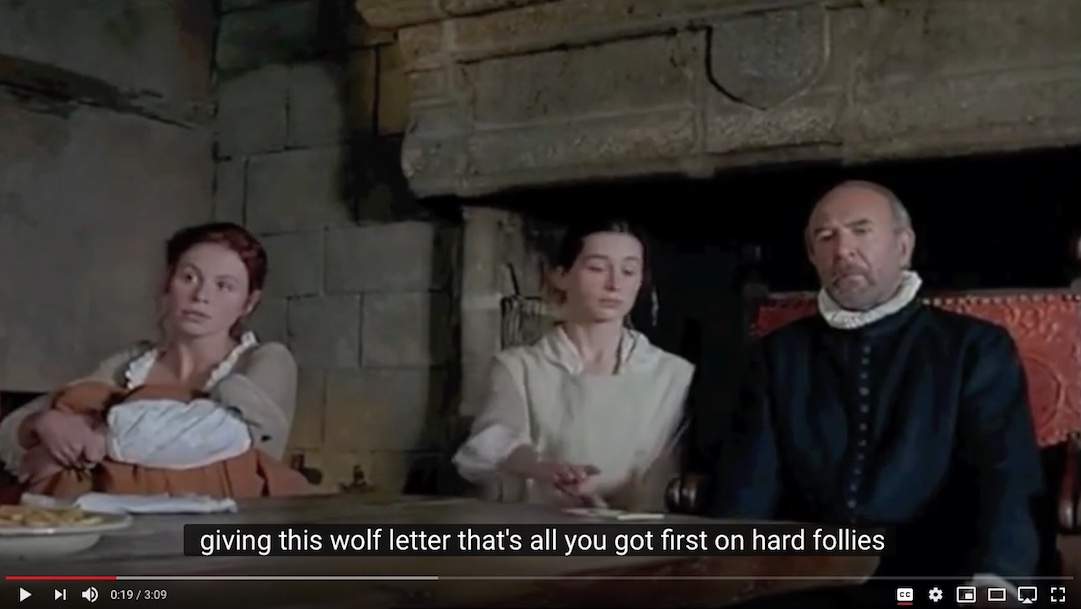
YouTube autotranslate is making me feel like I'm watching an episode of Masterpiece Theater scripted by Salvador Dalí.
That is the beginning of it. But there has to be the inner spark, the will to dream, the desire to master technique so it can be put away when the time comes, as at that point it will be so internal and controlling of the subconscious that the conscious thought is not even of the music, but of consideration and awareness of all who are participating and sharing in it so you become the conduit to the greater enjoyment of the music. Mystics call it the union with the singularity. Athletes call it the zone where all else fades. For musicians, it is the opposite: it is the assimilation of all involved: fellow musicians and audience alike.I went to a small music school. My major instrument was percussion with a concentration on mallet instruments.
One night, there was a performance by 2 gentlemen on piano and xylophone. Mostly, they were doing the old ragtime xylophone pieces and promoting an album they put out.
They had excellent technique on some VERY difficult pieces, but they didn't really sound that good.
The next day, in my lesson, my teacher asked what I thought of them. I said they sounded like someone who showed up for a lesson unprepared.
I used an expression I learned from a previous teacher: They weren't playing music, they were 'making notes'.
Is that what you mean by being a musician and not a technician?

A technician will always be a technician, and nothing more.
If that’s the case, then how did the fictional character - who was dismissed by the master character as being a mere technician - ever able to become a musician and play with the character of the master if “a technician will always be a technician and nothing more” hmm?
Your premise doesn’t follow.
I don't know if that is something that can be learned. It might be something that can be developed, but does it need to be in there to begin with?That is the beginning of it. But there has to be the inner spark, the will to dream, the desire to master technique so it can be put away when the time comes, as at that point it will be so internal and controlling of the subconscious that the conscious thought is not even of the music, but of consideration and awareness of all who are participating and sharing in it so you become the conduit to the greater enjoyment of the music.
Technique gives you the tools to achieve full expression, but I don't know if everyone has the capacity to be expressive. But I do believe that, for those who do have it, technique is a means to that end and not the end itself.
Have you seen the movie? His rejection, followed by his life lessons, formed the basis of his transitioning from technician to musician, including the courage and self confidence so that he could eventually reapproach his Master as his equal, just as the Master, after his life lessons, could humble himself to reapproach and offer to share music.If that’s the case, then how did the fictional character - who was dismissed by the master character as being a mere technician - ever able to become a musician and play with the character of the master if “a technician will always be a technician and nothing more” hmm?
Your premise doesn’t follow.
And it is not a difference in semantics. I strive for the highest musical expression I can.
To say nothing of verbal hyperbole.


Not a fan of deepities.
There are many ways to make interesting music and they're not mutually exclusive.
Technical/simple, fast/slow, sentimental/intellectual, formal/pop, dancing/listening, demanding/easy listening, the list goes on. It all works.
There are genius pieces built today over structures as tired as a 12 bar blues or a 4 chord pattern.
There are many ways to make interesting music and they're not mutually exclusive.
Technical/simple, fast/slow, sentimental/intellectual, formal/pop, dancing/listening, demanding/easy listening, the list goes on. It all works.
There are genius pieces built today over structures as tired as a 12 bar blues or a 4 chord pattern.
Being a musician is something intrinsic to some people and not so much to others. Hard work will only get you so far. You can be an aspiring athlete who strives to run a 4 minute mile. You work and practice harder than anyone else ever did. You just don't have the natural ability to achieve your goal. Your best time is 5 minutes. Are you better off than you would have been without all of the effort? Certainly. Are you better than a natural athlete who ran a four minute mile on a dare once without any training? No. You can't teach innate traits. You can only cultivate what already exists. There are some flashy players who have no musical training. They would be monsters if they took the time to learn the rules of their art. Then there are others who have immersed themselves in study only to become musical robots with no soul and nothing to say. The best any of us can do is to put in the effort to be as creative, expressive and communicative as we can within the musical framework.
Have you seen the movie? His rejection, followed by his life lessons, formed the basis of his transitioning from technician to musician, including the courage and self confidence so that he could eventually reapproach his Master as his equal, just as the Master, after his life lessons, could humble himself to reapproach and offer to share music.
I didn’t see the movie and I don’t see what difference that makes when it comes to you stating a technician will always be a technician and nothing more. Apparently the technician in your movie disproves your argument.
Until he decided to not be a technician. It is not a disproving of the thesis. It is the very demonstration of it. Once he decided he didn't want to be a technician anymore, but to be a musician, then he was a musician from that point on.I didn’t see the movie and I don’t see what difference that makes when it comes to you stating a technician will always be a technician and nothing more. Apparently the technician in your movie disproves your argument.
"Fletcher Lynd Seagull, do you want to fly so much that you forgive the flock, and learn, and go back to them one day and work to help them know?"
There was no lying to this magnificent skillful being, no matter how proud or how hurt a bird was Fletcher Seagull.
"I do," he said softly.
"Then, Fletch," that bright creature said to him, and the voice was very kind, "Let's begin with level flight...."
--Jonathan Livingston Seagull, page 65
When a player reaches that point and says "Yes," then that is the point a technician becomes a musician, and learning or re-learning the technique is put in its proper perspective as the tool to reach the height of flight.
Last edited:
There is a lot more to this movie that still applies to artists of today.
Ste Colombe was an aristocratic annuinant, coming from a rich family. Living modestly, he could afford to spend his entire life chasing his art.
Marin Marais was a commoner, the son of a shoe maker. He had to be impressive or he wouldn't have been able to even approoach a career. His art had to generate a living or he'd be back to a workingman's life.
Mohini Dey was talking about this in an interview. She HAD to be flashy as to get noticed and find herself a spot in the game.
Ste Colombe was an aristocratic annuinant, coming from a rich family. Living modestly, he could afford to spend his entire life chasing his art.
Marin Marais was a commoner, the son of a shoe maker. He had to be impressive or he wouldn't have been able to even approoach a career. His art had to generate a living or he'd be back to a workingman's life.
Mohini Dey was talking about this in an interview. She HAD to be flashy as to get noticed and find herself a spot in the game.
Yes, but even at that, she was not controlled by the flash. She had the vision of where she wanted to go and used the flash as a tool to get there, and she controlled the flash.Mohini Dey was talking about this in an interview. She HAD to be flashy as to get noticed and find herself a spot in the game.
Until he decided to not be a technician. It is not a disproving of the thesis. It is the very demonstration of it. Once he decided it didn't want to be a technician anymore, but to be a musician, then he wasn't.
Sorry. Flawed argument on your part. If your premise is that something or someone is “always,” then always it remains. Such are the dangers of invoking absolutes. If you’re going to introduce volition into the equation then you’ll need to qualify and restate your premise.
Yes. All persons have limitations. Recognizing those limitations and using them as a tool to transcend into artistic expression is another aspect of transcending the technical to the art. For example, Ringo is the first person to admit he really can't play a drum roll well, and is left-handed on a right-handed drum set. But he took those limitations, including his innate sense of tempo and what to not play as much as what to play, turned them into his style through practice of the fundamentals, and, well, the rest is history.Being a musician is something intrinsic to some people and not so much to others. Hard work will only get you so far. You can be an aspiring athlete who strives to run a 4 minute mile. You work and practice harder than anyone else ever did. You just don't have the natural ability to achieve your goal. Your best time is 5 minutes. Are you better off than you would have been without all of the effort? Certainly. Are you better than a natural athlete who ran a four minute mile on a dare once without any training? No. You can't teach innate traits. You can only cultivate what already exists. There are some flashy players who have no musical training. They would be monsters if they took the time to learn the rules of their art. Then there are others who have immersed themselves in study only to become musical robots with no soul and nothing to say. The best any of us can do is to put in the effort to be as creative, expressive and communicative as we can within the musical framework.
How would you know?Yes, but even at that, she was not controlled by the flash. She had the vision of where she wanted to go and used the flash as a tool to get there, and she controlled the flash.
I can say how I feel about a performance or record, how touched and/or impressed I am.
This is entirely separate from the composer and player's intentions. I have no way to tell if they're sincere in their art, playing with my feelings for the sake of profit or didn't intend to convey emotion at all.
Go re-read the interview. The fact that she knew she had to be flashy to get noticed is in and of itself proof that she knew what she was doing and controlled it, rather than letting it control her.How would you know?
I can say how I feel about a performance or record, how touched and/or impressed I am.
This is entirely separate from the composer and player's intentions. I have no way to tell if they're sincere in their art, playing with my feelings for the sake of profit or didn't intend to convey emotion at all.


