• TalkBass has been independent since 1998. Add your voice.
    Create a free account to reply to discussions, view embedded media, and browse with fewer display ads.
    Join freeLog in
    Want zero display ads or expanded classifieds tools? Compare plans.

Double Bass Bent Bridge - how to go?

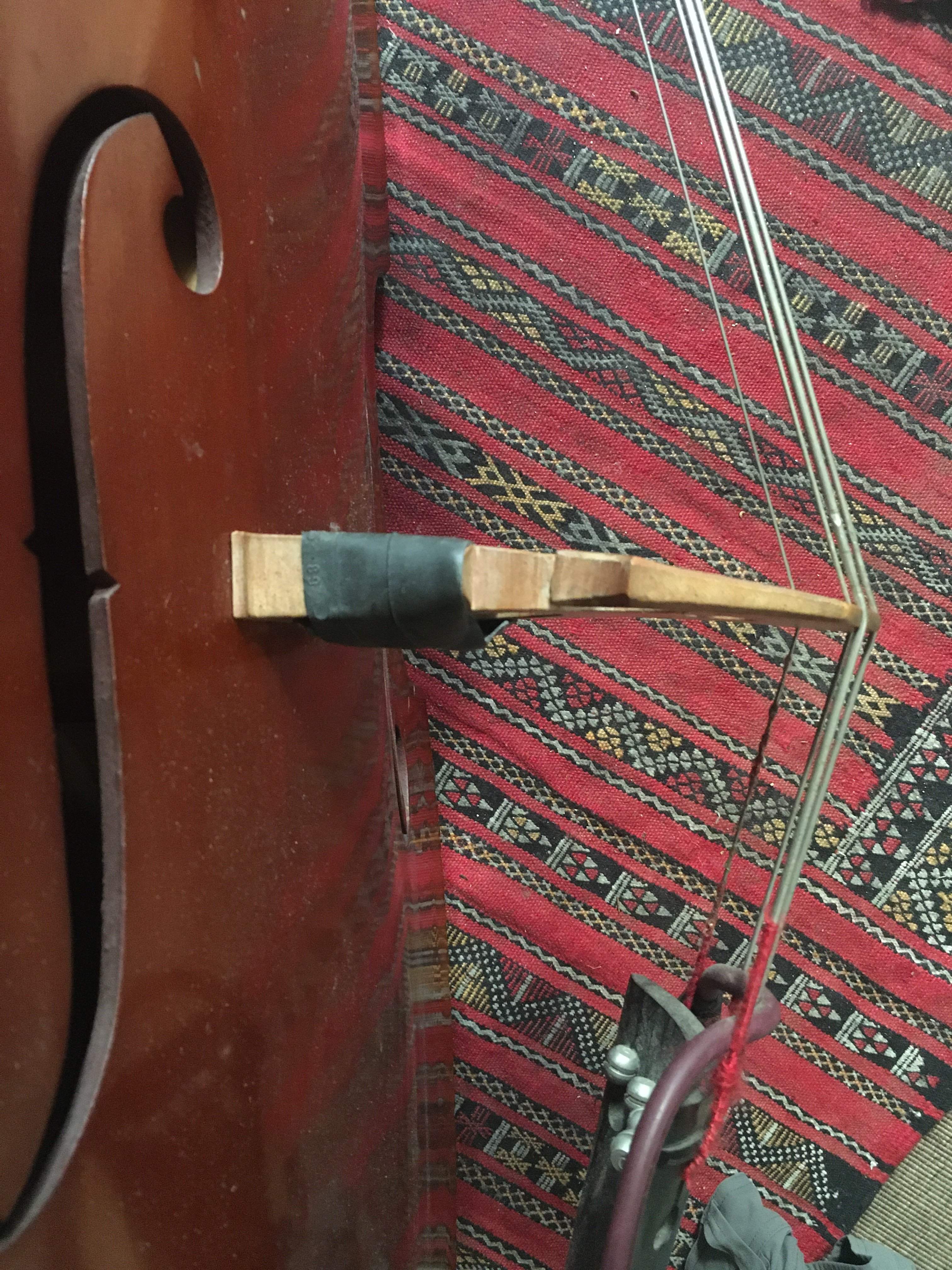
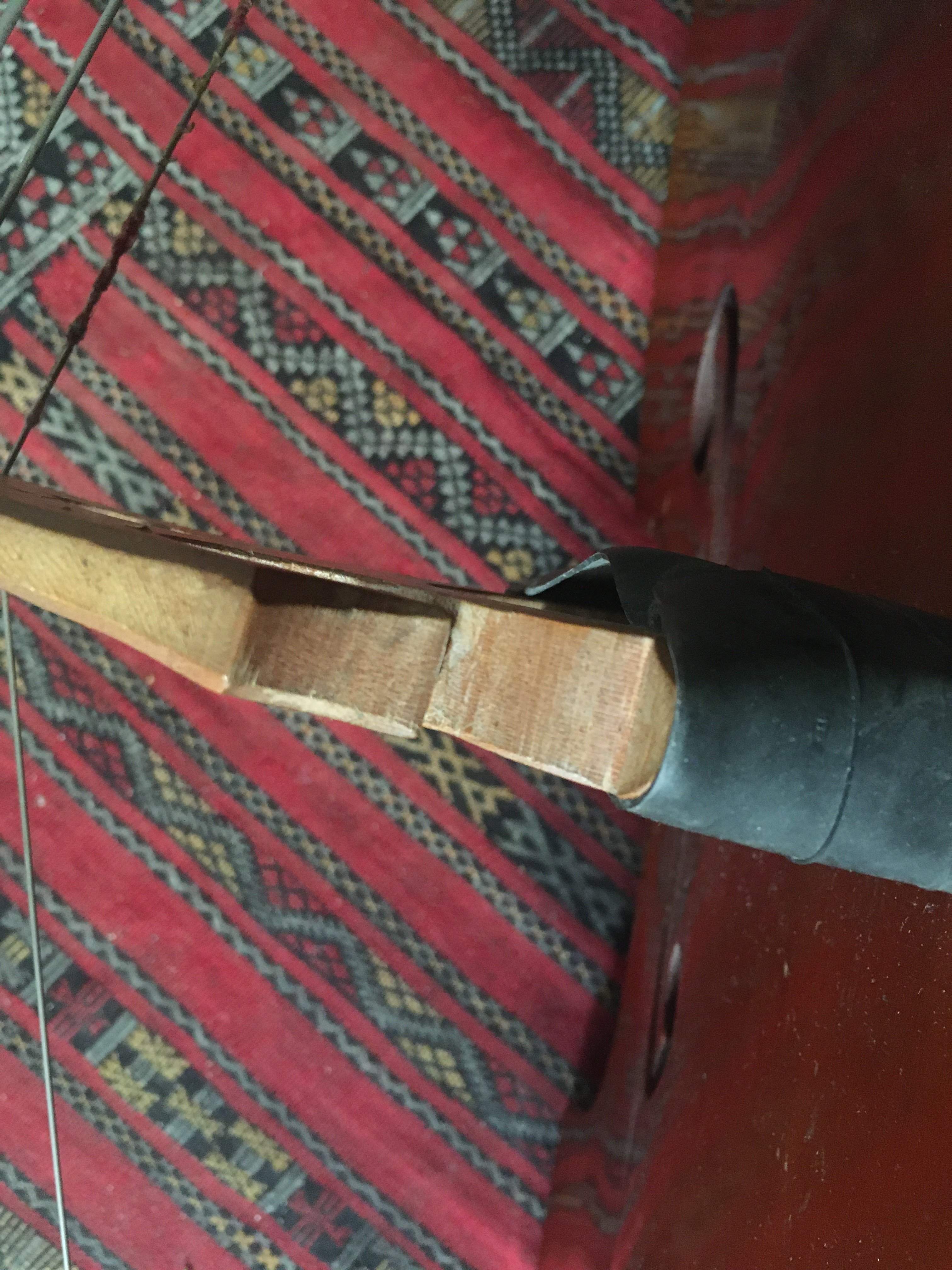
Here are two photos of a bridge that is ~20 years old and has bent. The climate it has lived in for the last five years is metditerranean (quite humid and pretty warm). It has worn a kind of heavy mute, sometimes for continued days.

Is this a dangerous situation that calls for snapping at the most inconvinient moment? What is there to do? Can it be saved, like warm it up or cook it up and simply bend it back?

How would you go with this?

BendtBridgeWide.JPG
BentBridgeClose.JPG
BendtBridgeWide.JPG BentBridgeClose.JPG
 
Well, you probably should just bite the bullet and get a new bridge made. In time. It is unlikely to break or do anything dramatic or dangerous, but it will continue to bend. Moist heating and reshaping can work, but the bridge will want to revert to the bend, and is weakened in that regard. Most importantly, the transmission of vibration from string to body is no longer optimal. You will likely find greater ease of playing and a better sound once you replace it.

I have a satanic cello that does this to bridges about every 6 months, despite my and my luthier's best efforts. I just consider it a cost of doing business with the cello. It is happening with my bass now, but the time course is measured in years, not months, thankfully.
 
A new bridge is not a bad idea, but it is interesting that the bridge bends towards the tailpiece. Normally due to stretching of the string over time the instrument needs to tune up which takes the top of the bridge towards the fingerboard if not corrected regularly.

Since it is in the other direction here I would try a bend over steam with clamping afterwards. It would get completely straight, but if mounted well the tendency to bend will be in the other direction, so the little rest gets corrected automatically.

Unfortunately the current state of bending is too much for an autocorrection by string tension and there is a risk of breaking the bridge, so better steam it in shape soon.
If that doesn’t work well you can get a new bridge which you need anyway soon if you do not steam-bend it back.
 
  • Like
Reactions: TomB
(...)
Unfortunately the current state of bending is too much for an autocorrection by string tension and there is a risk of breaking the bridge, so better steam it in shape soon.
If that doesn’t work well you can get a new bridge which you need anyway soon if you do not steam-bend it back.

Thank you for joining. How would that steaming process go exactly? Induced by intuition I'd go like: make some good steam, hold it in there for 2 minutes, clamp it (maybe with a counterpiece where it becomes thinner) over night.
Like this? Or would you forget about a possible counterpiece so that the "little rest" can be auto corrected.
And then cross fingers that it stays in shape, that my bass nows its manners better than the santanic cello from colleague Anne Millington ...


(...) but the bridge will want to revert to the bend, and is weakened in that regard. Most importantly, the transmission of vibration from string to body is no longer optimal. You will likely find greater ease of playing and a better sound once you replace it.

I have a satanic cello that does this to bridges about every 6 months, despite my and my luthier's best efforts. I just consider it a cost of doing business with the cello. It is happening with my bass now, but the time course is measured in years, not months, thankfully.

:-)))
Satanic cello ... sounds like fun to play with.
Your observation is contrary to what Double Midi is saying though. Your bridge is bending downwards too, or upwards? And if so, have you figured out the reason for doing that. I'd find a cause for going down in that heavy mute that the bridge was wearing. For going up the only reason I can think of would be the tuning up as DM suggest, or the playing itself (when the vibrations are causing friction that are pulling it in an upper direction). The silks from the strings are showing a tendency for travelling up ...

Makes one think why bridges bend at all ...
 
I think it might need more than two minutes of steam, but I have never done it. A luthier might jump in here.

Yes, you can overbend a bit, but don’t do too much. If you do too much or steam too less the bridge might break.

It is very important that the bridge feet make contact to the top over the whole area. Otherwise the bridge might bend again in one or the other direction.

I think the problem comes from rather thin bridges (top mostly). Thin bridges are preferred because they sound better (well, do a better job transferring the sound from string to top). On my 5-string DB I have a rather thick bridge and several luthiers told me that it would sound better if it would be sanded thinner, but I never needed a new bridge during the over 30 years I have my instrument. But I always correct the bridge after string change, transport (if needed) or every few months as the most important maintenance task.
 
Your observation is contrary to what Double Midi is saying though. Your bridge is bending downwards too, or upwards? And if so, have you figured out the reason for doing that.

I have actually seen both phenomena in my bridges. Mostly, they bend upwards, that is with the top of the bridge curving towards the fingerboard. This I think results from not checking each time I tuned that the bridge was still absolutely vertical. That's what is going on with my bass now, but it is really mild, and I probably will live with it a while longer.

The downside of doing the steam treatment is you have to take the bridge off the instrument, and make sure it is good and dry before you use it again. That might mean a week or two of no instrument, unless you have a backup.

I have had a bridge on the Satanic Cello bend downwards, towards the tailpiece, and I have no good explanation for why, nor does my luthier. An inherent flaw in the bridge itself is possible, or just having the thing go a little out of vertical one way or another, and the strings exerting such tension that the bridge cannot withstand it and starts to curve. Once curving starts, it accelerates, by virtue of the forces of the strings no longer being supported by a straight column of wood.

The cello had a Belgian bridge on it when I got it, which if you research is intended to support the high registers, and provide a brighter, louder sound. But they are designed differently, with longer legs and a smaller body, thus a bit lighter and more likely to bend.

Because that cello didn't really need the boost, we changed to a regular French bridge, and when the sucker went on to bend a couple of those, got a "special" bridge blank of even harder wood than is typical. I am not sure of the details, but know that it cost more.

We shall see. I really like the strong/stark strings with max string height, so I may be making my own trouble. But I love the cello, so what's a girl to do?
 
I haven't steamed a bridge but a friend has and we talked about. As I recall, it is more like 20 minutes than 2. You want just long enough that you can clamp it flat without it cracking. Let it completely dry, at least a week. He said he has about a 50% success rate but he is very picky on what he calls success.
 
I have actually seen both phenomena in my bridges. Mostly, they bend upwards, that is with the top of the bridge curving towards the fingerboard. This I think results from not checking each time I tuned that the bridge was still absolutely vertical. That's what is going on with my bass now, but it is really mild, and I probably will live with it a while longer.

The downside of doing the steam treatment is you have to take the bridge off the instrument, and make sure it is good and dry before you use it again. That might mean a week or two of no instrument, unless you have a backup.

I have had a bridge on the Satanic Cello bend downwards, towards the tailpiece, and I have no good explanation for why, nor does my luthier. An inherent flaw in the bridge itself is possible, or just having the thing go a little out of vertical one way or another, and the strings exerting such tension that the bridge cannot withstand it and starts to curve. Once curving starts, it accelerates, by virtue of the forces of the strings no longer being supported by a straight column of wood.

The cello had a Belgian bridge on it when I got it, which if you research is intended to support the high registers, and provide a brighter, louder sound. But they are designed differently, with longer legs and a smaller body, thus a bit lighter and more likely to bend.

Because that cello didn't really need the boost, we changed to a regular French bridge, and when the sucker went on to bend a couple of those, got a "special" bridge blank of even harder wood than is typical. I am not sure of the details, but know that it cost more.

We shall see. I really like the strong/stark strings with max string height, so I may be making my own trouble. But I love the cello, so what's a girl to do?

It might be due to the construction of the cello.
The string to bridge angles on both sides of the bridge need to be equal to get the same force up and down and the bridge needs to stand perpendicular to the top (in most cases the back of the bridge (towards the tailpiece) is perpendicular to the to time be able to tolerate some little pulling towards the fingerboard due to tuning up. But the top of the bridge should never be positioned outside the bridge foot area.

Maybe you want to check this on your cello.
Depending on the construction of the cello it might not be possible to get both things at once. Then something like a raised saddle changed neck angle can help to solve the problem, but it might change the sound in a way you might not like.

I still think a thicker bridge might solve the problem better than a harder wood, but might have more (negative) influence on the sound.
But you should discuss this with your luthier.
 
  • Like
Reactions: Anne Millington
I snapped an old bridge in half a few years back on the first gig of three on New Year's eve. I found an old tube of superglue in the pub manager's desk drawer, hit it with a few drops, held in place for five minutes, and then strung up the bass and started playing. It held for all three gigs and another four months before I replaced it; 'still holding together on the wall today.

Sometimes, you just gotta do what it takes....
 
For future reference I have boiled a bent bridge in an old saucepan then clamped it down with three clamps onto a flat piece of wood to dry. Or you may go one small step further and bend the bridge back the other way slightly by inserting something thin like a match under the heart of the bridge before clamping. At least this buys time to get to a luthier for a new one. Remember that usually the back of the bridge is meant to be flat and vertical, and the front of the bridge is shaped and thinned and leans back slightly.
 
Last edited:
  • Like
Reactions: Anne Millington
That’s good info from all of you. Obrigado.

The coming up questions are: How much likely is it to snap if it stays in the current condition?
The reason for snapping is that the bridge parts into two or multiple pieces, or just slipping & departing?

I could live with the degradation of sound for a while but do not want to be called responsible for a black eyed (or worse) hit drummer.
Please feel free to make non-conservative prognosis.
 
I've seen worse but Tick.....Tick.....Tick.......Lay your bass on a bed and put some heavy books above and below the bridge to hold the sound post in position while you let down the strings and operate. Wrap a cloth around the top of the tailpiece first because those Thomastik string knobs have nasty little sharp wire protrusions that will scratch the varnish given 1/2 a chance !!