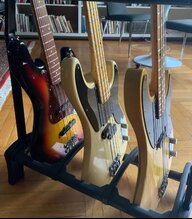
I use them as well but the LaBella may be the icing on the cake on the Motown R&B field
Good call.
Last edited:

TalkBass has been independent since 1998. Add your voice.
Create a free account to reply to discussions, view embedded media, and browse with fewer display ads.
Join free Log in
Want zero display ads or expanded classifieds tools? Compare plans.
I use them as well but the LaBella may be the icing on the cake on the Motown R&B field

Easy answer .. Fender Custom Shop Pino Palladino Precision bass strung with LaBella DTF 760 FL flatwound strings

How does it do with fret noise and hum?


P bass! Hands down!Hi again ladies and gents. I am a musician that did at one point do a lot of gigging but I find myself now doing almost all studio recordings and songwriting. I finally upgraded and got the Fender Strat that I always wanted and my studio recordings are definitely much better. Now, I want to upgrade my bass. Since I was never a regular bass player I never put any money into that other than an old 25 year old Yamaha 4 string and a cheap Harley Benton bass.
Now I want to upgrade my bass. I write mostly R&B, Soul and Country while doing some old Motown covers. What type of bass should I be looking at for recording purposes. I need something with not a lot of fret noise, thats for sure and low hum if thats possible.
Thanks
Jessie
Definitely a Pbass for what you describe, and likely flatwounds. Labella for a truly classic sound, or maybe Chromes for a more "modern" sound. As stated above a Squier P will work, and you can always upgrade the pickups. I just helped a guitar player friend set up a Squier Classic Vibe 70's precision with Lindy Fralin pickups for his studio. He was out of pocket around $600 and got a bass that records great. Totally legit p tone in the mix.
lol. I see. It's all good information for me though. I like to ask people who know more than I do.@jessiejs
You are never going to get a consensus like this from TalkBass on most any other subject. It’s unusual.
Hi again ladies and gents. I am a musician that did at one point do a lot of gigging but I find myself now doing almost all studio recordings and songwriting. I finally upgraded and got the Fender Strat that I always wanted and my studio recordings are definitely much better. Now, I want to upgrade my bass. Since I was never a regular bass player I never put any money into that other than an old 25 year old Yamaha 4 string and a cheap Harley Benton bass.
Now I want to upgrade my bass. I write mostly R&B, Soul and Country while doing some old Motown covers. What type of bass should I be looking at for recording purposes. I need something with not a lot of fret noise, thats for sure and low hum if thats possible.
Thanks
Jessie

+1A PBass is a good choice.
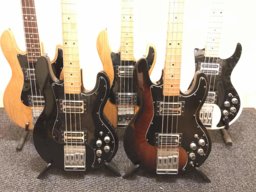
That said, my bass of choice for recording country and rock for years has been my1979 Peavey T-40 with old Pure Nickel strings. Strong, smooth-yet clear, tone that records very well, even response across it's range, minimal fret noise and no hum. It's too heavy to wear for 3 sets but I keep it just for recording.
Even had an engineer like it so much he offered to buy it!
Honestly - unless you're a session musician doing studio recordings for other people, play the bass that gives you the sound and feel that you like. Fret noise is unavoidable to a certain extent (unless you dial it out with the tone knob, but if you do that you lose clarity and tone as well); hand/finger noise is mostly a function of string choice. Hum is a function of single coils but also a function of your power supply, your location, and ambient signals; this is why noise gates exist. A lot of bass recording comes down to good technique and post-processing (gating, multi-band compression, and EQ).
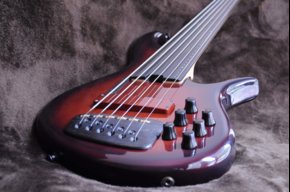
Given what you're recording, you'd probably be okay with a P/J bass of some sort for maximum versatility. In my opinion, it'll do the P thing while giving you more tonal options. You might want a five-string if you're doing R&B and soul stuff - it'll be easier to deal with flat keys, and since it's studio time you can always use a fretwrap to control string ring and harmonics if your muting technique isn't well-developed. That said, it's more important that you play something that you're comfortable with and that you like. Doesn't have to be a P/J.
If you are a session musician, on the other hand - if it were me, I'd get a really nice Jazz and a Musicman, and get a P down the line (or just keep an inexpensive one). I believe that most professional studios (and even non-professional ones) are going to have some kind of P bass on hand for recording purposes when it's needed - something that works well - but the nuances of the Jazz and other bass types are things I'd want to bring to the studio myself. I'm sure many will disagree with me, but if I were a studio musician, this is what I would do.
Hope this helps. Pay attention to recording technique and post-processing.


Hi again ladies and gents. I am a musician that did at one point do a lot of gigging but I find myself now doing almost all studio recordings and songwriting. I finally upgraded and got the Fender Strat that I always wanted and my studio recordings are definitely much better. Now, I want to upgrade my bass. Since I was never a regular bass player I never put any money into that other than an old 25 year old Yamaha 4 string and a cheap Harley Benton bass.
Now I want to upgrade my bass. I write mostly R&B, Soul and Country while doing some old Motown covers. What type of bass should I be looking at for recording purposes. I need something with not a lot of fret noise, thats for sure and low hum if thats possible.
Thanks
Jessie


