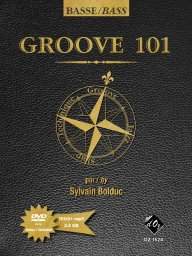
My wife bought me the Hal Leonard Complete edition, books 1,2,3 but before I get too far into it I just wanted to ask if there were any more entertaining or more effective methods out there that might make the process more efficient or just overall better.
I am going to assume you can play the bass and have done so for a while (yes I know ASS UME).
Having come from a more "classical" side of music this was a skill that I didn't always realise I had, until conducting and the players couldn't keep up.
So my secret to success - just as all of the others; practice reading, practice reading and when you have done that practice reading.
My main suggestion though would be to look at PULSES (beats) and patterns. I have done a simple line of beats, BUT the important ones are ON THE BEAT, look at all music and work that out, then if you play after or on the beat. I assumed you can play, if so, you can (usually) hear where the bass line is going, you already have the hard to learn skills of understanding chord changes, 8 bars, 12 bars etc etc.
Every piece of music, no matter what it is or the pitch or the instrument, try to work out the beats. Can you spot any patterns? Every exam I've taken the examiner has said something to the effect of " Take a moment to look at this and then play it.
So if you have a pattern that you use to sort out what you have to play you shouldn't miss out something, like key sig.
As an aside I was taught:
FLATS
Flowers, Bloom Early And, Die, Gradually, Charlie
Bloom Early And, Die, Gradually, Charlie, Flowers,
SHARPS
Good, Dogs, Always, Eat, Bones, For, Calcium,
Fran, Can't, Go, Down, An, Escalator, Backwards,
Good Luck