I am making a 4x10 bass cab for my major design project in my final year of high school. I was wondering what type of wood should i use and at what thickness? I have been told to use Mahogany or Birch Plywood but when i went down to my local joinery and they said that it would just be a waste of money seeing as though I would just be paying more for the nice finish when i'm just going to cover over it anyway. They said just to use normal plywood but i'm still not convinced.

Enjoy the benefits of a premium membership!
Upgrade Account
-
TalkBass has been independent since 1998. Add your voice.
Create a free account to reply to discussions, view embedded media, and browse with fewer display ads.
Join free Log in
Want zero display ads or expanded classifieds tools? Compare plans.
You are using an out of date browser. It may not display this or other websites correctly.
You should upgrade or use an alternative browser.
You should upgrade or use an alternative browser.
Best Wood to use for 4x10 cabnet
- Thread starter Dylan_White
- Start date
More options
Who Replied?


Void free marine grade Baltic birtch. 7/8". Thats if you really wanna do it better than good.
Otherwise dont use anything less than 3/4". Also make sure it is front loaded.
If you can find it, it will not be cheap. If you can find it aged all the better.
Otherwise dont use anything less than 3/4". Also make sure it is front loaded.
If you can find it, it will not be cheap. If you can find it aged all the better.
screw the a-holes at your local "joinery" they have no idea what they are talking about. Make a cab out of 3/4" or 7/8" void free birtch then one out of plywood, then one out of composite. Load the same speakers in them and play through them. Then tell me what you think
There will be no comparison.
One of the huge factors in how it sounds also is going to be the size, number and location of the ports you use. Plus any baffles you use and where they are placed. Thats the real sonic engineering part.
There will be no comparison.
One of the huge factors in how it sounds also is going to be the size, number and location of the ports you use. Plus any baffles you use and where they are placed. Thats the real sonic engineering part.
Void free birch is supposed to be the material of choice, from what I understand. My LDS cab was built from 3/4" Baltic birch plywood. I remember reading about marine grade plywood being a good choice, as well.
Void free birch is supposed to be the material of choice, from what I understand. My LDS cab was built from 3/4" Baltic birch plywood. I remember reading about marine grade plywood being a good choice, as well.
Marine grade is just a quality variation of the baltic birtch. Nothing sounds like birtch. I'm sure if you got into some exotic tone wood like mahogany i would sound very interesting and unique though.
My friend is a phenominal craftsman and copied my 75' HIWATT 4x12 (front loaded) to the letter. But he built it out of douglas fur 3/4" plywood as an experiment before he spent the cash on birtch. The cab Kills.
Thanks Ledyard for all your help this will really help me a lot. As i suspected, normal plywood would not do the job.
few years back I was bandless for about 2 years. In that time i switched over to guitar (always have played anyways) In that time I spent probably $15,000 on various heads, 4x12 cabs, ect ect. Searching, mixing matching gear ect. I became a real cabinet snob. As far as wood type and the tone it delivers. When it comes to bass, most cabs are made of poplar plywood or birtch. Most birtch cabs are 1/2" or 5/8". Some of the better cab companies use 3/4" birtch. My old HIWATT was 7/8". Never heard anything like that. Being aged 30 years didnt hurt it either.
Go with 3/4" marine grade baltic birtch. you wont be sorry.
Some companies list their cab wood in plys. Like bogner cabs are 13 plys in 3/4". While Orange guitar cabs are 18 ply in the same 3/4" inch.
Go with 3/4" marine grade baltic birtch. you wont be sorry.
Some companies list their cab wood in plys. Like bogner cabs are 13 plys in 3/4". While Orange guitar cabs are 18 ply in the same 3/4" inch.
Do lots of research on the size, number and location of ports. Along with the sound baffles. You can build a phenominal cab but if the sound engineering is wrong It can sound like a turd.

If you want to do something a little more challenging, you should look at one of Bill Fitzmaurice's designs. Much more interesting than the traditional square box.

Do lots of research on the size, number and location of ports. Along with the sound baffles. You can build a phenominal cab but if the sound engineering is wrong It can sound like a turd.
+1
If ledyard is really saying that the species of wood (it's birch BTW, not birtch) that the plywood is made from makes an incredible audible difference, then who am I to argue with his opinion.
It's unclear whether he's making the case for marine grade birch ply or for solid birch but, to my knowledge, all plywood is an engineered wood product made from thin veneers that are peeled from a log, then glued together under pressure with the grain oriented in opposing directions; so that any warping that could be induced by exposure to humidity is counteracted by the grain running in opposing directions in subsequent layers (wood is a cellular material and the cells it's made of will absorb water from the air and swell).
As far as I recall void free ply is made from layers of veneer that have no knots in the wood that could (and do) fall out before they get laminated into the ply sandwich (hence the void). Marine ply is a further level of quality in that it is glued with waterproof glue so that it doesn't delaminate in water like a regular construction grade would.
I would want to make the cab from the best quality material I could afford, but only for mechanical integrity. IMHO there would only be a minute difference between the audio qualities of any of this material. Compared with making sure that the cabinet is properly designed from an audio engineering perspective with due design attention being paid to the Thiele small parameters of the chosen speakers and matching the internal volume and porting of the cabinet to those speakers, any microscopic difference in sound caused by the type of ply or even solid wood is negligible.
Thickness of the chosen material is really defined by making sure that the cabinet does not resonate - you want the speakers to do that, not the cab. You can do that in two ways, you can either over engineer it with massively thick ply to get the panel stiffness where it needs to be (and end up with a massively heavy cab) or you can use thinner ply and make sure that it is well braced internally to get that stiffness.
A third option is to use a composite sandwich of composite -dense foam - composite which is incredibly stiff for its weight, but more difficult to construct for the average do-it-yourself project.
Me? I'd go for a properly audio designed cab made out of well-braced 12mm void free ply.
I'm no expert but I do know that there is far more to it that just making a box and sticking speakers into it. Although they're not 4 x 10's take a look at the fearful threads and the Bill Fitzmaurice design to see what design considerations are needed
Which Bill Fitzmaurice design would you recommend if i want to use it with a head with an output of about 200watts?
billfitzmaurice
Commercial User
- Sep 15, 2004
- 16,860
- 278
- 76
- Disclosures
- Owner, Bill Fitzmaurice Loudspeaker Design
That should be specified in the plans. If you're not working from a set of plans from a reliable source, you should be. Building a speaker cabinet is a far more involved process than just sticking a few drivers into a box.I was wondering what type of wood should i use and at what thickness?
I have been told to use Mahogany or Birch Plywood but when i went down to my local joinery and they said that it would just be a waste of money seeing as though I would just be paying more for the nice finish when i'm just going to cover over it anyway.
your local joinery may not have an appreciation for the physics involved in speaker cabinet construction. they may also recommend non-water soluble glue, which is also insufficient for high SPL speaker cabinets.
they are obviously more concerned with strength and appearance in terms of furniture, in which case building a box with normal plywood is plenty sufficient if you're covering it anyway.
if you're not following a plan (like a fitzmaurice or a fEARFUL), you should certainly be designing one intelligently, guided by resources like winISD software and the loudspeaker design cookbook by vance dickason.
robb.
As an Amazon Associate, TalkBass may receive commissions from qualifying purchases made via links on this site.

If you want to do something a little more challenging, you should look at one of Bill Fitzmaurice's designs. Much more interesting than the traditional square box.
+1
I am so stoked to start building my Omni 15. I just can't decide between Regular or tallboy. But, I have a few months to decide.
To OP: If you can get your hands on it, void free Baltic Birch is going to be your #1 choice. If you can't get your hands on it but want an inexpensive substitute the only plywood worthy is at Lowe's. Not all locations stock it but, Arauco plywood 1/2", 5 ply. It's void free and is about 1/3 the price of birch.
Don't get anything else from there and Home Depot doesn't even have it. Their 'birch' is crap, with a thin outer veneer. It's not worth it.
1/2" is going to save you on weight and you may have to brace it a little more, but it will still weigh less. My current cab is double braced at all flex points and glued and dado'ed. (I didn't build it) It's 1/2 baltic birch and has been pretty much indestructible.
Which Bill Fitzmaurice design would you recommend if i want to use it with a head with an output of about 200watts?
PA support? DI or mic'ed? Is weight an issue? How big is the venue?

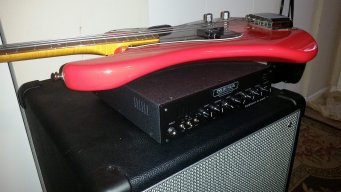
i have been running my omni 15 with a 200 watt head, deff loud and clear....but sounds better with my new carvin b1500 and 700 watts goin to it
+1
If ledyard is really saying that the species of wood (it's birch BTW, not birtch) that the plywood is made from makes an incredible audible difference, then who am I to argue with his opinion.
It's unclear whether he's making the case for marine grade birch ply or for solid birch but, to my knowledge, all plywood is an engineered wood product made from thin veneers that are peeled from a log, then glued together under pressure with the grain oriented in opposing directions; so that any warping that could be induced by exposure to humidity is counteracted by the grain running in opposing directions in subsequent layers (wood is a cellular material and the cells it's made of will absorb water from the air and swell).
As far as I recall void free ply is made from layers of veneer that have no knots in the wood that could (and do) fall out before they get laminated into the ply sandwich (hence the void). Marine ply is a further level of quality in that it is glued with waterproof glue so that it doesn't delaminate in water like a regular construction grade would.
I would want to make the cab from the best quality material I could afford, but only for mechanical integrity. IMHO there would only be a minute difference between the audio qualities of any of this material. Compared with making sure that the cabinet is properly designed from an audio engineering perspective with due design attention being paid to the Thiele small parameters of the chosen speakers and matching the internal volume and porting of the cabinet to those speakers, any microscopic difference in sound caused by the type of ply or even solid wood is negligible.
Thickness of the chosen material is really defined by making sure that the cabinet does not resonate - you want the speakers to do that, not the cab. You can do that in two ways, you can either over engineer it with massively thick ply to get the panel stiffness where it needs to be (and end up with a massively heavy cab) or you can use thinner ply and make sure that it is well braced internally to get that stiffness.
A third option is to use a composite sandwich of composite -dense foam - composite which is incredibly stiff for its weight, but more difficult to construct for the average do-it-yourself project.
Me? I'd go for a properly audio designed cab made out of well-braced 12mm void free ply.
I'm no expert but I do know that there is far more to it that just making a box and sticking speakers into it. Although they're not 4 x 10's take a look at the fearful threads and the Bill Fitzmaurice design to see what design considerations are needed
I'm making a case for birch in general being a superior wood.
There is a large difference in sound quality between BIRCH and things like POPLAR. I have spent alot of time A/B'ing cabinets to find out this very thing. Not that poplar cabs cant sound good. But birh cabs sound better.


