• TalkBass has been independent since 1998. Add your voice.
    Create a free account to reply to discussions, view embedded media, and browse with fewer display ads.
    Join freeLog in
    Want zero display ads or expanded classifieds tools? Compare plans.

Bi-amping Suggestions, Comparisons, Tips and Configurations

Hi, Over the next few weeks, I plan to post a series of videos documenting my findings as I explore different speaker combinations, amps and settings, and roundwound and flatwound strings on my stereo Stanley Clarke Brown Bass. Hearing is believing! I'll be using GK amps and speakers, Genzler Speakers , JBL speakers and as soon as I receive it, the new Phil Jones 450 lightweight combo amp used as the neck pickup cabinet. It may be the perfect combo amp to use in many situations as a stand-alone and also as my bridge pickup amp in the stereo setups. In the end, there are trade-offs in terms of size, weight, and the rooms we are playing and many more variables.

What I am working to demonstrate is that in order to hear more than just the fundamental note played, to hear the overtones and harmonics created above the fundamental, using more than a single sized speaker will enable players and audience members a greater palette of sounds than with just one speaker size. Most bass speaker cabinets contain 1 or more 15, 12” or 10” speakers but not combinations. If they do, using an internal frequency bandwidth splitter, they send highs to a smaller speaker and lows to a larger one but you don’t get to fine tune either.

Overtone” is a term generally applied to any higher-frequency standing wave, whereas the term harmonic is reserved for those cases in which the frequencies of the overtones are integral multiples of the frequency of the fundamental. Overtones or harmonics are also called resonances.

An added benefit of bi-amping using two lightweight cabinets and two heads is that it provides redundancy at gigs in the event you have issues with tube preamps or speakers or both.

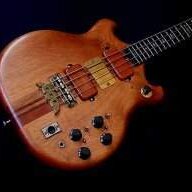
The bass I am using in this demo is a 2004 Stanley Clarke Brown Bass with Signature Electronics which are stereo output with a toggle that switches from Stereo to Mono. The Brown Basses are Walnut veneers front and back over a mahogany core and the neck is mahogany with maple stringers. The bass was strung yesterday with D’Addario 45-105 roundwound strings.Stay tuned! My first foray into creating demo and instructional videos.


Click the Youtube link below to access the video.

 
Last edited:
This probably should be moved to Amps to get more traffic. And you will get it.

Now for me, if it doesn’t come out of an SVT 810e, I don’t want it ;) But I find this a very interesting subject since I do love good sound and I get why some want extra highs and lows. Biamping is a way to do it, but with the higher end stuff like Genzler and Barefaced and the like, they do such a good job as they sit that it’s tough to improve. I think your stuff sounds good either way, stereo or mono, and you could make an argument for using either.
 
  • Like
Reactions: MattZilla
This probably should be moved to Amps to get more traffic. And you will get it.

Now for me, if it doesn’t come out of an SVT 810e, I don’t want it ;) But I find this a very interesting subject since I do love good sound and I get why some want extra highs and lows. Biamping is a way to do it, but with the higher end stuff like Genzler and Barefaced and the like, they do such a good job as they sit that it’s tough to improve. I think your stuff sounds good either way, stereo or mono, and you could make an argument for using either.

Thanks for that suggestion - was more focused on bi-amping and the setup as an electronics and sound engineering but you are right, I should move it there.
 
  • Like
Reactions: JimmyM
That Genzler cab is already crossed over like a bi-amp.
Woofer takes the lows below 800hz and above that is the linearray. They do fantastic with a full range signal sent to a full range amp and let the cab's crossover do the work with less gear.

Play both of them cabs together full range, and you will get more of the lows from the combined now two woofers and more highs with the two line arrays that are now coupled together.
You are neutering each cab that is designed for full range playback.

Bi-amp with cabs stacked that are not already full range like a Subwoofer, mid box then a high box like a PA system does or a single cab with another voiced high like Stanley does in that video. You are wasting them Genzler cab's performance.
 
  • Like
Reactions: Bassdirty
That Genzler cab is already crossed over like a bi-amp.
Woofer takes the lows below 800hz and above that is the linearray. They do fantastic with a full range signal sent to a full range amp and let the cab's crossover do the work with less gear.

Play both of them cabs together full range, and you will get more of the lows from the combined now two woofers and more highs with the two line arrays that are now coupled together.
You are neutering each cab that is designed for full range playback.

Bi-amp with cabs stacked that are not already full range like a Subwoofer, mid box then a high box like a PA system does or a single cab with another voiced high like Stanley does in that video. You are wasting them Genzler cab's performance.
Thanks - I am aware of that and plan to use bottoms without the crossover or simply unplug the array of 3 inch paper cones to defeat that for the bi-amping. Of course you can’t affect the 800 and above separately when bi-amped with the Genzler arrays connected. The mono demo above is going through both at full range but does not give as full a sound as bi-amped in my opinion. More cab videos to follow using 10” GK NEOS, Neo 12s and a JBL Cabaret E140 15.
 
... simply unplug the array of 3 inch paper cones to defeat that for the bi-amping
Careful! Some types of crossover may have a very low impedance around the crossover frequency if the high-frequency driver is simply disconnected. If you're lucky, the amp will have a protection circuit that handles this... if not, you may damage the amp.
 
I have used several biamp rigs over the years. Unless some actual engineering is put into it, you are probably better off with a good modern multi-way cab.

Take the Genzler Bass-Array you mention. It's a 2-way design. I assume the designer put a lot of thought into the drivers that were chosen, how the cab is tuned to work with the woofer, and how the crossover is implemented so the woofers and mid drivers integrate properly.

The typical biamp bass rig uses far less engineering. Usually available drivers are thrown together, rather than thoughtfully choosing combinations of drivers that will work well together to produce the desired result. Also generally a crossover is dialed in without any real understand of how to get the drivers to integrate properly or produce smooth response.

I am not saying you can't get useful results, have some fun, and maybe even learn some stuff. Rather, what I mean is really doing it right requires a fairly deep understanding and the ability measure and analyze system performance so improvements can be made.

As an example, I have some old GK 2000RB amps that can be configured to run in biamp mode. I believe the crossover has 18dB per octave filters, which AFAIK cannot produce good phase coherence through the crossover region. The only parameters you can adjust are the crossover frequency and woofer and mid/hi level. I have tried biamping the 2000RB with my GreenBoy Dually for the woofer and an SX300 for the mid/hi. I think it sounds pretty decent, but not great. It definitely sounds better than just using the just Dually or just some SX300s.

I also have sort of a 4-way lab PA set up....in other words, it's main purpose was for experiments. The processors are Klark Teknik DN9848E. This is a very powerful and sophisticated speaker processor that gives you the ability to control several important tuning parameters that are not available on basic crossovers. If you are curious, I suggest down loading the DN9848E owner's manual.

I adjusted the lab PA system by ear and have it sounding decent. Ideally I would have a measurement program like Rational Acoustics SMAART. SMAART allows you to measure frequency response and phase response. These measurements would allow me to take the system tuning to a much higher level.
 
  • Like
Reactions: Bassdirty
Is it your intention to use an electronic crossover (some might call it a type of 'frequency bandwidth splitter') to route the signals to the LF and HF amps? How will you determine what crossover frequencies to use for the various drivers. And what Q?

Edit: Now that I've looked at your video and the Stanley Clarke one, I see that what you seem to be interested in is not actually bi-amping, but something more like stereo or two-channel mono. Sending the outputs of the two pickups to two different amps isn't bi-amping to this old PA guy.
 
Last edited:
Is it your intention to use an electronic crossover (some might call it a type of 'frequency bandwidth splitter') to route the signals to the LF and HF amps? How will you determine what crossover frequencies to use for the various drivers. And what Q?

Edit: Now that I've looked at your video and the Stanley Clarke one, I see that what you seem to be interested in is not actually bi-amping, but something more like stereo or two-channel mono. Sending the outputs of the two pickups to two different amps isn't bi-amping to this old PA guy.
Yep, but IMO and IME it's arguably actually much more useful for bass guitar. ;)
 
  • Like
Reactions: JimmyM
Yep, but IMO and IME it's arguably actually much more useful for bass guitar. ;)
I'm not arguing that it isn't useful, just that it isn't biamping, in the sense that I understand it. There's already a great deal of confusion about it, if the posts and threads I read on TB are any indication, so I'm in favor of not further muddying the waters.

I always felt like the Greenboy concept begged to be biamped, but I'm an old PA guy who tried to never use passive crossovers for any purpose. I've experimented some playing bass through a 3-way JBL cab that has a cone-type mid-range driver, using my old G-K 800RB's variable crossover function. The results were encouraging enough that IF I was really interested in max-ing out performance, I think it would be worth pursuing. Unfortunately, that particular JBL cab has an E-145 LF driver; I think I could be a lot happier with an E-140 for that function. All the passive crossover functions in that JBL cab are simple HPFs -- JBL did that a lot, even on the legendary L-100/4311 control room monitors. And honestly, single-driver boxes generally have enough high-end for my purposes -- I understand that other folks might be looking for more/better HF performance and a 2-way or 3-way system would be advantageous in that pursuit.
 
I'm not arguing that it isn't useful, just that it isn't biamping, in the sense that I understand it. There's already a great deal of confusion about it, if the posts and threads I read on TB are any indication, so I'm in favor of not further muddying the waters.

I always felt like the Greenboy concept begged to be biamped, but I'm an old PA guy who tried to never use passive crossovers for any purpose. I've experimented some playing bass through a 3-way JBL cab that has a cone-type mid-range driver, using my old G-K 800RB's variable crossover function. The results were encouraging enough that IF I was really interested in max-ing out performance, I think it would be worth pursuing. Unfortunately, that particular JBL cab has an E-145 LF driver; I think I could be a lot happier with an E-140 for that function. All the passive crossover functions in that JBL cab are simple HPFs -- JBL did that a lot, even on the legendary L-100/4311 control room monitors. And honestly, single-driver boxes generally have enough high-end for my purposes -- I understand that other folks might be looking for more/better HF performance and a 2-way or 3-way system would be advantageous in that pursuit.
I'm with you on confusing nomenclature. In the filter preamp community we'd just call the OP's thing a two filter preamp with separate outputs. I do have a bass with potential similar capabilities, but since I'm no longer even playing bass for the moment I'm not sure when I'll get to finishing it. I think I'll be more likely to put the resonant LPFs in an outboard enclosure, which has worked out great for my Dojo (banjo dobro hybrid) which has separate outputs for the magnetic and piezo pickups.

FWIW, Dave Green and I both did extensive bi and tri amping experiments with fEARful cabs and some other similar cabs that came before or after that time, and the original fEARful 15/6 was originally meant for biamping. Dave was using the little QSC digital crossover appliance and I had a Rane RPM26z and later a DIY crossover based on one of the MiniDSP boards. I still have the Rane, among other things it is a great tool for spitballing crossover alignments before taking them to passive. FWIW, I've never heard a single driver cab that has anywhere near enough well dispersed high end response for my wants ands needs, but my applications tend to go well beyond just bass guitar.
 
Last edited:
Reading the few previous comments on my exploration, I think the waters are being "muddied" by the crossover remarks. I understand that Genzler cabs have crossovers in them, but in my examples I am using two separate GK amps, each being fed the full signal (no crossover) from the two separate pickups on my Alembic STEREO bass using a Stereo Cable with a Y output. No crossover is involved at that point. The treble pickup feeds one amplifier and cabinet and the bass pickup feeds the other amp and cabinet. Once I connect an envelope follower or chorus pedal to the treble pickup amplifier, I can have the bass pickup "un-effected" and the treble pickup with the effect and mix in more bass pickup to insure that the attack is not lost. It works quite well and I'll post a video of that shortly. The title should probably be modified to say bi-amping STEREO instruments.
 
I have used several biamp rigs over the years. Unless some actual engineering is put into it, you are probably better off with a good modern multi-way cab.

Take the Genzler Bass-Array you mention. It's a 2-way design. I assume the designer put a lot of thought into the drivers that were chosen, how the cab is tuned to work with the woofer, and how the crossover is implemented so the woofers and mid drivers integrate properly.

The typical biamp bass rig uses far less engineering. Usually available drivers are thrown together, rather than thoughtfully choosing combinations of drivers that will work well together to produce the desired result. Also generally a crossover is dialed in without any real understand of how to get the drivers to integrate properly or produce smooth response.

I am not saying you can't get useful results, have some fun, and maybe even learn some stuff. Rather, what I mean is really doing it right requires a fairly deep understanding and the ability measure and analyze system performance so improvements can be made.

As an example, I have some old GK 2000RB amps that can be configured to run in biamp mode. I believe the crossover has 18dB per octave filters, which AFAIK cannot produce good phase coherence through the crossover region. The only parameters you can adjust are the crossover frequency and woofer and mid/hi level. I have tried biamping the 2000RB with my GreenBoy Dually for the woofer and an SX300 for the mid/hi. I think it sounds pretty decent, but not great. It definitely sounds better than just using the just Dually or just some SX300s.

I also have sort of a 4-way lab PA set up....in other words, it's main purpose was for experiments. The processors are Klark Teknik DN9848E. This is a very powerful and sophisticated speaker processor that gives you the ability to control several important tuning parameters that are not available on basic crossovers. If you are curious, I suggest down loading the DN9848E owner's manual.

I adjusted the lab PA system by ear and have it sounding decent. Ideally I would have a measurement program like Rational Acoustics SMAART. SMAART allows you to measure frequency response and phase response. These measurements would allow me to take the system tuning to a much higher level.
Great post. I’ve had several non-engineered biamp set ups over the years, which were indeed more fun than useful in a practical sense. Today where FOH support is more and more common, it may sound great in your envelop, 15-20 feet away or more maybe not so much.

I had a few rigs back in the bar band no FOH days. I really liked the ( SVT & 100 watt Hiwatt w/412) Rick o Sound set up for one that seem to attract a lot of bassists. It was crude, lewd, rude, and extremely loud but so was the music back then. Is was also very expensive. IMO there is a cost benefit analysis that should be considered.

Truth be told, I still have the equipment to run some bi-amp rigs if I had a bent to, but for work in a 12 piece Motown review band, uh no. But in my music room?? It’s pretty cool, engineered or not.
 
  • Like
Reactions: Iristone and Wasnex
Reading the few previous comments on my exploration, I think the waters are being "muddied" by the crossover remarks...I am using two separate GK amps, each being fed the full signal (no crossover) from the two separate pickups on my Alembic STEREO bass using a Stereo Cable with a Y output.

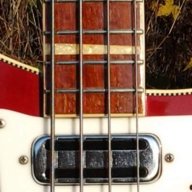
What you describe here is a different form of multi-amping. It appears to be 100% identical to Ric-O-Sound...each pickup is sent to a different amp.

The most common definition of biamping uses an active crossover to split the signal into a high and low range before it is amplified. If you don't want people talking about crossovers...DON'T USE THE TERM BIAMPING!


If you continue calling what you are doing "biamping," you will frequently need to explain what you mean. The best term for what you are doing is Ric-O-Sound.

I used Ric-O-Sound before I bought a crossover. IMHO, I got good results with Ric-O-Sound, but biamping was a better choice for me, as I wanted a really clean and articulate tone. Ric-O-Sound is better if you want to blend OD in with your clean signal.