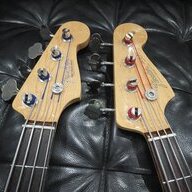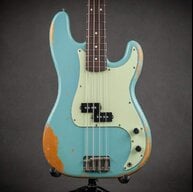
I've had to file my precision's frets back 3 times now so anyone saying that doesn't happen is nuts, that's all I have to add

TalkBass has been independent since 1998. Add your voice.
Create a free account to reply to discussions, view embedded media, and browse with fewer display ads.
Join free Log in
Want zero display ads or expanded classifieds tools? Compare plans.
Oh look! Another Fender bashing thread. Cue the same cast of characters, with the same old complaints.


If you enjoy slightly conspiratorial takes, I wouldn't be surprised at all if these bigger forums have trolls in place simply to keep engagement up. TDPRI, TGP, and Talkbass all have the same sets of debates that happen regularly. Fender, flatwounds, tonewoods, Strat vs Tele, P Bass vs Jazz.
You'd think with some of these posts! HahaBassAnon?

Fret sprout can happen on any type of wooden necks, even roasted maple. I had this problem also (Stingray).I'm trying to figure this out;
If fret sprout happens more than once or twice, wouldn't that mean the neck/fingerboards is continuing to shrink and becoming more and more narrow over time? How old are these instruments?
BTW: I just dealt with my 2nd case of (very mild) fret sprout. (The 1st was on a roasted maple neck! How is that possible?)
The latest one was on a NOS from 2019 - probably sat in a dry warehouse for the last 4 years.
I used a Norton sharpening stone and finished with micro-mesh. It turned out fantastic.

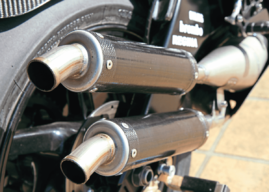
Exactly my point.I think the fender - harley davidson analogy is great (disclaimer: i am not a bike guy so some of these details could be wrong). Harley was getting killed by japanese imports and cried to daddy reagan in the early 80s to get an absurd tarriff placed on imported bikes. I guess it actually worked and they figured out that they have a core consumer base who really likes classic harley stuff and they just needed to improve quality enough for their customers to be satisfied. People have said that a lot of the more adventurous stuff that harley makes in the sport bike or electric bike space is pretty good, but guys and gals who want those generally dont bother with harleys. Fender has a similar story - they were getting killed by higher quality imports, have generally improved quality since, try non-classic stuff that people like but don't actually buy, and do a great job making classic-type stuff that their key customers enjoy
Hasn't pricing on new instruments regardless of brand or country of manufacture gone up across the board?One of my Fender gripes would have to be pricing on the MIM models. They are nice instruments, but I would hesitate to spend $1,000 or more for a new Fender made in Ensenada when I can often find a used USA model made in Corona for $900. I realize that being made in the USA doesn’t always mean the instrument is better, but I don’t think we can deny that resale value will be greater in most cases.
I was happier when a Standard MIM bass cost a little over $600. I owned one of those and it was very nice.
It's the price of the MIM Fenders relative to their declining quality. I was alluding to this in a previous post. Price vs. quality of mid-range instruments is the key Fender issue here.Hasn't pricing on new instruments regardless of brand or country of manufacture gone up across the board?
How is this a Fender issue exclusively?
I believe the instruments are actually cheaper now than 50 years ago when the value of the dollar is adjusted.
Well, lots of folks would argue that the quality of the MIM's is, in fact, not declining.It's the price of the MIM Fenders relative to their declining quality. I was alluding to this in a previous post. Price vs. quality of mid-range instruments is the key Fender issue here.
It speaks to the quality of the manufacturing since it's clear they don't dry the necks enough or use inappropriate wood.I am not sure that fret sprout can be classified as a Fender gripe, because it happens to every brand of bass. You may argue that it happens more frequently on Fenders, but I am not sure if that argument is an accurate reflection of statistical reality.
What can happen, however, is the neck expands come summer and high humidity and the frets end up being narrower than the neck, leaving notches all over the edge that you can feel. Reverse fret sprout.Fret sprout can happen on any type of wooden necks, even roasted maple. I had this problem also (Stingray).
Keep your bass in my house over winter and there will be a good chance that your bass will develop fret sprout.
Fret sprout won't persist if addressed when it happens, because wood doesn't keep shrinking past an equilibrium point.
Bummer! Some pieces of lumber should never become a bass neck.What can happen, however, is the neck expands come summer and high humidity and the frets end up being narrower than the neck, leaving notches all over the edge that you can feel. Reverse fret sprout.
Happened to me with a Vintera P bass neck. I fixed the fret sprout in April when humidity was still below 50%. In July the neck was uncomfortably prickly again due to the exposed notches. The neck was also still bowed with the truss rod relaxed. Just a nice looking but badly functioning neck. Really glad I got rid of it.
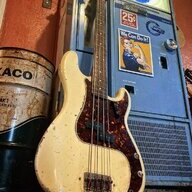
And .... Don't play it and put at home as decoration. Right ? Haha....
Real player rarely care their instrument, they need serious workhorse. Roasted maple neck and great factory fret work are main factor on my view.