Please feel free to redirct me if this has been discussed before. If playing on a rosewood fretboard sounds different than playing on a maple fretboard, wouldn't it also sound different when playing on block inlays verses playing on frets without inlays, especially with big block inlays that occupy most of the space between frets?

Enjoy the benefits of a premium membership!
Upgrade Account
-
TalkBass has been independent since 1998. Add your voice.
Create a free account to reply to discussions, view embedded media, and browse with fewer display ads.
Join free Log in
Want zero display ads or expanded classifieds tools? Compare plans.
You are using an out of date browser. It may not display this or other websites correctly.
You should upgrade or use an alternative browser.
You should upgrade or use an alternative browser.
Block Inlays
- Thread starter TerryW
- Start date
More options
Who Replied?

- Jun 30, 2010
- 49,588
- 221,960
- Disclosures
- musician/artist/owner - Gildaxe
Inlays are very thin and have no effect on the wood under it, regardless of size.Please feel free to redirct me if this has been discussed before. If playing on a rosewood fretboard sounds different than playing on a maple fretboard, wouldn't it also sound different when playing on block inlays verses playing on frets without inlays, especially with big block inlays that occupy most of the space between frets?

Turnaround
Commercial User
Perhaps a measurable effect with some very sensitive audio analysis equipment. Audible to you and me? Exceedingly unlikely.

No human ear could tell the difference. Go with what you think looks best.

I didn’t want to bias any replies, so I didn’t include my thoughts on the matter. I never really thought maple or rosewood made much difference, so I didn’t really think the inlays would either, but I was curious what other people’s experiences was.
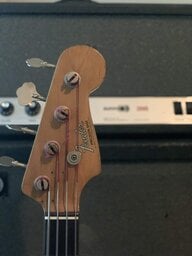
Yep 100%. That’s why cbs went to blocks and binding. You see, plastic and rubberized plastic vibrates and wiggles a whole lot. I mean, take a rubber band, and take a 2x4. Try and pluck the rubber band and then pluck the 2x4, see how the rubber band vibrates a whole lot more? That’s all of your sustain right there. It’s science, bro. In a perfect world, a bass neck would be made purely of binding and crushed pearl inlay material, with no wood in it. However CBS fender as well all know is trash and 100% of all instruments made after 1964, regardless of brand, are firewood. This is all totally true and I didn’t make any of it up. Totally


+1. Meanwhile, the general audience can't hear what black magic f*ckery the bass is even adding to the mix...No human ear could tell the difference. Go with what you think looks best.
I'm quite certain that the differences between maple and rosewood fretboards have never been discussed on Talkbass before. We should start there.
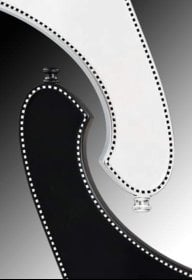
No. Unless you have the Hands of Thor, The strings should be riding on the frets, not the fingerboard. I’m sure there are some incredibly subtle sonic differences you could track electronically, but since any wood bass is effectively unique, I don’t know how you’d untangle what combination of factors resulted in which tonal difference.

the most important tonewood is between the listener's earsI'm quite certain that the differences between maple and rosewood fretboards have never been discussed on Talkbass before. We should start there.

I'm with everyone else on this. However...
I worked for Tobias/Steinberger (Gibson) in the mid nineties. They built a fretless 5 string Steinberger (XL-25?) for an upcoming NAMM show. They decided to inlay "STEINBERGER" on the fingerboard in large white mother of pearl block letters.
When the bass was played (even acoustically) you could here a noticable difference between the pearl inlays and the composite fingerboard.
I worked for Tobias/Steinberger (Gibson) in the mid nineties. They built a fretless 5 string Steinberger (XL-25?) for an upcoming NAMM show. They decided to inlay "STEINBERGER" on the fingerboard in large white mother of pearl block letters.
When the bass was played (even acoustically) you could here a noticable difference between the pearl inlays and the composite fingerboard.

- Jun 30, 2010
- 49,588
- 221,960
- Disclosures
- musician/artist/owner - Gildaxe
Well yes.., as there would be a tonal/sound difference with a fret-less fb of raw wood compared to a coated fb. But I doubt the OP's inquiry was targeted at a fret-less fb.I'm with everyone else on this. However...
I worked for Tobias/Steinberger (Gibson) in the mid nineties. They built a fretless 5 string Steinberger (XL-25?) for an upcoming NAMM show. They decided to inlay "STEINBERGER" on the fingerboard in large white mother of pearl block letters.
When the bass was played (even acoustically) you could here a noticable difference between the pearl inlays and the composite fingerboard.

Last edited:

- Jun 30, 2010
- 49,588
- 221,960
- Disclosures
- musician/artist/owner - Gildaxe
Whatever brand/luthier/DIY'rs hack-job approach to installing blocks that pic illustrates - most all block inlays are definitely not that thick. One.., they don't need to be, and two.., the point of doing it sufficiently/professionally would never require routs that deep.There's actually quite a bit more material than I thought in block inlays, one couldn't deny potential alterations in tone, miniscule as they might be.
View attachment 7165521
Last edited:
I'm just here to offer mindless trivia... My work here is done.Well yes.., as there would be a tonal/sound difference with a fret-less fb of raw wood compared to a coated fb. But I doubt the OP's inquiry was targeted at a fret-less fb.


"Somebody’s had too much to think."
(from "Ashtray Heart" by Don Van Vliet/Captain Beefheart)
- Jun 30, 2010
- 49,588
- 221,960
- Disclosures
- musician/artist/owner - Gildaxe
Well, I appreciated your post as it disclosed that you worked for Tobias/Steinberger (Gibson) in the mid nineties which I was unaware of. That's pretty damn cool!I'm just here to offer mindless trivia... My work here is done.


- Jun 30, 2010
- 49,588
- 221,960
- Disclosures
- musician/artist/owner - Gildaxe
Love all things Beefheart!
"Somebody’s had too much to think."
(from "Ashtray Heart" by Don Van Vliet/Captain Beefheart)


