• TalkBass has been independent since 1998. Add your voice.
    Create a free account to reply to discussions, view embedded media, and browse with fewer display ads.
    Join freeLog in
    Want zero display ads or expanded classifieds tools? Compare plans.

Body & Neck Woods irrelavent?

I don't buy the two similar basses with different fretboards test because there's too much room for other variables.

If anyone's serious about it, use the same bass with the same electronics with the same strings and swap necks. Then you'll have a fairly accurate idea of what the change in necks MIGHT have done as far as the tone.

Pickups that look alike don't have to be alike, and seemingly identical pickups with the same DCR can be wound and/or potted to sound very different.

I'm not saying that a maple body and a mahogany body are going to sound alike with the same parts, but if you want to know what one part does, that part needs to be introduced into the test by itself with no other changes.
 
Weeeeeeeee! This is fun!:hyper:

Seriously, I also think electronics make a big difference from the sound of different basses when you compare a jazz with stock fender pups and then the same bass, same amp etc with a set of pups from another mfr...same bass with different configurations of electronics.

The acid test would be - 2 bases, the same electronics, the same manufacturer of the bass, same model strings, same necks, fingerboards and finish etc and several of each model foor a fair overall comparison. Then the omnly variable would be the the body wood. This is also why a bass by Peavey with a Jazz pup configuration sounds different from a fender jazz, and why a Fender jazz may sound different than a Thunderbird.

I'll bet one body wood will sound different than the other. I tried this with my two jazzies. I know that was only 2 basses, but I'd bet if you expanded it out and did 7 ash bodied maple necked basses and seven alder bodied,maple neck/rosewood fingerboards it would bear out to be the same with each bass of each construction.....

And the fun part is no two pieces of alder will be axactly the same tonally...now wether or not a guy can actually tell one alder bodied, maple necked bass from another is the question. But that bass will most certainly have a different overal tone to the same note than a bass with an ash body.....This was the case with my two jazz basses. Same mfr, same electronics different bodywoods, different necks.....different sound!
 
I don't buy the two similar basses with different fretboards test because there's too much room for other variables.

If anyone's serious about it, use the same bass with the same electronics with the same strings and swap necks. Then you'll have a fairly accurate idea of what the change in necks MIGHT have done as far as the tone.

Pickups that look alike don't have to be alike, and seemingly identical pickups with the same DCR can be wound and/or potted to sound very different.

I'm not saying that a maple body and a mahogany body are going to sound alike with the same parts, but if you want to know what one part does, that part needs to be introduced into the test by itself.

I mostly had the 2 basses with the 2 different fingerboards....because I ordered one with the ebony fingerboard as an upgrade, which I'll attribute to looks. At least I'm honest. The pao fero fb was stock on the other one and the price was right.....so I got it later. That's how I found 'em and could A/B them. I didn't think the difference was as great as the bubinga/walnut to the maple/alder combo, but something was there.
 
I mostly had the 2 basses with the 2 different fingerboards....because I ordered one with the ebony fingerboard as an upgrade, which I'll attribute to looks. At least I'm honest. The pao fero fb was stock on the other one and the price was right.....so I got it later. That's how I found 'em and could A/B them. I didn't think the difference was as great as the bubinga/walnut to the maple/alder combo, but something was there.


That's sort of what I'm talking about. You can go to a store and try two different basses of the exact same model, and there'll likely be a subtle difference.
 
I can tell you Plywood has 0 sustain for those that say wood doesn't matter.

I can tell you that, at least in the case of one fretless Jazz bass I have with a plywood body, the sustain goes on forever. It's a heavy sucker, and it won't win anyone over with it's beautiful looks, but it's got very nice tone. I'd guess, although I don't know for sure, that the neck might have more to do with the tone and sustain of this bass. It's a plain old maple neck with rosewood fingerboard.
 
Yes the wood matters,

The whole instrument is big vibrating system and the stiffness and mass of the wooden body and neck affect the vibration of the strings as does the magnetic field of the pickup. Everything matters. The pickup probably has a more noticeable effect though.

Yes, this is exactly why the wood matters, as well as all the other components.
If your bass was made of rubber, those strings wouldn't make sound. The wood is entirely responsible for how the string vibrates-- something needs to hold that string in place while it vibrates. Even the subtlest difference in the density and stiffness of a wood will still affect the sound, and yes, that difference does come through the amplified sound. How much of a difference is dependent on your ear, really, and entirely up for debate.
I saw a thread comparing two Cirruses with different body woods, and the difference was noticeable. Slight, but still there.
 
Maybe on a Line6 Variax.... maybe....

A simple A/B will prove this to you. Find a music store with a couple of Fender Jazz basses and try two of the same model, one w/a rosewood board, another with just the maple neck. Have a store employee play them for you and close your eyes. I've never done this, so I can't say for sure whether I could tell or not. But it would answer your question for you.

Dave
 
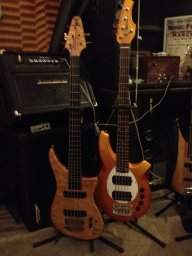
Done and done!
130-3072_IMG.jpg


130-3076_IMG.jpg


Fretted Cirrus 5ers. Everything is the same but the one from the custom shop has an ebony board. It has a shade more bite than the stock peacock blue 5, which has a slightly warmer tone. My band my band definitely wanted the warmer tone I was getting with the pao fero fingerboard for a particular recording.

Those 2 bass's in the first pic have very different maple tops and if you know plastics different pigments can have a great influence on the properties of the finish so your basses are very different in ways you've dismissed as identical. But this isn't an argument of science :)

Also you're ignoring any possible difference between a 4 & 5 string and between fretted and fretless ;) To be honest I'm not sure which basses you think are almost identical here.
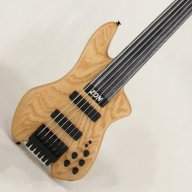
 
Again, this may have been said before, but. The woods are excited in certain frequencies, and HEY, those frequencies are subtracted from your string movement. So there is a difference. Not much, but as long as you feel you bass body vibrate against your torso, there's some change there.

I think what fenderhutz is trying to say about plywood is that it has no sustain, not that a bass made of it would have none. Ritter has made a very nice plywood bass that im sure works fine. It's also completely possible to build a stiff rubber bass that works, i think.
 

Latest posts