
Enjoy the benefits of a premium membership!
Upgrade Account
-
TalkBass has been independent since 1998. Add your voice.
Create a free account to reply to discussions, view embedded media, and browse with fewer display ads.
Join free Log in
Want zero display ads or expanded classifieds tools? Compare plans.
You are using an out of date browser. It may not display this or other websites correctly.
You should upgrade or use an alternative browser.
You should upgrade or use an alternative browser.
Boss TU-30 Tuner
- Thread starter Bisheri
- Start date
More options
Who Replied?

that doesn't answer your question, but a Strobostomp HD can display the octave and is pretty darn accurate.


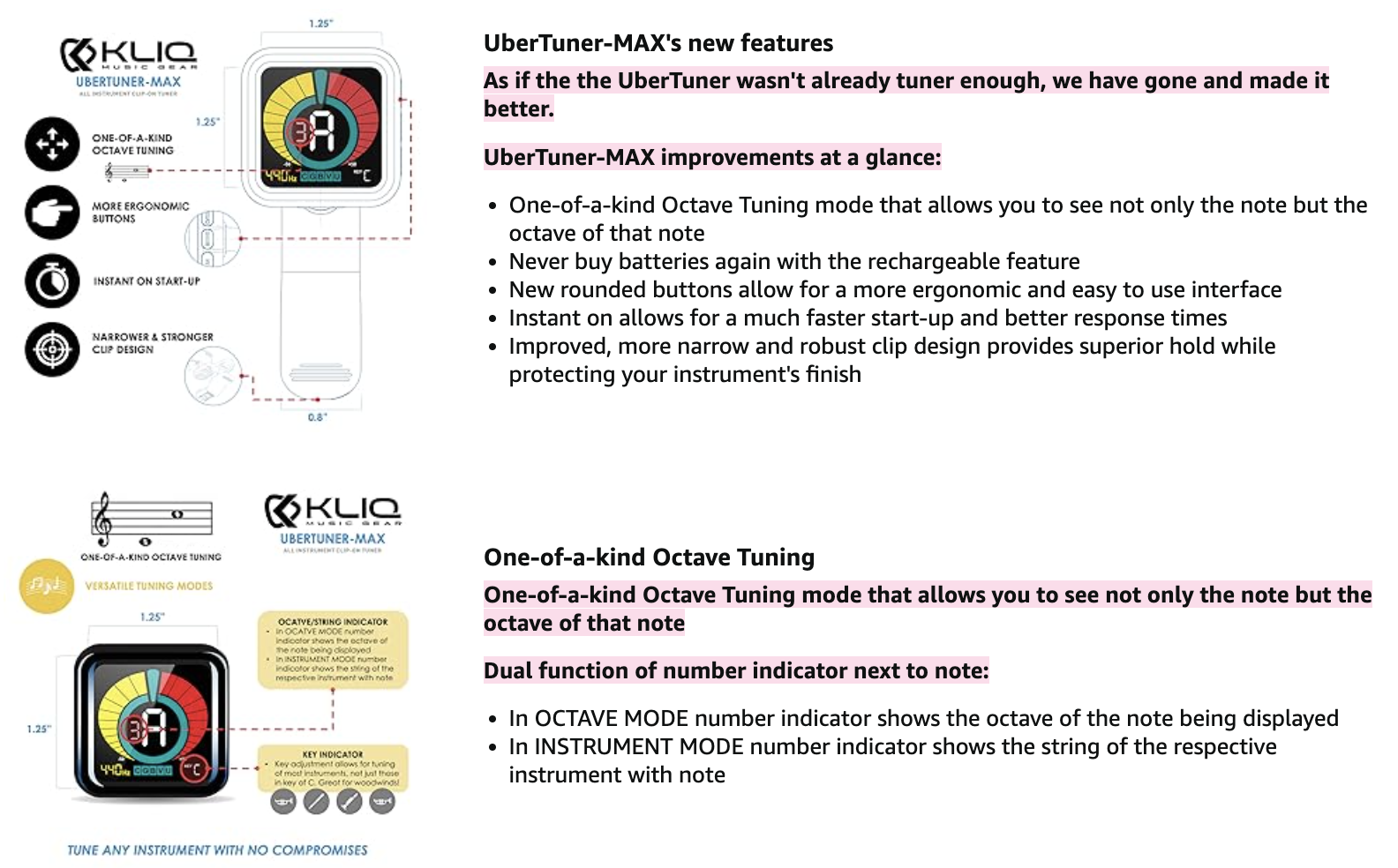
KLIQ's USB-rechargeable clip-on UberTuner-Max is $24.30 w/ clippable coupon at Amazon or $24 direct from Cliq (~ half the price of the Boss) and has an Octave function.

 www.kliqmusicgear.com
KLIQ UberTuner-MAX - Clip-On Tuner for All Instruments with Octave Tuning
Details Specifications Shipping Tired of underperforming clip-on tuners? So were we... Introducing the UberTuner-MAX ONE-OF-A- KIND OCTAVE-TUNING: If you want to make sure you are in the right octave and you have the right now, the UberTuner-MAX is for you. Turn it on, clip it on, and you're...
www.kliqmusicgear.com

I need a tuner which shows the octave along with the note
Humor me, please: *Why* do you need a tuner which shows the octave along with the note?
When adjusting intonation, I loosen the strings a lot to avoid damaging the them, until they're really loose. After adjusting intonation, in this situation where the strings are really loose, I tune up much faster when I can see the octave.Humor me, please: *Why* do you need a tuner which shows the octave along with the note?
This is especially true when setting up multiple guitars with various string tensions and it is especially beneficial when there isn't much time. For example, setting intonation for a band just before their performance.
It looks suitable, do they have a line-input version?KLIQ's USB-rechargeable clip-on UberTuner-Max is $24.30 w/ clippable coupon at Amazon or $24 direct from Cliq (~ half the price of the Boss) and has an Octave function.
View attachment 7337076
KLIQ UberTuner-MAX - Clip-On Tuner for All Instruments with Octave Tuning
Details Specifications Shipping Tired of underperforming clip-on tuners? So were we... Introducing the UberTuner-MAX ONE-OF-A- KIND OCTAVE-TUNING: If you want to make sure you are in the right octave and you have the right now, the UberTuner-MAX is for you. Turn it on, clip it on, and you're...
When adjusting intonation, I loosen the strings a lot to avoid damaging the them, until they're really loose. After adjusting intonation, in this situation where the strings are really loose, I tune up much faster when I can see the octave.
if you need very fast and very accurate, a strobe is your best bet. try one if you can to see how faster you are with that. yeah, I know, it's over budget, but really nothing comes close, especially if you need it accurate enough to set intonation.
this said, I don't loosen my strings when adjusting intonation and everything had been fine for years.

You're probably doing more "damage" to the strings with the frequent, and or drastic, loosening and tightening than with adjusting at tension or loosening slightly.
When adjusting intonation, I loosen the strings a lot to avoid damaging the them, until they're really loose. After adjusting intonation, in this situation where the strings are really loose, I tune up much faster when I can see the octave.
Is it even possible to have a guitar string get close to the desired pitch in the wrong octave?
It should be so obvious -- from tension alone, if not also the sound -- if a string is flopping around 8vb from standard tuning. I'm not sure you would even get a sound 8vb from standard! And long before you got a string cranked up 8va from standard you'd probably notice it ripping through your fingers like a cheese slicer...if it didn't just snap way before reaching that pitch.
So Anyway, I don't use the Boss TU-30 tuner, but I've played with guitarists who have it on their pedalboard.Does anyone use this tuner? I need a tuner which shows the octave along with the note, is the Boss TU-30 a good option, is it accurate?
I use a Seiko that's probably 20+ years old.
I think it still works.


I’m confused… I always have my strings tuned up to the correct tension/pitch/octave when setting the intonation with the bridge saddles (Matching harmonic to fretted note). It seems setting the intonation with the strings all loose would not work since cranking it back up to the correct pitch then changes the neck tension and thus changes the intonation.When adjusting intonation, I loosen the strings a lot to avoid damaging the them, until they're really loose. After adjusting intonation, in this situation where the strings are really loose, I tune up much faster when I can see the octave.
This is especially true when setting up multiple guitars with various string tensions and it is especially beneficial when there isn't much time. For example, setting intonation for a band just before their performance.
Sorry I don’t have an answer or suggestion for you since I’ve never paid attention to the octave when tuning my basses, or whether a tuner even indicates it. I can just feel and hear it’s the correct octave. I love the Sonic Research mini Turbo Tuner and mini Peterson Strobostomp. I don’t know if they indicate the octave, but if you’re looking for accuracy and speed in setting intonation they are the two most accurate and quick-to-respond tuner pedals out there. I wouldn’t set intonation with a Boss TU pedal because it’s not nearly as accurate as the two pedals I mentioned.
@Gluvhand I've never snapped a string when changing intonation, loosening is just a precaution. Not completely loose, like you said, just slightly loose. This results in way less friction between the string and the saddle. I don't see how loosening can be worse than not loosening.
It's a matter of speed and preference, I'm a lot faster when I can see the octave. The time saved per string adds up when you're setting up four guitars and a bassIs it even possible to have a guitar string get close to the desired pitch in the wrong octave?
It should be so obvious -- from tension alone, if not also the sound -- if a string is flopping around 8vb from standard tuning. I'm not sure you would even get a sound 8vb from standard! And long before you got a string cranked up 8va from standard you'd probably notice it ripping through your fingers like a cheese slicer...if it didn't just snap way before reaching that pitch.
I don't see how loosening can be worse than not loosening.
Frequent / drastic loosening and tightening of bass strings is more likely to cause premature wear, loss of tone, and potential damage to the strings. Excessive loosening and tightening cycles can cause fatigue in the metal winding and core which can lead to loss of elasticity and reduced string life, or reduced clarity and sustain if the structural integrity of the string is compromised. It's why you just don't see techs or musicians doing what you're doing and why everyone adjusts intonation at tension or just slightly slackened.
Not completely loose, just slightly loose. Definitely not "drastic loosening"Frequent / drastic loosening and tightening of bass strings is more likely to cause premature wear, loss of tone, and potential damage to the strings. Excessive loosening and tightening cycles can cause fatigue in the metal winding and core which can lead to loss of elasticity and reduced string life, or reduced clarity and sustain if the structural integrity of the string is compromised. It's why you just don't see techs or musicians doing what you're doing and why everyone adjusts intonation at tension or just slightly slackened.
Not completely loose, just slightly loose. Definitely not "drastic loosening"
Originally:
I loosen the strings a lot to avoid damaging the them, until they're really loose.

@FretRiff Really loose, but not completely loose. Loose enough for the saddle to move freely, but not so loose as to detatch the string from the machine head. I'm pretty sure this is recommended in many luthiery guides since I definitely didn't teach myself how to make and setup guitars. Please look it up. This is a very common point of view.
Semantics and technique aside, my question was specifically about tuners which display the octave
Semantics and technique aside, my question was specifically about tuners which display the octave

I get you want to see the octave but I do not get why you loosen the strings. Maybe just a bit - if the intonation screw is hard to turn. I learned from my luthier that it is important to have the correct size screw head to adjust intonation - if too small or too big it will be hard to turn and you can damage it as well. Octave on 6 string is B0 E1 A1 D2 G2 C3. My luthier has a cheap keyboard also and he listens to the ptches first to get inot the neighborhood -- Makes sense as he fixes basses to mandolins. He never detunes when setting intonation but he lays graphite on the nut and bridge saddles. This prevents binding which I think you are trying to avoid. The other thing that you are doing with detuning is also varying the pressure on the neck assuming they are wood and not graphite or carbon fiber.
If you are on a tight budget, get an app ( free to $3) and keep on using a regular in line tuner for accuracy. The app will get show you the octave.
If you are on a tight budget, get an app ( free to $3) and keep on using a regular in line tuner for accuracy. The app will get show you the octave.


