
Enjoy the benefits of a premium membership!
Upgrade Account
-
TalkBass has been independent since 1998. Add your voice.
Create a free account to reply to discussions, view embedded media, and browse with fewer display ads.
Join free Log in
Want zero display ads or expanded classifieds tools? Compare plans.
You are using an out of date browser. It may not display this or other websites correctly.
You should upgrade or use an alternative browser.
You should upgrade or use an alternative browser.
More options
Who Replied?

I saw something about roasted oak as a potential replacement for rosewood recently, actually. Didn't look comparably dark in the sample photos they had, though, but looked nice. Always liked oak. But I guess it sounds more like maple. I'l see if I can find the reference.
Edit: Found it, was on notreble, as @BruceWane says, steamed not roasted: Sandberg Announces Steamed Oak Fingerboards
Edit: Found it, was on notreble, as @BruceWane says, steamed not roasted: Sandberg Announces Steamed Oak Fingerboards
Last edited:

Sandberg is using "steamed" oak as a replacement for rosewood.
Don't know what exactly the "steaming" process involves. Might be the same as roasting, but I'd guess there's something more than just a heating process.
Don't know what exactly the "steaming" process involves. Might be the same as roasting, but I'd guess there's something more than just a heating process.
The example:

Yeah, I could live with that!
Yeah, I could live with that!

What is the preferred alternative to Brazilian rosewood for bassists today? What comes closest to Brazilian in color and feel?
Hello. Much more interesting to me than appearance is sound. By chance I have yet to hear any fingerboard wood that sounds like Brazilian rosewood.
Also, as far as I can tell, it has been many years since Brazilian rosewood was widely available for fingerboards.
I believe that to approximate its appearance alone, decades ago Fender and Gibson stopped using Brazilian rosewood and substituted the less expensive Indian rosewood. Thus for years now, the standard for the sound of a rosewood electric guitar fingerboard has been Indian rosewood.
But, to your point, even the look of Indian rosewood is different from Brazilian.
As for sonic alternatives, hard maple or pau ferro might be candidates. We're talking about 'least unlike' however, not a credible true replacement.

The closest replacement to Brazilian rosewood I've seen yet is roasted pau ferro. Plain unroasted pau ferro is usually more of a tan-brown in color, and is a bit heavier and harder than Brazilian. The roasting process darkens the pau ferro to pretty close to the right color, and lightens it a bit. One of my clients got several sample boards of the roasted pau ferro from his supplier, who he gets his roasted maple from. I machined the necks, including radiusing and slotting the fingerboards. It was beautiful stuff. Color, machinability, hardness, everything. I personally liked it better than most Brazilian rosewood. Pau ferro is plentiful and relatively inexpensive (in the "exotic" wood category). As some of the wood-roasting companies develop out their processes for it, we'll see more of it on the market. My guess is that it will eventually become the standard "rosewood" on higher end instruments.

I would think eventually the future is going to go more and more towards the artificial surfaces, like ebanol.
I don't know much about it and haven't tried it yet, but I have heard some glowing reviews (a friend tried a Martin guitar with a composite fretboard and raved about it!!)
I know many of us love the look, sound and feel of woods, but with improved technology, and decreasing/more protected natural woods (thus increasing price), I can't help but think that we'll be seeing more & more of these products.
Im sure this will be a lively argument in upcoming years on talkbass and beyond. I like to consider myself open minded, so I'm anxious to try one, to see how far the tech has come to sounding/feeling like the real thing...lucky for us there are still plenty of beautiful basses out there with real wood!
I don't know much about it and haven't tried it yet, but I have heard some glowing reviews (a friend tried a Martin guitar with a composite fretboard and raved about it!!)
I know many of us love the look, sound and feel of woods, but with improved technology, and decreasing/more protected natural woods (thus increasing price), I can't help but think that we'll be seeing more & more of these products.
Im sure this will be a lively argument in upcoming years on talkbass and beyond. I like to consider myself open minded, so I'm anxious to try one, to see how far the tech has come to sounding/feeling like the real thing...lucky for us there are still plenty of beautiful basses out there with real wood!

The closest replacement to Brazilian rosewood I've seen yet is roasted pau ferro. Plain unroasted pau ferro is usually more of a tan-brown in color, and is a bit heavier and harder than Brazilian.
Spector has been using plain (unroasted) pau ferro for fingerboarda for decades. To my ears, it's tonally very close to Brazilian rosewood, - maybe closer than Indian rosewood. It is a bit brighter than Brazilian, though. My guess is that it will wind up becoming the most common rosewood replacement.
I doubt synthetic fingerboards will be widely accepted any time soon. Grenadilla, a type of rosewood, has been the preferred wood for clarinets, bass clarinets and oboes forever. Stable wood blanks long enough to make those woodwinds have been in increasingly short supply since the 70's, and so the major makers (Selmer, Buffet, Yamaha and LeBlanc) have been trying to come up with a synthetic substitute for decades. So far, they've been unable to find anything that pros or serious amateurs will accept - not because of snobbery, but because nothing sounds like real wood except real wood.I would think eventually the future is going to go more and more towards the artificial surfaces, like ebanol.
Last edited:

Pbassmanca
In the pocket n' thumpy. So woody, so greasy...
Yes, agreed. The impact of the wood used for the fingerboard on the sound of the bass, is to me, the primary factor to be considered as companies consider moving away from using rosewood for finger boards.Hello. Much more interesting to me than appearance is sound. By chance I have yet to hear any fingerboard wood that sounds like Brazilian rosewood.
Also, as far as I can tell, it has been many years since Brazilian rosewood was widely available for fingerboards.
I believe that to approximate its appearance alone, decades ago Fender and Gibson stopped using Brazilian rosewood and substituted the less expensive Indian rosewood. Thus for years now, the standard for the sound of a rosewood electric guitar fingerboard has been Indian rosewood.
But, to your point, even the look of Indian rosewood is different from Brazilian.
As for sonic alternatives, hard maple or pau ferro might be candidates. We're talking about 'least unlike' however, not a credible true replacement.

EdwardofHuncote
I Still Dream of Jeannie
- Aug 21, 2013
- 6,654
- 2
- 16,425
- Disclosures
- I privately own and operate a local musical instument repair shop.

I am a big rosewood fan. I have pao ferro boards also and like them. I also have zircote board on one bass. I like it also. I guess rather then a single replacement for rosewood, there will be several woods used that offer similar look , feel, and tone to rosewood. Perhaps certain woods will respond better in controlled combinations of other hardware than others and that will help determine which gets used.

Lachlan Legge
Guest
Ebony, Pau Ferro, Maple, Oak, the list goes on. The tone difference, if any, is miniscule and it really just comes down to aesthetics. If having a dark wood is a must, then pau ferro or ebony is the best alternative.
Lachlan Legge
Guest
Plus there's also completely graphite necks, wenge and zircote to look out for. If you must have rosewood, then any bass with rosewood options will still have them now, this law only affects new guitar models created after it was put in place. So you still have rosewood if you really must have it.
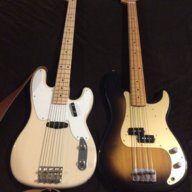
For the next 10-20 years it will likely be pau ferro. I haven't tried to stain it yet but can see no reason why it wouldn't take it.

Sadowsky put up a note that he offers morado/pau ferro, chechen, and grenadilla as alternatives to rosewood.
I've got a pair of Sadowsky Will Lee 5s, a Metro with morado and an NYC with Brazilian rosewood.. The pups and body wood are different so I can't compare the tone--but I don't perceive any difference in the feel under my fretting fingers, and actually like the look of the morado just as well.
I've got a pair of Sadowsky Will Lee 5s, a Metro with morado and an NYC with Brazilian rosewood.. The pups and body wood are different so I can't compare the tone--but I don't perceive any difference in the feel under my fretting fingers, and actually like the look of the morado just as well.

Tell that to the guy who thinks he can differentiate between different kinds of rosewood.The tone difference, if any, is miniscule and it really just comes down to aesthetics.

Lachlan Legge
Guest
We don't talk about those guysTell that to the guy who thinks he can differentiate between different kinds of rosewood.

Ebony ...Hello. Much more interesting to me than appearance is sound. By chance I have yet to hear any fingerboard wood that sounds like Brazilian rosewood.
Also, as far as I can tell, it has been many years since Brazilian rosewood was widely available for fingerboards.
I believe that to approximate its appearance alone, decades ago Fender and Gibson stopped using Brazilian rosewood and substituted the less expensive Indian rosewood. Thus for years now, the standard for the sound of a rosewood electric guitar fingerboard has been Indian rosewood.
But, to your point, even the look of Indian rosewood is different from Brazilian.
As for sonic alternatives, hard maple or pau ferro might be candidates. We're talking about 'least unlike' however, not a credible true replacement.

It is funny to read "such fretboard wood sounds like this and this other wood sounds like that" with everyone on this thread in apparent agreement that different fretboard woods have a different tone (for the record, I too hear sonic differences between fingerboard woods)
A few weeks ago, I read a thread on this exact same forum, where everyone agreed of the exact opposite. Everyone seemed to say that no tonal differences can be heard between Rosewood, Maple or whatever wood you may use.
Anyone dissenting on this thread was being humiliated and accused of being a raging and delusional lunatic. "Mob effect" right?
A few weeks ago, I read a thread on this exact same forum, where everyone agreed of the exact opposite. Everyone seemed to say that no tonal differences can be heard between Rosewood, Maple or whatever wood you may use.
Anyone dissenting on this thread was being humiliated and accused of being a raging and delusional lunatic. "Mob effect" right?


