
Enjoy the benefits of a premium membership!
Upgrade Account
-
TalkBass has been independent since 1998. Add your voice.
Create a free account to reply to discussions, view embedded media, and browse with fewer display ads.
Join free Log in
Want zero display ads or expanded classifieds tools? Compare plans.
You are using an out of date browser. It may not display this or other websites correctly.
You should upgrade or use an alternative browser.
You should upgrade or use an alternative browser.
Double Bass Broken tuning key
- Thread starter A. Munk
- Start date
More options
Who Replied?
Hi.
^This.
There's plenty of other options for DIYers, but all of them fall into: "if You have to ask, you probably don't have the tools/desire to go for it."
Regards
Sam
Remove tuner plate and bring the pieces to a jewelry repair shop ( along with $20-$50).
^This.
There's plenty of other options for DIYers, but all of them fall into: "if You have to ask, you probably don't have the tools/desire to go for it."
Regards
Sam

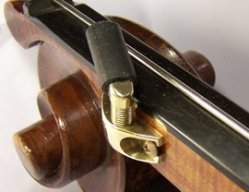
That looks like an old American Standard bass tuning machine; if so, those are rare and coveted. A jeweler will be able to silver solder that break, but it is in a very high stress area. You may need to have the rest of the broken machine removed from the shaft and cleaned up and then another button welded in. Please get it fixed properly and don't trash a set of those trying to save $5; those machines should last another 100 years and make a difference in the originality and resale of the bass....
Since this is a common issue, can you post a few after photos when you get it fixed?
j.
www.condino.com
www.kaybassrepair.com
Since this is a common issue, can you post a few after photos when you get it fixed?
j.
www.condino.com
www.kaybassrepair.com
Funny thing is that you know someone has a set of those sitting in their parts drawer; how to go about finding that person....More than once, I've bought a whole bass just for an obscure part like that. Might want to change the thread title to American Standard tuning machine for a little more visibility.
Same company; both came out of the H.N White factory. I'm working on bringing the old American Standard website back on line in the next month or two.


Turnaround
Commercial User
Shop work must be slow if you are spending your time reviving dead websites.Same company; both came out of the H.N White factory. I'm working on bringing the old American Standard website back on line in the next month or two.

Found this thread.
Thanks everyone.
http://www.talkbass.com/index.php?threads/Need-Tuning-Machines.1022896/
Thanks everyone.
http://www.talkbass.com/index.php?threads/Need-Tuning-Machines.1022896/
- Aug 1, 2005
- 3,546
- 1,421
- Disclosures
- Private Inventor - Bass Capos
Unfair! James is a specialist in these basses. As to the repair, I wouldn't touch it with the tools I have at hand, and I don't think 20 to 50 bucks will be enough. I agree with James, though. Have someone cut an entire new key from the proper metal and solder it in. James will hopefully instruct on what metal to use and maybe where to go for the work. Once you get the details in order, you can shop around for price.Shop work must be slow if you are spending your time reviving dead websites.
Munk:
Call the shop (no pms, no emails, no facetime...telephone- old school black bakelight rotary phone is even better...) so we can exchange the details and for the cost of shipping I'll send you a couple of tuner shafts that you can recycle a good working button from for the price of shipping; I've got a drawer full of them. As for the other...the shop is VERY busy; I keep a web guy on the payroll who does the other stuff for me. Resurrecting the old site is on purpose to give credit to all of the other folks over the years who have worked hard prior to me, rather than some brand new vibe.
j.
www.condino.com
www.kaybassrepair.com
Call the shop (no pms, no emails, no facetime...telephone- old school black bakelight rotary phone is even better...) so we can exchange the details and for the cost of shipping I'll send you a couple of tuner shafts that you can recycle a good working button from for the price of shipping; I've got a drawer full of them. As for the other...the shop is VERY busy; I keep a web guy on the payroll who does the other stuff for me. Resurrecting the old site is on purpose to give credit to all of the other folks over the years who have worked hard prior to me, rather than some brand new vibe.
j.
www.condino.com
www.kaybassrepair.com

Haji
Supporting Member
How many people are reading "black bakelite rotary" and have no idea what James it talking about?
Hi.
Over here at the dark side?
None I assume.
On the side of the light, 95% would be wondering if the cell phones in the past were made out of bakelite.
Regards
Sam
How many people are reading "black bakelite rotary" and have no idea what James it talking about?
Over here at the dark side?
None I assume
.On the side of the light, 95% would be wondering if the cell phones in the past were made out of bakelite.
Regards
Sam
- Aug 1, 2005
- 3,546
- 1,421
- Disclosures
- Private Inventor - Bass Capos
Hi.
Come to think of it, they probably do not .
.
The current commercial phone line network used in most countries does not AFAIK support the pulse coding used on the rotary phones.
Nothing prevents one from converting the pulses to be compatible with the current system though .
.
OTOH, when we moved here into the hicks, the phone company plainly informed us that the hard line will be gone, and that's what those effing bastards did.
No mo telephone lines for the birds to sit on.
Regards
Sam
Do rotary phones still work?
Come to think of it, they probably do not
.The current commercial phone line network used in most countries does not AFAIK support the pulse coding used on the rotary phones.
Nothing prevents one from converting the pulses to be compatible with the current system though
.OTOH, when we moved here into the hicks, the phone company plainly informed us that the hard line will be gone, and that's what those effing bastards did.
No mo telephone lines for the birds to sit on.
Regards
Sam
- Aug 1, 2005
- 3,546
- 1,421
- Disclosures
- Private Inventor - Bass Capos
I haven't had any wires besides electrical mains and the doorbell connected to my flat for years. We have a fake land line number called "home zone" which is actually a cell # but allows us to access the traditional network if we are near home. In Europe, calling a cell from land line or vice versa is expensive. I share internet costs with a neighbor and get it via Wi-Fi. No TV at home anyway, so no need for cable. Entertainment content comes from streaming services and a network of friends who buy DVDs. Advantage: No ads. My kids occasionally see an ad on Youtube and complain bitterly. That, my friends, is progress. Don't get me started on telephone books!
- Aug 1, 2005
- 3,546
- 1,421
- Disclosures
- Private Inventor - Bass Capos
James,
Just out of curiosity, how is the key plate attached, and what is it made of? I'm guessing the shaft/worm is iron and the plate maybe German silver, but the fit looks too tight to be pinned, and I see no evidence of solder. My metallurgical bone is tickling
Just out of curiosity, how is the key plate attached, and what is it made of? I'm guessing the shaft/worm is iron and the plate maybe German silver, but the fit looks too tight to be pinned, and I see no evidence of solder. My metallurgical bone is tickling

I'm not James, obviously, but:
Solder does not work the same as welding, and, if done correctly, is about as obvious as a glue-seam in wood. Solder works by adhesion, as opposed to fusion, and, provided the joint is close-fitting, and clean, there is no call for a fillet on the outside of the joint, though they are frequently present, just because it is easier to leave them there than to remove them.
Silver-solder usually is a high-temperature solder, and, technically, is a form of brazing (840 deg. F being the line of demarcation between solder and brazing filler metal melting points.)
The Tungsten carbide teeth on "carbide-tipped" tools are fastened there by "silver solder" and they stay connected, usually, even if the operator saws through a nail or worse. Strong connection!
Solder does not work the same as welding, and, if done correctly, is about as obvious as a glue-seam in wood. Solder works by adhesion, as opposed to fusion, and, provided the joint is close-fitting, and clean, there is no call for a fillet on the outside of the joint, though they are frequently present, just because it is easier to leave them there than to remove them.
Silver-solder usually is a high-temperature solder, and, technically, is a form of brazing (840 deg. F being the line of demarcation between solder and brazing filler metal melting points.)
The Tungsten carbide teeth on "carbide-tipped" tools are fastened there by "silver solder" and they stay connected, usually, even if the operator saws through a nail or worse. Strong connection!
Latest posts
-
-
 What I am finding out with regards to playing as I grow older
- Latest: Bunk McNulty
-


