• TalkBass has been independent since 1998. Add your voice.
    Create a free account to reply to discussions, view embedded media, and browse with fewer display ads.
    Join freeLog in
    Want zero display ads or expanded classifieds tools? Compare plans.

Build for maximum sustain

An old pic of me with my Kramer DMZ 5000. The sustain on this beast was insane, I swear it could last a week. Black Walnut body, ebonol fretboard and the legendary aluminum neck structure/inset.
I've got one of them too and agree.

It was, however, very heavy - got to be hard on the shoulder for me over time

For me, it was my left ankle. Every time I let go of the neck, the headstock hit my ankle hard.
 
I'm actually NOT trying to be a smartie, I have some musical ideas where long sustain would be needed. But this is probably my best solution, short of dragging a keyboard around.

EHX Freeze Angle-600x600.jpg


But I also agree that having the maximum sustain possible on the bass and muting it when not needed (as we do anyways) is ideal
 
Good quality wood and hardware. I have basses of all kinds that will sustain until next week with regular wood, regular strings, regular hardware, regular pickups. It is in the quality of the build.
 
  • Like
Reactions: lucas303
Graphite neck?

The basses I've owned that had the greatest sustain are a Steinberger L2 and a NS Radius CR5. What they both have in common is graphite...the L2 is nothing but, the Radius just has rods in the neck...and EMG pickups (not the same model, though) which are known for weakers for less interference with string vibration...whether that helps, who knows. I suspect other high-tech basses like Alembic, Ritter, Zon, Modulus, etc. might be able to meet or beat the sustain of my basses.
 
  • Like
Reactions: lucas303
I built mine with a graphite neck. It can sustain for days, but I didn't build it because of that. The reason I used graphite was stability and strength. A thinner and stronger neck. I built mine back in 2000 and haven't had to do any truss rod adjustments since. Also, temp and humidity does not affect it in any way. Always stays in tune unless a tuner gets bumped.
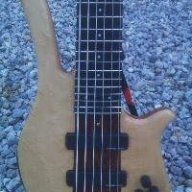
IMG_3408 (2)-682x1482.JPG
 
My graphite neck Modulus quantum has been known to do an annoying party trick where i hit the E stinger at the end of the set, carefully pop it in the stand while still ringing, ignore the mute button, and go get a beer while the sound guy gives me dirty looks.
 
In my experience composite necks offer the most sustain and the monocoque Steinberger design takes it to the limit. I have never played any bass that has such precise, even and almost endless sustain as the Steinberger L-2. As others have said, that much sustain can be a liability and it does make you change the way you play.
Exactly! Playing an L2 the first time was a humbling experience for me, every flub and sloppy note was faithfully reproduced and amplified, maybe that's unforgiving, but they made you a better player if you were willing to put the work in making them sound good. I had a similar experience with Alembics, a very "hi-fi" tone. Still, unless you are into Ambient Bass, I'm not sure why sustain is a central goal in the first place, and if it is, there are plenty of pedals that will stretch a note.
 
If you were designing a bass with the goal of maximum sustain, what would your priorities be? Graphite neck? Aluminum neck? Bolt on or neck through? Pickup type and location? Fretted or fretless? Active or passive? Other considerations...?

I would follow some Spector and G&L design specs. Neck through, flat radius, brass nut, locking bridge inset in the body or possibly with a flange like G&L.

Since sustain is a physical property - conserving string momentum, I don’t think pickup type/location, fretless/fretted, active/passive make any difference.
 
  • Like
Reactions: lucas303

Latest posts