
• TalkBass has been independent since 1998. Add your voice.
    Create a free account to reply to discussions, view embedded media, and browse with fewer display ads.
    Join freeLog in
    Want zero display ads or expanded classifieds tools? Compare plans.

Build II - Paradox MJ5 - New design!

Wow Rob, fantastic design! Very unified and thought-out looking, like you've been working on it and letting it marinate for some time. Subbed, I'm excited to see it come together!
 
Another way to have the "nut" high is to do a zero fret with a higher fret wire.

Good one, didn't think of that.

Wow Rob, fantastic design! Very unified and thought-out looking, like you've been working on it and letting it marinate for some time. Subbed, I'm excited to see it come together!

Thank you! I indeed spent a lot of time on this design, spread out over several months. Glad you like it too :).
 
One possibility for grounding would be to inlay a thin piece of brass or aluminum in the body core, under the top.
Place it so the screws that fasten the bridge will go through it, and so one end of it runs into the control cavity.

The mechanical contact between the screws and the strip should be enough to provide a decent ground connection.
Inside the cavity, either solder (with brass) or otherwise attach (screw terminal or foil w/conductive adhesive?) the strip to your chassis ground.

This has the benefit of being invisible from outside the guitar.

Also - definitely reconsider your feelings about zero frets!
In my opinion, there's really almost no reason NOT to use one.

Cheers,
Martin
 
One possibility for grounding would be to inlay a thin piece of brass or aluminum in the body core, under the top.
Place it so the screws that fasten the bridge will go through it, and so one end of it runs into the control cavity.

The mechanical contact between the screws and the strip should be enough to provide a decent ground connection.
Inside the cavity, either solder (with brass) or otherwise attach (screw terminal or foil w/conductive adhesive?) the strip to your chassis ground.

Great idea! This is going on the shortlist! :smug:

Also - definitely reconsider your feelings about zero frets!
In my opinion, there's really almost no reason NOT to use one.

I will reconsider, but I'm not sure I'm confident enough if I can pull it off... we'll see.
 
Since I'm figuring things out and mostly sourcing materials, getting price quotes and deciding on the wood, I spent the last few days making a (flat!) workbench that doubles as a very basic router table.

This is the result (without the router attached). I may stain it with transparant wood stain for protection, note sure..

Link Removed

It's 1.5" thick (high quality plywood and MDF sandwich) and it has aluminum profiles on the sides to keep it from bending. That's also the reason the legs aren't on the outer corners.. Behind the hole I routed a seat for my router, so I can basically swap the base plate of my router with this table :D. Not very easy to attach, but it works and the whole thing only cost me like 50 dollars.

Back to the bass:

The fingerboard probably is going to be Macassar Ebony (or maybe Pau Ferro but I think not). The body could be a two piece Swamp Ash, which is easy to drill the wiring channels before glueing the body halves together, but I'd rather buy a single piece for the looks. Furthermore I'm probably going to put an accent veneer between top and body.

I'm almost sure the headstock will be angled (13 degrees). I almost finished the drawing of the volute.

:)
 
Yesterday I went to a local luthier to show my first bass, ask for some criticism and give me some tips to enhance playability. I needed some advice from a professional to give me enough confidence to proceed building my next bass.

Turns out he was quite positive. Said I'm on the right track. Of course, there were some improvements to make. I knew of some points, but he gave some good tips on how to solve them.

Things I need to change are:
  • neck thickness is okay, but the profile could be more smooth towards the fingerboard edges
  • frets are beveled okay, but still have sharp edges were the bevel meets the sides of the frets - he showed me how to fix that
  • fine tuning is not perfect, distance from open string to twelfth fret sounds okay, but from open to 19th fret is off, need to correct that
  • the slots in the nut are to shallow, need to be deeper to lower the strings above the first fret - this is the main reason the action is not low enough
  • the lower body contour is located to the bridge side too much, causing the bass to neck dive while playing seated.. kind of design failure, saw that coming and I'll try to avoid it on the next one, not sure the current design does, but I will have to check when the templates are done

The neck relief and straightness is good, which made me happy because I was worried that could be the problem.

So all are very solvable issues, I can make this bass a lot better with small adjustments. Except the body design, but that's okay... I knew that and will improve my designs.
 
Some more template work in progress going on..

Link Removed

Link Removed

Invalid Link Removed

Sexy, isn't it? :D

Though I'm a bit in doubt about the neck width and fanned frets now I've got the template. The first fret on the low B seems hard to reach, and the first frets do not feel very natural, despite my modest fan (34.5" - 33"). However, the mid section feels very good. Just not sure if it's okay for me, 5 strings and fanned.. if I invest all this time and money it must be perfect, so at the moment I am rethinking the plan. Checking my options.
 
roberthabraken said:
Some more template work in progress going on..

Sexy, isn't it? :D

Though I'm a bit in doubt about the neck width and fanned frets now I've got the template. The first fret on the low B seems hard to reach, and the first frets do not feel very natural, despite my modest fan (34.5" - 33"). However, the mid section feels very good. Just not sure if it's okay for me, 5 strings and fanned.. if I invest all this time and money it must be perfect, so at the moment I am rethinking the plan. Checking my options.

FWIW, I think your shape looks like it would translate well into a non-fanned version.
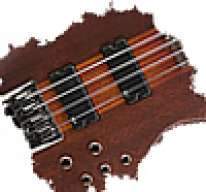
 
Even though I really like the 5, that 4-string version is quite attractive. If I saw it in a store, I'd certainly be drawn to it.

I would find it hard to believe there would be neck dive with that upper horn. Also reminds me of one of Flea's basses with the large scroll as a prominent feature...

Both are very nice. Subbed. Looking forward to seeing this done.
 
*** back to the drawing board ***

After completing the neck template I noticed it didn't feel the way I wanted, so today I tried a few different basses to make up my mind:
- Dingwall Afterburner (4 strings, fanned, banjo frets)
- Fender JB Deluxe (5 strings, larger bridge spacing, smaller radius)
- Warwick Streamer (5 strings, narrow bridge, large fb radius)

Conclusion: I don't like fanned frets as much as I thought. Also, I like the wider bridge better, gonna stay with 5 strings and I don't like banjo frets. The radius of 20" I planned is too flat and I am gonna go with a smaller (compound) radius.

Good thing is I can keep the master template for the body. I will of course store the neck template with the fanned version. Now I am going to do some redesign...

:hiding:
 
Very cool build, Rob. Personally I don't like the upper horn much (seems... baloon-y, for lack of a better term), but if it serves the purpose, so much the better.

As far as the electronics go - if I remember well the Sonar is a preamp detached from the pots (i.e. the circuit boards are not glued on the bottom of the pots). So once you get the Sonar, check which pots it uses and head over to this thread on custom concentric pots so you can make your own.
You can condense the Sonar's four controls into a three: an EQ stack, a volume and a blend. The blend is actually a two-layer pot similar to a stack, except only one knob controls both layers, so it can't be paired with the volume. EDIT: in theory, yes it can, JackANSI explained that further down the page in that thread. In theory it could work, but his prototype failed.

Apologies if you already know most of this - but I figure somebody who'll read this, won't. :smug:
 
As far as the electronics go - if I remember well the Sonar is a preamp detached from the pots (i.e. the circuit boards are not glued on the bottom of the pots). So once you get the Sonar, check which pots it uses and head over to this thread on custom concentric pots so you can make your own.
You can condense the Sonar's four controls into a three: an EQ stack, a volume and a blend. The blend is actually a two-layer pot similar to a stack, except only one knob controls both layers, so it can't be paired with the volume. EDIT: in theory, yes it can, JackANSI explained that further down the page in that thread. In theory it could work, but his prototype failed.

Apologies if you already know most of this - but I figure somebody who'll read this, won't. :smug:

Thank you for this information! I also contacted two suppliers of Delano products and they both confirmed that I can simply swap the bass and treble pot with a 50k/50k stacked bass/treble pot. Bass-Parts from Germany sells them: to this thread on custom concentric pots

As far as I know I can simply solder the wires to this one and I'm done.
 
Hey Rob,
It's definitively looking good.
I wonder what's your plan regarding:
- I had a Lakland 5502 and the coil selector switch was really neat. What do you have in mind with yours?
- Hardware color?
- Knobs color and material? (Seems like the ETS ones could fit your design... or you plan to do your own?)
 

Latest posts