see #14At some point certain instruments morphed into valuable artifacts instead of fun machines, with an artificial value that far exceeds the utility.

Enjoy the benefits of a premium membership!
Upgrade Account
-
TalkBass has been independent since 1998. Add your voice.
Create a free account to reply to discussions, view embedded media, and browse with fewer display ads.
Join free Log in
Want zero display ads or expanded classifieds tools? Compare plans.
You are using an out of date browser. It may not display this or other websites correctly.
You should upgrade or use an alternative browser.
You should upgrade or use an alternative browser.
Why are older basses "coveted"???
- Thread starter vindibona1
- Start date
More options
Who Replied?Like me?At some point certain instruments morphed into valuable artifacts instead of fun machines, with an artificial value that far exceeds the utility.
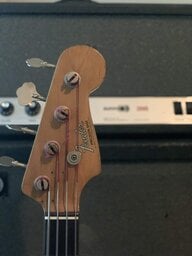
Well, if you’ve never held one, there’s nothing I can really tell you. Spend some quality time with one, like, more than just noodling in an instrument store.
They have some quirks regarding pickup even-ness and the old school radiuses. Spend over a month just playing an early 60’s Fender every day, your playing will adapt to the instrument.
If you can find a good one for a good deal you’ll know what I mean. I picked up a 65 Thunderbird for a grand last year.
They’re not all amazing, but when you find a good one… nothin like it
They have some quirks regarding pickup even-ness and the old school radiuses. Spend over a month just playing an early 60’s Fender every day, your playing will adapt to the instrument.
If you can find a good one for a good deal you’ll know what I mean. I picked up a 65 Thunderbird for a grand last year.
They’re not all amazing, but when you find a good one… nothin like it


Anything vintage or antique gains some of its value due to scarcity. There are a fixed number of them in existence and that number will only decrease over time.

The academic answer is scarcity. When demand for something exists at all, the less or fewer of that thing being available results in the price going up, as long as the demand remains constant.
Sometimes the scarcity actually increases demand, which causes the market price to increase even more sharply.
Whether price changes result in changes in demand is a concept called elasticity. Gasoline, for example, has pretty inelastic demand as we have to get places no matter how expensive the gas is. Up to a point.
Sometimes the scarcity actually increases demand, which causes the market price to increase even more sharply.
Whether price changes result in changes in demand is a concept called elasticity. Gasoline, for example, has pretty inelastic demand as we have to get places no matter how expensive the gas is. Up to a point.
There are lots of reasons I like my old basses while still appreciating my newer cheaper cousins.
>In some cases they have a feel and sound from all those years making good and occasionally bad vibrations that there is simply no substitute for.
>There is specific 'identity' in some instruments that can be from a place of pride to a point of snobbery.
>Some basses have a provenance of previous owners, over the years I have owned a bases that once belonged to a famous player currently I have a bass that belonged to Verdine White.
>My #1 bass holds precious memories of all the places, people and music I've been fortunate to play since 1982 the year I went pro for a decade.
>In some cases they have a feel and sound from all those years making good and occasionally bad vibrations that there is simply no substitute for.
>There is specific 'identity' in some instruments that can be from a place of pride to a point of snobbery.
>Some basses have a provenance of previous owners, over the years I have owned a bases that once belonged to a famous player currently I have a bass that belonged to Verdine White.
>My #1 bass holds precious memories of all the places, people and music I've been fortunate to play since 1982 the year I went pro for a decade.

I didn't it understand it, either, until the day I went to see a band and was chatting up the bassist. I asked what his P bass was, it was a 62, and I was playing an 80s Elite P at the time. He offered to let me try it and first of all it was lighter and the neck although of similar dimentions as mine just felt smoother to play.
It would be more than a decade when I came across a 62 refin for only $1549 back in 2001 and then picked up my 53 Franken P in 2005 for $1569 (both from Bass NW, RIP). Because of refins and mods, they were selling cheap, but those prices didn't last. Whether it's just the overall inflation of the last two decades or the scarcity, I see 62 refins that look like mine going for over $4000. Today, I wouldn't be able to afford that.
For those who are TLDR types, skip to the end...
As much as I liked my Elite, I did sell it off just before the pandemic but kept both the 62 and 53. I've played reissues that came really close in feel and sound to those. I had an AVRI 62J with a custom "Mary Kay" finish that had the vibe of the real thing and spent some time in a store playing one of those Noel Redding MIJ signature basses that was almost as good despite being an assembly line bass.
As far as rare stuff, I was lucky enough to eventually get 3 Steinbergers, two Pedullas, a Jerry Jones and most recently two NS Radius CR basses.
I didn't really have the $$$ to buy high end basses new, but I played as many as I could find on the wall at dealers just to see what a Tobias, Alembic, Pedulla, Steinberger, Carl Thompson, etc. was like. So when some showed up really cheap at the dawn of the 90s I started buying. I only paid $550 for my Steinberger L2 in the early 90s. Gibson was still making the XL2 at the time and it was close to $2K by then. I lucked into a fretless L2 in 1995 for a whopping $725. Finally I got a rare contoured body XM2 with no binding, $923 in 2005. Nobody wanted one at the time.
In 2008 I got a Pedulla Interceptor at GC for $945. This was like an MVP bass but with an oiled mahogany (or maybe walnut) body instead of gloss finished maple and made in very small quantities. I had never even heard of it and to top it off, mine was a custom build with 3 pickups instead of 2 and an optional Bartolini EQ similar to the Alembic filter EQ. At the time, MVPs were already over $3K I think. Around 2010 I finally got a Buzz which is what I had been jonesing for since I first tried one back in 1981. I paid $800 and took it to Mike himself for an overhaul since his shop was nearby. At the time a brand new Buzz was $4500.
I was interested in getting an NS Radius CR5 which was close to $4k at the time and lucked into a CL seller with a CR4 for $1800. I went to try it and ended up playeing it for over an hour, that's how seductive it was. Maybe 2 years later, a CR5 showed up in CL and the price was about the same. I passed because I was concerned that I wouldn't be able to sell the CR4 easily so I decided not to get it. Maybe a year later, the same bass showed upfor sale from it's current owner. I contcated him and he told me he had interest form a guy who really wanted a CR4. So we did a three way swap, I sold the CR4 and took the proceeds to buy the CR5. I think I had to kick in another $100. The current retail for a CR5 is almost $4500. They have low resale value right now because they aren't well known with no big name players using them...Steinberger and NS Design owners of today are almost like a cult. Maybe some day a used Radius will go up in price the way the L and XL basses have.
Two that I missed out on because I couldn't cough up the cash to afford a 30 day layaway: a Carl Thompson J-style fretless for only $650 in 1981 and sometime prior to 1990 an Alembic Series I with the power supply for $1000 (new ones were already more than double that). Both of those were fantastic instruments, maybe the two nicest basses I've ever played.
Short answer is you just have to treat every instrument you come across as an individual and if it speaks to you, it's worth having. If you can't afford it today, maybe the resale prices will drop in the future and you can get another one down the road. Just save your money and keep your eyes open.
It would be more than a decade when I came across a 62 refin for only $1549 back in 2001 and then picked up my 53 Franken P in 2005 for $1569 (both from Bass NW, RIP). Because of refins and mods, they were selling cheap, but those prices didn't last. Whether it's just the overall inflation of the last two decades or the scarcity, I see 62 refins that look like mine going for over $4000. Today, I wouldn't be able to afford that.
For those who are TLDR types, skip to the end...
As much as I liked my Elite, I did sell it off just before the pandemic but kept both the 62 and 53. I've played reissues that came really close in feel and sound to those. I had an AVRI 62J with a custom "Mary Kay" finish that had the vibe of the real thing and spent some time in a store playing one of those Noel Redding MIJ signature basses that was almost as good despite being an assembly line bass.
As far as rare stuff, I was lucky enough to eventually get 3 Steinbergers, two Pedullas, a Jerry Jones and most recently two NS Radius CR basses.
I didn't really have the $$$ to buy high end basses new, but I played as many as I could find on the wall at dealers just to see what a Tobias, Alembic, Pedulla, Steinberger, Carl Thompson, etc. was like. So when some showed up really cheap at the dawn of the 90s I started buying. I only paid $550 for my Steinberger L2 in the early 90s. Gibson was still making the XL2 at the time and it was close to $2K by then. I lucked into a fretless L2 in 1995 for a whopping $725. Finally I got a rare contoured body XM2 with no binding, $923 in 2005. Nobody wanted one at the time.
In 2008 I got a Pedulla Interceptor at GC for $945. This was like an MVP bass but with an oiled mahogany (or maybe walnut) body instead of gloss finished maple and made in very small quantities. I had never even heard of it and to top it off, mine was a custom build with 3 pickups instead of 2 and an optional Bartolini EQ similar to the Alembic filter EQ. At the time, MVPs were already over $3K I think. Around 2010 I finally got a Buzz which is what I had been jonesing for since I first tried one back in 1981. I paid $800 and took it to Mike himself for an overhaul since his shop was nearby. At the time a brand new Buzz was $4500.
I was interested in getting an NS Radius CR5 which was close to $4k at the time and lucked into a CL seller with a CR4 for $1800. I went to try it and ended up playeing it for over an hour, that's how seductive it was. Maybe 2 years later, a CR5 showed up in CL and the price was about the same. I passed because I was concerned that I wouldn't be able to sell the CR4 easily so I decided not to get it. Maybe a year later, the same bass showed upfor sale from it's current owner. I contcated him and he told me he had interest form a guy who really wanted a CR4. So we did a three way swap, I sold the CR4 and took the proceeds to buy the CR5. I think I had to kick in another $100. The current retail for a CR5 is almost $4500. They have low resale value right now because they aren't well known with no big name players using them...Steinberger and NS Design owners of today are almost like a cult. Maybe some day a used Radius will go up in price the way the L and XL basses have.
Two that I missed out on because I couldn't cough up the cash to afford a 30 day layaway: a Carl Thompson J-style fretless for only $650 in 1981 and sometime prior to 1990 an Alembic Series I with the power supply for $1000 (new ones were already more than double that). Both of those were fantastic instruments, maybe the two nicest basses I've ever played.
Short answer is you just have to treat every instrument you come across as an individual and if it speaks to you, it's worth having. If you can't afford it today, maybe the resale prices will drop in the future and you can get another one down the road. Just save your money and keep your eyes open.
Last edited:
What's crazy is that most of the Boomers are going to be gone by 2050. I wonder what the antique guitar and bass market will bring by then...Nostalgia, and rich Boomers with more money than sense. The technology behind making electric guitars and the art for making them has advanced since the day they were invented. Well made modern stuff is better an the old stuff.
Same here! I traded off my last Fender (from 2021) a few months ago and my last pre-2000 bass (from 1972) in 2022.All my bases were made in this century, and none are by fender, so I don’t get it either.
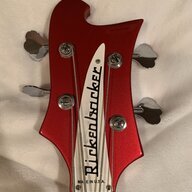
My oldest bass is from 2012. it's my Ruby Rickenbacker 4003 that I have owned since it was new. It's aging gracefully with me (not that either of us are old yet).

I don't care what it is, as long as it's workin'!It's like half these people don't know what "mojo" even is!
( It's not )

And Pokemon! what is up with that? It's just cardboard and ink.

Humans are weird. get used to it.
Humans are weird. get used to it.

some old things are valuable because they're old.
some because they have a particular character from the era they were made
some because they age well
some because the patina is charming
some because they're rare and most originals are lost over the decades
etc etc
any combination of these can do it.
some because they have a particular character from the era they were made
some because they age well
some because the patina is charming
some because they're rare and most originals are lost over the decades
etc etc
any combination of these can do it.

I think there will be some carry over, then the prices will coast down to something much more reasonable. Gen X doesn't seem to care as much about instruments. 80s stuff should have started to increase in price, and doesn't seem to have jumped to the crazy levels of the 50s, 60s and 70s stuff.What's crazy is that most of the Boomers are going to be gone by 2050. I wonder what the antique guitar and bass market will bring by then...

For me it's about having something that feels broken in, but there's also something about old things. Why do people like antique shops? Why are they interested in visiting old/historic sites?
As far as "broken in" basses, some makers do as good of a job as honest play wear, IMO. Nash, for instance, made the best feeling bass I've touched.
As far as "broken in" basses, some makers do as good of a job as honest play wear, IMO. Nash, for instance, made the best feeling bass I've touched.

Personally, I think old and vintage is more important in acoustic six string guitars and double basses than solid body basses. I've played several old Martins and Gibsons, even a D'Aquisto archtop (no double basses, though). They definitely sound richer than more modern guitars. I don't feel the same with the vintage solid body basses I've played. The ones I have played from the 60s and 70s seem to vary in weight, playability, and even tone. I have a great pbass made in 2011 and a jazz made in 2023 (both passive, both non-Fender). I wouldn't trade either for a vintage Fender. But, if you like the vintage instruments, then more power to you. Everyone has their likes and dislikes. It's what makes things so interesting.

Beats the hell out of me
I live minutes from Gruhn's, Carter Vintage, and Rumble Seat, three of the greatest vintage dealers in the world. I stick my head in the door once or twice a year, and they always have many interesting things, and for the most valuable, the prices will give your eyes sunburn.
Whatever that 'vintage mojo' must be, obviously I'm totally immune. The Gibson, Fender, and Martin classics have been in production for many years, and seriously legit reproductions would make far more sense for me if that was important to me, which it isn't. New finish, hardware, electronics, and I'm not going to lose thousands by changing a few screws.
My only interest would be axes that will never come back, say, something like a Roscoe Beck Five or neck through MIJ Yamaha BB's from the 80's
Basses are wonderful tools I take good care of, but I learned years ago there's no.magic built in at the factory, and to never get emotionally attached to things.
I live minutes from Gruhn's, Carter Vintage, and Rumble Seat, three of the greatest vintage dealers in the world. I stick my head in the door once or twice a year, and they always have many interesting things, and for the most valuable, the prices will give your eyes sunburn.
Whatever that 'vintage mojo' must be, obviously I'm totally immune. The Gibson, Fender, and Martin classics have been in production for many years, and seriously legit reproductions would make far more sense for me if that was important to me, which it isn't. New finish, hardware, electronics, and I'm not going to lose thousands by changing a few screws.
My only interest would be axes that will never come back, say, something like a Roscoe Beck Five or neck through MIJ Yamaha BB's from the 80's
Basses are wonderful tools I take good care of, but I learned years ago there's no.magic built in at the factory, and to never get emotionally attached to things.
Well, it's nice to have 30 - 40 years on the wood and have everything well stabilized, but other than that, or having some rare woods that you cannot get now, no big deal to old age.
One thing - - basses age far better than most of the guys who play them.
One thing - - basses age far better than most of the guys who play them.
The only good answer I can give is the wood. No.... I meant the neck wood.
For me it's a "look / feel" of the neck wood and the rich "look" of the rosewood. Whereas today, the necks come in all sorts, textures, colors to imitate something pleasing to the eye (real wood already is) and I've seen some fretboards where I'd swear the rosewood looked so thin I believe I could see thru it.
Otherwise... no reason. Some are heavy as hell, beat up and never did sound good. So its a two sided coin
For me it's a "look / feel" of the neck wood and the rich "look" of the rosewood. Whereas today, the necks come in all sorts, textures, colors to imitate something pleasing to the eye (real wood already is) and I've seen some fretboards where I'd swear the rosewood looked so thin I believe I could see thru it.
Otherwise... no reason. Some are heavy as hell, beat up and never did sound good. So its a two sided coin

I was enamored with the idea of having a birth year bass. So I traded a bunch of stuff for a ‘78 Precision. Heavy, some neck dive, original PU’s gave up the ghost a couple of years ago, and replaced those with Lindy Fralins. But the neck is perfect. I haven’t touched anything with my left hand any better. I don’t baby it. It has picked up scuffs and scratches. But nothing else I’ve played feels more confident, reliable. The age is just coincidental at this point.

This. Whine about younger generations and their avocado toast or Starbucks or whatever as they buy a $8,000 bass on Reverb. No reason to think into this at all.Nostalgia, and rich Boomers with more money than sense. The technology behind making electric guitars and the art for making them has advanced since the day they were invented. Well made modern stuff is better an the old stuff.


