I wanted a new pedalboard large enough to hold all my effects, but I didn't want to break the bank. At the same time, I also had a desire to make something—anything—out of Baltic birch plywood.
I was inspired by the Diago line of pedalboards because they're basically a box with the bottom lid serving as the board. But they're expensive. So here's what I came up with:

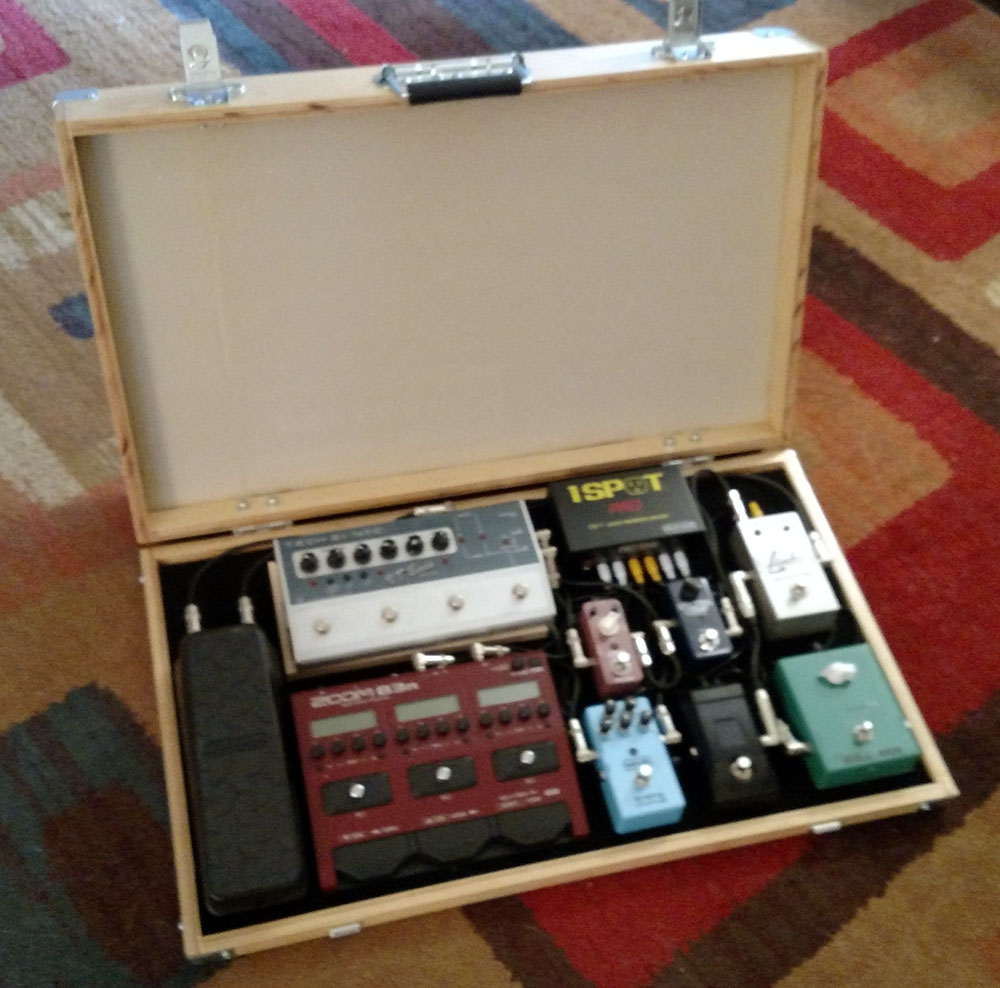
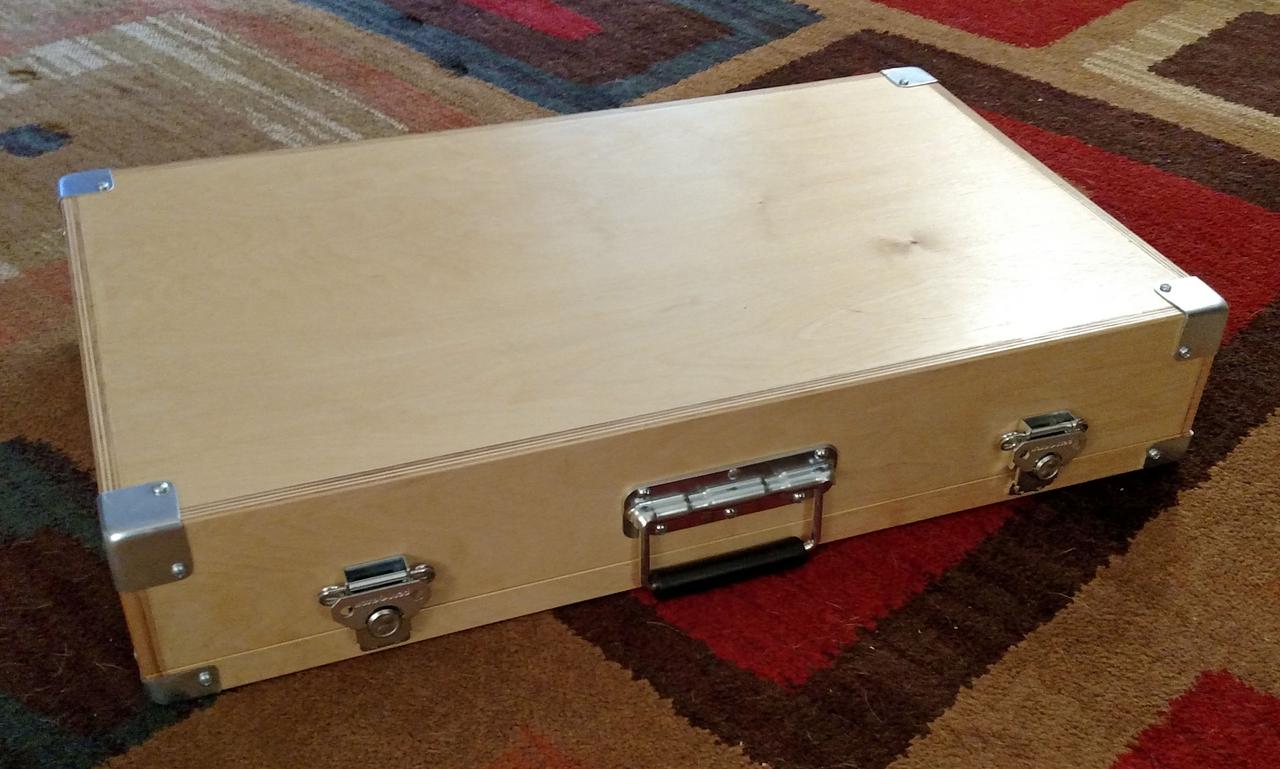
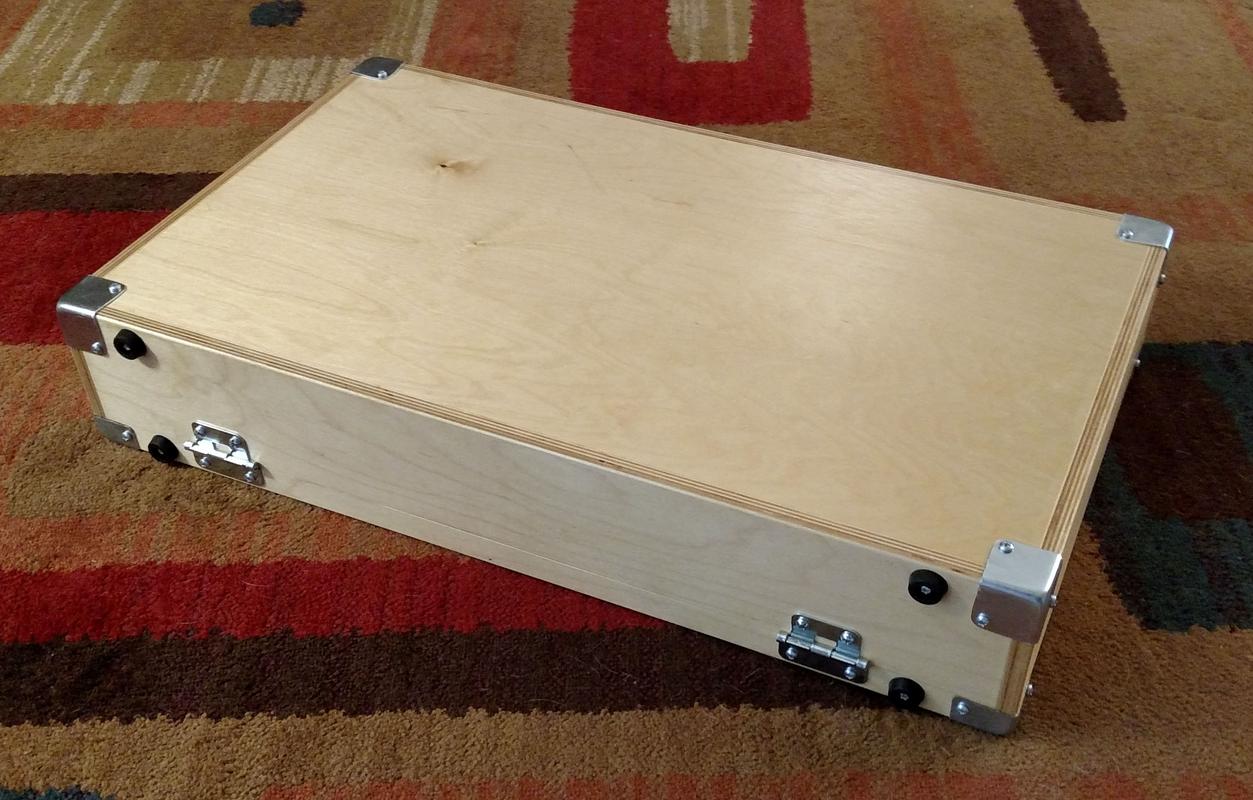
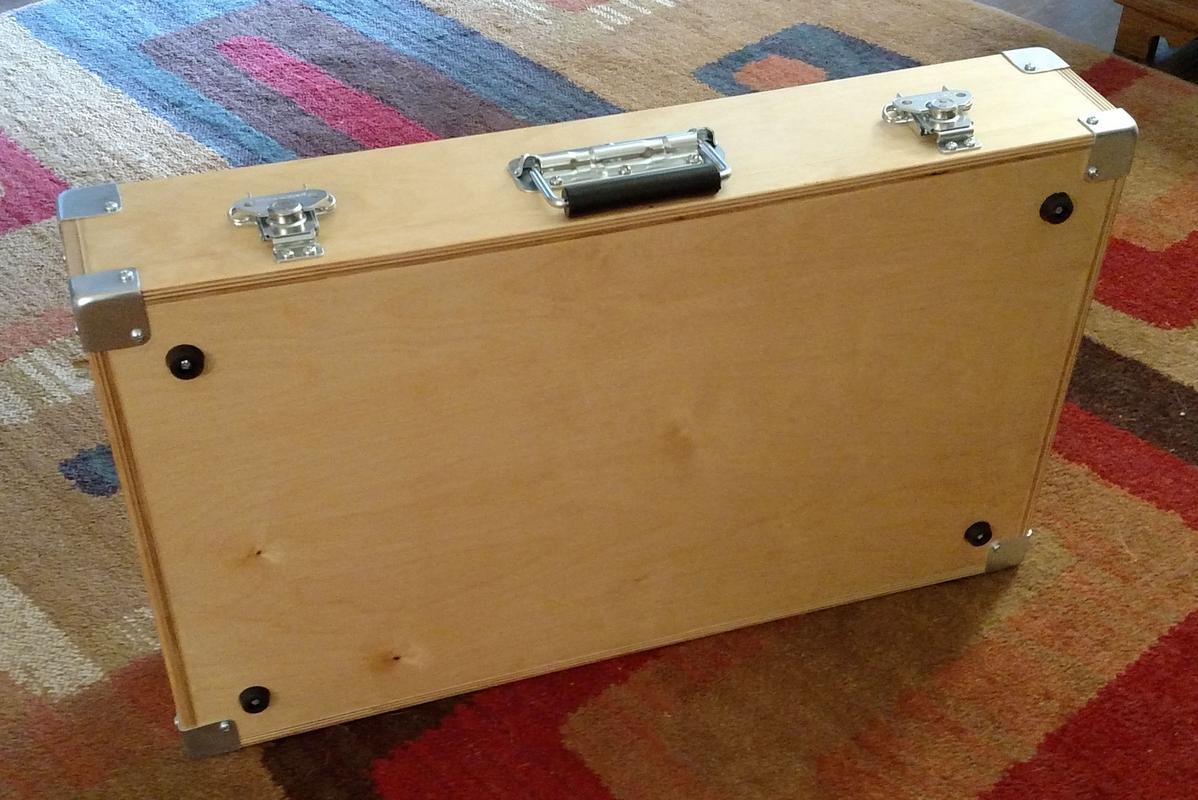
I originally thought I might cover it in tolex or something similar. But that was going to add pretty significantly to the cost, and the whole point was to make something as cheaply as possible. Then I remembered that Baltic birch plywood looks great by itself, is strong and is millable. Just a couple of coats of polyurethane would be all the finish it needs.
The plywood is from 84 Lumber, the case hardware is from DIY Road Cases, the pedalboard carpet from O'Reilly Auto Parts, the foam inside the upper lid (to keep pressure on the pedals when closed) is from a local upholstery place, and fastening hardware from Lowe's.
The total cost for materials added up to $114.02. And you can sort of lower that if you consider I have a good bit of plywood and spray adhesive left over.
I had a funny moment picking up the plywood. You'd think 84 Lumber people would know everything about every kind of wood. But as the guy was walking me back to pick it up, he told me, "You've got everyone in the building curious. None of us have ever seen a 5' x 5' sheet of anything before."
It was fairly simple to do, but it needed some patience and planning. The key was using a template routing bit to finish cutting pieces. This guaranteed a perfect edge on every piece that would result in a perfectly square box.
It's so convenient, and I couldn't be happier.
For the record, the gear inside:
I was inspired by the Diago line of pedalboards because they're basically a box with the bottom lid serving as the board. But they're expensive. So here's what I came up with:
I originally thought I might cover it in tolex or something similar. But that was going to add pretty significantly to the cost, and the whole point was to make something as cheaply as possible. Then I remembered that Baltic birch plywood looks great by itself, is strong and is millable. Just a couple of coats of polyurethane would be all the finish it needs.
The plywood is from 84 Lumber, the case hardware is from DIY Road Cases, the pedalboard carpet from O'Reilly Auto Parts, the foam inside the upper lid (to keep pressure on the pedals when closed) is from a local upholstery place, and fastening hardware from Lowe's.
The total cost for materials added up to $114.02. And you can sort of lower that if you consider I have a good bit of plywood and spray adhesive left over.
I had a funny moment picking up the plywood. You'd think 84 Lumber people would know everything about every kind of wood. But as the guy was walking me back to pick it up, he told me, "You've got everyone in the building curious. None of us have ever seen a 5' x 5' sheet of anything before."
It was fairly simple to do, but it needed some patience and planning. The key was using a template routing bit to finish cutting pieces. This guaranteed a perfect edge on every piece that would result in a perfectly square box.
It's so convenient, and I couldn't be happier.
For the record, the gear inside:
- Dunlop DVP-3 Volume (X)
- Tech 21 VT Bass Deluxe
- Zoom B3n
- Truetone 1Spot Pro CS7
- Mooer Tender Octaver
- TC Electronics SpectraComp
- Homemade A/B box - I built this so I could quickly switch between basses. The A/B switch feed two buffered outputs, one of which goes to the rest of the board, and the other goes to the tuner, which I leave always on.
- MXR Analog Chorus
- Korg Pitchblack Tuner
- Gull in a Box - I built this so I could make those David Gilmour seagull sound effects from "Echoes". Rarely used, but fun to throw in every now and then when we're doing Floyd songs.