
It only bothers me if someone is selling a bass and expects you to pay for those “upgrades” with the sale price. Even if they were upgrades that I would have made myself, I wouldn’t pay anything extra for them.

Enjoy the benefits of a premium membership!
Upgrade Account
-
TalkBass has been independent since 1998. Add your voice.
Create a free account to reply to discussions, view embedded media, and browse with fewer display ads.
Join free Log in
Want zero display ads or expanded classifieds tools? Compare plans.
You are using an out of date browser. It may not display this or other websites correctly.
You should upgrade or use an alternative browser.
You should upgrade or use an alternative browser.
Buying "upgraded" basses
- Thread starter Micha84
- Start date
More options
Who Replied?

I’m fine buying “upgraded” basses. Spector owners love to upgrade the preamps to Haz or Haz clones so finding a bass that’s already had that done is a huge plus for me. Upgraded tuners or a detuner, upgraded pups, upgraded nut, etc. all good to go.
However, I won’t pay a bunch extra for them. Most of those type upgrades are what will get me to choose that bass over a similar non-upgraded bass at a comparable price, but it’s kinda like adding rims or a nice stereo to a car or a better exhaust on a motorcycle - it really doesn’t make the car or bike more valuable.
It might make them more attractive to already come with upgrades I like, but no, I’m not gonna pay $900 for a Squier because it has new hardware and pups.
However, I won’t pay a bunch extra for them. Most of those type upgrades are what will get me to choose that bass over a similar non-upgraded bass at a comparable price, but it’s kinda like adding rims or a nice stereo to a car or a better exhaust on a motorcycle - it really doesn’t make the car or bike more valuable.
It might make them more attractive to already come with upgrades I like, but no, I’m not gonna pay $900 for a Squier because it has new hardware and pups.

Hi everybody,
inspired by the thread "Would you buy a $950 Squier Precision" I wondered: When buying a used instrument, what is your take on upgrades or modifications that have already been done?
Are you more likely to buy a "lower tier bass" if tuners or pickups have been replaced? Do you mind if somebody swapped the pickguard? How about a paint job or a changed neck?
Have you ever bought a heavily modified bass that turned out to be amazing?
I find that I avoid basses that have been modified in any way. I just don't trust the handywork behind it. I know that you can't really do damage when changing a pickguard, for example, but still. Was the soldering done right when the pickups where changed? Has the new bridge been properly aligned? There is a lot of things you can't really know unless you have the bass in your hands. I am not too great with tools myself, so if I were to discover a modification done badly I'd have to bring the bass to a shop which will increase the overall price significantly.
Apart from that, I wonder: If somebody had an instrument that he or she wasn't happy with, so they spend money and time on it, and then they are selling it... chances are that this is not going to be a great instrument.
So, what's your take?
Cheers,
Michael
Depends. I’m general I don’t buy instruments I haven’t played. The point is it doesn’t mean much to me I’d a bass is modded. The only thing I ask out of an instrument is that it is useful. That said, I wall not pay extra for basses that have been modified.

I have not and will (most likely) not buy a modded bass.
I prefer to do my own mods/builds because they are fun and particular to _my_ requirements.
I prefer to do my own mods/builds because they are fun and particular to _my_ requirements.


My initial impression on seeing a modified bass for sale: the owner discovered the hard way that a pig in lipstick is still a pig, and he's out the lipstick too.


The only upgrade I will pay a bit more like 50 bucks more are hipshots and will ding them if they use ultralites when they should be using some HB* models because the screw holes even filled degrade the value of the bass - maybe I'll forgive on a squier but they better have filled those holes up. Even if they put Delanos as pickup upgrade - unless they have the original pickups. Exception would be entry level Soundgear and Sterling by Musicman Rays.
American Fenders, any modification is a ding specially if you use EMGs. Original hardware is always a plus even if that hardware was deemed junk. But I am okay with MIJ Fenders with premium pickups because I can always get an American Fender pickup
Japanese Ibanez, Yamahas, ESPs better be all original.
Modding a bass is something I do to my bass. The moment I mod that Squier, anything I add will mean that i cannot recoup the cost if I keep it on the bass at time of resale. I am better off selling those components by themselves and off the bass.
American Fenders, any modification is a ding specially if you use EMGs. Original hardware is always a plus even if that hardware was deemed junk. But I am okay with MIJ Fenders with premium pickups because I can always get an American Fender pickup
Japanese Ibanez, Yamahas, ESPs better be all original.
Modding a bass is something I do to my bass. The moment I mod that Squier, anything I add will mean that i cannot recoup the cost if I keep it on the bass at time of resale. I am better off selling those components by themselves and off the bass.

if a bass had upgrades i might actually pay for myself, and if the original parts were included, i'd pay for the upgrades - not new prices for them, but at least good used.
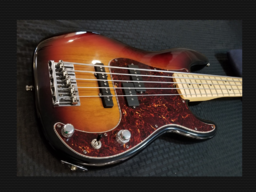
 )
)
In general I consider upgraded cheap basses to be the same or less valuable than stock, depending on if I want the upgrade. People who try to sell their modded basses for more than the cost of the stock bass brand new are insane.

D
I currently own 40+ basses. I've probably owned over 100 over the years. I have NEVER purchased a modded or "upgraded" instrument. All my basses were purchased either brand new or as used, vintage instruments in 100% original condition.
Why would I want an instrument where some amateur has messed with the electronics or spent money on a garish pickguard that makes me want to vomit?
When I buy an expensive instrument I buy it because I want THAT specific model, as close to original specs/condition as possible. Any deviations from original condition/specs will lower the value significantly.
When I buy a cheap instrument I want a decent value platform for mods. If someone has already spent lots of money on parts (which are most likely not the parts I wanted) and try to cover their losses by increasing the price the value is gone as far as I'm concerned.
Also, "upgraded" basses often means sloppy soldering jobs or worse. No thank. I not paying money to fix the problems created by a previous owner. A parts bass will only ever be as good as the person who assembled it, and unless I know that person (and his/her skill level) I'm not interested.
Why would I want an instrument where some amateur has messed with the electronics or spent money on a garish pickguard that makes me want to vomit?
When I buy an expensive instrument I buy it because I want THAT specific model, as close to original specs/condition as possible. Any deviations from original condition/specs will lower the value significantly.
When I buy a cheap instrument I want a decent value platform for mods. If someone has already spent lots of money on parts (which are most likely not the parts I wanted) and try to cover their losses by increasing the price the value is gone as far as I'm concerned.
Also, "upgraded" basses often means sloppy soldering jobs or worse. No thank. I not paying money to fix the problems created by a previous owner. A parts bass will only ever be as good as the person who assembled it, and unless I know that person (and his/her skill level) I'm not interested.


If I like what they did I have no problem with it, happy to buy it, especially if it's something I intend to do.
One of my favorite basses came "upgraded" to alnico vintage style pickups, but it was a nice price so I bought it, reverted to the original set (came with it) and sold the alnicos.
One of my favorite basses came "upgraded" to alnico vintage style pickups, but it was a nice price so I bought it, reverted to the original set (came with it) and sold the alnicos.

I will not be interested by a hobbyist moded bass without large discount, because I know that I will not have the full picture and that fails and errors can be hidden, that the mods where inspired by damages. To me it is like for car, a clean stock model will always be more attractive than one that had repairs, because you do not know what sort of crash that one survived.
The only exception would be a pro mod, or something very special, but I would not pay more than for a stock instrument.
The only exception would be a pro mod, or something very special, but I would not pay more than for a stock instrument.
The problem is when the seller thinks the value of the instrument is the original cost of buying it, plus the full retail price of the parts, plus what they paid the tech to do the mods, plus the refin/paint job, plus a new set of strings, and plus a smidge more to cover its uniquenes, their creative input, and their time.
The reality is that none of their mods and customisations add much real value at all.
The most ridiculous ones are the ersatz "road-worn" ones where the seller thinks they've added value but instead I think I'll have to factor in the cost of a refin to sort it out.
Me, I mostly do reversible upgrades, such as pickups or a drop-D tuner, so they can be reverted to stock if/when I decide to sell.
I do a lot of projects, where I buy barebones/restorations; some I'd look to sell for the equivalent of a current similar used model, whereas others I'd strip back to parts.
Some projects are just because I wanted to, eg. this Ric.

The reality is that none of their mods and customisations add much real value at all.
The most ridiculous ones are the ersatz "road-worn" ones where the seller thinks they've added value but instead I think I'll have to factor in the cost of a refin to sort it out.
Me, I mostly do reversible upgrades, such as pickups or a drop-D tuner, so they can be reverted to stock if/when I decide to sell.
I do a lot of projects, where I buy barebones/restorations; some I'd look to sell for the equivalent of a current similar used model, whereas others I'd strip back to parts.
Some projects are just because I wanted to, eg. this Ric.

I can't find a general rule here.
Some part changes can be clearly seen as upgrades.
If someone sells a FSO, a Squier for example, and had the pickups swapped from stock to something reputable (Aguilar, Nordstrand, Duncan, ESP etc.) and the Tuners swapped for Gotoh Reso-Lites, and maybe a different pickguard on there, I would consider this an upgrade and consider paying a bit more than for a stock model in the same condition.
I could also see myself buying a bass where a new pickup cavity has been routed in and the paintjob has been altered - but only if all that has been done on a very high professional level. Which is, more often than not, unlikely. It does not happen very often that you buy a bass for $450 new and then bring it to a pro to have a new pickup routed and installed and then send the body off to get a fancy coat of paint, which would each cost about as much or more as the bass would fetch on the 2nd hand market.
Some part changes can be clearly seen as upgrades.
If someone sells a FSO, a Squier for example, and had the pickups swapped from stock to something reputable (Aguilar, Nordstrand, Duncan, ESP etc.) and the Tuners swapped for Gotoh Reso-Lites, and maybe a different pickguard on there, I would consider this an upgrade and consider paying a bit more than for a stock model in the same condition.
I could also see myself buying a bass where a new pickup cavity has been routed in and the paintjob has been altered - but only if all that has been done on a very high professional level. Which is, more often than not, unlikely. It does not happen very often that you buy a bass for $450 new and then bring it to a pro to have a new pickup routed and installed and then send the body off to get a fancy coat of paint, which would each cost about as much or more as the bass would fetch on the 2nd hand market.

i'm not put off by "mods" and/or "upgrades" at all, never have been. if the instrument is/was something i want(ed) = work out a price and be done with it.what's your take?
i don't have any rules about what would constitute a fair price for an upgraded/modified ax. but if i played it, then i'd know what its value is to me.

Latest posts
-

-

-

-
 Future Impact now available!! WAS: deep impact reissue!!! interested?
- Latest: Andras Szalay
