• TalkBass has been independent since 1998. Add your voice.
    Create a free account to reply to discussions, view embedded media, and browse with fewer display ads.
    Join freeLog in
    Want zero display ads or expanded classifieds tools? Compare plans.

Can anyone comment on instruments made in Indonesia?

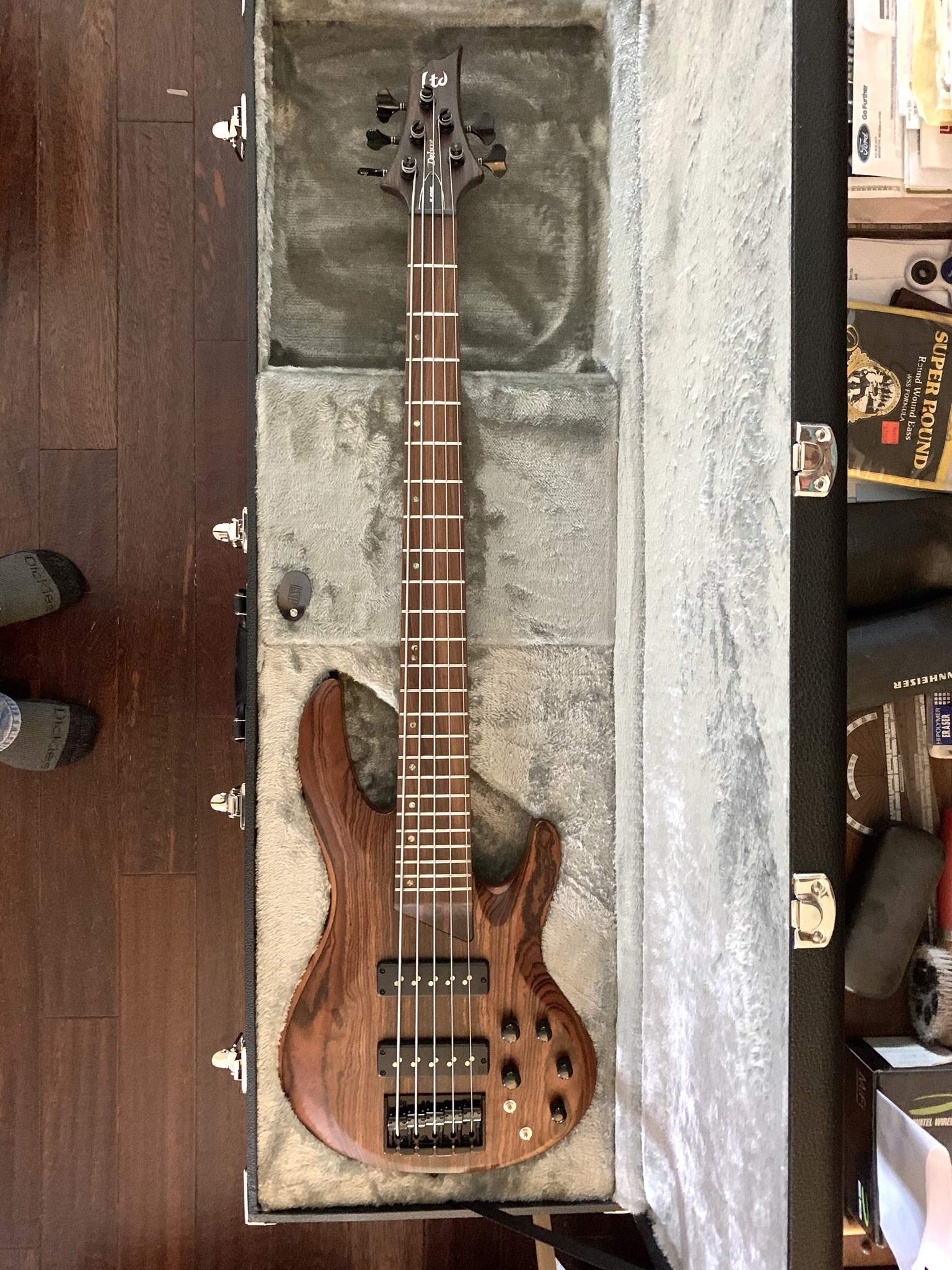
ESP LTD Deluxe B-1005. It has the nicest feeling 5 string neck I’ve ever felt. I play it every night. Made in Indonesia.
9421E052-2503-4E7E-B0DD-573D70EFCD71.jpeg
 
  • Like
Reactions: flannel cat
My experience with Indonesian built instruments is mostly Fender Squire instruments. I have played and owned a few. I have always found that the Indonesian instruments were superior to China Fender instruments. I currently own a Squire Jazz bass that is Indonesian manufactured. I love this bass. It plays and sounds better than my Fender MIA. Don't get me wrong, my MIA is a beautiful instrument. I simply find myself playing my Squire much more frequently than my MIA.
 
I have two Yamaha BBs, 434 and 435 and Lakeland Skyline long scale HB, all made in Indonesia. All three are beautifully finished and set up. Having looked at an American made HB, I loved the look of the more premium wood grain, but the workmanship seemed not better. I am very picky with instruments. There was no workmanship, playability or tone issues.
 
My experience with Indonesian built instruments is mostly Fender Squire instruments. I have played and owned a few. I have always found that the Indonesian instruments were superior to China Fender instruments. I currently own a Squire Jazz bass that is Indonesian manufactured. I love this bass. It plays and sounds better than my Fender MIA. Don't get me wrong, my MIA is a beautiful instrument. I simply find myself playing my Squire much more frequently than my MIA.


My very words, exactly.
 
No basses but I do have a G&L Legacy Tribute guitar that was made in Indonesia. Very nice, one of the best feeling “budget” instruments I’ve ever had, a little bit tricky to dial in the sounds but that’s more to do with the PTB tone system than the origin of the guitar.
 
None. Not a single one. It's years of testing, playing, and visiting music stores, and always making mental notes of place of origin.

You might as well be making mental notes of their colours. There's a huge range of instruments being made in Indonesia, at different price points and qualities. As it's already been mentioned, Lakland gets their Skylines there (at the Cort factory, I think?) and they are great instruments, for example. There are various factories too. Country of origin is a broad generalisation that doesn't really mean much these days. Same (actually even more so) with China. Some companies source a factory in China to produce cheap stuff, others require a certain level of quality... it varies. They'll all produce whatever is asked of them: they have the equipment and the ability. Yes, they're well known for being made to produce budget instruments, but they will produce good instruments when that's what they've been asked (just not at $100 final price in stores, obviously).

Forget the whole thing and just judge each instrument series for their own merits, looking at country of origin is just not very helpful these days.
 
  • Like
Reactions: superdick2112
Both my multiscale Ibanez's (the SRFF806 I just returned, and the SRMS806 I bought to replace it) have big issues at the neck/ body joint. The SRFF straight up had a fracture that went halfway through the neck depth and even into the fingerboard, while the SRMS had the fingerboard LIFTING away from the truss rod opening NEW OUT OF THE BOX, and the truss rod opening routing was clearly made at the end of a Friday shift. Made a video comparing them side by side (no playing as I have not yet learned my recording interface and needed to get the SRFF back before PayPal cancelled my claim), will link it here once it's uploaded.
I really, really wanted to love these basses, and I do- the overall tone and balance is spot on, but there just seems to be a major lack of proper design/ QC work, and these basses are not built to withstand the neck pressure of a 6 string multiscale. Hopefully the demo-model 5 string I have on the way will prove more sturdy at the joints.
 
^I'm glad I read that, because I was literally just looking at ordering either of those 2 exact basses the other day, but they were both out of stock online. I may look elsewhere or commit to buying one I can try in person.

 
^I'm glad I read that, because I was literally just looking at ordering either of those 2 exact basses the other day, but they were both out of stock online. I may look elsewhere or commit to buying one I can try in person.

Got my SRMS805 today. Gonna keep it for the foreseeable future as I love the tonal range of these (you can hop from a Warwick growl to a super muted P Bass tone to a very bright solo tone like it's nothing) and the 5 string arrangement is both more structurally more sound AND less straining on the neck. Going to devote the weekend to getting a 805 vs 806 comparison added to my earlier video. The Deep Twilight finish that isn't available on the 806 is mesmerizing, and there is no neck joint bulge to speak of.
My opinion is that the 5-string Ibanez multiscales are the only ones worth getting: 4 string doesn't benefit much from the multiscale, and the 6 string is structurally unsound due to the double whammy of having a 4 bolt pattern and only one truss rod with no graphite supports (dunno what made it stick in my mind that the SRMS806 had Kiesel style rods. It doesn't).
Still wishing Cort made an A6 Artisan SCMS with a 33.5-37" multiscale, or that Ibanez made a BTB/ SRSC MS. 33.5-35 on the EHB1506 is all kinds of "why bother".
 
I have three Indonesian Squiers (J Johnson Sig Jazz, PBass 5, and the Cont Act HH Jazz 5) and for the price they are just fine, gig-ready out of the box with a little fine-tuning if required (none for mine) and are tremendous value for the price, about $1200 total for all three. The 'piano black' finish on the Cont Jazz 5 is flawless, which is NOT easy.

They're good enough for a non-touring, no longer professional player (me!) that I wonder WHAT would move me to pay for their more expensive brothers with that 'F' on the label.
 
I've read that there is still lots of more or less primal jungle in parts of Indonesia.

Can't think of a better place to find interesting instrument wood than a jungle.

Someone mentioned centuries old tradition of high skill wood craftsmanship as well.

Paging a friend from days past @antontanzil . IIRC, Anton has an intimate knowledge of the fabrication process.

Riis
 
  • Like
Reactions: claudel
Paging a friend from days past @antontanzil . IIRC, Anton has an intimate knowledge of the fabrication process.

Riis

Hi Riis... Been way too long since the last time we chat. I hope you're doing fine.

I haven't read all the comments/replies on this thread, I'm just gonna give an opinion based on my experience. I worked a a Manager for 3+ years in a Musical Instruments factory in Indonesia, we made Guitars, Basses, Amps, PA Speakers. I supervise everything from design to the manufacturing process, and since I quit that job, I opened my own business in selling Instruments, esp. Basses and their accessories, and believe it or not, I have only one Indonesian made Bass I have been selling for the last 4 years or so, and that is the Sire Basses, been selling them since their 'Gen 1' model. So, here is a few things I can say about Indonesian made instruments, especially Basses:

-Like others have said, in the end it all depends on the price point, the more expensive, the better the build, parts, woods, quality control, etc. This is no different than any other mass produce instruments made anywhere in the world.

-Here, we have limited resources for wood, hardware, pickups, and even things like frets, strings, and the smallest parts like pickguard screws, we still have to Import them, mostly from Korea or China, woods like maple, ash or alder are from north America or Europe, we have local Mahogany and Rosewood but the quality is sometimes questionable. How about Ebony, you wonder? Our Maccassar Ebony is exclusively for Export, so we have to buy them back from outside of Indonesia, a pretty sad fact. So for the woods and parts, it's mostly not made/sourced locally. The factories here just make the Guitar/Basses itself. So the parts, woods of Instruments made in Korea, China, even Mexico (my Korean parts supplier was supplying for Fender Mexico) made instruments are the same as Indonesian ones.

-Big factories like Cort, Sire, Yamaha, Ibanez, etc uses CNC Machine, you can search on youtube for the PRS SE Factory tour, that is in Indonesia. Almost every process are done by automated machines, that's pretty much how everybody do it these days.

-For the human part of the process I can say that we are better than China, but not as good as Korea who has more experience in the business. Perhaps not speed-wise better than China, but the people who does the work like Fret dressing, Neck Joint, Sanding, Final QC and setup are more talented and has better understanding of what the instruments are made for.

So with all that being the factor of a good/bad Instrument, like any other mass produced Bass and Guitars, the variations of quality within a batch can be quite broad, you cannot say they are all good or all bad by only playing one Bass, even the Korean and Chinese made MTD Kingstons have this variation, I know because I sell them, I also sell the US made MTDs which never fails.

The variations in quality become smaller as the price increases, even within the same brand, more expensive models are more consistent in build quality, feel and sound. I think this goes not only for overseas made Instruments, even US made Fenders has this issue. Specifically for Basses, I'm a fan of two Indonesian made brands that for me is the most consistent compare to the others, they are Sire and Lakland, no surprise about the Lakland though, as they are not cheap compare to the others.

All that being said, if you wanna get 'value for money' I suggest you try them in person, even two Basses with the exact same color, etc can be very different in feel and sound, and you can find a $500 Bass that plays and sounds as good if not better than a $1000 Bass, but they are unlikely to be better than a $2000 Bass, and you certainly can't expect much from a below $400 Bass (new price) these days IME, regardless of the brand and made, though you might be really2x lucky. Yes, I'm one of those guys that believe there is an 'X' factor in an instrument.

And I just realize I haven't been active in this forum for a while :D Have a great day guys!
 
Last edited:
My impression has always been there is one single gigantic factory in Indonesia that produces all or nearly most guitars and basses which sport the "Made in Indonesia" moniker.
True or False?

Another impression is that a dozen companies or more have some series made there. I see it also as a place/factory where entirely new brand names are setup for a few runs, then rarely seen again. Presumably with some bigger corporation behind the 'project'.
Anyone know for sure?

For me the "Made in Indonesia" stamp on an instrument foretells of the world's possibly lowest quality. This is a generalization, and I'm sure is not universally applicable to every single thing made there, yet IMO, there is some truth to it. Even surpassing China as a kind of "be careful of what you are getting" type of warning.

Just in case anyone might be thinking that I'm personally ragging on Indonesia or its populous, don't.

Nope, there are several factories here, the biggest ones are Samick, Yamaha, Cort and Ibanez, they make Bass/Guitars for other brands too.

A one time OEM is very possible not just for Indonesian made; Trial and error, business decisions, budgeting, etc holds more factor than the product quality itself.

I see you wrote this in 2009, it might be worse than Made in China ones back then, but as of today, I can say Made in Indonesia ones are better thanks to machines the Chinese made LOL. The major reason for this is now they are established companies like the ones I mentioned above open their own factories in Indonesia, while China is mostly OEM, quality control is harder when it is OEM and not your own factory. I have seen worse Chinese made instruments in larger number than Indonesian ones, but again, this is due too their massive production output, cheap knockoffs, trying to make as many profit as possible, etc.
 
  • Like
Reactions: mexicant
Same people, same tools, some of the same components. That is why sonetimes you get that inexpensive bass that is fantastic and the mid range bass that does not seem 'right. Sometimes the QC is lacking. Sometimes a bass with a neck with a weird wood grain or knot will go thru. Where the $5000 bass it would not. difference ? If you moved the exact plant, exact parts, labor, etc, your Squier would cost $1000.