
• TalkBass has been independent since 1998. Add your voice.
    Create a free account to reply to discussions, view embedded media, and browse with fewer display ads.
    Join freeLog in
    Want zero display ads or expanded classifieds tools? Compare plans.

Can I use this closet as a bass trap?

See the pictures. I have acoustic treatment in the works, including homemade corner traps, but the size and shape of the room, the placement of the doors, my budget, and other things limit what I can do.

Right now the closet is full of gear, but that can be moved. The door to the closet can be removed. My requirements are not professional: recording is just for fun, and cost is a factor, but I feel I might be missing a readily exploited opportunity with the closet being there.
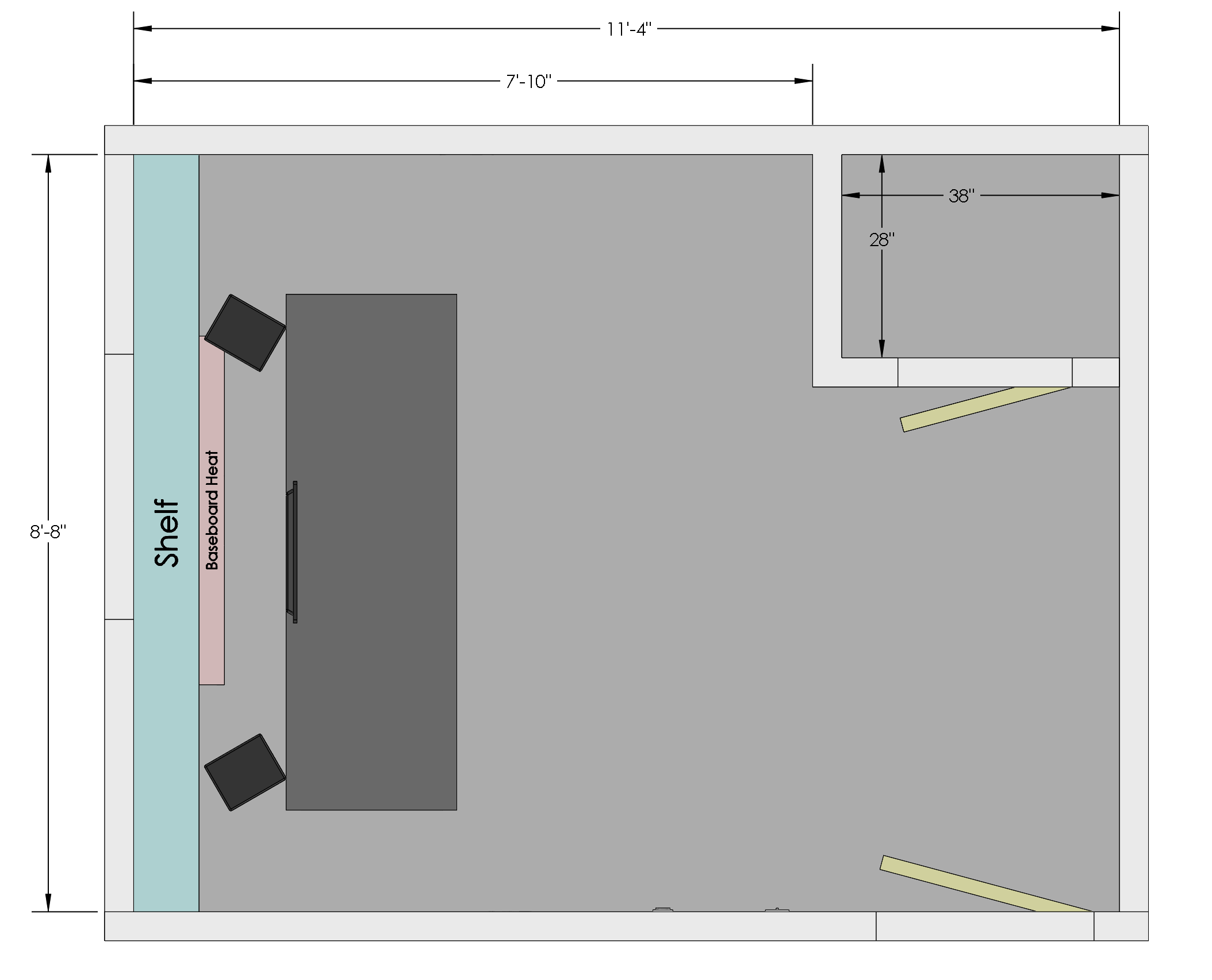
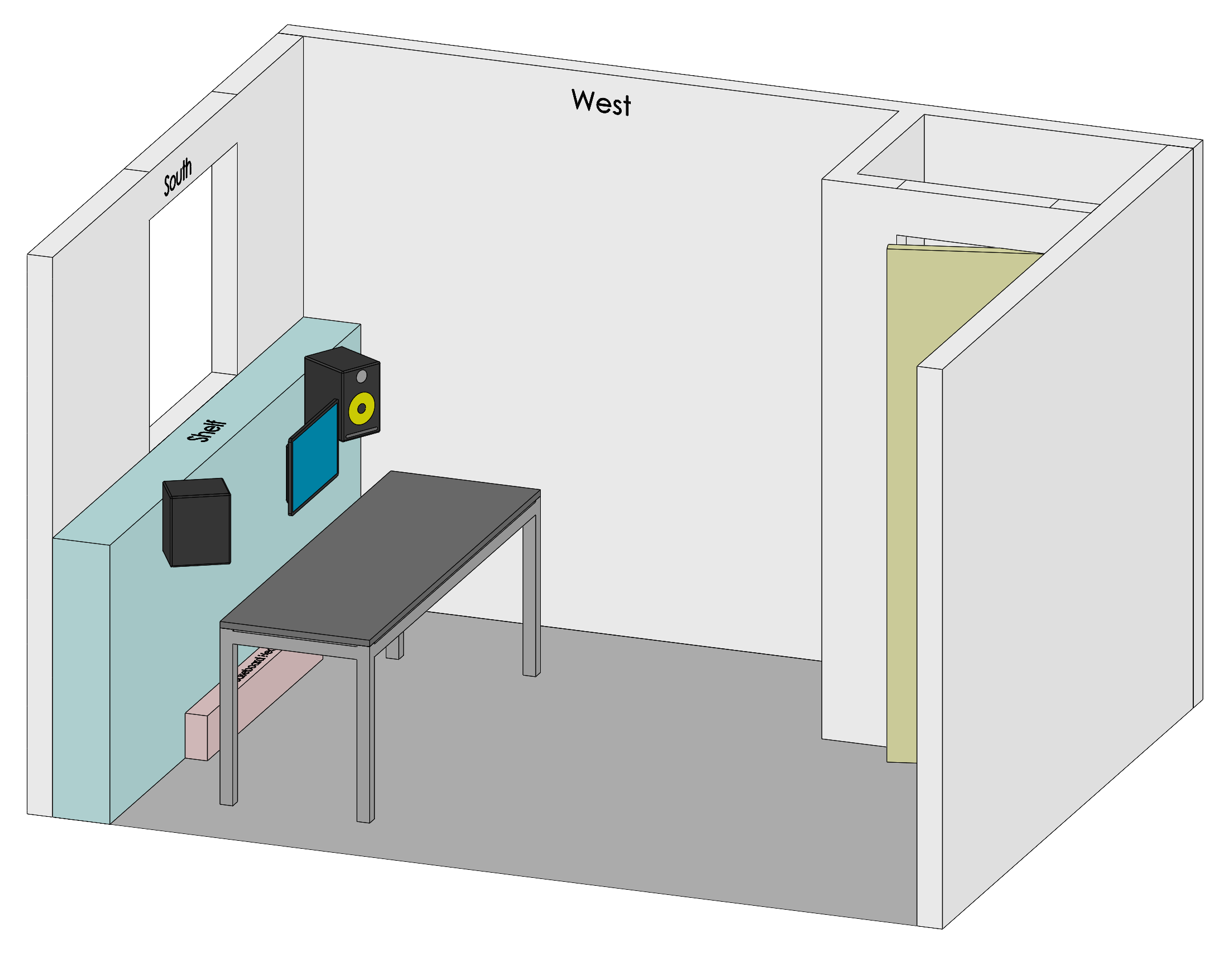
plan-view.PNG

east-wall-hidden.PNG
 
I guess you could, but it would need to be opened up vertically at it's intersection with the west and north walls, the door "sealed" off, and the closet filled with sound absorbing materials, then you'd need another one on the opposite side of the room.

If it were mine, I'd use it as an isolation booth for my speaker cabinet. Or maybe expand it to be large enough for a vocal booth. Or take it out altogether to get more floor space, and use traditional corner-placed bass traps.
 
  • Like
Reactions: DirtDog
unless you have excessive boomy bass in that room.
I see many other corners that would be more of a issue.
With small monitors I dont think you have much of a problem.

looks more useful for storage or as a vocal booth.
all in all it looks rather convenient and a fun work space

even if not a ground breaking trap. just hanging drapes in all the corners
calms things down and makes the room look cool
 
  • Like
Reactions: EatS1stBassist
I have good ears, but lousy judgement. My judgement is that this room has accentuated low end.

REW will show what’s going on in the room, but the monitors are probably part of the problem. They’re older KRK 5s, before they had generations. They were OK for casual listening in my previous residence, but I think the new room is revealing their colored personality. I want to treat the room, but if the sound source itself is whacked, I’ll want to fix that directly, I think.
 
Something I was going to mention earlier actually.

Corners are always a thing.
But in most small rooms with standard bookshelf monitors.

The larger surfaces like the ceiling and floor are more a issue.
I usually use a area rug for the floor.
And have hung blankets from the ceiling that sit loose and puffy.

With corners a little foam or just drapes calms them down enough.
Major room treatments are only needed for very high SPL.
That is when bass can be a issue.

Usually floor or ceiling is more a issue, or the rear wall behind the monitors.
 
I have good ears, but lousy judgement. My judgement is that this room has accentuated low end.

REW will show what’s going on in the room, but the monitors are probably part of the problem. They’re older KRK 5s, before they had generations. They were OK for casual listening in my previous residence, but I think the new room is revealing their colored personality. I want to treat the room, but if the sound source itself is whacked, I’ll want to fix that directly, I think.

Any small room will have room gain and corners will increase bass.
Your likely to calm the bass by just adding drapes or foam in the corners behind
the monitors. And just a softer material on the middle of the ceiling
 
If need be, I can cover quite a few corners, including vertical, horizontal, and trihedral, with the homebrew rockwool panels, with some left over for wherever makes sense. The ceiling cloud will be commercial 703 product because I got sick of stapling fabric. :)

There would be another top corner panel on the east wall.

Side question: would rear ported monitors cause me headaches against the wall/shelf here?

8-traps.PNG
 
Side question: would rear ported monitors cause me headaches against the wall/shelf here?
Maybe

You can use this calculator to work out the cancellation frequencies based on distance from the front wall: The Wall Behind The Loudspeaker. Generally speaking there isn’t enough room in this space to allow for a placement far enough from the front wall to be beneficial. Your best bet is to place the speakers as close to the front wall as possible without actually touching. With that placement in mind a rear ported monitor may be problematic.
 
If need be, I can cover quite a few corners, including vertical, horizontal, and trihedral, with the homebrew rockwool panels, with some left over for wherever makes sense. The ceiling cloud will be commercial 703 product because I got sick of stapling fabric. :)

There would be another top corner panel on the east wall.

Side question: would rear ported monitors cause me headaches against the wall/shelf here?

View attachment 4203635

yes rear ports and the wall behind them will put extra emphasis on bass response.
allowing more distance from the wall would help.
Obviously it likely not a option.

Room treatment you show in the pic should help.
and might as well just use the closet for its intended purpose
 
See the pictures. I have acoustic treatment in the works, including homemade corner traps, but the size and shape of the room, the placement of the doors, my budget, and other things limit what I can do.

Right now the closet is full of gear, but that can be moved. The door to the closet can be removed. My requirements are not professional: recording is just for fun, and cost is a factor, but I feel I might be missing a readily exploited opportunity with the closet being there.

Whatever is needed must be determined by measuring the room's response, unless you used a 'real' program to model the room- I put apostrophes on 'real' to mean 'as used by acousticians'. Ordering treatments before knowing the response may mean that some may not be needed, wrong for the application or by using a graphic rather than testing, might be placed incorrectly.

You need to handle the first reflection and secondary reflection points first. Sometimes, as in the case in my living room, those panels handled the problems in the bass. Mine was incredibly annoying and I hated listening to music because of it, so I fired up REW with the Behringer ECM8000 mic (not as good as the Dayton or UMIC, but it does the job), saw where the problems were and brought in the panels I had made for a home theater demo- I could watch the response change/improve in real time and it didn't take long to see that the cancellations were gone.

I don't see a subwoofer- are you not using one, or did you omit it for the sake of simplicity?
 
I know it’s off the subject, but that window may be a bigger problem for your near field monitors. You might want to look at a way to cover it up at least when mixing. Glass is highly reflective and I don’t know what kind of outside noise it could introduce.
 
The front wall is a nuisance. In addition to the window, the “shelf” is a drywall and framing enclosure built around the foundation and electrical runs, so I can imagine it acting as it’s own separate resonating chamber.

I don't see a subwoofer- are you not using one, or did you omit it for the sake of simplicity?

I’m not using a subwoofer.

I’ve run a few REW tests just to get the software up and running. It will be interesting to move treatments around and observe the effects on the plot.
 
The front wall is a nuisance. In addition to the window, the “shelf” is a drywall and framing enclosure built around the foundation and electrical runs, so I can imagine it acting as it’s own separate resonating chamber.


I’m not using a subwoofer.

I’ve run a few REW tests just to get the software up and running. It will be interesting to move treatments around and observe the effects on the plot.

What speakers are you using? If they're small near-field monitors, I doubt they'll move the air necessary to cause problems in the <40Hz range (unless they're rear-ported), but the drywall movement and lack of damping in that front wall can be helped by doubling the drywall (if you can) or if you need a place to locate something, maybe you could put a shelf across and below the top of the desk and pressing into the drywall.

An easy way to determine whether something like drywall is causing a problem is to run REW and press one finger into the drywall at the middle of the stud bay- not only would you feel it vibrating, you'll see the results in the display on REW.
