

Enjoy the benefits of a premium membership!
Upgrade Account
-
TalkBass has been independent since 1998. Add your voice.
Create a free account to reply to discussions, view embedded media, and browse with fewer display ads.
Join free Log in
Want zero display ads or expanded classifieds tools? Compare plans.
You are using an out of date browser. It may not display this or other websites correctly.
You should upgrade or use an alternative browser.
You should upgrade or use an alternative browser.
Double Bass Can you change a D neck to Eb?
- Thread starter anightintunisia
- Start date
More options
Who Replied?
I'm being a little presumptuous, sorry, but it might be even easier to get used to playing a D neck.
Yes, much easier to change your habits.
You might move the bridge closer to the neck, but then you also need to reposition the soundpost. Not what a luthier would recommend. This also makes the scale shorter. And it's a lot, about 10 cm or 4 inches, that the bridge needs to be moved.
You could also change the neck for a longer one, but then the scale gets longer (about 4 to 4.5 cm).
Or you do both, but there is still the bridge at the "wrong" place, since it sits about 4 cm closer to the neck than intended by the builder of the instrument.
You see not something that could be called "easy".
If you want an Eb neck, get an instrument with an Eb neck. The construction is too different.
Getting a D neck from an Eb neck instrument is much easier with a false nut, but even then either the scale is changed or the bridge needs to be moved (but less).
You might move the bridge closer to the neck, but then you also need to reposition the soundpost. Not what a luthier would recommend. This also makes the scale shorter. And it's a lot, about 10 cm or 4 inches, that the bridge needs to be moved.
You could also change the neck for a longer one, but then the scale gets longer (about 4 to 4.5 cm).
Or you do both, but there is still the bridge at the "wrong" place, since it sits about 4 cm closer to the neck than intended by the builder of the instrument.
You see not something that could be called "easy".
If you want an Eb neck, get an instrument with an Eb neck. The construction is too different.
Getting a D neck from an Eb neck instrument is much easier with a false nut, but even then either the scale is changed or the bridge needs to be moved (but less).
I'm being a little presumptuous, sorry, but it might be even easier to get used to playing a D neck.
I presumed this was the case, but DoubleMIDI did a better job of answering my question without being presumptuous. But thanks for your honesty.
Yes, much easier to change your habits.
You might move the bridge closer to the neck, but then you also need to reposition the soundpost. Not what a luthier would recommend. This also makes the scale shorter. And it's a lot, about 10 cm or 4 inches, that the bridge needs to be moved.
You could also change the neck for a longer one, but then the scale gets longer (about 4 to 4.5 cm).
Or you do both, but there is still the bridge at the "wrong" place, since it sits about 4 cm closer to the neck than intended by the builder of the instrument.
You see not something that could be called "easy".
If you want an Eb neck, get an instrument with an Eb neck. The construction is too different.
Getting a D neck from an Eb neck instrument is much easier with a false nut, but even then either the scale is changed or the bridge needs to be moved (but less).
This is exactly what I wanted to know. Thanks!

You might be able to remove wood from the heel, but you must get advice regarding the neck's structural
integrity with the loss of wood.
integrity with the loss of wood.
That would be about 3.7 cm to remove. I'm afraid there wouldn't be any heel left on most basses and even if something is left it would collapse under tension.You might be able to remove wood from the heel, but you must get advice regarding the neck's structural
integrity with the loss of wood.
That would be about 3.7 cm to remove. I'm afraid there wouldn't be any heel left on most basses and even if something is left it would collapse under tension.
I have seen it done with no ill effects on one bass. I think it depends on the design of the bass and how thick the heel is.

I've played both D and Eb for some time and am fine switching back and forth once I'm adjusted. I just prefer Eb if I had a choice. Been shopping around for basses and the ones I've been playing are D necks. Was curious if it was simple to switch, clearly not. Does anyone know when and why exactly they started doing this?
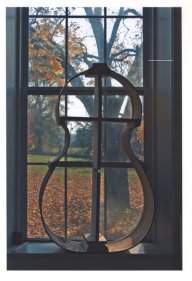
Originally, the double bass or violone tuned in fourths was fretted with tied gut frets. The e-flat neck found on most early basses facilitated tying the highest fret (d on on the g string). This longer neck remained a feature on many basses long after the frets were discarded. Indeed, some modern makers offer their instruments with either a d or e-flat neck.

The e-flat neck found on most early basses facilitated tying the highest fret (d on on the g string).
Cool! I did not know this. Thank you!

Also, the D neck is pretty much the standard, to the point that many players won't even consider buying an Eb neck bass. There's a video of pro bassist judges playing a makers competition bass a couple years ago (the maker posted it here at some point), and every single one seems to dismiss it as unplayable due to the neck. I imagine changing an instrument from D to Eb neck would devalue it in the current market. I'd suggest selling it and finding an Eb bass before making drastic alterations like shaving the heel. I like Eb, both of my basses have Eb necks and I like where it places the octave. It's easy to play a few notes above the octave without going into thumb position.

As someone who grew up playing a stratocaster, my first exposure to a D neck double bass seemed absurdly limiting and short; nobody I know would ever build or want a 7 fret guitar. For my first double bass build, I decided to make an F neck with clear intent and design; I have really enjoyed it and it is a very different experience than a D neck. Over the years I have listened to such an avalanche of complaints and crying from the crusty crusty uptight crowd who always complain about the bass neck and never mention their own limitations and inability to make full use of the extended parameters. That said, my current new build has a D neck ......
J.
Condino.com
Kaybassrepair.com
J.
Condino.com
Kaybassrepair.com

As someone who grew up playing a stratocaster, my first exposure to a D neck double bass seemed absurdly limiting and short; nobody I know would ever build or want a 7 fret guitar. For my first double bass build, I decided to make an F neck with clear intent and design; I have really enjoyed it and it is a very different experience than a D neck. Over the years I have listened to such an avalanche of complaints and crying from the crusty crusty uptight crowd who always complain about the bass neck and never mention their own limitations and inability to make full use of the extended parameters. That said, my current new build has a D neck ......
J.
Condino.com
Kaybassrepair.com
I played electric bass for decades before taking up the big bass.
My first two uprights were Kays with a D neck.
My next three, a Wilhelm Eberle, a Lidl, and a Strunal (all of European manufacture, BTW) have E-flat necks.
I would LOVE a bass with an F neck, since I want to be able to nail that octave G with my pinky without having to go into thumb position.
Which is why bassoguitars and mandobasses are so cool. They give you at least a full octave before you have to go "over the top."
".......to nail that octave G with my pinky without having to go into thumb position. "
Exactly!!!!!!
Exactly!!!!!!


