
Agree with the opening post. I can´t stand the sandpaper-feeling of roundwound strings. Using Fender tapes on the JB and Cobalt flats on the Yamaha. A food for thought, classical stringed instruments never use roundwound strings.

Enjoy the benefits of a premium membership!
Upgrade Account
-
TalkBass has been independent since 1998. Add your voice.
Create a free account to reply to discussions, view embedded media, and browse with fewer display ads.
Join free Log in
Want zero display ads or expanded classifieds tools? Compare plans.
You are using an out of date browser. It may not display this or other websites correctly.
You should upgrade or use an alternative browser.
You should upgrade or use an alternative browser.
Can't stand roundwound strings?
- Thread starter BAG
- Start date
-
- Tags
- roundwound stand
More options
Who Replied?

Have you ever tried to bow a round wound string?Agree with the opening post. I can´t stand the sandpaper-feeling of roundwound strings. Using Fender tapes on the JB and Cobalt flats on the Yamaha. A food for thought, classical stringed instruments never use roundwound strings.
You'll do it once.

Producer and engineer are two succinctly different jobs. The underlying attitude that the musicians have no clue as to what they want the over all sound of their band to be is an outdated and disgusting model. Particularly in todays modern world where we have access to recording and mixing that even at a consumer grade level can produce product capable of broadcast standards. In other words, your job is disappearing rapidly. I know, I own a studio, and I engineer for many bands as well as my own projects. We let go of the commercial space because there just isnt enough market for it. We still have the gear, analog tape decks included. Granted its not 2" tape, it still gets the job done. The beauty of recording is that bands like Swervedriver, My Bloody Valentine, The white Stripes, Big Black, Joy Division, Tool, PJ Harvey, The Talking heads and so many others have ditched the long held standards by "educated" engineers and producers, and did what ever the hell they wanted too. Where as it defies your rigid structure and belief system. Ive had the horrendous experience of recording in large studios with overbearing engineers and producers. We told them to pound sand immediately and switched engineers. Yes, there is always a task of mixing levels and getting people a happy frequency spot, but your assumptions of why people play bass are way off the mark, totally unfounded and unrealistic. Again, many bassists dont seek to stand out, nor be louder, they prefer a more subdued tone and or to be down in the mix. Soundgarden is a perfect example of this. And again another band that decided to hell with the producer and engineer and did whatever the hell they wanted in the studio. Where your task comes in, is how to get the desired sound that the band wants you to get. Whether your the recording engineer or the mixing engineer or both, and hopefully you have an open mind as where and how to achieve that. From your arguments here though, its clear that you have a finite opinion on how a mix should sound, what the musicians should do to achieve this and how to go about it. Textbook ego that was prevalent in the 80's and even early 90's in the studio. Wether you like the loudness wars or not, the current high compressed lack of dynamics is here and its not going away anytime soon in hard rock, metal, progressive metal, pop, and pop punk, pop country and current country. If you dont want to deal with that, try out other genres that are still more conventional.The job of the engineer and producer is to make the best possible product. And they know how to mix much more than musicians. Musicians always want more loudness. That just a fact. Everyone wants to be more prominent. But there is a finite limit to how much volume each instrument can take up.what happens 9 times out of ten is that the musicians have no idea how to mix, they just know what they want, and thats loudness. Thus comes squashing everything flat and saying bye to dynamics. Its not about the engineer trying to change the music to suit his own needs, its about balancing the need to make good mixes that work, and trying to make the musicians happy. Which is very difficult. The musicians are paying the bill, so the engineer is just forced to squash the mix to satisfy the talents' unending appetite for loudness. I have recorded many bands, and i can tell you this is the reality, this is what top level guys teach, this is what my teachers taught, and it has been my experience since i began engineering, from the moment we started recording bands in the schools studios. And i have been playing much longer than i have been an engineer and producer, and played rounds for 15 years.
Preference is preference, but loudness and brightness are whether subconsciously or consciously the main factors in our preferences. The guys who prefer flats are the ones that value euphony and a vintage warmth over brightness and "cutting".
Warmth, roundness, and low end boom is why most people play the bass rather than other instruments, and whenever you increase brightness with rounds orneq or whatever, you are sacrificing low end. Adding brightness is the samd thing as cutting lows and mids. Thats something many people dont realize, because eq seemingly allow you to boost highs mids and lows. But when you turn one down, its the same as turning the others up. People are able to make fun of the "turn it to 11" from Spinal tap, but the same concept exists in brightness. You cant turn the highs to eleven without turning down everything else.
Thanks, I was under the impression they were the same thing. I wish they taught me that at school.Producer and engineer are two succinctly different jobs.
The underlying attitude that the musicians have no clue as to what they want the over all sound of their band to be is an outdated and disgusting model.
I agree. Show me who think this and I will give them a swift kick in the arse
Particularly in todays modern world where we have access to recording and mixing that even at a consumer grade level can produce product capable of broadcast standards. In other words, your job is disappearing rapidly.
Sure, musicians are getting better at recording, but most still don't know how to mix properly. I haven't noticed any drop in demand for my services, but I consider myself more of a musician than an engineer. But I thought we were talking about mixing not gear [/QUOTE]
...
did what ever the hell they wanted too. Where as it defies your rigid structure and belief system. Ive had the horrendous experience of recording in large studios with overbearing engineers and producers.
I have no rigid belief system I am a pragmatist, other than following "the customer is always right". I try to explain to them about loudness, but if they want things squashed and maxxed out, it's their money. I guess I do believe that music sounds better and richer when it is dynamic, but I'm not willing to do anything other than explain it to people. No reasonable person would call that overbearing.
your assumptions of why people play bass are way off the mark, totally unfounded and unrealistic.
I thought most bass players play bass because they like bass. Not the instrument, but the low end.That's what I said.
Again, many bassists dont seek to stand out, nor be louder, they prefer a more subdued tone and or to be down in the mix. Soundgarden is a perfect example of this. And again another band that decided to hell with the producer and engineer and did whatever the hell they wanted in the studio. Where your task comes in, is how to get the desired sound that the band wants you to get. Whether your the recording engineer or the mixing engineer or both, and hopefully you have an open mind as where and how to achieve that. From your arguments here though, its clear that you have a finite opinion on how a mix should sound, what the musicians should do to achieve this and how to go about it. Textbook ego that was prevalent in the 80's and even early 90's in the studio.
No, I just am a musician, and learned engineering later. I understand the dynamic between engineers/prducers and artsits. The fact is that engineers understand sound in general,psychoacoustics, recording, and mixing better than pure musicians. How is that ego? That's like saying a guitar player doesn't know as much as an engineer about his guitar. Of course there are exceptions, but I did say 9 times out of 10.
Wether you like the loudness wars or not, the current high compressed lack of dynamics is here and its not going away anytime soon in hard rock, metal, progressive metal, pop, and pop punk, pop country and current country. If you dont want to deal with that, try out other genres that are still more conventional.
that's irrelevant. I don't care, I'll squash anything you give me, and very well. It's not like I will refuse your money because I love dynamics, haha
Well, bought some strings in a hurry, thought I grabbed flats. They're rounds! But very heavy gauge.
And I like them!
And I like them!

Pbassmanca
In the pocket n' thumpy. So woody, so greasy...
Love flats straight up. Particularly labella and GHS flats. That said, dead rotosound SS, and half to mostly dead Fender or D'addario NPS work for me quite nicely, especially on Precision basses. One thing I just can't stand though is dead rounds on a maple fret board jazz bass. That tone just does not make me happy.I really can't stand the feel of roundwound strings. I've got three full scale basses with flats and two shorty's with ground wound (would update them to flats but I hardly play them and at $60 per set i'm too cheap to change them). The only bass with rounds is my ABG which never gets played.
Whenever I try out basses at shops now it just keeps reminding me of how much nicer it is to play a bass with flats........
Pbassmanca
In the pocket n' thumpy. So woody, so greasy...
Heavy gauge rounds kick arse. Rotosound has a set of Nickel plated steel .50 - .110Well, bought some strings in a hurry, thought I grabbed flats. They're rounds! But very heavy gauge.
And I like them!
That sound really great on a Pbass. Also D'addario make a set .55 - .110 that I would like to try. Maximum thump from a round wound for sure with those ones!
Pbassmanca
In the pocket n' thumpy. So woody, so greasy...
You know, it's interesting. In my experience, I find that whIle flats on a J bass with both pickups on sound a bit weird on their own, they sound absolutely killer in a live band mix.I've converted back to flats, mostly, because the string industry has developed some great flatwound strings, TI's and La Bella, I find the latter just as good as the former. ... But, I can't say the rounds are history because, I remember back when rounds were a great option. ... There's also this 'nostalgic' swing to flats on P-basses but, remember this too shall pass and five years from now they'll be a push back to rounds on J-basses. ...
Pbassmanca
In the pocket n' thumpy. So woody, so greasy...
And THAT is the crux of the issue!I like to be able to achieve a variety of tones, and I'm in agreement with these guys.
I have a Jazz Bass that just wants to growl, so I've currently got it set up with DR Sunbeams 45-100. Those strings just shine on that bass, and give me everything I want with great clarity, solid lows, and a wonderful mid range. They feel great, too.
My alder P Bass w/ Novak vintage wind PU is set up with 45-95 GHS Precision Flats, though. Such smooth strings, no grip, and they have a very woody, plucky mid range that helps bring the best out in the natural resonance of that bass.
My real problem is not that I have a preference for one certain string type, but that I don't have enough basses to have ALL of my favorite strings types available to me
Heavy gauge rounds kick arse. Rotosound has a set of Nickel plated steel .50 - .110
That sound really great on a Pbass. Also D'addario make a set .55 - .110 that I would like to try. Maximum thump from a round wound for sure with those ones!
They're Ernie Ball strings, 50-135
I hope I don't have to file the nut! I still don't have any files

Pbassmanca
In the pocket n' thumpy. So woody, so greasy...
To be fair though, the feel of flats, especially Labella deep talking or GHS precision flats for example; is uniquely tied to the sound of the strings. The smooth feel contributes to quiet glissandos and little fret noise, and the taut, high tension nature of the strings lends itself to a more rythmic and percussive style of playing. Listen to James Jamerson, Bob Babbitt, Gerald Jemmott, Duck Dunn to name a few. I believe the unique feel of the flatwound strings they were using shaped the way that they played the instrument and thus contributed greatly to the sounds that they produced. Just my humble opinion anyhow. Peace.I like this post because its about the sound, not the feel.
I can't stand how everyone on talkbass talks about feel when the subject of strings comes up, whether it's flats vs rounds or light gauges vs heavier gauges. People always talking about how their strings feel to them are completely missing the point and a reminder that talkbass can be a terrible place to seek advice.
Flatwounds have a certain SOUND. You either want/need that sound or you don't. It's that simple.
To be fair though, the feel of flats, especially Labella deep talking or GHS precision flats for example; is uniquely tied to the sound of the strings. The smooth feel contributes to quiet glissandos and little fret noise, and the taut, high tension nature of the strings lends itself to a more rythmic and percussive style of playing. Listen to James Jamerson, Bob Babbitt, Gerald Jemmott, Duck Dunn to name a few. I believe the unique feel of the flatwound strings they were using shaped the way that they played the instrument and thus contributed greatly to the sounds that they produced. Just my humble opinion anyhow. Peace.
It's not so much the feel that affects the tone, it's the construction that affects both sound and feel. You guys are just proving my point. Imagine if I used roundwounds and decided that for my music I wanted to sound like James Jamerson or Duck Dunn, so I tried flats but decided not to use them because I didn't like the feel. The dedicated musician would stick with flats and get used to them.
What if I needed the sound of fresh stainless rounds for the type of music I wanted to make, but I chose to stick with flats because I didn't like the feel of rounds? Am I a dedicated musician? I say no. Why is that so difficult to accept?
What if I needed the sound of fresh stainless rounds for the type of music I wanted to make, but I chose to stick with flats because I didn't like the feel of rounds? Am I a dedicated musician? I say no. Why is that so difficult to accept?
A dedicated musician would grab some pressurewounds then


Its weird. I think a lot of people use flats either for their feel or due to the popularity of "flats are the new cool". However, when I first tried them it was because of all the statements of the clarity in the mix, how they slotted in etc. I got em and forced myself to play them - different brands on different basses. I never ever felt like they cut through, or even had clarity in the mix (for rock and pop). I even had band members ask me to change back to the "good strings". No matter what I always went back to rounds and felt at home and that I was once again back "in the mix". That is until my last attempt at flats - I put a set of Fender flats on my 50's classic P and for the first time they actually did sit in the mix with clarity, growl and definition. I won't take them off that bass, but rounds will dominate on my others. To me they are really dependent on the instrument, more so than rounds in my opinion.
Yeah, it's all about context for me as well. If I'm in a 3-piece band, flats all day. However, when I try flats with my 10-12 piece horn band with two guitars, drums, percussion, and keyboards, my bass sounds like Charlie Brown's teacher! Womp-womp-wa-womp-womp. Lol!
since were on the subject of this, not to hijack, but its in the vein of this post, Will ss rounds mess up a fretless? If not, heck, Ill buy another fretless. I thought I had to use flats in order not the damage the fret(less)board
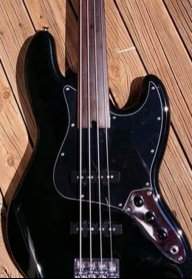
since were on the subject of this, not to hijack, but its in the vein of this post, Will ss rounds mess up a fretless? If not, heck, Ill buy another fretless. I thought I had to use flats in order not the damage the fret(less)board
Depends somewhat on what the fingerboard is made out of. The rosewood on my Warmoth fretless was, in the words of my luthier, "the softest piece of sh1t i've ever seen on a fretless.....it should have only ever been used on a fretted neck" . A good piece of ebony or other bit of very hard wood should be no problem. In saying that, any rounds on a fretless will wear the fingerboard quicker than flatwound strings but on a good hard, or epoxied, fingerboard you'll still get years of use before having to get the fingerboard re-levelled.
Rosewood is only SLIGHTY softer than Ebony.
One of the big myths regarding fretless is that roundwound strings will destroy your fingerboard. I've used rounds on Rosewood for decades, and with low action, and a soft touch, your fingerboard might need to be redressed after 5-10 years.
One of the big myths regarding fretless is that roundwound strings will destroy your fingerboard. I've used rounds on Rosewood for decades, and with low action, and a soft touch, your fingerboard might need to be redressed after 5-10 years.

I keep coming back to this again and again. I find it funny how someone starts a "I hate something" thread in the category about which they are referring and nothing gets said to them. I start a thread in which I say that I'm going to ditch most of my effects except for the two most crucial ones and I get my thread shut down and a personal message from one of the Mods. Very hypocritical.
Ya'll know how to pick your battles and be passive-aggressive. I will definitely hand that to you.
Ya'll know how to pick your battles and be passive-aggressive. I will definitely hand that to you.

Ya'll know how to pick your battles and be passive-aggressive.
I don't like being caught in the middle of controversies, conflicts or confrontations. That's why I usually put in my nickel's worth right at the beginning of a thread like this and go do something more constructive.


