

Enjoy the benefits of a premium membership!
Upgrade Account
-
TalkBass has been independent since 1998. Add your voice.
Create a free account to reply to discussions, view embedded media, and browse with fewer display ads.
Join free Log in
Want zero display ads or expanded classifieds tools? Compare plans.
You are using an out of date browser. It may not display this or other websites correctly.
You should upgrade or use an alternative browser.
You should upgrade or use an alternative browser.
Capo on a bass ??
- Thread starter pappabass
- Start date
More options
Who Replied?
Alternately, tune you bass DGCF and with a capo on 2nd fret, you have a 30" short scale.If I had a bass tuned BEAD and put a capo on the 5th fret.
Wouldn't I have a VERY short scale bass in EADG??


If I had a bass tuned BEAD and put a capo on the 5th fret.
Wouldn't I have a VERY short scale bass in EADG??
How to turn a fiver from BEADG to EADGC...
Learn the songs using Nashville numbers system...then it doesn't matter which key is chosen...
We have a woman that sings with us and she loves her capos ...I've never had an issue transposing a song I've learned with numbers...just change the root and your off to the races... in Bb this time
We have a woman that sings with us and she loves her capos ...I've never had an issue transposing a song I've learned with numbers...just change the root and your off to the races... in Bb this time
I have never used a capo on bass and Ive never seen anyone use one. Its pretty lame, just learn to play in F, its a common enough key. In bluegrass circles capos are referred to as "cheaters" despite all the guitarists and banjo players use them, in this context i feel the term "cheater" couldn't be anymore appropriate.

I would say just learn to play in all keys. It's only going to benefit you later, and give the ability to adjust on the fly.
I was playing bluegrass and old time for the last 4/5 years, which amounts to about 3 keys. Then I joined another band that plays in what I would call bad keys for a bass player, or to be more honest - not rock or blues keys. Stuff like Eb, Bbmin, C#min. Having to get my crap together (on upright) in keys that I literally never played songs in a band context with has made me a much better musician, and improved my ear ten fold.
Capos are for guitar and banjo.
I was playing bluegrass and old time for the last 4/5 years, which amounts to about 3 keys. Then I joined another band that plays in what I would call bad keys for a bass player, or to be more honest - not rock or blues keys. Stuff like Eb, Bbmin, C#min. Having to get my crap together (on upright) in keys that I literally never played songs in a band context with has made me a much better musician, and improved my ear ten fold.
Capos are for guitar and banjo.
When I first started playing in church, the BL put a capo on my bass for one song. I hated it. Never used one again. I simply play in standard tuning and adapt to the key the song is in. If I can't use open strings then so be it. I still play with that worship team and everything is fine. 
I almost never use open strings.
Malcolm, I'm not sure what you mean by "neck markings off" and playing out of key.?.?.?
Doesn't a capo only change the open string?
Am I missing something?
A capo changes the note names (but not the pitch!) of every note on the neck. For example, if you put a capo on the 2nd fret, that becomes your new "E" (even though it sounds like F#), the 3rd fret is called F (even though it sounds like G) and so on up the neck.
This is what I do. I use my capo mostly when the band requires that I do some slap stuff in E. I use all the notes, both open and fretted because... Why not? They're there to be used, and so I do. Further, I use my ears when I play rather than my eyes, so the position of the dot markers makes little difference to me.Alternately, tune you bass DGCF and with a capo on 2nd fret, you have a 30" short scale.
My guitarist tunes in fourths, my drummer uses a broken cymbal on his snare for cool effects, and my keyboardist sometimes plays left hand bass so I can do wacky stuff high up on the neck... Do whatever works for you and screw what anybody on talkbass or in the real world thinks. Try every idea because that's the difference between you becoming the best and you just being another copy who talks about other ppls interesting techniques.
Maybe it's time to start a "Capo Users Club" here on TB... I know there's at least three of us and that's a pretty good start!

Last edited:
I think the OP needs an open E drone note when playing the tune in E. If he were to merely change the key, his open note turns into a fretted note which has different sustain and timbre.
In most cases, I merely transpose. 5'ers are great! That's a lot fun in itself. But in this case I may be inclined to capo this one song to get the open note effect.
In most cases, I merely transpose. 5'ers are great! That's a lot fun in itself. But in this case I may be inclined to capo this one song to get the open note effect.

I've never seen anyone use a capo on a bass. I've thought about it but never pursued the idea. Then again, I'm also not into alternate tunings. With my 6 string, I feel I have enough range.
Alternately, tune you bass DGCF and with a capo on 2nd fret, you have a 30" short scale.
I actually just bought a new capo so that I could do that! It remains to be seen how much I will use it but it is a very quick and cheap way to get a short scale version of a bass that you love. It is especially good if the bass you love (SR605 in my case) has a 24 fret neck since you're no worse off than you would be on a 22 fret short scale. There is nothing wrong with using a capo, I don't care how many other bassists use or disdain them. If it does something for you better than your options would then use it. I agree that it can be much more helpful for chording on a guitar and I don't personally have much use for one other than making a scale length conversion but if you have a reason to use one then use it proudly. We're supposed to avoid them because people call them "cheaters"? Yeah, in my experience and in many different fields, cheater is the name that experienced practitioners of an art give to that one tool in their toolbox that is so useful that using it feels like cheating, that one tool they WOULD NOT be caught without!
I certainly agree that in most cases the things that we do as bassists don't benefit that much from a capo. Change keys? I don't need a capo, or a fifth string, to do that! I play in a church band and key changes are pervasive in our music. Probably half of our songs change keys at some point and half of those change keys several times. I've learned to change keys by other means. On those very rare occasions when a last minute key change occurs they are almost always down and I can't move a capo north of the nut, but I now have a nice capo and if anyone ever should want to go up at the last minute....
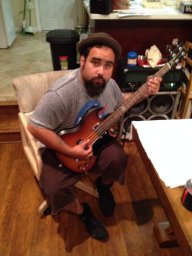
I've been using one for the last few years ,it helps mix it up. I also like having "new" harmonics to play with and having to think of new approaches to a line
There is actually one reason why every bassist should have a capo with them at all times.
Your guitarist, who is likely to be dependent on them, will forget his/hers occasionally!
Of course it is too bad that there is not such a thing as a remote capo remover too because sometimes when the guitarist forgets the capo it is right there on the neck. Where it shouldn't be for this song. Which throws the rest of the church band, the vocalists, and 400 congregational singers off if the guitarist happens to start a song alone. If you are lucky this happens on one of those songs with at least one key change because then the rest of you can just tacitly and silently agree to jump to the right key at the change and leave "capo boy" to figure out the error of his ways on his own....
Not saying this ever happened to anyone I know of course.
Your guitarist, who is likely to be dependent on them, will forget his/hers occasionally!
Of course it is too bad that there is not such a thing as a remote capo remover too because sometimes when the guitarist forgets the capo it is right there on the neck. Where it shouldn't be for this song. Which throws the rest of the church band, the vocalists, and 400 congregational singers off if the guitarist happens to start a song alone. If you are lucky this happens on one of those songs with at least one key change because then the rest of you can just tacitly and silently agree to jump to the right key at the change and leave "capo boy" to figure out the error of his ways on his own....
Not saying this ever happened to anyone I know of course.
If you are lucky this happens on one of those songs with at least one key change because then the rest of you can just tacitly and silently agree to jump to the right key at the change and leave "capo boy" to figure out the error of his ways on his own....
Not saying this ever happened to anyone I know of course.
Hahahahahahaha!!
I don't play any tunes on BG that require open strings, so I don't use a capo.
The singer in a band I played with years ago asked if we could do Barracuda in a different key---- the guit player and I said no--- so we didn't do it.
On upright, there are some classical pieces that require an open string or two, but I wouldn't consider asking the whole orchestra to take it down a half step.
The singer in a band I played with years ago asked if we could do Barracuda in a different key---- the guit player and I said no--- so we didn't do it.
On upright, there are some classical pieces that require an open string or two, but I wouldn't consider asking the whole orchestra to take it down a half step.


