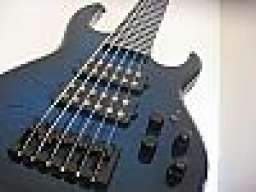
Last week, I bought a Carvin LB75 from the original owner. It is neck through, J pick up at the neck, humbucker pickup and piezo bridge. I did my first gig with it tonight and was very disappointed. I expected much more. No matter what I did the bass sounded like it had no balls. No punch, and not much in the way of dynamics. My Alembic sounds much better. It might be me. I have been playing Alembic for 10 years but bought the Carvin because I heard a lot of good things about them. Maybe their sound just isn't for me. If anyone is interested in buying it, please feel free to email me. I also have the Carvin hardshell case.

Enjoy the benefits of a premium membership!
Upgrade Account
-
TalkBass has been independent since 1998. Add your voice.
Create a free account to reply to discussions, view embedded media, and browse with fewer display ads.
Join free Log in
Want zero display ads or expanded classifieds tools? Compare plans.
You are using an out of date browser. It may not display this or other websites correctly.
You should upgrade or use an alternative browser.
You should upgrade or use an alternative browser.
Carvin LB75 First Impressions
- Thread starter Rockmusician
- Start date
More options
Who Replied?
Is the Alembic a bolt on? I found my past Carvin's (2 or 3?), the bolt-on's had much more punch. Also, you can't compare the electronics in an Alembic to Carvin - NOT apples to apples.
I liked the Carvin basses for backups - their pickups are passive with active pre's, so if your battery craps out at a gig you can go passive which is nice when your main bass goes down during your Brown Eyed Girl "Solo"
Sorry you have the remorse.
I liked the Carvin basses for backups - their pickups are passive with active pre's, so if your battery craps out at a gig you can go passive which is nice when your main bass goes down during your Brown Eyed Girl "Solo"
Sorry you have the remorse.
My Alembic has a set in neck. It has active electronics. Before we started playing I spent about an hour with the Carvin switching between the active and passive mode and couldn't get the sound I wanted. For the third set I went to the Alembic and sounded much better.
By the way, I don't do Brown Eyed Girl and will never, ever do a solo. To me, solos are nothing more than self indulgent crap and bore an audience.
By the way, I don't do Brown Eyed Girl and will never, ever do a solo. To me, solos are nothing more than self indulgent crap and bore an audience.

Last week, I bought a Carvin LB75 from the original owner. It is neck through, J pick up at the neck, humbucker pickup and piezo bridge. I did my first gig with it tonight and was very disappointed. I expected much more. No matter what I did the bass sounded like it had no balls. No punch, and not much in the way of dynamics. My Alembic sounds much better. It might be me. I have been playing Alembic for 10 years but bought the Carvin because I heard a lot of good things about them. Maybe their sound just isn't for me. If anyone is interested in buying it, please feel free to email me. I also have the Carvin hardshell case.
Sorry you don't like the bass. You can put it up for sale in the classifieds if you become a supporting member. Otherwise, you are breaking forum rules.

Just flip it. Since you bought it used you likely won't lose much money other than maybe shipping. fwiw I've never liked any of the Carvin neck throughs. They are well built and use some nice woods but they just never spoke to me. Then again, I'm not sure I've played a neck through that I really liked so ymmv.
i'm sorry the carvin didn't do it for ya. i have an lb70 and i'm a fan but no bass is perfect for everyone.
i have to ask though, with all do respect, i don't know what model alembic you have but i'd assume it's well over $5000... so why would you expect a 1000 dollar bass to sound as good as a 5000+?
i know the price of a bass doesn't mean everything, but it seems like you're comparing a Honda to a Masarati...
i have to ask though, with all do respect, i don't know what model alembic you have but i'd assume it's well over $5000... so why would you expect a 1000 dollar bass to sound as good as a 5000+?
i know the price of a bass doesn't mean everything, but it seems like you're comparing a Honda to a Masarati...


How does the bass feel in your hands, unplugged? I ordered a BB75 back in the 90's, and though I never had a problem with the stock pre-n-pups, once I swapped them for a Bart harness, the instrument really came alive. If I were to order another BB75(the only body shape I dig from Carvin), I'd gut the pre-n-pups and have a Nordstrand system installed immediately. That would be a real monster ...but only if the bass felt like your favorite pair of jeans in your hands.
Bass fabrication discussions don't often take into consideration the solid construction techniques that Carvin utilizes. Focusing solely on the wood and its placement and finish are only a portion of the requirements of a superior design. Somehow, it's a common perception that skillfully constructing a a bass with tight, well aligned grain is all that is necessary to bring out the best tone. Carvin itself seems to fall prey to this line of reasoning. They are masters at guitar design and construction, yet their instruments don't seem to capture the body of sound necessary to compete with other established standards.
Actually, this is one of the great things about the Carvin - it _doesn't_ follow the established standards of tone (by that I assume something like the Fender style tone where there's a large acoustic contribution) and for that I'm hugely grateful.
In fact, the best kept secret of a design like the Carvin neck-through is the _lack_ of acoustic contribution. With many other designs, like the Fender style basses, you can't get _rid_ of that contribution if you need to. This is a joy when it comes to recording, for instance. You're not fighting some inherent tone from the start and you can achieve pretty much whatever you want electronically.
My Bunny is the most versatile sounding bass I think I've ever played because of that. It also so happens that, when left alone, it's got the best tone for sitting in a mix of anything else I've used.
With my other basses I'm stuck with some kind of character to their tone whether I like it or not. Or at least, I don't have that expensive of a rack of electronics to try to get rid of it.
I like what the other poster said about whether it "feels like a good pair of jeans." If so, I'd swap out the pups in a heartbeat. My Carvin is always a show stopper in design and construction - wish it had the tone to keep up.
It probably already does, or it did until you hacked it by replacing the PU's
. I don't think Carvin came up with their design willy-nilly at all. The acoustic "deadness" of their neck-throughs is almost certainly intentional in order to get a what I'd call "neutral" tone to start with. From there, you can do whatever you want electronically. I.e. My BB76F cops a nearly perfect P bass sound with just the neck PU only.
And FWIW, they're filling out their line with more traditionally constructed basses like the SB and B series for those who want a more traditional tone.
But their neck-throughs are as good as you can do for the money, IMO.
LS

My Alembic has a set in neck. It has active electronics. Before we started playing I spent about an hour with the Carvin switching between the active and passive mode and couldn't get the sound I wanted. For the third set I went to the Alembic and sounded much better.
By the way, I don't do Brown Eyed Girl and will never, ever do a solo. To me, solos are nothing more than self indulgent crap and bore an audience.
I've heard plenty of bass solos that I thouroughly enjoyed.

How does the bass feel in your hands, unplugged? I ordered a BB75 back in the 90's, and though I never had a problem with the stock pre-n-pups, once I swapped them for a Bart harness, the instrument really came alive. If I were to order another BB75(the only body shape I dig from Carvin), I'd gut the pre-n-pups and have a Nordstrand system installed immediately. That would be a real monster ...but only if the bass felt like your favorite pair of jeans in your hands.
I ordered a BB75 a few years ago. Beautiful instrument, very well built and felt great. The tone was good but didn't floor me so I returned it. I could have done a pickup swap but I felt the unplugged tone didn't warrant going that route. If I had my Sadowsky outboard preamp back then I would definitely have experimented to see what it would do for the Carvin's sound.
One thing to do before giving up on a bass: try different strings. I own a Carvin Icon and just last week received my SB5000. They're both keepers but shortly after getting them I installed stainless steel roundwounds (Carvin ships them with nickel roundwounds). What an improvement! Especially the B string on the SB5000, it sounds monstrous!
Sorry to hear you're not loving the new bass but I have a few questions....
Which preamp set up is in your bass? Is it the old 9v bass/treble set up or the current 18v bass/mid sweep/treble rig. I have the 18v set up in LB76 with dual MM style humbuckers (See avatar) and the mid control makes all the difference in the world. A lot of players find Carvin's sound to be sterile, and I can see that, but I think of it as having less mush to my tone, and more like having the moving blanket removed from over the top of my rig. It works for me, but it is definitely not a traditional Fender sound to be sure. For me with 3 band mid sweep EQ on the bass plus the tons of EQ options on my BX1500 amp I have more than enough EQ at my disposal to get any sound I could want.
I agree that there is also a difference in punch between bolt-on, set, and neck through designs. Maybe the smoother sound of a neck through is simply not for you. People like what they like and no one can truly say one thing is better than another but as previously noted you are compairing a $1800 or less bass to a $5000 or more bass so it is kind of a rough apples to oranges kind of thing. I know that some people have changed out the electronics on their Carvins with excellent results but you'll have to make the call for whether or not its worth changing preamps and pickups or just selling it.
Again I'm sorry to hear you're not in love with the new bass and I hope you find a solution/resolution to the issue that makes you happy and enjoy
Best of luck and groove on!
Which preamp set up is in your bass? Is it the old 9v bass/treble set up or the current 18v bass/mid sweep/treble rig. I have the 18v set up in LB76 with dual MM style humbuckers (See avatar) and the mid control makes all the difference in the world. A lot of players find Carvin's sound to be sterile, and I can see that, but I think of it as having less mush to my tone, and more like having the moving blanket removed from over the top of my rig. It works for me, but it is definitely not a traditional Fender sound to be sure. For me with 3 band mid sweep EQ on the bass plus the tons of EQ options on my BX1500 amp I have more than enough EQ at my disposal to get any sound I could want.
I agree that there is also a difference in punch between bolt-on, set, and neck through designs. Maybe the smoother sound of a neck through is simply not for you. People like what they like and no one can truly say one thing is better than another but as previously noted you are compairing a $1800 or less bass to a $5000 or more bass so it is kind of a rough apples to oranges kind of thing. I know that some people have changed out the electronics on their Carvins with excellent results but you'll have to make the call for whether or not its worth changing preamps and pickups or just selling it.
Again I'm sorry to hear you're not in love with the new bass and I hope you find a solution/resolution to the issue that makes you happy and enjoy
Best of luck and groove on!
I've heard plenty of bass solos that I thouroughly enjoyed.
+1
there is definitely a time and place for bass solos, and there are definitely times and places for NOT soloing, but to make call all solos "self-indulgent crap" on TB sounds like a troll to me...

I've got a Carvin 5 string fretless with active EQ from the early '90's. It is a "neck-through" bass with two "jazz" style pick-ups. I found that it didn't work well for live work, but it recorded very well - extremely quiet and had a very wide range. For some reason it got buried in the mix when used live, but sat perfectly in the mix when used for recording. Arguably, we were able to mess with the mix when recording, but it seemed to work just fine with very little alteration.
If you record your music, you may find that it will be good for that. If not ... time to move on.
If you record your music, you may find that it will be good for that. If not ... time to move on.
+1
there is definitely a time and place for bass solos, and there are definitely times and places for NOT soloing, but to make call all solos "self-indulgent crap" on TB sounds like a troll to me...
I gotta agree.
[Invalid or Expired Link Removed]

I had an LB75P for about 2-1/2 years and I replaced the preamp with a 4 band Audere. I also disabled the Piezo pickups (hated it). It gave me a lot more tonal choices and it turned the bass around sonically for me.

Actually, this is one of the great things about the Carvin - it _doesn't_ follow the established standards of tone (by that I assume something like the Fender style tone where there's a large acoustic contribution) and for that I'm hugely grateful.
In fact, the best kept secret of a design like the Carvin neck-through is the _lack_ of acoustic contribution. With many other designs, like the Fender style basses, you can't get _rid_ of that contribution if you need to. This is a joy when it comes to recording, for instance. You're not fighting some inherent tone from the start and you can achieve pretty much whatever you want electronically.
I don't think Carvin came up with their design willy-nilly at all. The acoustic "deadness" of their neck-throughs is almost certainly intentional in order to get a what I'd call "neutral" tone to start with. From there, you can do whatever you want electronically. I.e. My BB76F cops a nearly perfect P bass sound with just the neck PU only.
I must say, this is the first time I've ever come across the concept of "acoustic deadness", and my curiosity is definitely aroused - particularly since I've been playing Carvin bass guitars exclusively for the past 20 years, and currently own several Carvins.
It might explain why I'm almost completely unable to hear any sound from my Carvins when I play them acoustically - not that I care to anyway. I didn't buy them to play unplugged. I bought them to play plugged in - and turned up!
I'd really like to hear more about this particular design philosophy. I'm going to guess right now, off the top of my head, that "acoustic deadness" is a separate and distinct issue from "resonance" - as I certainly don't detect any lack of resonance when playing my Carvin bass guitars. From from it.

Given the neutrality of this basic Carvin tone, I would argue that it is even more imperative to retrofit one's Carvin bass guitar with the best aftermarket pickups & preamp one can afford - in order to take fullest possible advantage of the complete range of tonal options afforded by this neutral platform.
Since the basic Carvin tone is so neutral, it would explain why so many first-time Carvin owners/players tend to have mixed feelings about the stock Carvin electronics, which - though they have improved significantly in recent years - are still generally not yet in the same league as the overall instrument materials & build quality. It would also explain why so many first-time Carvin players tend to characterize the stock Carvin tone as "sterile".

MM


