• TalkBass has been independent since 1998. Add your voice.
    Create a free account to reply to discussions, view embedded media, and browse with fewer display ads.
    Join freeLog in
    Want zero display ads or expanded classifieds tools? Compare plans.

Caution! Graphic Content! Squier truss rod fix (amateur)

Sep 20, 2015
1,973
5,397
60
London
Thought I would show you pros how us amateurs do things. Brute force and ignorance is the name of the game for this truss rod repair.

I wanted a jazz bass neck for my Squier VM PJ bass so I purchased a new Squier VM 70's bass that had a broken truss rod. $106 shipped.

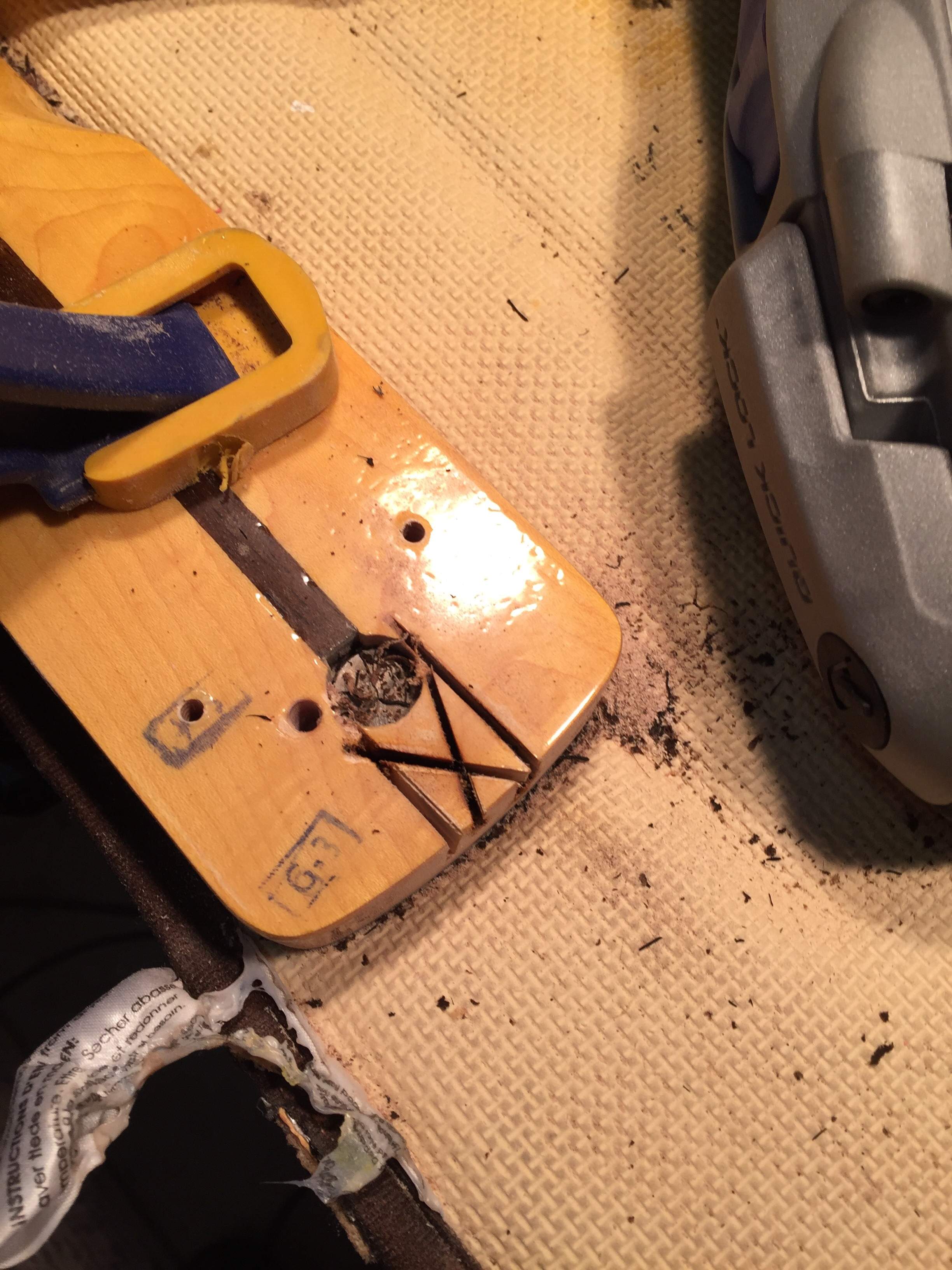
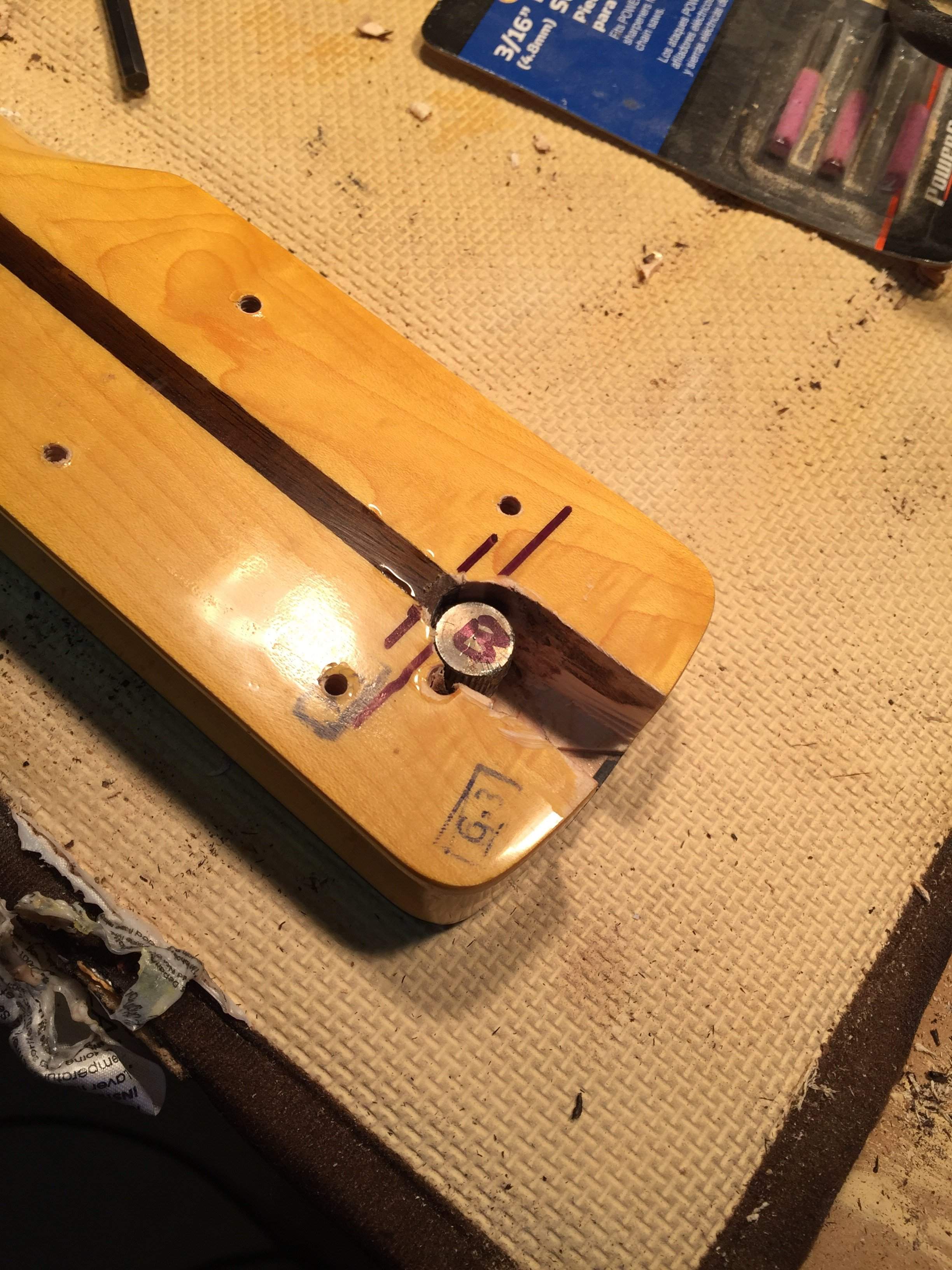
I was hoping it was just a stripped out truss nut, but no such luck. The rod was broken just at the bottom thread. So out comes the Dremel cutter and I carved out a chunk of the bass of the heel and fairly easily I was able to remove the truss rod.

The problem I'm having is that out of the 4 truss nuts I have none seem to fit the rod (and it didn't come with the original truss nut).

Sooo, my plan is to build up the rod tip with some welding slag and then thread the ends, hoping the build up of slag will be enough to make one of the new truss rod nuts to fit.

Here's where we stand so far....more to follow.
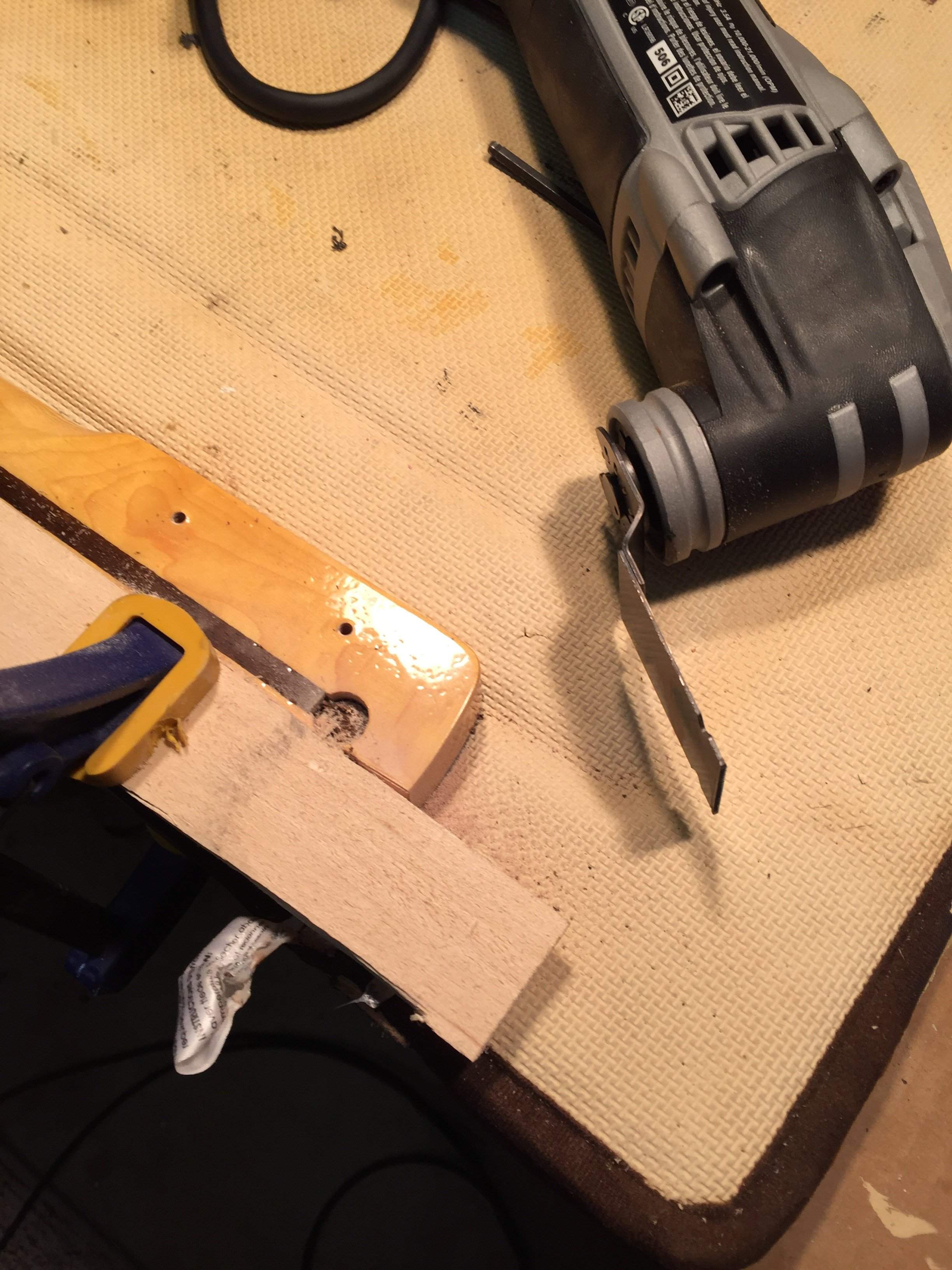
image.jpg
image.jpg
image.jpg
image.jpg
image.jpg
 
Last edited:
Thanks! It's a bit more of a project then I had in mind, but it's good practice and it's not like it's a '62 jazz bass neck I'm working on so I'm ok with some imperfections. I just want it to work.

This is how I would have tried to tackle the job, I may have chosen some different tools, but the same principal.
 
Just curious why you have decided to build up the end of the rod to re-thread it instead of just threading the existing tip and having a rod that is 1/4" or so shorter.
Good question, I've already moved the rod upwards in the neck by about a quarter of an inch so I can get some "bite" on the existing part of the thread (which I will re-thread). The problem is every store I've been to in my area (and two nuts I ordered online) were just slightly too big. Even nuts that say "Squier bass truss rod nut" didn't fit. I'm thinking that the threads possibly stood "proud" past the diameter of the rod stock? Hence building up the area I'm going to thread. (BTW, the seller removed the "Squier decal, not me....he's a reseller and always removes any logos from his damaged instruments).
image.jpg
 
Maybe buy another truss rod with full length threads? Other style truss rods are pretty inexpensive- $8- $15, and considering time put in, and possibly having to do it over again...
Just lube the new threads with a graphite lube before replacing the nut.

Welding that little rod may make it even weaker than it was before.

Cutting threads into that one won't leave much diameter across the bottom of the threads, and it probably won't last.
 
Maybe buy another truss rod with full length threads? Other style truss rods are pretty inexpensive- $8- $15, and considering time put in, and possibly having to do it over again...
Just lube the new threads with a graphite lube before replacing the nut.

Welding that little rod may make it even weaker than it was before.

Cutting threads into that one won't leave much diameter across the bottom of the threads, and it probably won't last.
Yep, I'll be darned if I can't find the truss rod for sale. Nothing close. All parts, eBay etc. etc. Most of the truss rods I see look much different from the one I have, and then I also don't see the anchoring piece for sale that the rod screws into. If I could, I would defintely go the new truss rod route.
 
Yep, I'll be darned if I can't find the truss rod for sale. Nothing close. All parts, eBay etc. etc. Most of the truss rods I see look much different from the one I have, and then I also don't see the anchoring piece for sale that the rod screws into. If I could, I would defintely go the new truss rod route.

Hopefully, someone with Fender truss rod experience will help out with a source for one. I've not yet had to look for one of that style.
The double rod (even single-acting type) won't fit in that channel, so it has to be the same rod type.
 
  • Like
Reactions: StudioGC
Does this mean I can use any round stock? Cut it to length and use my existing anchor?

The square stock may be to put even pressure against the wood and/or to keep it from rattling in a square hole.
but a round rod should work ok if it's the right diameter. Would be good to slide some shrink wrap on it to keep it quiet inside the channel.
Can you get the old rod out of the anchor? If not, just cut it off, re-drill and tap (maybe just remove the old weld if poss), then thread the new rod to match.

I just did a brief search and didn't find a Fender direct Bass replacement truss rod.
 
  • Like
Reactions: StudioGC
Does this mean I can use any round stock? Cut it to length and use my existing anchor?

Sure. Just make sure it is a snug fit so it doesn't rattle. Because the threaded end is narrower, you'll probably have to wrap it or put heat shrink on it to keep it from rattling. But square or not, it's still just a rod in channel that applies stress on the neck.

Welding wouldn't weaken it though. It's mild steel si it welds up just as strong.
 
  • Like
Reactions: StudioGC
I saw that, it's the closest I've seen to what will work. Problem is it's about a two month delivery time from S. Korea. I'm really amazed with the plethora of Squier basses out there that it's so hard to get a truss rod. My big local music store (Chuck Levins) looked at my truss rod like deer in the headlights and were no help (and those guys are good!).
 
As an eBay Associate, TalkBass may earn a commission from qualifying purchases.
Problem is it's about a two month delivery time from S. Korea.

By Feb 17 to Mar 18 is a while- 2 to 6 weeks, but everything I've ordered from over that way has been delivered sooner than projected.

I'm really amazed with the plethora of Squier basses out there that it's so hard to get a truss rod.

Maybe because it's usually the wood that compresses too much and the neck has to be replaced (cheaper than replacing the truss rod other than the way you're doing it) before the rod breaks, and new necks can be found for a lot less than repairs.