
Enjoy the benefits of a premium membership!
Upgrade Account
-
TalkBass has been independent since 1998. Add your voice.
Create a free account to reply to discussions, view embedded media, and browse with fewer display ads.
Join free Log in
Want zero display ads or expanded classifieds tools? Compare plans.
You are using an out of date browser. It may not display this or other websites correctly.
You should upgrade or use an alternative browser.
You should upgrade or use an alternative browser.
Changing from 2 volume knobs to a blend knob
- Thread starter Scott Shaw
- Start date
More options
Who Replied?

The reason blend pots are uncommon on passive instruments is that they send the signal from each pickup through two volume pots. That results in a small but noticeable loss of high end and signal strength.
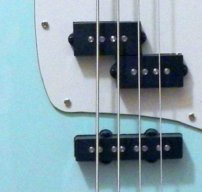
I recently finished a Ric clone with two pups, I did Master Volume, Pup Blend, and Master Tone. I think it works really well, and gives you some gradations you can't get with a switch. Personal Peeve, but I always loathed two volumes, every volume change necessarily causes a tone change, as the relative output changes. I used one of these Bourns pots:
Please do not state that it really makes a difference to you whether you dial in "47% neck-PU + 53% bridge PU" or something else that you will never recall. Total crap.
Blend pot all day. I also have a BB that will someday get switched to vol/blend, but not a priority right now. Whatever difference in level is meaningless, and the convenience of one vol pot FAR outweighs any unnoticeable differences from a vol/vol setup.

In my active PJ bass I’m considering the opposite. I almost always want the P on but sometime I want to add in the bridge J pickup for some growl/bite. I don’t necessarily like it on ratios as I feel that affects the dynamic range. I could be completely wrong though as every two pickup bass I’ve had was 1 volume 1 blend, I’m basing it off my time with guitars where they almost never have a blend knob
I recently finished a Ric clone with two pups, I did Master Volume, Pup Blend, and Master Tone. I think it works really well, and gives you some gradations you can't get with a switch. Personal Peeve, but I always loathed two volumes, every volume change necessarily causes a tone change, as the relative output changes. I used one of these Bourns pots:
Good info in the video. I think I'm gonna go ahead and try it.

I converted my passive jazz 10 years ago. No regrets. My Keisel PB5 came that way. I like it.
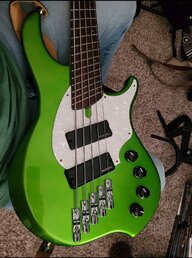
I say do it! I've only dug v/v on my Skyline bass since either pickup is actually usable soloed, unlike most other v/v instruments I've owned. Warwicks passive or active have been great with a blend IME. I agree it's quicker/easier to make tonal changes.
I had a Soundgear with Quarter Pounder P&J's that had a 3 way switch years ago. I liked that quite a bit for its middle and neck (P) positions. Never used the J soloed, it was too wimpy.
I had a Soundgear with Quarter Pounder P&J's that had a 3 way switch years ago. I liked that quite a bit for its middle and neck (P) positions. Never used the J soloed, it was too wimpy.
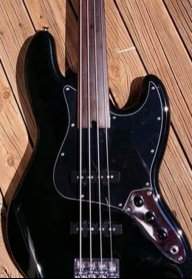
I did Master Volume, Pup Blend, and Master Tone. I think it works really well, and gives you some gradations you can't get with a switch. Personal Peeve, but I always loathed two volumes, every volume change necessarily causes a tone change, as the relative output changes. I used one of these Bourns pots:
I also have my fretless jazz wired VBT for similar reasons.
I nearly rewired it back to VVT last weekend as I am pretty sure I preferred the sound of the Neck pickup by itself that way as the VBT does still appear to have a bit of bridge pickup even when turn all the way to the neck pickup (and vice-versa). I decided not to bother as I also remembered how difficult it was to adjust volume on-the-fly which I tend to do quite a bit in the projects I am in. I also thought about the fact that virtually nobody except me would notice the 100% neck-pickup sound of VVT compared to the not-quite-100%-neck-pickup that VBT gives me.
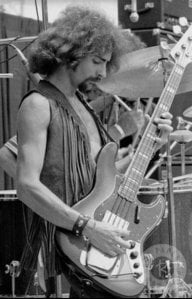
I have three basses with V/V/T controls and a couple with blend knobs. Both those with blend knobs are active basses. I manage OK with both, but I’m a lot more accustomed to two volumes.
Back in my early days of playing, I used to try to keep my volume controls somewhere around 1/2 so I would have some volume boost and cut available. Then, I finally realized the volume cut on a passive bass also rolls off some high end, so I started keeping both volumes full on.
Then I figured out that rolling one volume back just slightly gave me the varied tone of just neck or just bridge pickup with the slight help from the other PUP. It was a little serendipitous at the time, because the internet wasn’t ubiquitous yet, and magazine info wasn’t exactly indexed for quick access to specific topics. Anyway, I’m so used to grabbing both volumes and rolling one back slightly, that I don’t know a blend knob would be more useful. I’ve also read a blend knob can shave off a little high end, so with me being so used to V/V/T and the potential downside of the blend knob causting some high end, I suppose I’m sticking with what I have....
Back in my early days of playing, I used to try to keep my volume controls somewhere around 1/2 so I would have some volume boost and cut available. Then, I finally realized the volume cut on a passive bass also rolls off some high end, so I started keeping both volumes full on.
Then I figured out that rolling one volume back just slightly gave me the varied tone of just neck or just bridge pickup with the slight help from the other PUP. It was a little serendipitous at the time, because the internet wasn’t ubiquitous yet, and magazine info wasn’t exactly indexed for quick access to specific topics. Anyway, I’m so used to grabbing both volumes and rolling one back slightly, that I don’t know a blend knob would be more useful. I’ve also read a blend knob can shave off a little high end, so with me being so used to V/V/T and the potential downside of the blend knob causting some high end, I suppose I’m sticking with what I have....
Last edited:

There is an easy way to modify the blend pot so that this does not happen.does still appear to have a bit of bridge pickup even when turn all the way to the neck pickup
"Please do not state that it really makes a difference to you whether you dial in '47% neck-PU + 53% bridge PU' or something else"
Well there certainly is a noticeable tone change when moving off 50/50. At least with J style pickups.
- John
There is an easy way to modify the blend pot so that this does not happen.
Yeah, I've seen the No-load ungrounded blend pot thread and while i'm ok at soldering i wasn't going to try taking a knife to the blend pot although I did wire it the same as on that thread. Interestingly I found that at the middle (100% both pickups) setting of the blend pot it was noisier than at any other setting. I changed it to a more standard wiring and the noise is all but gone.

If you're the type who'd rather play than have an "ideal signal path," then just do it. The convenience of having a blend over two individual volume pots trumps whatever minimal imperceptible high end loss there might be, imo. I've converted every Jazz bass I've ever had to a blend knob... I've never noticed an actual loss of tone or fidelity, and I've never once ever had another person comment on any tonal change after I've made the mod.

I love vol/blend/tone.
The couple I have converted are excellent, if I’m losing anything electronically, I don’t care because I don’t have extra knobs to fiddle with.
besides, my guitar amp and pedals have knobs to adjust to make up for it.
The couple I have converted are excellent, if I’m losing anything electronically, I don’t care because I don’t have extra knobs to fiddle with.
besides, my guitar amp and pedals have knobs to adjust to make up for it.
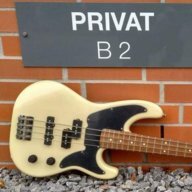

When I swapped pickups in my PJ recently from stock Fenders to Aguilar HCs I switched to a blend, and I like it better. For me having the single volume to control the level of the bass is easier in real playing situations. YMMV, of course.
Latest posts
-
 Future Impact now available!! WAS: deep impact reissue!!! interested?
- Latest: Andras Szalay
-
 I didn't need it but I bought it anyway new (to me) cab day...
- Latest: S-Bigbottom
-

-

