• TalkBass has been independent since 1998. Add your voice.
    Create a free account to reply to discussions, view embedded media, and browse with fewer display ads.
    Join freeLog in
    Want zero display ads or expanded classifieds tools? Compare plans.

Cheap basses with best stability. (under 300)

Another vote for a Squier VM P. My Affinity is also pretty good stability wise, but needed an upgrade in electronics. Pots to full size 250K and pickup to Seymour Duncan Quarter Pound- probably could have gotten by with the stock ceramic one, but found a deal on a used SD QP and went for it.
 
I've been (re)learning on a Edge 09 from Dean for about the past two years with a set of 50-110 on it. I've never had the slightest bit of issue with the neck / action / intonation / truss. They're retailing at $200 direct from Dean, but I've seen them as much as $40 cheaper from Amazon vendors. YMMV.
 
Buy used. My Carvin LB70 cost $300 bucks and is the best bass I have owned. And those cost more than double that new.

+1 to shopping used, private sale.

Apart from the bang-for-buck ratio being better, an instrument that's been around for a while will have settled in. The wood will be a bit drier, the stresses will have gone to their equillibrium point. In plain language, the neck will have moved whatever way it's gonna move, and been done with it.

Since stability was the key factor in the OP's question, buying used seems like a smart idea.


Added: The tradeoff is that ya gotta check the bass over well to make sure everything works properly. And presumably there will be some fret wear and some dings.
 
...I had a Fender jazz mex that was the best...

Now that you mention it...For some time now I've been buying MIM J basses any time I find one in good shape. Clean 'em up, new strings and a setup, then put it next to my current favorite MIM J bass for a while. I don't have any hard cutoff for making a decision, and truth be told it's their choice. One adopts me and the other one goes back out into the big wide world. I've paid between $125~$500 and oddly enough one of the least expensive ones of the lot is my current fave. This thing has put four other candidates back on the street and is about to retire number five. It's got cosmetic issues that would take five times what's it worth to put right, but it's set up for 115 instead of 105 and I am seriously liking it no matter how dog eared it might be. It was beat by a strap featuring a short piece of nylon and a plastic clip on both ends. You click the middle out when you put it away to avoid damaging your bass by leaving a standard faux seat belt strap permanently attached. They stayed on the bass and within the radius of those little short ends, it is beat up pretty bad. The front is mostly finish damage, but the back has some decent chunks knocked off.

Here's why it keeps winning though. I left it in a van in a gig bag for most of last year, it came out to be played but it lived in the truck otherwise and it's just solid. I had a Highway one for indoors and the MIM for when things got cold or dicey. Holds a setup really well with a Fender vintage or babicz bridge. It's had both about equal time now and I'm thinking the babicz is gonna win out, but I like big shiny things so there is that.

It's parts bass heaven with the J (and P) bass, Fender aftermarket is bottomless when compared to the rest of bassdom. It takes five minutes to order anything you need/want and another 3 days to have it in hand, all at a reasonable price. I can't think of a country on earth where you couldn't have any j bass part you might need/want in three days to a week, even in a combat zone.

Without the MIM J I'd be that guy asking where to find Peavey parts. I know they exist and I know they are good, but the last two second hand Peavey basses I got from our favorite big box place went back because of minor issues. One had a worn out machine head and the other one had wonky electrics, both times cost to repair or replace was going to add considerably to the price because of rarity. I'm not giving up though. When the right Peavey comes along I'm gonna snag it. It's still gonna have to beat what I got now, but hey half the fun is getting there. :D
 
Assuming you are in the US, rondomusic.com is your friend. I tend to like chunky necks, which are inherently more stable. That said, no bass I've ever gotten from rondo had neck stability issues... and I've bought quite a few.
As a Canadian, I love Rondo's offerings...but by the time you import them and pay the stupid fees, you're into new Squier range. :( I wish I knew where Kurt ordered them from, so I could just go direct to Canada.
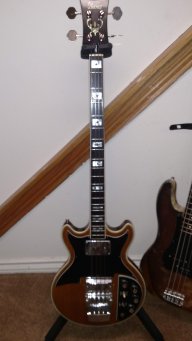
 
A quick price range search on the GC website yields a bunch of Ibanez basses, but with those small necks, I don't know how it would be for stability. Squier VM lands in your range, and they play very nicely. Also, as others have said, the Ray4 could be a good option.
Have you ever considered a five string? I play in an instrumental rock band, and I've found that having that extra string can open up the scales. The inherently larger neck might help with stability, and I think a lot of mid-priced fivers can be found in you used range. Happy searching!:thumbsup:
I do have a Spector Performer 5, but I rarely use it because I'm starting to lean towards slimmer necks. I just use a pitch shifter when I need extra range.
 
Just kind of curious which basses you're using that get banana necks.
The one that is the worst is my Washburn T-12. I love the feel of the neck because it has 24 frets and incredibly deep cutaways. But the downside is that it is nearly impossible to keep the neck straight since there is minimal contact between the body and neck heel. I have set it up perfectly many times where the action is ultra low and ready to shred, but as soon as it goes into a different environment it bows down and the action becomes so high that you could slide your fingers between the strings and fingerboard with ease.
 

Latest posts