So finally getting around to actually working on getting better with an actual practice regime since I started it for guitar. I stumbled across Frank Gambale Chop building exercise for guitar and its marvelous. Anything similar for bass? or just play guitar music?

Enjoy the benefits of a premium membership!
Upgrade Account
-
TalkBass has been independent since 1998. Add your voice.
Create a free account to reply to discussions, view embedded media, and browse with fewer display ads.
Join free Log in
Want zero display ads or expanded classifieds tools? Compare plans.
You are using an out of date browser. It may not display this or other websites correctly.
You should upgrade or use an alternative browser.
You should upgrade or use an alternative browser.
Chop building exercises
- Thread starter AlphariusOmegon
- Start date
More options
Who Replied?
Major scale and Minor scale, in 3rds, 4ths, 5ths, 6ths ascending/descending over two octaves. Just for a start.
Build slowly and deliberately giving each note its full value to around 120bpm.
Build slowly and deliberately giving each note its full value to around 120bpm.

Find a good teacher. Studying with a good teacher (and obviously practicing) is the fastest way to get good.
Ear training and timing. You got those, you're going to work. Slapping, and 16th notes @ 180bpm are nice, fun, but hearing and timing... can't beat 'em.
(oh yea, and reading. Never stop working on reading)
(oh yea, and reading. Never stop working on reading)
Major scale and Minor scale, in 3rds, 4ths, 5ths, 6ths ascending/descending over two octaves. Just for a start.
Build slowly and deliberately giving each note its full value to around 120bpm.
The difficulty with Charlie Parker lines is the wide and awkward intervals. If you start practising scales as above, you'll find muting is a very important part of what you do too. That little exercise was part of the technique module at the Guitar Institute, London in 95/96. Then you move to Melodic Minor modes.
Interval recognition - Wikipedia
You may have your own. Practise the interval from the root. Then combine them so you know what the intervals sound like played together. Then stack on top, eventually you get to recognise chords and alterations.
You may have your own. Practise the interval from the root. Then combine them so you know what the intervals sound like played together. Then stack on top, eventually you get to recognise chords and alterations.
As an Amazon Associate, TalkBass may receive commissions from qualifying purchases made via links on this site.
@Dean N That is exactly what I am needing. I have theory learning covered. I just want to work on the mechanical part of it. must widdle faster

I also have the Bass Fitness book that @Dean N mentioned, and it's pretty good.
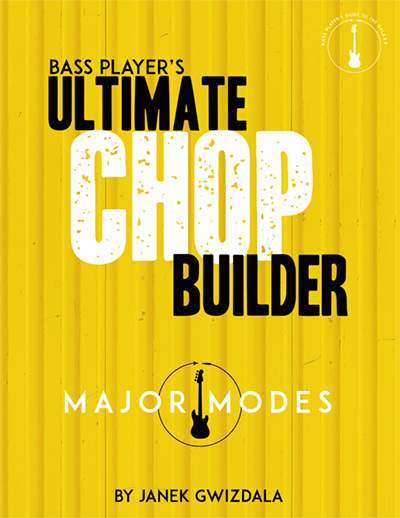
Janek Gwizdala Link Removed dedicated to practicing and chops, and puts them on sale somewhat regularly. These two in particular might be worth a look for you. Link Removed is next on my list to check out.
5sg.
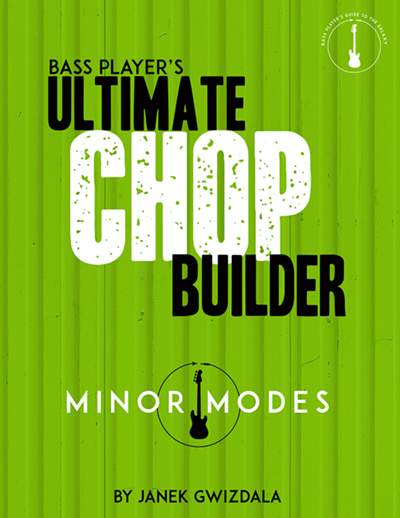
Janek Gwizdala Link Removed dedicated to practicing and chops, and puts them on sale somewhat regularly. These two in particular might be worth a look for you. Link Removed is next on my list to check out.
5sg.
Another option to check out is the Scott's Bass Lessons 26-Week Technique Accelerator course. He only offers enrollment a couple times a year and it's not cheap, but it will reprogram your technique. I'm currently on week 13 of the third enrollment, and it definitely has me rethinking and really re-focusing on my right hand in particular.
Topics covered include alternate vs. economy plucking, fretting hand independence, fingerboard shifting, and several weeks dedicated to building speed. The right hand plucking is where I've noticed a difference for myself in particular. After 20 years using a hybrid of both techniques, I've worked on moving totally to economy, and it's made a difference in my playing.
5sg.

Topics covered include alternate vs. economy plucking, fretting hand independence, fingerboard shifting, and several weeks dedicated to building speed. The right hand plucking is where I've noticed a difference for myself in particular. After 20 years using a hybrid of both techniques, I've worked on moving totally to economy, and it's made a difference in my playing.
5sg.
Pick a song where the bass moves around considerably, something like Walk don't Run or something comparable, learn the notes for the chord changes needed and go to work.
This will teach you scalar lines, how major and related minor chords work together, timing including rests, syncopation and other nuances required. Not many bass lines follow an entire scale, sometimes a portion, so I would focus more on triads, then the addition of 6ths, 7ths, and later on upper extensions. Practice these in the circle of 4ths and learn to recognize the sound of how these chords move from one to the next. A tremendous amount of music uses these patterns and will sharpen your ears. This will advance you quickly past playing 3 chord tunes into something more sophisticated.
Practicing scales by themselves are good for learning to hear intervals and moving about on the fingerboard, but it is basically the most elementary lessons that are necessary, but get boring pretty quickly.
This will teach you scalar lines, how major and related minor chords work together, timing including rests, syncopation and other nuances required. Not many bass lines follow an entire scale, sometimes a portion, so I would focus more on triads, then the addition of 6ths, 7ths, and later on upper extensions. Practice these in the circle of 4ths and learn to recognize the sound of how these chords move from one to the next. A tremendous amount of music uses these patterns and will sharpen your ears. This will advance you quickly past playing 3 chord tunes into something more sophisticated.
Practicing scales by themselves are good for learning to hear intervals and moving about on the fingerboard, but it is basically the most elementary lessons that are necessary, but get boring pretty quickly.


Firstly, I have no idea where you’re at in your bass journey so forgive me if this is redundant.
My 2¢:
Learning music (ultimately an instrument) is analogous to learning a language. When someone is new to a language or wanting to advance their skills, what’s the first thing they should do? Learn a bunch of nouns, verbs, adjectives, syntax, sentence structure void of conversational context right? Nope! The best thing is to learn is appropriate ways to respond to common day-to-day conversation. Once they are comfortable with that, then they can dig out the thesaurus and see what other words can be used to go beyond the basics. What’s even better if they’re conversing regularly with people that are fluent in the language as they’ll be able to pick up the context of advanced words and build vocabulary much faster. When learning anything, experience come first. Labeling comes second.
It’s pedagogical nonsense to teach beginner to intermediate players scales and triads and any form of theory void of a musical experience they can contextualize it with. When the language learner can hold down a moderate conversation then you can say, “by the way, ‘dog’ is a noun, ‘run’ is a verb, ‘quickly’ is an adjective, etc” but by no means should the labeling be prioritized over the learning experience. When you think about it, children are fluent in their home language before entering school. They have hundreds to thousands of words to contextualize their learning.
Translated into a musical context: learn a bunch of songs, cliche bass licks, and other foundational “roles” of the bass in different genres. I’m not saying it’s not useful to know your major/minor pentatonic and major/minor diatonic scales. Warm up with them, play them to a metronome, but that’s about it. A warm up. In my opinion, there’s no reason to be shedding “the 47 ways to use 5th mode of Spanish Phrygian”... unless you’re an advanced player, or just find it fun. I’m not against learning things for fun. But as a pragmatist, I tend to lean away from scales other than for warmups. Find some pieces to study that are fun and challenging. I learned way more from learning Sir Duke then any scale method book... and that was after a degree in jazz studies
I realize this was a bit of a rant and more than 2¢!
My 2¢:
Learning music (ultimately an instrument) is analogous to learning a language. When someone is new to a language or wanting to advance their skills, what’s the first thing they should do? Learn a bunch of nouns, verbs, adjectives, syntax, sentence structure void of conversational context right? Nope! The best thing is to learn is appropriate ways to respond to common day-to-day conversation. Once they are comfortable with that, then they can dig out the thesaurus and see what other words can be used to go beyond the basics. What’s even better if they’re conversing regularly with people that are fluent in the language as they’ll be able to pick up the context of advanced words and build vocabulary much faster. When learning anything, experience come first. Labeling comes second.
It’s pedagogical nonsense to teach beginner to intermediate players scales and triads and any form of theory void of a musical experience they can contextualize it with. When the language learner can hold down a moderate conversation then you can say, “by the way, ‘dog’ is a noun, ‘run’ is a verb, ‘quickly’ is an adjective, etc” but by no means should the labeling be prioritized over the learning experience. When you think about it, children are fluent in their home language before entering school. They have hundreds to thousands of words to contextualize their learning.
Translated into a musical context: learn a bunch of songs, cliche bass licks, and other foundational “roles” of the bass in different genres. I’m not saying it’s not useful to know your major/minor pentatonic and major/minor diatonic scales. Warm up with them, play them to a metronome, but that’s about it. A warm up. In my opinion, there’s no reason to be shedding “the 47 ways to use 5th mode of Spanish Phrygian”... unless you’re an advanced player, or just find it fun. I’m not against learning things for fun. But as a pragmatist, I tend to lean away from scales other than for warmups. Find some pieces to study that are fun and challenging. I learned way more from learning Sir Duke then any scale method book... and that was after a degree in jazz studies
I realize this was a bit of a rant and more than 2¢!
Another option to check out is the Scott's Bass Lessons 26-Week Technique Accelerator course. He only offers enrollment a couple times a year and it's not cheap, but it will reprogram your technique. I'm currently on week 13 of the third enrollment, and it definitely has me rethinking and really re-focusing on my right hand in particular.
Topics covered include alternate vs. economy plucking, fretting hand independence, fingerboard shifting, and several weeks dedicated to building speed. The right hand plucking is where I've noticed a difference for myself in particular. After 20 years using a hybrid of both techniques, I've worked on moving totally to economy, and it's made a difference in my playing.
5sg.
View attachment 3866613
Having loved the Practice Accelerator, I really really want to enrol in the next session.
What kind of chops do you want to build? For the fret hand? the pluck hand? do you want
to play slap? thumb style reggae? ghosted 16th note funk? speed picking? tapping?
There are books, and videos available for any style.
to play slap? thumb style reggae? ghosted 16th note funk? speed picking? tapping?
There are books, and videos available for any style.
Firstly, I have no idea where you’re at in your bass journey so forgive me if this is redundant.
My 2¢:
Learning music (ultimately an instrument) is analogous to learning a language. When someone is new to a language or wanting to advance their skills, what’s the first thing they should do? Learn a bunch of nouns, verbs, adjectives, syntax, sentence structure void of conversational context right? Nope! The best thing is to learn is appropriate ways to respond to common day-to-day conversation. Once they are comfortable with that, then they can dig out the thesaurus and see what other words can be used to go beyond the basics. What’s even better if they’re conversing regularly with people that are fluent in the language as they’ll be able to pick up the context of advanced words and build vocabulary much faster. When learning anything, experience come first. Labeling comes second.
I got the impression that the OP had already worked through a Frank Gamble book.
It’s pedagogical nonsense to teach beginner to intermediate players scales and triads and any form of theory void of a musical experience they can contextualize it with. When the language learner can hold down a moderate conversation then you can say, “by the way, ‘dog’ is a noun, ‘run’ is a verb, ‘quickly’ is an adjective, etc” but by no means should the labeling be prioritized over the learning experience. When you think about it, children are fluent in their home language before entering school. They have hundreds to thousands of words to contextualize their learning.
Translated into a musical context: learn a bunch of songs, cliche bass licks, and other foundational “roles” of the bass in different genres. I’m not saying it’s not useful to know your major/minor pentatonic and major/minor diatonic scales. Warm up with them, play them to a metronome, but that’s about it. A warm up. In my opinion, there’s no reason to be shedding “the 47 ways to use 5th mode of Spanish Phrygian”... unless you’re an advanced player, or just find it fun. I’m not against learning things for fun. But as a pragmatist, I tend to lean away from scales other than for warmups. Find some pieces to study that are fun and challenging. I learned way more from learning Sir Duke then any scale method book... and that was after a degree in jazz studies
I realize this was a bit of a rant and more than 2¢!
I got the impression the OP had already worked through a Frank Gambale book.
I found your reply sry interesting, would you be willing to recommend any books that you feel are worth buying thanks hFirstly, I have no idea where you’re at in your bass journey so forgive me if this is redundant.
My 2¢:
Learning music (ultimately an instrument) is analogous to learning a language. When someone is new to a language or wanting to advance their skills, what’s the first thing they should do? Learn a bunch of nouns, verbs, adjectives, syntax, sentence structure void of conversational context right? Nope! The best thing is to learn is appropriate ways to respond to common day-to-day conversation. Once they are comfortable with that, then they can dig out the thesaurus and see what other words can be used to go beyond the basics. What’s even better if they’re conversing regularly with people that are fluent in the language as they’ll be able to pick up the context of advanced words and build vocabulary much faster. When learning anything, experience come first. Labeling comes second.
It’s pedagogical nonsense to teach beginner to intermediate players scales and triads and any form of theory void of a musical experience they can contextualize it with. When the language learner can hold down a moderate conversation then you can say, “by the way, ‘dog’ is a noun, ‘run’ is a verb, ‘quickly’ is an adjective, etc” but by no means should the labeling be prioritized over the learning experience. When you think about it, children are fluent in their home language before entering school. They have hundreds to thousands of words to contextualize their learning.
Translated into a musical context: learn a bunch of songs, cliche bass licks, and other foundational “roles” of the bass in different genres. I’m not saying it’s not useful to know your major/minor pentatonic and major/minor diatonic scales. Warm up with them, play them to a metronome, but that’s about it. A warm up. In my opinion, there’s no reason to be shedding “the 47 ways to use 5th mode of Spanish Phrygian”... unless you’re an advanced player, or just find it fun. I’m not against learning things for fun. But as a pragmatist, I tend to lean away from scales other than for warmups. Find some pieces to study that are fun and challenging. I learned way more from learning Sir Duke then any scale method book... and that was after a degree in jazz studies
I realize this was a bit of a rant and more than 2¢!
Right. But that doesn't necessarily give me a context to OP's musical fluency.I got the impression the OP had already worked through a Frank Gambale book.
I was working through a Jaco method book and Patitucci's 60 Melodic Etudes before I knew what a II-V-I lick was (jazz school context). My jazz vocabulary was very low and I was prioritizing method and theory. In that context, I would have been much better off playing along to records or transcribing than going through a method/scale book. Again, the pragmatist in me.
Anway, to each their own.
Hey Huw, the point of that comment was to get players outside of books and into playing music. That said, if you're wanting books I would reccomend something like Standing in the Shadow of Motown or other books that are transcription based as opposed to theory/method based. At least that way you can play along to a song at the end of your study! I still think that learning a song by ear is one of the best ways to do it!I found your reply sry interesting, would you be willing to recommend any books that you feel are worth buying thanks h


