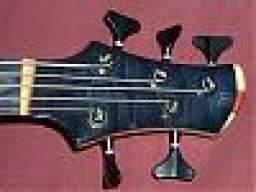
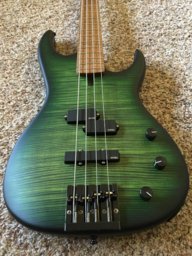
You're correct that the body and neck have more of an impact on the tone, but with the Cirrus basses it is easier to identify the woods used by the top wood. You know what the body and neck are because of the top wood used, but you can't say the same in revirse.
For example, if you talk about a "redwood" Cirrus, you know that the body is alder and the neck is maple/purpleheart. If you say "bubinga", you know the body is walnut and the neck is walnut/maple. But if you say "alder", the top could be either redwood or maple. If you say "walnut", the top could be bubinga, walnut, or wenge. This may be confusing if you don't know the Cirrus product line, but Cirrus owners usually describe their basses by the top wood to keep it simple.
By the way - all of this goes out of the window if you're talking about a Custom Shop Cirrus, becuase any combination of woods could be used.