So I’m a jazz player who’s been learning some classical recently and just bowing in general as I never learned it when I started playing, and I’ve noticed that classical players and jazz players have very different bow sounds. Jazz bowing is a lot more scratchy and midrangey, whereas classical tends to sound more full and smooth. I think both of these serve their styles very well, and I was wondering how each of those sounds are achieved as I would like to be able to eventually do both.

Enjoy the benefits of a premium membership!
Upgrade Account
-
TalkBass has been independent since 1998. Add your voice.
Create a free account to reply to discussions, view embedded media, and browse with fewer display ads.
Join free Log in
Want zero display ads or expanded classifieds tools? Compare plans.
You are using an out of date browser. It may not display this or other websites correctly.
You should upgrade or use an alternative browser.
You should upgrade or use an alternative browser.
Double Bass Classical vs Jazz bowing
- Thread starter CoolGuyBassist
- Start date
More options
Who Replied?
There are arco players much better than I on this forum, more qualified to answer your question, but I'll take a stab at it:
1) Setup: if you're an orchestral player, you're bass is setup to respond better to arco (string choice, and string height)
2) Practice: Classical players play and practice arco 90% of the time, while Jazz players play and practice arco 30% of the time. Classical players arco tone is better becasue they spend more time on it than jazz players.
Maybe I'm wrong, but those seem the most obvious differences to me.
1) Setup: if you're an orchestral player, you're bass is setup to respond better to arco (string choice, and string height)
2) Practice: Classical players play and practice arco 90% of the time, while Jazz players play and practice arco 30% of the time. Classical players arco tone is better becasue they spend more time on it than jazz players.
Maybe I'm wrong, but those seem the most obvious differences to me.



Definitely some of the sound is related to piezo pickups and their settings being geared more towards pizz. Since I've been using an Ischell contact mic solely for the past few months, my arco sound has become much less strident unless I purposely intend it to.
But also I do think that sort of jazz arco sound that favors a more brighter sound is still inherent to the tradition. Slam Stewart and Paul Chambers, who arguably set the standard for jazz arco playing, inherently have a buzzy/nasaly tone. That also has to do with them playing gut strings hard. But also I think that probably comes from a desire to imitate horns and vocalists. Like Red Mitchell said he was hearing Gene Ammons when he used the bow. I've lately been finding that the solos I play with the bow are a little more horn like than those I play pizz.
Personally I like to add a little more rosin than I would do for a classical concert when I'm on a jazz gig and want to use it more. And I tend to play with my bow almost dead center between the fingerboard and bridge to get a more bright sound, and to help with articulating long 8th note lines clearly.
If you haven't yet, I highly recommend getting John Goldsby's book on jazz arco technique if you're deeply curious about the bows use in jazz. It's been a fun journey using it more and more and people honestly dig it when bassist use the bow and use it well in jazz.
But also I do think that sort of jazz arco sound that favors a more brighter sound is still inherent to the tradition. Slam Stewart and Paul Chambers, who arguably set the standard for jazz arco playing, inherently have a buzzy/nasaly tone. That also has to do with them playing gut strings hard. But also I think that probably comes from a desire to imitate horns and vocalists. Like Red Mitchell said he was hearing Gene Ammons when he used the bow. I've lately been finding that the solos I play with the bow are a little more horn like than those I play pizz.
Personally I like to add a little more rosin than I would do for a classical concert when I'm on a jazz gig and want to use it more. And I tend to play with my bow almost dead center between the fingerboard and bridge to get a more bright sound, and to help with articulating long 8th note lines clearly.
If you haven't yet, I highly recommend getting John Goldsby's book on jazz arco technique if you're deeply curious about the bows use in jazz. It's been a fun journey using it more and more and people honestly dig it when bassist use the bow and use it well in jazz.

...
But also I do think that sort of jazz arco sound that favors a more brighter sound is still inherent to the tradition.
Yeah. I think this is true for pretty much all instruments, not just bass. There are a lot of excellent jazz trumpeters who, due to their sound, probably wouldn't get jobs in top orchestras.
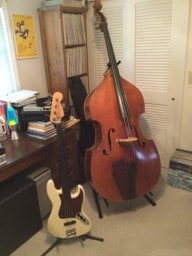
Edgar Meyer's arco work might be something you should check out if you haven't already. It straddles various styles including classical, jazz, new-grass etc. In all situations he gets a great tone that he seems to modify for the situation. Eberhard Weber also did some interesting arco playing in a more modern, electrified European jazz context.

It's the amount of thoughtful, guided practice: Hundreds vs Thousands of hours. Good bowing tone requires years of dedication and work , just like any other instrument . How long does it take a trumpet player to get a good tone, and be able to employ it easily? A reed player ?
Three hours/day for one year ~ 1000 hrs. A good conservatory student likely practices 5-6hrs/day for four years, plus probably put in 3-5 years at possibly 1hr/day before that , so by the time they graduate, probably 10k hours in. When Edgar Meyer answers the "how much should I practice?" question with his famous "12 hours a day" , it's not just snark.
Three hours/day for one year ~ 1000 hrs. A good conservatory student likely practices 5-6hrs/day for four years, plus probably put in 3-5 years at possibly 1hr/day before that , so by the time they graduate, probably 10k hours in. When Edgar Meyer answers the "how much should I practice?" question with his famous "12 hours a day" , it's not just snark.
Jazz bowing is a lot more scratchy and midrangey, whereas classical tends to sound more full and smooth. I think both of these serve their styles very well, and I was wondering how each of those sounds are achieved as I would like to be able to eventually do both.
Look at what jazz players and classical players focus on, too. The jazz player is likely playing by ear, focusing on time, pitch, and note selection - basically making music from thin air; the classical player does not select her next note, or any of her notes, and she has practiced playing the piece with the tone and articulation that the piece calls for. She must also blend with her section and the other players in the orchestra ... something the jazz bassist doesn't worry about. Much more of her attention can be paid to making a full, smooth, beautiful sound.
The supremely-versatile bassist is one who can improvise AND use his bow (and fingers) to produce any sound he desires.

Greg Clinkingbeard
Commercial User
The strings and bass have a lot to do with it. If you took the average bass used in an orchestra to a jazz gig it might not be the best choice.
That said, learning to get a great tone with the bow is a skill that takes time.
That said, learning to get a great tone with the bow is a skill that takes time.
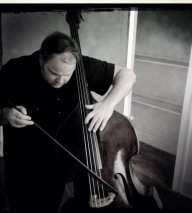
I would say pizzicato generally falls in the "playing" category or at least in "repertoire" category. Therefore, bassists should practice arco about 90% regardless of style.2) Practice: Classical players play and practice arco 90% of the time, while Jazz players play and practice arco 30% of the time. Classical players arco tone is better becasue they spend more time on it than jazz players.
One factor you are likely hearing besides strings is the amp. As far as historical (and many modern) recordings, they are very often on gut. Also, different periods and combinations of pick up & amps come into play.
Another aspect is that a jazz player is expected to have personal tone, and a classical player is expected to fit into an accepted spectrum of sound.
Still, plenty of jazz player have clean and beautiful arco tone - see the new Marc Johnson solo album!


