• TalkBass has been independent since 1998. Add your voice.
    Create a free account to reply to discussions, view embedded media, and browse with fewer display ads.
    Join freeLog in
    Want zero display ads or expanded classifieds tools? Compare plans.

What Frequency Response is Actually Needed for Low Tuning?

So long as you have a decent forklift, moving a 218 is a breeze. I don't see a problem.... ;-)

AFAIK Danley is pretty much the King of Super LF.

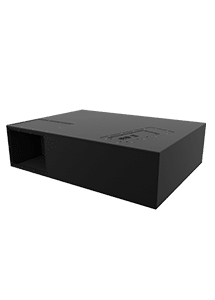
Danley DTS10 has response down to 10hz. One weighs 285lbs, and you may need multiples.
 
1787765753253.webp
 
He certainly is - he's done some interesting things for the government, and wildlife (calling elephants from long distances, etc...he's a very interesting guy who's work (and maybe his personality) are both a little "out there". He never really does anything by the "book" - always a twist or two.
Yes, and his work is well guided by science too.

What about the he Bag End ELF (or the current INFRA) for that last bottom octave/sub?

Does it really work in the real world?
Sure, it's possible to generate extended frequency response from a sealed cabinet by this method, but the mechanical power handling falls like a rock as the integration filters apply the algorithm.

A cabinet that has 400 watts RMS mechanical power handling at 60Hz will have about 30 watts RMS mechanical power handling at 30hz. It also takes a pretty strong motor and larger than normal Xmax combined with a steep tracking HPF to achieve this performance. To achieve higher volume, it's necessary to use (many) multiples.

The 12dB/octave integrator results in a 12dB/octave LF boost (the start frequency depends on the speaker model) which means that when maximum SPL is held constant, the effective power handling falls at the same rate. This is the part that's often ignored or misunderstood.


Yes, and his work is well guided by science too.


Sure, it's possible to generate extended frequency response from a sealed cabinet by this method, but the mechanical power handling falls like a rock as the integration filters apply the algorithm.

A cabinet that has 400 watts RMS mechanical power handling at 60Hz will have about 30 watts RMS mechanical power handling at 30hz. It also takes a pretty strong motor and larger than normal Xmax combined with a steep tracking HPF to achieve this performance. To achieve higher volume, it's necessary to use (many) multiples.

The 12dB/octave integrator results in a 12dB/octave LF boost (the start frequency depends on the speaker model) which means that when maximum SPL is held constant, the effective power handling falls at the same rate. This is the part that's often ignored or misunderstood.


Thanks, Andy.
 
My point is extended LF can enhance the listening experience, not that you can discern pitch to 10hz or lower.

AFAIK Strong aural pitch perception does not extend to 20hz.
Sort of. If it is that low, your ears cant percieve it and your body doesn't care if the rumble it's feeling comes from the fundamental or from the first harmonics. So a cab that goes down to 40 hz is pretty much as good as one that goes down to brown note territory.

Imho it doesn't make much sense to build a bass cab to go that low. It will be a pita to lug around and the beneffits to the listening experience are marginal if any.

And all that without considering the acoustics of whatever venues you are intending to gig with it. I would not expect any of the places I play in to respond remotely good if I start pumping 25 hz at a decent volume into them.
 
The generic "look at pro subs for design cues" is a little misleading IMO. Those are designed for efficiency as well as some balance of deep response and size (Hoffman's Iron Law). If I were building my own cab (thinking about this as well), I would give zero rips about the efficiency (if I'm using it for a practice cab at home) and I would ONLY focus on low end response and cabinet size. Case in point - I'm developing a 'oversized bookshelf' speaker with a 5.25" woofer that digs to ~32Hz @-3dB (that's lower than ALL bass guitar cabs I've seen) and is definitely NOT what one would call 'efficient' at ~80dB. The port is tricky and it's not 'tiny', but it digs way deeper than any 'oversized bookshelf' (or floor standing for that matter) ought to. Watts are cheap and my volume requirements are relatively low, so I just don't care about sensitivity in this context. Also, yes, I have built a prototype and it does indeed hit that 32Hz target IRL (according to both my ear and measurement mic).

There is a lot to be said about 'timbre', 'overtones', 'harmonics', etc things that trick our ears into thinking they're hearing a note that they're actually not BUT in my experience, there's simply no replacement for hitting the fundamental (or at least having a significant amount of fundamental being reproduced). Harmonics can't 'excite' your room, shake your leg hairs, or knock kidney stones lose like a real fundamental note can.

I played through an Ampeg SVT 410HLF for a few years (28Hz @-10dB) and nothing else has been able to touch it for low end 'authority', FEELING the air move, and simply "sounding huge". If I were building my own cab for my own practice, I would probably get a ~12" home theater sub to cover the 25-80Hz range, a ~6" mid (just pulling driver sizes out of my butt as the ACTUAL design would need proper design work, driver matching, volume/port displacement calculations (including bracing, etc.....)), and a nice tweeter. Crossover design is surprisingly complex too (especially if you factor in phase/time alignment) and you need proper measurement gear to do it 'right', but to answer your basic question, I would aim for at least 25Hz @-10dB.

Aaaaallso, to throw another wrench in things. Room gain. That's a thing and entirely unpredictable unless we know the room you're playing in.
 
Last edited: