• TalkBass has been independent since 1998. Add your voice.
    Create a free account to reply to discussions, view embedded media, and browse with fewer display ads.
    Join freeLog in
    Want zero display ads or expanded classifieds tools? Compare plans.

Club Sadowsky!!!

I always that boosting treble and cutting VTC would be counteractive. It seemed illogical. What gives?
Not to put words in Chef's mouth, but...

This approach works pretty well; because, boosting the treble around 30% +/- causes the bass to speak well; while simultaneously increasing the VTC cut removes that fingernails on chalkboard sizzle on the top. The result is an increased presence in the bass' voice while eliminating the objectionable sizzle on top.

At least, that's why I do that also.
 
Not to put words in Chef's mouth, but...

This approach works pretty well; because, boosting the treble around 30% +/- causes the bass to speak well; while simultaneously increasing the VTC cut removes that fingernails on chalkboard sizzle on the top. The result is an increased presence in the bass' voice while eliminating the objectionable sizzle on top.

At least, that's why I do that also.
I'll have to start experimenting with this. I do notice that rolling on too much VTC can get "boxy" sounding.
 
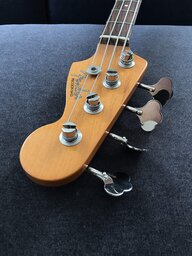
I've gotta ask: what does the roasted maple board sound and feel like? Any distinguishing difference from a non-roasted neck or board?

From the Sadowsky website:

Sadowsky Guitars has always taken pride in the quality and stability of our neck wood. We are now pleased to offer "roasted maple" necks for an unprecedented level of stability. Lumber for maple necks and fingerboards is placed in a special oven after normal kiln dying. The wood is roasted at temperatures ranging from 180º to 220º Celsius. The result of this treatment is wood that is significantly more resistant to absorbing or releasing moisture. With this increased stability, the "roasted maple" process enables us to offer figured maple neck blanks for the first time in our three decades of instrument making. We have always advocated that figured neck stock was too unstable to use. However, any piece of wood than has a stability problem will warp during the roasting process and be discarded. It would also be a recommended option for players who reside in areas of extreme humidity (low or high), or who travel a lot through variable climates, as well as players who desire a figured maple neck for aesthetic reasons.​

There is no mention of tone above, though I'm sure some audiophiles will claim to hear a difference. ;)

I've had zero stability problems with my Sadowskys, but If I get another it will have a roasted neck simply because I love the appearance of roasted maple, figured or not.
 
Not to put words in Chef's mouth, but...

This approach works pretty well; because, boosting the treble around 30% +/- causes the bass to speak well; while simultaneously increasing the VTC cut removes that fingernails on chalkboard sizzle on the top. The result is an increased presence in the bass' voice while eliminating the objectionable sizzle on top.

At least, that's why I do that also.

You have to remeber that the treble control on the sadowsky EQ effects a very wide range of frequencies, from 300hz on up, peaking at 4k. And the VTC is pretty complex too, you are moving the filter frequency down when you back it off, but because its passive it also changes the whole shape of the signal, softening and fattening the lower mids. There are no wrong settings but a dash of scoop from the 2 band (with highs boosted a little more than lows) with a little high highs lopped off with the vtc is a very right setting!
 
From the Sadowsky website:

Sadowsky Guitars has always taken pride in the quality and stability of our neck wood. We are now pleased to offer "roasted maple" necks for an unprecedented level of stability. Lumber for maple necks and fingerboards is placed in a special oven after normal kiln dying. The wood is roasted at temperatures ranging from 180º to 220º Celsius. The result of this treatment is wood that is significantly more resistant to absorbing or releasing moisture. With this increased stability, the "roasted maple" process enables us to offer figured maple neck blanks for the first time in our three decades of instrument making. We have always advocated that figured neck stock was too unstable to use. However, any piece of wood than has a stability problem will warp during the roasting process and be discarded. It would also be a recommended option for players who reside in areas of extreme humidity (low or high), or who travel a lot through variable climates, as well as players who desire a figured maple neck for aesthetic reasons.​

There is no mention of tone above, though I'm sure some audiophiles will claim to hear a difference. ;)

I've had zero stability problems with my Sadowskys, but If I get another it will have a roasted neck simply because I love the appearance of roasted maple, figured or not.
+1. Totally agree.

I am one who thinks the flexural properties of the neck have a big influence on the acoustic resonance of the instrument; and thus, in ways perceptible to the player, on the tone of the instrument. When I used to play completely passive basses, I was pretty hard on this point. More recently using the Sadowsky preamp with the Delano JMVC pups, I am more inclined to think I could put that setup on a 2x4 from Home Depot and get good tone. That electronics rig is THAT good for me. It trumps a lot of the other factors. Nonetheless, I admire Roger's efforts with the roasted necks and would go that direction if specifying a new instrument. And, I suspect the roasting does influence the stiffness of the neck. The bamboo fly rod makers have used various heat treatments for decades to modify the stiffness of bamboo, which is admittedly a grass and not wood. But, I would expect similar structural effects on the wood properties.
 
From the Sadowsky website:

Sadowsky Guitars has always taken pride in the quality and stability of our neck wood. We are now pleased to offer "roasted maple" necks for an unprecedented level of stability. Lumber for maple necks and fingerboards is placed in a special oven after normal kiln dying. The wood is roasted at temperatures ranging from 180º to 220º Celsius. The result of this treatment is wood that is significantly more resistant to absorbing or releasing moisture. With this increased stability, the "roasted maple" process enables us to offer figured maple neck blanks for the first time in our three decades of instrument making. We have always advocated that figured neck stock was too unstable to use. However, any piece of wood than has a stability problem will warp during the roasting process and be discarded. It would also be a recommended option for players who reside in areas of extreme humidity (low or high), or who travel a lot through variable climates, as well as players who desire a figured maple neck for aesthetic reasons.​

There is no mention of tone above, though I'm sure some audiophiles will claim to hear a difference. ;)

I've had zero stability problems with my Sadowskys, but If I get another it will have a roasted neck simply because I love the appearance of roasted maple, figured or not.

I live in New Orleans, the home of extreme humidity and temperature changes, so it's a good thing. The bass was shipped from CT when it was in the mid 30's and came to LA where it was in the 70s. The bass needed zero set up when arrived! The neck never moved, or so it seems.
 
  • Like
Reactions: Fuzzbass
The frets on my MV5 are sticking out the sides of the fretboard, I'm guessing the maple shrunk a bit due to the super cold winter we've had here in New England. I've only had the bass since last April. I'm sure it's normal, I just miss that super smooth feeling the neck used to have.

Bummer. Hasn't happened on my Sadowskys, but it has to other basses I've owned. On those, the fretboard eventually re-expanded in spring/summer once humidity returned. On that note, I'm pretty sure the cause is humidity (lack of), not temperature. Makes me wonder if I should keep acoustic guitar humidifiers (?) in the cases with the problem basses.

You could get a tech to file the fret ends. If you go that way, do it now while the ends are still sticking out.
 
The frets on my MV5 are sticking out the sides of the fretboard, I'm guessing the maple shrunk a bit due to the super cold winter we've had here in New England. I've only had the bass since last April. I'm sure it's normal, I just miss that super smooth feeling the neck used to have.

This happens on pretty much every bass I own, Sadowsky included. It's best solved by a visit to a good, established luthier - not a tech or setup guy, but a luthier.
 
This happens on pretty much every bass I own, Sadowsky included. It's best solved by a visit to a good, established luthier - not a tech or setup guy, but a luthier.
Sorry for the silly question but
If the frets are shaved and the board later expands back to its original position, will the frets now be too " short" so to speak?
 
This happens on pretty much every bass I own, Sadowsky included. It's best solved by a visit to a good, established luthier - not a tech or setup guy, but a luthier.
Honestly, I recently picked up a 2014 Fender P5 that had the exact same thing happen to. Last week I picked up a fret end dressing file from Stew Mac. Never having done this before, I took my time and within an hour the bass was done and smooth like there was never an issue. Invalid Link Removed