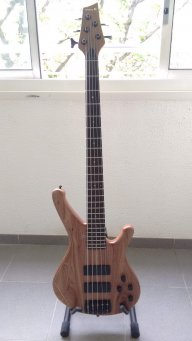
I’ve heard from the others that they also found such factory shims in their new Sandbergs. Why do they put them? I believe without a shim the neck joint would be stiffer which is better for tone?
I wouldn't worry too much about whether it may or may not have an effect on the tone. What it does is it angles the neck back slightly, making the action lower. You'd typically do this on a bass where the saddles bottom out but you still want to lower the action further, so you shim the neck until you can set the action too low with the saddles all the way down, then raise them again.
I would also agree that changing their production method where they have an ever so slighly angled neck pocket would be better, but I also know that this would complicate manufacturing. They work off the plane surface of a blank for most cuts and routing, then they'd have to introduce a jig to angle the body by half a degree or something like that when they cut the neck pocket. With the introduction of the jig you have more potential errors and more inconsistencies that may occur, tolerances may get worse, maybe you'd have to throw out some bodies or start shimming them the other way around on some, in short it's a hassle.
Shims are very much an accepted practice, on expensive Fender basses it's likely that you'll find some sandpaper used as a shim, not even wood. And I'm pretty sure that more than 90% of customers never take the neck off their bass so they'll never even know that the shim is there.