• TalkBass has been independent since 1998. Add your voice.
    Create a free account to reply to discussions, view embedded media, and browse with fewer display ads.
    Join freeLog in
    Want zero display ads or expanded classifieds tools? Compare plans.

Club Sandberg (part 2)

I'm still very happy about the build quality of this Sandy.
Totally agree. All Sandbergs I’ve owned were top notch quality. I’ve been Spector artist before and none of my Spector basses, even from the top made in USA line were not even close to Sandy’s build quality and consistency.
 
  • Like
Reactions: Nuage420
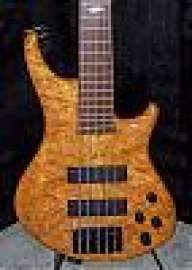
Sandberg California Supreme Quilted Maple w/Matching Headstock (Honeyburst/Blue or Redburst)
Does anyone own this model? Thoughts, Feedback from the group? I saw this in person recently and it "kinda" caught my attention. I know most of the models in this thread lean towards "Relic" but thought I'd check and see.


Seems like a cross between a Fender-ish design and the Warwick/Spector wood pallet. Never saw one, but judging from my experience with my VM5s, I'm sure it will have impressive tone and playability
 
  • Like
Reactions: TB24
Totally agree. All Sandbergs I’ve owned were top notch quality. I’ve been Spector artist before and none of my Spector basses, even from the top made in USA line were not even close to Sandy’s build quality and consistency.

Similar experience here. Warwick disciple here, have 2. Of all the basses I own/owned they were the only basses that "grabbed me" like these 2 VM5s have. The only thing I can compare it to was my 1st Warwick experience. Nice thing about these Sandbergs is that I don't feel the impulse to protect them like I do the coffee table basses. They sounded good when 1st plugged in with no tone tweaking to get my sound, and they just melt in your hands
 
When I had a TM4, I reversed the single coil on the MM pickup so that with the switch on the coil nearer the bridge was selected. I didn't like the single coil mode the way it came stock. No idea whether the California II's still come with the neck coil as the default for single coil mode.
Also, this and cutting the bass control on the preamp by the smallest amount possible put me in the general area of a 70's Jazz.
+1000. Don't understand why theydon't do it that way stock.
;)
 
When I had a TM4, I reversed the single coil on the MM pickup so that with the switch on the coil nearer the bridge was selected. I didn't like the single coil mode the way it came stock. No idea whether the California II's still come with the neck coil as the default for single coil mode.
Also, this and cutting the bass control on the preamp by the smallest amount possible put me in the general area of a 70's Jazz.
@kasbrey, when you say that you reversed the single coil of the MM pickup... do you mean that you had to modify the wiring on the switch or have you just turn the pickups in its cover to have the front coil at the rear ?

Thanks for your reply.
 
@kasbrey, when you say that you reversed the single coil of the MM pickup... do you mean that you had to modify the wiring on the switch or have you just turn the pickups in its cover to have the front coil at the rear ?

Thanks for your reply.
I wouldn't recommend it but I did the latter. Removing the cover from the pickup is a delicate task.

The switch just puts one of the coils to ground so if you can figure out the wire colours to swap it may well be the better option.
 
  • Like
Reactions: Shiveringbass
Good morning friends of Sandberg I would like to ask you a curiosity: have any of you ever made some comparison between a masterpiece model then a bass with thermo and vibration treatment and a simple model? to understand if important differences emerge .. thanks a lot!
Technically, the tone would be the same. The relic'ing + Thermo + Vibration is what makes a Masterpiece a Masterpiece. You should only be missing out aesthetically, but I have heard the Masterpiece basses as kinda a "greater than the sum of all its parts" kind of bass. I hope this helps.

Also, getting a roasted maple neck + vibration can be a less expensive workaround.
 
  • Like
Reactions: Pantofolaio79
Technically, the tone would be the same. The relic'ing + Thermo + Vibration is what makes a Masterpiece a Masterpiece. You should only be missing out aesthetically, but I have heard the Masterpiece basses as kinda a "greater than the sum of all its parts" kind of bass. I hope this helps.

Don't think this is entirely true. The vibration treatment is supposed to change the sound. The idea is that wooden instruments that have been played for many years sound better because of the vibrations they have been subjected to by those years of playing. The vibration treatment is intended to simulate this process to make your new instrument sound as good as one that has been played for many years. Whether it works or not, I've no idea, but that's the rationalle for the vibration treatment. Roasting may also change the sound of a piece of wood by altering its structure and moisture content though the main reasons may be cosmetics and possibly long term stability. Relicing is entirely about look and feel.

I have a basic that has none of these treatments and it is a really great bass. Sounds like nothing else I own and is superbly well buit. I would never pay extra to make a new bass look old. I like shiny and new. I might be persuaded by the vibration treatment if I was convinced it did alter the sound. At present I'm a little sceptical but willing to be persuaded. You'd have to play me an instrument before and afterwards to convince me and it would have to sound significantly different afterwards.

Please note, I'm not knocking relicing. I understand why some people like it, it just doesn't appeal to me personally.
 
Technically, the tone would be the same. The relic'ing + Thermo + Vibration is what makes a Masterpiece a Masterpiece. You should only be missing out aesthetically, but I have heard the Masterpiece basses as kinda a "greater than the sum of all its parts" kind of bass. I hope this helps.

Also, getting a roasted maple neck + vibration can be a less expensive workaround.
I have a tt4 masterpiece that sounds divinely..but i read that even non masterpiece models so without any treatment they sound equally divinely..it was my curiosity to understand what was the added value in terms of sound of a masterpiece model :)
 
Don't think this is entirely true. The vibration treatment is supposed to change the sound. The idea is that wooden instruments that have been played for many years sound better because of the vibrations they have been subjected to by those years of playing. The vibration treatment is intended to simulate this process to make your new instrument sound as good as one that has been played for many years. Whether it works or not, I've no idea, but that's the rationalle for the vibration treatment. Roasting may also change the sound of a piece of wood by altering its structure and moisture content though the main reasons may be cosmetics and possibly long term stability. Relicing is entirely about look and feel.

I have a basic that has none of these treatments and it is a really great bass. Sounds like nothing else I own and is superbly well buit. I would never pay extra to make a new bass look old. I like shiny and new. I might be persuaded by the vibration treatment if I was convinced it did alter the sound. At present I'm a little sceptical but willing to be persuaded. You'd have to play me an instrument before and afterwards to convince me and it would have to sound significantly different afterwards.

Please note, I'm not knocking relicing. I understand why some people like it, it just doesn't appeal to me personally.
That's right is a reasoning that I fully agree with
 
Don't think this is entirely true. The vibration treatment is supposed to change the sound. The idea is that wooden instruments that have been played for many years sound better because of the vibrations they have been subjected to by those years of playing. The vibration treatment is intended to simulate this process to make your new instrument sound as good as one that has been played for many years. .

I have a masterpiece TT4. I feel the wood treatment, whether its the roasting or the vibration, has definitely altered the wood...it feels old and more "dead".

Feel aside, I hypothesize this changes the balance of the harmonics between the fundamental vs the 2nd and third harmonics. It's subtle, but I don't think I'm imagining it and I'm very aware of the placebo effect I could be projecting.

Any marketing materials I've sen on the treatment seem to be reaching IMO though. It's not magic, and any sound change is subtle at best.

By contrast, I have a few neck through wenge Warwicks...wenge all the way through the body, and they are "springy" feeling in comparison...my theory is the specific "spring" characteristics of that wenge have a resonation frequency somewhere around the 3rd harmonic and get that characteristic Warwick mid bump. You can almost feel it though the neck, the buzz.
 
I have a masterpiece TT4. I feel the wood treatment, whether its the roasting or the vibration, has definitely altered the wood...it feels old and more "dead".

Feel aside, I hypothesize this changes the balance of the harmonics between the fundamental vs the 2nd and third harmonics. It's subtle, but I don't think I'm imagining it and I'm very aware of the placebo effect I could be projecting.

Any marketing materials I've sen on the treatment seem to be reaching IMO though. It's not magic, and any sound change is subtle at best.

By contrast, I have a few neck through wenge Warwicks...wenge all the way through the body, and they are "springy" feeling in comparison...my theory is the specific "spring" characteristics of that wenge have a resonation frequency somewhere around the 3rd harmonic and get that characteristic Warwick mid bump. You can almost feel it though the neck, the buzz.

I'm sorry I didn't understand if this feeling of "dead" wood is a good or bad thing as far as the sound is concerned .. thank you very much