• TalkBass has been independent since 1998. Add your voice.
    Create a free account to reply to discussions, view embedded media, and browse with fewer display ads.
    Join freeLog in
    Want zero display ads or expanded classifieds tools? Compare plans.

Double Bass collapsing first finger in thumb position

As far as I know, Rabbath was the first person to introduce collapsed fingers as "correct".

I think adherence to the concept of what is taught as "correct" is way overrated, especially because it can become a snapshot from a frozen moment in history. Knowledge and culture evolves. If it didn't, women would still not be able to vote, the NBA playoffs would be rife with two handed chest passes and centers who can only play with their back to the basket, and people would still be smoking on airplanes.

Regarding technique, I would advise players to try everything that you see others doing that seems to work, keep what works for you, and throw out what doesn't. Pay attention to the details and practice slowly, making sure that what you are doing is healthy and sustainable for you. Don't ignore pain. Also don't embrace dogma from an older era without questioning if the subject and substance of the dogma has evolved since it was written on a stone tablet. As always, EEMMV, and EEMWCB. :)
 
There is truth in here, but I think if you see a vast range of bass players, this logic doesn't hold. In the wide world, doing what-the-#^@$-ever is pretty overrated! To my mind, when a great pedagogue like Rabbath endorses something like this, we need to consider it, but not open the flood gates. While there are some compelling arguments for collapsed fingers the biggest argument against arched fingers remains laziness. This is extremely important to point out. The Paul Cannons of the world are few and far between - they may seem more prevalent at an ISB convention than they truly are in the wild.

I think adherence to the concept of what is taught as "correct" is way overrated, especially because it can become a snapshot from a frozen moment in history. Knowledge and culture evolves. If it didn't, women would still not be able to vote, the NBA playoffs would be rife with two handed chest passes and centers who can only play with their back to the basket, and people would still be smoking on airplanes.

Regarding technique, I would advise players to try everything that you see others doing that seems to work, keep what works for you, and throw out what doesn't. Pay attention to the details and practice slowly, making sure that what you are doing is healthy and sustainable for you. Don't ignore pain. Also don't embrace dogma from an older era without questioning if the subject and substance of the dogma has evolved since it was written on a stone tablet. As always, EEMMV, and EEMWCB. :)
 
There's lots of good comments in this thread, but I really don't get all the Rabbath (or so-and-so) 'can do whatever they want and still sound great' comments. It's not like Rabbath was born playing bass that way. It obviously took decades of work and lots of careful reflection regarding technique. It reminds me of my college bass instructor who always took a minute to laugh at the various "yea, but so-and-so practices all the time" comments. Yea, that's kind of how it works :)
 
  • Like
Reactions: Chris Fitzgerald
And clearly, you are playing at a very high level. Here is a question: Do you think it is something people should just do or something people should adapt as part of studying Rabbath?
I think you people are making a mountain out of a molehill.

There are two big questions you can ask about any difference in technique: does it work, and does it hurt? For me, both approaches work just fine and I've never been injured by them.

There are things that work much better for me with a collapsed finger, especially double stops. It feels better to drop arm weight into a collapsed finger (as you would when doing fingertip push-ups), and having some extra flesh on the string can make for a nice vibrato. There are some rare moments where an arched finger makes more sense to me, but to be honest I don't really need it. It completely depends on your hand shape, hand size, flexibility, strength, set-up, playing style, etc. etc.
 
Gentlemen et. al. I applaud you for such an informative, thoughtful, and civil debate regarding this topic. I'm watching and listening with great interest.... Thank you.
P.S. Discussions such as this, are the reason I keep giving this site numerous chances at redemption... Despite itself.. IMO.
D.
 
  • Like
Reactions: daniel9.7
I think adherence to the concept of what is taught as "correct" is way overrated, especially because it can become a snapshot from a frozen moment in history. Knowledge and culture evolves. If it didn't, women would still not be able to vote, the NBA playoffs would be rife with two handed chest passes and centers who can only play with their back to the basket, and people would still be smoking on airplanes.

Regarding technique, I would advise players to try everything that you see others doing that seems to work, keep what works for you, and throw out what doesn't. Pay attention to the details and practice slowly, making sure that what you are doing is healthy and sustainable for you. Don't ignore pain. Also don't embrace dogma from an older era without questioning if the subject and substance of the dogma has evolved since it was written on a stone tablet. As always, EEMMV, and EEMWCB. :)
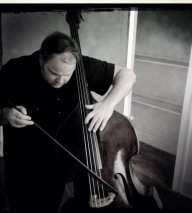

I would add that you have to significantly master a technique (or at least put in the effort) before you can actually assess whether it is optimal for you.

What works best for you can also change over time.
 
  • Like
Reactions: AGCurry
That's exactly what I did...
Hi Paul,
Do you think there was any advantage to you having learned curved before learning collapsed?
Would it have been more difficult to "unlearn" collapsed while learning curved? (And, would a beginner be advised one way or the other?)
(Chicken/Egg, Molehill/Mountain Dept. question.)
Thanks for your time and expertise.
 
Last edited:
  • Like
Reactions: damonsmith
I think you people are making a mountain out of a molehill.

There are two big questions you can ask about any difference in technique: does it work, and does it hurt? For me, both approaches work just fine and I've never been injured by them.

There are things that work much better for me with a collapsed finger, especially double stops. It feels better to drop arm weight into a collapsed finger (as you would when doing fingertip push-ups), and having some extra flesh on the string can make for a nice vibrato. There are some rare moments where an arched finger makes more sense to me, but to be honest I don't really need it. It completely depends on your hand shape, hand size, flexibility, strength, set-up, playing style, etc. etc.

^^^^This.
 
  • Like
Reactions: Tom Lane and Wasnex
There is truth in here, but I think if you see a vast range of bass players, this logic doesn't hold. In the wide world, doing what-the-#^@$-ever is pretty overrated! To my mind, when a great pedagogue like Rabbath endorses something like this, we need to consider it, but not open the flood gates. While there are some compelling arguments for collapsed fingers the biggest argument against arched fingers remains laziness. This is extremely important to point out. The Paul Cannons of the world are few and far between - they may seem more prevalent at an ISB convention than they truly are in the wild.

There is truth in here. On the other hand, it is also true that a vast range of bass players will also play with mediocre technique whether they play with curved or collapsed fingers in thumb position. Given that great players play both ways without question, I see no reason to discount one of those ways because it was not considered sound pedagogical technique decades ago.

When I was studying piano at University, there was one studio that taught only curved fingers and motion that was centered in the hand, emphasizing finger independence. Another, right next-door, advocated the opposite approach with the fingers moving as little as possible and with the motion being drawn from the core. Both studios produced both great players and musicians, and mediocre players and musicians. I don’t believe it was the techniques themselves that made this so.
 
Hi Paul,
Do you think there was any advantage to you having learned curved before learning collapsed?
Would it have been more difficult to "unlearn" collapsed while learning curved? (And, would a beginner be advised one way or the other?)
(Chicken/Egg, Molehill/Mountain Dept. question.)
Thanks for your time and expertise.
Hard to say. I didn’t completely grasp how to direct relaxed arm weight into the fingerboard until I started collapsing the first finger. Arching the finger seems to focus one’s attention toward finger and hand strength while ignoring the larger shape of the arched arm.
 
You summed it up nicely, Paul - It completely depends on your hand shape, hand size, flexibility, strength, set-up, playing style, etc. etc.

In particular, your hand shape and relative finger lengths. If you hold up your hand with palm towards you and fingers together you will see if your palm is somewhere between square and sloping towards your little finger side. You will also see if your index finger is shorter, equal to or longer than your ring finger. And you see if your little finger tip is shorter, equal to or longer than the second joint in your ring finger.

Assuming that the general aim is a cupped hand with arched fingers then a squarish palm with index finger shorter than ring finger and longer little finger will always be more comfortable in neck positions. It will make transitioning from the neck to thumb position happier and arrive at the basic Thumb Position (thumb on the G octave harmonic) with arched fingers and a minimum of fuss. IMO this hand shape suits almost any musical instrument.

A sloping palm with long index finger and short little finger will cause the L elbow to be lower in neck positions in order to align the four fingers with the strings and risk having the forearm ground on the ribs before the thumb reaches the base of the neck. A long narrow palm too will not help. Thumb position becomes more awkward and may require a rethink about patterns of fingering. Sometimes I have suggested to a would-be student that they should perhaps think about a brass instrument like French Horn.

There are other considerations too. If you have very knobby finger joints you may have difficulty using the side of your thumb to stop notes in thumb positions because there is a hollow between the joint and nail. Even with your nails cut as short as possible there may not be enough tip flesh protruding to avoid the nails pressing the strings down. I see this as perhaps the main reason why people resort to using flatter fingers.

I don't know anyone who thinks thumb positions are easy. The music sets the challenges for us to find ways for us to use the hands we are given, and mostly we can.

Best wishes on the journey, everyone, and keep safe.
 
Renaud Garcia Fons. DaXun Zhang. Lorraine Campet...

Yes, just imagine how fast, clean, and articulate these players and many others could play if only they adhered to the correct "pedagogy".

After attending the past two ISB conventions and sitting dead center in the second row every night for both sets (classical feature followed by jazz feature each night), I'd estimate the curved/collapsed TP technique on display among some of the world's finest players to be about 50/50 among those players.
Yes, but Chris is absolutely right that if you learn with curved fingers then you have the choice. I do get that it suits some people's physiology less well, but my feeling is that of the two, curved fingers work better for the majority of players. YMMV
 

Latest posts