so whats the difference ? im still kinda new to the bass world and i have 2 combo amps ..a fender rumble 100 and a hartke 1400 both work fine for me but i feel im missing something by not having amps and cabinets seperate is it better sound ? more versatility? .. is it just easier having a combo and thats why manufacturers sell them? is a combo amp considered entry level equipment? thoughts and comments please!

Enjoy the benefits of a premium membership!
Upgrade Account
-
TalkBass has been independent since 1998. Add your voice.
Create a free account to reply to discussions, view embedded media, and browse with fewer display ads.
Join free Log in
Want zero display ads or expanded classifieds tools? Compare plans.
You are using an out of date browser. It may not display this or other websites correctly.
You should upgrade or use an alternative browser.
You should upgrade or use an alternative browser.
combo amps vs seperate amps and cabiets
- Thread starter dennis bailey
- Start date
More options
Who Replied?

I went with a head/cab for portability. Also, many combo amps rear mount the amp on the cab so the controls are facing up instead of forward, and I just don't like that style.
At the end of the day, buy what you like. Anyone who cares what you play, and not how you sound, isn't really worth your time.
At the end of the day, buy what you like. Anyone who cares what you play, and not how you sound, isn't really worth your time.
For me it’s flexibility to upgrade/change either head or cab individually.

You see guys start out on combos. One box to do it all, is a good first step. Someone else has made the decision on how to pair an amp and cab. When you get to know this stuff you can make your own decisions.
Separates have a level of flexibility that is perfect for me. I have several amps to choose from and fit the cabs to the gig. When it's upgrade time, I prefer to buy amps and cabs separately and they are kinder to my poor old back!
Separates have a level of flexibility that is perfect for me. I have several amps to choose from and fit the cabs to the gig. When it's upgrade time, I prefer to buy amps and cabs separately and they are kinder to my poor old back!

Really the only advantage of amps and cabs is modularity. If you have multiple cabs you can take one to rehearsals and smaller gigs, and more for louder situations.
If you like your combos, keep rocking them until you figure out more about what you do and don't like in bass tone and/or your volume requirements change.
If you like your combos, keep rocking them until you figure out more about what you do and don't like in bass tone and/or your volume requirements change.

Well, a bass amplifier is always two things:
1. one box that will take a weak signal and make it strong enough to drive a speaker.
2. one box that houses one or multiple speakers that take the electricity and move air with it, creating sound.
A combo is when you take box one and integrate it into box 2.
The advantages are:
-Only one box to worry about.
-The components are usually well matched
-No separate speaker cable
The disadvantages are:
-you're stuck with what you got.
-Controls often in the rear, facing upwards
1. one box that will take a weak signal and make it strong enough to drive a speaker.
2. one box that houses one or multiple speakers that take the electricity and move air with it, creating sound.
A combo is when you take box one and integrate it into box 2.
The advantages are:
-Only one box to worry about.
-The components are usually well matched
-No separate speaker cable
The disadvantages are:
-you're stuck with what you got.
-Controls often in the rear, facing upwards

so whats the difference ? im still kinda new to the bass world and i have 2 combo amps ..a fender rumble 100 and a hartke 1400 both work fine for me but i feel im missing something by not having amps and cabinets seperate is it better sound ? more versatility? .. is it just easier having a combo and thats why manufacturers sell them? is a combo amp considered entry level equipment? thoughts and comments please!
Component systems are more fun as you can roll different pieces through as desired, add & subtract, etc. That being said, I'm a big fan of the 1400 head despite the modest power. No reason you can't use your combos as a backline.
Riis
There's not one truth to this. Some combos are so perfect in design and execution there is nothing to change or upgrade. Sure a lot of budget entry level gear comes in the combo format. Thing is one of the greatest amps of all time is a combo. The Ampeg B-15. Next comes the SWR BBII. It does things some makers haven't figured out yet. (The More Me function) As you step into the pro market there are combos that just excel at what they are designed to do. That is do the job with minimum stage footprint, effective eq. and features, well designed speaker enclosures and high performance speakers. EA combos were amazing in their time. Before those the GK MB-150, and earlier Polytone Mini Brutes and 101 were exceptional. EBS and AER combos were/are truly high performance.
When you need a head and cab then that's a different conversation. Many pros have a selection to choose from so they can cover any gig. You can't bring a head and cab to some gigs. It freaks out the guests, doesn't disappear in the setting visually and may not sound great turned down. These hi end combos can sound full on present at lower volumes. They bring authority to a lower decibel gig.
Pick your poison. Hopefully you will end up with both.
When you need a head and cab then that's a different conversation. Many pros have a selection to choose from so they can cover any gig. You can't bring a head and cab to some gigs. It freaks out the guests, doesn't disappear in the setting visually and may not sound great turned down. These hi end combos can sound full on present at lower volumes. They bring authority to a lower decibel gig.
Pick your poison. Hopefully you will end up with both.
You can always buy a combo that allows you to connect and power another cab.
My Markbass CMD121P for example. 300 watts as it is but connecting another cab if the correct ohms and the combo produces 500 watts.
It’s not a binary answer either combo or not.
My Markbass CMD121P for example. 300 watts as it is but connecting another cab if the correct ohms and the combo produces 500 watts.
It’s not a binary answer either combo or not.

buldog5151bass
Kibble, milkbones, and P Basses. And redheads.
More versatile. I have no need far a "practice amp". One cab at rehearsal space, the other where I practice. I only have to bring my head and bass when I travel (both cabs come for bigger gigs).
Just makes life easier.
Just makes life easier.

I’ve done both. It’s fun to stand in front of a chest high stack and shake the walls, but it takes three trips to the truck to get it in the bar. I just sold off my Ampeg stack and bought an Ampeg Rocket Bass 210.
It doesn’t sound quite as good as my bigger gear, but it is a one hand carry that will pull off any bar gig. If I’m only playing electric, I can sling my bass on a shoulder, grab the combo, a mic stand in the other hand, and walk away from the truck, especially handy when you can’t park close to the venue.
It doesn’t sound quite as good as my bigger gear, but it is a one hand carry that will pull off any bar gig. If I’m only playing electric, I can sling my bass on a shoulder, grab the combo, a mic stand in the other hand, and walk away from the truck, especially handy when you can’t park close to the venue.

It's down to what you want. I have a head and speaker and a combo. I saw Status Quo at Wembley Arena. Rhino had a combo.
all those answers work for me especially the one about how the amps are mounted up like me fender rumble..thanks for all your input guys
buldog5151bass
Kibble, milkbones, and P Basses. And redheads.
I’ve done both. It’s fun to stand in front of a chest high stack and shake the walls, but it takes three trips to the truck to get it in the bar. I just sold off my Ampeg stack and bought an Ampeg Rocket Bass 210.
It doesn’t sound quite as good as my bigger gear, but it is a one hand carry that will pull off any bar gig. If I’m only playing electric, I can sling my bass on a shoulder, grab the combo, a mic stand in the other hand, and walk away from the truck, especially handy when you can’t park close to the venue.
Depends on your rig. For me, bass in on hand, cab in other, backpack with head, cables and such on back.

The combo controls pointing upwards must be a new design thing...my old SWR 210 Combo has them facing outwards like a normal bass head. It does weigh like 80 lbs though, and without the casters, it would be awful to move. It already is heavy loading in and out of a car. While it takes me more trips moving my separate cabs - I appreciate the modularity, and being able to scale up or down depending on the venue.
I have both setups.
I use my combo when it is loud enough for the gig or FOH is doing the heavy lifting. Quick setup and tear down play into the picture.
I get hired because of my ability, not because of my gear, although it must be reliable. I don’t want to be the guy whose gear is always breaking down.
I use my combo when it is loud enough for the gig or FOH is doing the heavy lifting. Quick setup and tear down play into the picture.
I get hired because of my ability, not because of my gear, although it must be reliable. I don’t want to be the guy whose gear is always breaking down.

Whatever works for your situation, my first real rig was a head that weighed around 35 pounds and a 2X15 cabinet that was heavy. Now I am down to a Rumble 100 because we have a good PA that I line out to, and some places have small stage areas. I played 3 shows last week (at the same venue) and I am playing today, tomorrow, Saturday and Sunday all in different cities so I like the convenience and portability of a combo. A couple of times in the past year or so I did shows with a vocals-only PA and doubled up by bringing a small 1X12 and head to use with the Rumble 100.

Really the only advantage of amps and cabs is modularity. If you have multiple cabs you can take one to rehearsals and smaller gigs, and more for louder situations.
If you like your combos, keep rocking them until you figure out more about what you do and don't like in bass tone and/or your volume requirements change.
+ 1 on modularity. I have two 320 watt Eden combos (2-10s-1-15) that can be slaved, as well as the 2-210 cabs, a rack system or integrated head to power one or both of them for the sole reason of using only what you need on the job.
Just for old times sake, here's a pic of my first combo amp, an Acoustic 136,which I purchased as a 17 yo in 1974. Worked my ass of that summer to buy it - $499.00. It was a beast, weighed 75 lbs., but a bit underpowered at 110 RMS. It was just too heavy to lug between home and practice, so I ended up saving and buying a used Acoustic 140 head along with a 4-12" bottom for the practice place. Combined the 136 and the 140 set-up live, which was fairly potent for the time. Now fast forward to today, I'm 64, not playing in bands anymore, will occasionally get together with buddies to jam, so, decided to unload my older Ampeg combo this past spring and bought a new Rumble 500, which I absolutely love. I don't need to talk about the 500, you're all familiar with it, but for me, at 36 lobs, I can easily lug it to a friends house with ease. Even at my age, I'm 6'2, 195 lbs, and in good shape (it's the NC BBQ), so at 36 lbs, and triple the power of my older Acoustic, it's a great amp for me. I know a lot of you "old timers" out there are in the same position as me. However, I will say I'm also
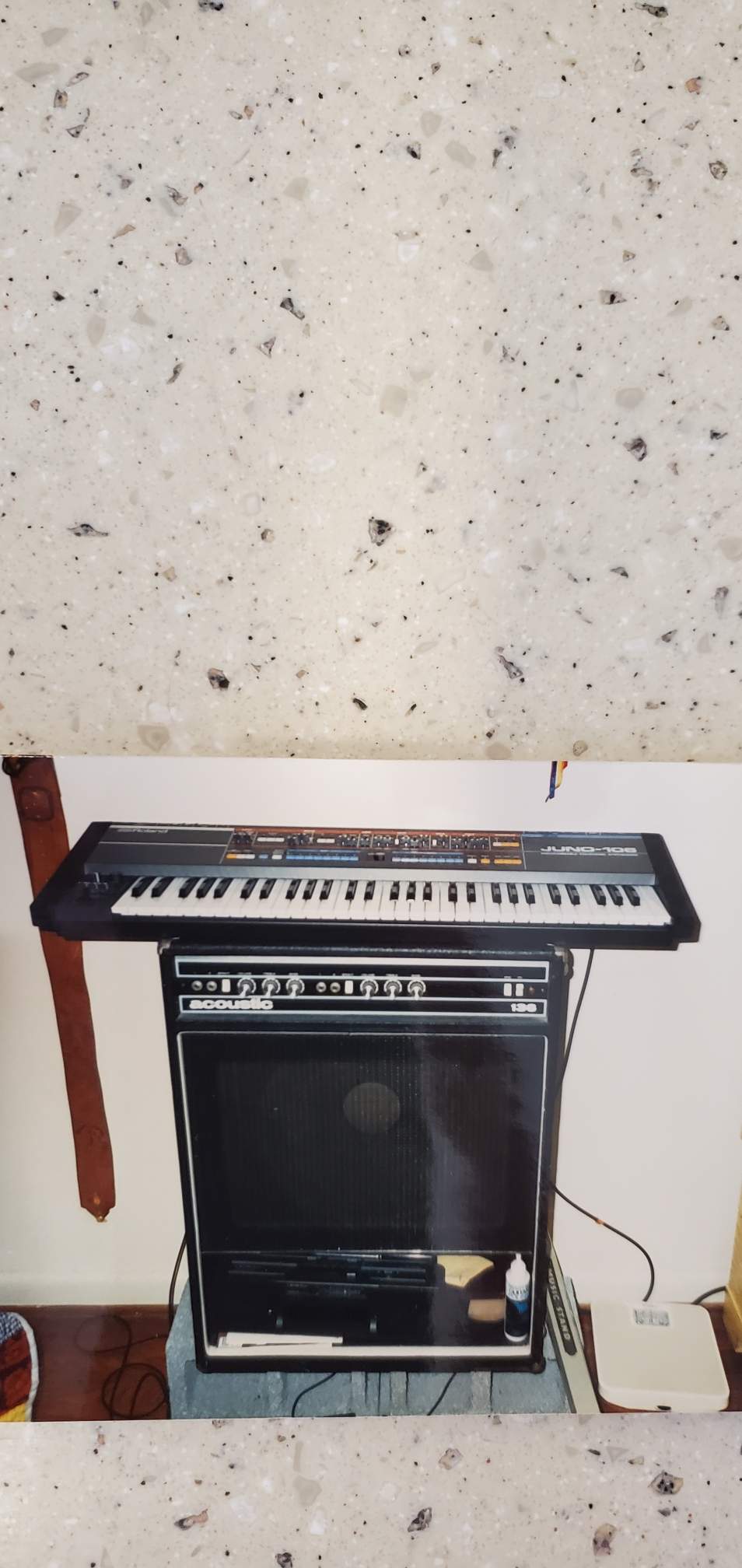 amazed at the new lighter heads and cabs that have come out in recent years, certainly one of the smartest moves by these companies. Recently saw a killer Steely Dan tribute band, and the bassist had a Bergantino set-up that just killed - couldn't see the amp model, but he had 2 separate cabs with 2-12" each. One of the best sounding set-ups I've heard in a long time - he was playing a Fedora 5 string Monarch as well. Yes, that is a Roland Juno 106 on top of the Acoustic, I've been a long time synth player as well. Peace out.

As much as I would like to have one again, it's hard for me to justify going the combo route anymore. I have three cabs, all of which are pretty portable and capable, and a couple of class D amp heads that practically schlep themselves.
The extra tedium of taking the head out of the bag, placing it on the cab and hooking up the speaker cable is not a problem - even for neurotic me. That very slight workflow kink is more than offset by the flexibility of mixing and matching heads & cabs for the various different situations I encounter.
YMMV
The extra tedium of taking the head out of the bag, placing it on the cab and hooking up the speaker cable is not a problem - even for neurotic me. That very slight workflow kink is more than offset by the flexibility of mixing and matching heads & cabs for the various different situations I encounter.
YMMV


