I feel this. I reached a level of success in my professional career that I was able to retire before 50. I had always been a music fan, but had made only very minor efforts to make music myself. When I had more free time, I made it a priority. I went through a time with the ukulele, then the guitar. I realized that I wasn't that interested in just making music for myself. I wanted to be part of an ensemble. I picked up the bass guitar with the goal of finding a group. I tried a few different things and after several years ended up in a retro-country band. It was a lot of fun, but I felt more and more that the group needed a standup bass, not a bass guitar. Finally, I decided I should bite the bullet and learn to play the upright, in spite of the sheer inconvenience of the thing! I was 60 years old. Reaching a certain level of competence has created lots of playing opportunities. I play 50s Nashville country, 40s western swing, gypsy jazz, 50s and 60s modern mainstream jazz, 40s and 50s pop standards with a singer, bluegrass once in a while. I try to say yes to every chance I get to play. That said, I consider myself just barely competent. I can keep time pretty well, I can follow a chart, play two-feel and bossa nova rhythms, walk comfortably on country tunes and with some effort on jazz standards. I'm terrible at memorizing songs, so I just make sure to always have good charts. I stay away from the higher reaches of the fingerboard. The bow mystifies me. I only solo when absolutely required. I find myself as a musician in almost exactly the opposite role from my professional career. I'm the guy in the back who keeps things grounded, not the star. Still, I get a lot of satisfaction out of it and I'm very grateful that I discovered this late in life.

Enjoy the benefits of a premium membership!
Upgrade Account
-
TalkBass has been independent since 1998. Add your voice.
Create a free account to reply to discussions, view embedded media, and browse with fewer display ads.
Join free Log in
Want zero display ads or expanded classifieds tools? Compare plans.
You are using an out of date browser. It may not display this or other websites correctly.
You should upgrade or use an alternative browser.
You should upgrade or use an alternative browser.
Double Bass Coming to grips with my limitations
- Thread starter Ed S
- Start date
More options
Who Replied?

Upright for the "guest" slot, upright and clawhammer for my band.
Perhaps the best thing about our band is that we do all listen to each other, and emphasize doing what is best for the overall sound. We regularly pull out a metronome if we feel the need. Our efforts just don't seem to translate to performance.
You may put in a lot of effort, and still have a mediocre band. It sure happened to me a few times too many.
Having said that, perhaps you're all too focused on "the performance"? Try a bit of mindfulness and just enjoy being there, instead of worrying about a wrong note or a sly look someone in the audience gave you - it's coincidence, they didn't actually look at you.
I’ve decided that after all these years of wanting to be Jaco, Marcus Miller, and Christian McBride, all I really want to be is the Duck Dunn of the upright bass. It’s working out, so far!
I thought that "in the pocket" is what that means. And it made a bass player desirable.Ed, your post resonates with me.
Looking back to my self-taught younger days, I was respected for my playing. I had others asking me to give them lessons and tips. Part of my "success" may be attributable to playing with people better than me, but I think it's mostly because I was playing simple music. I could play walking lines, 2/4, and waltzes, all day, and my time and my ear were pretty good in those contexts... small pond, big fish.
By the standards I have today, I was mediocre... and still am.
I'm playing in a near-geriatric "jazz" band, playing arrangements meant for high-school bands. I struggle with reading and agility, mostly, especially in keys like Ab. The other players seem to like me, and I suspect part of that is because nobody listens to the bass.
I just joined a community orchestra, with a bunch of good players, playing challenging stuff. Every rehearsal, I walk in feeling like an imposter, and the other two bassists smile and say "Glad you're here!" My teacher uses the term "bass bodies." Orchestras need bass bodies, I guess.
From both rehearsals I come home. My wife asks me how it went, and my answer is invariably "It's kickin' my *ss, but it's easier than it was."
Two things keep me going. The first is the question "What else would I rather do?" The second is "I'm better than I WAS, and what I'm doing is why that's so." Progress in music IMO needs to be measured over long stretches of time, and the "failures" you describe, while discouraging in the short term, motivate me to work harder.
But yes: Limitations. I'm capable of some magical thinking, imagining doing things I'll never be able to do. But bass bodies are needed, and I can enjoy being one!

Yes, I did play "in the pocket," and I WAS "desirable" ... in the small circle of simple jazz, blues, rhythm and blues, bluegrass, and country and western. But there's a lot more music outside of that circle, and to venture there is to be humbled.I thought that "in the pocket" is what that means. And it made a bass player desirable.

To the question of improving : Do you practice and rehearse with strategies and techniques for improvement ? Practice makes permanent otherwise. If the group keeps practicing but you're not getting better, you should consider changing how you rehearse.I also started playing in a 4-piece classical ensemble with my wife in my home, and most recently joined a community orchestra. My classical chops are far from great, but I enjoy it and know it is helping me improve.
We put together 8 songs, and had plenty of time to work on them. But - like I said - we weren't that good. I was quite nervous throughout, we each blew lyrics, transitions, breaks... In between songs was uncomfortable.
I'm probably being harder on myself than I ought, but believe me, we were amateurish and mediocre. Sure, we aren't pros. I just woulda hoped for something more given the time we had to prepare.
And yeah, I know. Take lessons, practice more...
For one, how about record every time you play and review it as a group ?

IMHO, practice and rehearsal should serve different purposes. Practice is to study, learn, and improve. This is something one should do individually.If the group keeps practicing but you're not getting better, you should consider changing how you rehearse.
Rehearsal is a group activity that should involve putting parts together, working out differences, and applying final polish. Rehearsal may involve working on sections of music that are problematic, but for the most part, rehearsal should not involve learning new material, unless the material is original.
Rehearsal may also involve refreshing old material the group previously used but hasn't played for a long time. However it should not involve wasting the rest of the groups time for one person to figure out/relearn a part that is too far gone. To prevent this, rehearsals should be planned and organized rather than calling up material on the spot. This means identifying the songs that will be covered and letting everyone know so they can work up anything they don't have under their fingers. [Note: I suggest building a library of reference recordings to serve as practice aids]
YMMV of course.
I played some piano yesterday. I was actually quite good when in grade school, but I foolishly stopped playing when I went to high school. Now, at 64, what I wouldn't give to be able to play as well as I did when I was 13...
One reason I do not play piano much is because - in my mind - I suck at it. Not just not as good as I used to be, but barely able to play very simple pieces at any decent pace. And I sorta feel that if I'm going to sit down at the piano, it should be part of an ongoing effort to get good at it again.
But I'm somewhat rethinking that. Is it enough to just be good enough to play very simple versions of xmas carols for friends and family to sing along with? Can I get my mind around just enjoying playing - even simple stuff, rather than feeling I have to follow a regimen aimed at improving?
And that is somewhat similar to my thoughts on bass, clawhammer - and even golf. A huge part of my mind is always thinking - OK, I'm at THIS level. What do I need to do to get BETTER? But I sorta wonder if it might be pretty valid to simply be satisfied with the level I'm at, and just have fun with it. My impression is that I AM slowly and gradually improving. But when I think of what I KNOW it would take to really get better at a faster pace, I find that I don't really want to pick up the bass and do scales, vomit drills, etc.
Not recommending anything for anyone else. And I truly respect the dedication and accomplishment so many of you exhibit. Just trying to get peace within my own head.
One reason I do not play piano much is because - in my mind - I suck at it. Not just not as good as I used to be, but barely able to play very simple pieces at any decent pace. And I sorta feel that if I'm going to sit down at the piano, it should be part of an ongoing effort to get good at it again.
But I'm somewhat rethinking that. Is it enough to just be good enough to play very simple versions of xmas carols for friends and family to sing along with? Can I get my mind around just enjoying playing - even simple stuff, rather than feeling I have to follow a regimen aimed at improving?
And that is somewhat similar to my thoughts on bass, clawhammer - and even golf. A huge part of my mind is always thinking - OK, I'm at THIS level. What do I need to do to get BETTER? But I sorta wonder if it might be pretty valid to simply be satisfied with the level I'm at, and just have fun with it. My impression is that I AM slowly and gradually improving. But when I think of what I KNOW it would take to really get better at a faster pace, I find that I don't really want to pick up the bass and do scales, vomit drills, etc.
Not recommending anything for anyone else. And I truly respect the dedication and accomplishment so many of you exhibit. Just trying to get peace within my own head.

Of course. But there are things the group does collectively that individual practice does not address, while also identifying forgetting and other performance issues that can't be known in the practice room. Evaluation and feedback of the collective group is important apart from personal practice.IMHO, practice and rehearsal should serve different purposes. Practice is to study, learn, and improve. This is something one should do individually.
Ed, enjoy all the music you play. Best wishes.
Last edited:

I turned 70 this year so I’m playing about as well as I ever will.
I always beat myself up when I hear anyone playing things I can’t or at least don’t because I never needed to in the bands I was in. What I focus on is the feel as paramount and on the DB, intonation. As long as players I respect keep asking me to play I’ll have to be satisfied.
I always beat myself up when I hear anyone playing things I can’t or at least don’t because I never needed to in the bands I was in. What I focus on is the feel as paramount and on the DB, intonation. As long as players I respect keep asking me to play I’ll have to be satisfied.
Your first statement does not jibe with my experience. I'm older than you, and although my progress is best measured by the month or even longer, I continue to improve.I turned 70 this year so I’m playing about as well as I ever will.
I always beat myself up when I hear anyone playing things I can’t or at least don’t because I never needed to in the bands I was in.
Your second statement ("I never needed to") brings clarity. I get discouraged (and motivated) mainly because I'm playing harder music with people who are better than me.
A lot of these self evaluations have to do with who you're playing with and the circumstances you're playing in. Sometimes you're playing in situations where you can't play your best. I look at practice as my daily yoga or meditation; an end in itself, not as a type of training where the goal is to pass certain tests. Balancing out the part of you that's loving what you play, and the part of you that's listening and critiquing can be tricky. In my experience folks who come from a classical background often have too much of the second; folks who take too much drugs and alcohol often too much of the first.
My playing was never astounding, but I also had a 30+ yr career mostly as a sideman.
I had wide experience in many styles, played DB almost as well a BG, had good ears and could sightread.
I gave out a reliable bottom end that was not overpowering, and tried my best to produce what was required. I'm grateful for the returns. It's enjoyable work for a living.
I had wide experience in many styles, played DB almost as well a BG, had good ears and could sightread.
I gave out a reliable bottom end that was not overpowering, and tried my best to produce what was required. I'm grateful for the returns. It's enjoyable work for a living.
I gave out a reliable bottom end that was not overpowering, and tried my best to produce what was required. I'm grateful for the returns. It's enjoyable work for a living.
When I give out bottom end, it usually is overpowering. But people are never grateful

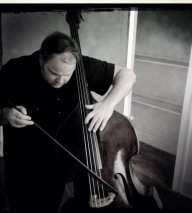
It is hard to save a set as a "traditional" bass player. It sounds like you might have outgrown that band. It is a lot easier to play with great musicians, even if and when they push your limits.
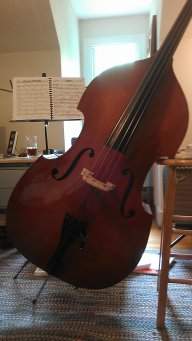
One thing i love about music/playing instruments is that there is always something new to grasp onto or a different direction to traverse. That's what keeps me going, and i always think i can work closer to a goal by spending the time. I've also made a point of playing with just about anyone that asks, and putting myself underwater from time to time by getting on the stage with those that have way more experience than me. As a double bass player, that is a gift we get for simply deciding to play the instrument. There aren't many of us to go around, so inevitably musicians above our pay grade will call for us to come join them on a gig. If we are hell bent on improving, then taking up those offers is paramount.
I’ve decided that in addition to being the Duck Dunn of the upright bass, I also want to be Neal Miner:I’ve decided that after all these years of wanting to be Jaco, Marcus Miller, and Christian McBride, all I really want to be is the Duck Dunn of the upright bass. It’s working out, so far!


