• TalkBass has been independent since 1998. Add your voice.
    Create a free account to reply to discussions, view embedded media, and browse with fewer display ads.
    Join freeLog in
    Want zero display ads or expanded classifieds tools? Compare plans.

Compression vs EQ Pedal Advice (And other good stuff)

Some examples of colorizing compressors are the: Ovinlab Smoothie, Doc Lloyd Death Ray, and BOSS OC-2.
.

BOSS OC2 as a compressor?? LOL!! Just giving you a hard time, I'm sure you meant the CS2 ;) I do agree with you on the two schools of thought, I do a sorta combination of both with my Empress: I find it does add a certain something to my tone with helping me cut through, but it's mostly used in a functional way for varied techniques and to sorta limit any volume discrepancies from my pedals by placing it at the end of my signal chain.

I'd recommend the OP just check out a cheap but good multi like the Zoom B3N as it'll have EQ, compression, a tuner and a lot more. I've used eq in the past a few different ways: in the first variety band I played in I used the BOSS EQ to cut everything above 500hz for an instant dub sound. The last time it was the Source Audio PEQ to get all of my basses the same volume so my compression, drive and envelope filter all sounded uniform no matter the bass.

 
I thought it was about time I got myself some pedals for gigging. I'm only looking for a small setup - I've got a PedalTrain Nano+ board so nothing major, but I'm looking for some suggestions.

So far I've got a BOSS Tuner and I know I'll be getting a compression (Most likely MXR as it has great reviews all round), however my question is would I need a EQ pedal as well as compression? Would they aid each other, or would it be pointless? Any other suggestions for pedals would be great too!

Another little thing I'm looking for advice is about my PSU. I have a 1Spot Pro CS6 from a previous Guitar Pedal board project, and I was planning on using that. Is it too big for my bass pedals? Should I size down to a T Rex Junior?

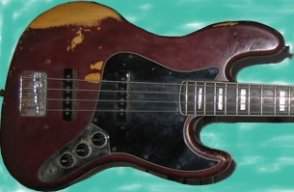
Finally, I know quite an eclectic post; I'm looking for LED Lights that I can plug directly into my PSU, if I had the option of changing their colour that would be awesome but if not I'd love either Pink or Purple to compliment my bass (Adam Clayton Signature J-Bass in purple - Too fabulous for words!) - Any suggestions?

Thank you all for your help! These forums truly are amazing for getting friendly advice!

Do you use an amp or go direct. If you go ampless then IMHO an EQ pedal is more important...or you could use a preamp DI like a Mesa Subway Mesa Boogie Subway Bass DI Preamp | MESA/Boogie® or MXR MXR - Electronics - Products  

If you decide to go with compression and EQ pedals consider the order you will place them in. I normally prefer to compress a flat unprocessed signal. Applying compression to a signal with a lot of EQ will cause the compressor to key of the peaked frequencies and sometimes this can sound and feel very unnatural. Compression with a gentle broadband boost will usually work just fine though. IMHO set your EQ and then try the compressor pre and post EQ.

Another situation where EQ can be really important is if the EQ on your amp is not very powerful. Many tube amps have a fairly baked in voice and a fairly weak EQ. The EQ may be great for dialing in a basic sound, but not for dealing with acoustic problems. IMHO, with this type of an amp, an outboard EQ can be really helpful.

Regarding the power supply. Some things to be aware of. Different pedals have different current and voltage requirements. Also the polarity and size of the DC connectors can vary from one company to the next.

Some pedals will interact and produce noise if you use a daisy chain with a single output power supply like a 1Spot. There are many cheap power supplies that appear to provide isolated power that do not. Read the fine print.

I use Voodoo Lab Pedal Power 2 Plus. This is an older model that provides multiple isolated outputs that can be setup for different voltage and current requirements using internal dip switches and various adapter capabilities which can be bought separately. My board currently runs 9V and 18V pedals on two Pedal Power 2 Plus and I use one separate wall wart for a pedal that requires high current and a polarity reverse (12V, 300mA, center positive). I could also run this pedal on one of the Pedal Power 2 Plus, I just haven't bought the necessary adapters. I need a current doubler and a polarity reverse adapter with the correct size barrel termination to make it work...all available off the shelf from Voodoo Lab.

The Pedal Power 2 Plus is probably overkill for your current needs...but here are relevant links if you are interested for future needs.

[Invalid or Expired Link Removed]
[Invalid or Expired Link Removed]
 
Yeah, it's a rabbit hole once you start. I blame TalkBass! After I bought a tuner pedal I got the MXR – not knowing much about compression or having one before – and I love it! I also ended up getting the Tech 21 VT Bass DI, which is kind of the same thing as an EQ, plus it means I can get "my sound" without taking my amp to rehearsals and always have a backup. It really was the special sauce I was looking for ever since I lost my old SVT, which is another long story...
 
ok easy does it on the carrots.. but the way to find out is to buy a basic compressor. and a basic eq. and go to town you'll know if you like them in a matter of a few day. actually take a few weeks. buy used. I'd start with a DOD Milkcan compressor and a Boss bass eq.
 
For my small boards, a Nano and a Metro 22, I have had luck daisy chaining off of a One Spot wall wart. Super easy, and no lost pedalboard space.

As for EQ and compression like others have said they are really two different thing. Compression is a dynamics processor, while EQ is, well, equalization. Now EQ is all about changing the relative dynamics of specific frequency bands, so they will interact.

I have found that I am now used to active bases to the point that when I play a passive bass I want an active EQ pedal. Difference: passive is cut-only, or attenuation. Active allows both cutting and boosting of target frequencies. Lots of bands I play with can be eclectic with the set lists so I might try to cop a 60’s-ish overdriven tune amp tone on one song, and reggae/dub tone on another, etc. The active EQ, along with a nice drive pedal, allow me to do this. So maybe think about the music you play, your setlist, and buy something that actually solves a problem or provides you the flexibility to play the way you want.

As for compression, I love it. But I got spoiled by first hearing compression in the studio and no pedal I’ve ever tried sounded as good without introducing some negative in the dynamic response to my playing. So for now I don’t supply compression. Whenever I play a bigger gig through a PA the FOH Engineer is going to apply his compressor anyway. That said, the Smoothie came the closest, but perhaps had just a bit too much coloration and squish for me.
 
For my small boards, a Nano and a Metro 22, I have had luck daisy chaining off of a One Spot wall wart. Super easy, and no lost pedalboard space.

As for EQ and compression like others have said they are really two different thing. Compression is a dynamics processor, while EQ is, well, equalization. Now EQ is all about changing the relative dynamics of specific frequency bands, so they will interact.

I have found that I am now used to active bases to the point that when I play a passive bass I want an active EQ pedal. Difference: passive is cut-only, or attenuation. Active allows both cutting and boosting of target frequencies. Lots of bands I play with can be eclectic with the set lists so I might try to cop a 60’s-ish overdriven tune amp tone on one song, and reggae/dub tone on another, etc. The active EQ, along with a nice drive pedal, allow me to do this. So maybe think about the music you play, your setlist, and buy something that actually solves a problem or provides you the flexibility to play the way you want.

As for compression, I love it. But I got spoiled by first hearing compression in the studio and no pedal I’ve ever tried sounded as good without introducing some negative in the dynamic response to my playing. So for now I don’t supply compression. Whenever I play a bigger gig through a PA the FOH Engineer is going to apply his compressor anyway. That said, the Smoothie came the closest, but perhaps had just a bit too much coloration and squish for me.

From a player's standpoint I never like heavy compression. It makes it hard to hear myself so I tend to overplay and tear up my chops. I do sometimes enjoy light compression...you tend to feel it more than hear it.

Some of my favorites have been optical compressors. I really loved the original orange Aphex Punch Factory, but unfortunately their construction and reliability were awful. The closest I have come has been the Diamond which is also an optical compressor. The gray Aphex Punch Factory I hav doesn't seem to sound as good as the orange one, but at least it hasn't fallen apart.

The truth is many amps have enough natural compression that I don't need a compressor pedal. Also a few of my amps have really nice built in compressors. My Mesa M9 Carbine's compressor is awesome!
 
  • Like
Reactions: HolmeBass
Another little thing I'm looking for advice is about my PSU. I have a 1Spot Pro CS6 from a previous Guitar Pedal board project, and I was planning on using that. Is it too big for my bass pedals? Should I size down to a T Rex Junior
It's only too big if it doesn't fit on or under the particular pedalboard you're using. No point spending money on another power supply if the current one works well and fits.

It won't overpower your bass pedals, if that's what you meant.
 
  • Like
Reactions: Wasnex
From a player's standpoint I never like heavy compression. It makes it hard to hear myself so I tend to overplay and tear up my chops. I do sometimes enjoy light compression...you tend to feel it more than hear it.

Some of my favorites have been optical compressors. I really loved the original orange Aphex Punch Factory, but unfortunately their construction and reliability were awful. The closest I have come has been the Diamond which is also an optical compressor. The gray Aphex Punch Factory I hav doesn't seem to sound as good as the orange one, but at least it hasn't fallen apart.

The truth is many amps have enough natural compression that I don't need a compressor pedal. Also a few of my amps have really nice built in compressors. My Mesa M9 Carbine's compressor is awesome!
Exactly this. My positive experiences were that compression added a very pleasing plumpness to the lows and a sweetness to the highs without noticeably changing my dynamics. Pedals always seem to interfere with dynamics too much, and once I dial them back to where they are not messing with my dynamics they are no longer changing the sound of the bass. I like very light compression or none at all.

I think if I slapped more I might want to find one that would squish the highs and bring up the lows, and I would only turn it on while slapping. And I am in a new project now where the guys are having me slap *a lot*. I keep telling them it is not my strong suite, but I am bound to get better at it if they make me keep doing it.

I know Juan Alderette used his Boss CS-2 in a pretty high-gain way to bring his tapping in-line, volume-wise, with his other playing.
 
  • Like
Reactions: Wasnex
Fasterpussycat - What size of LED did you go for if you know?

"Temple Audio RGB-18 LED Light Strip Fits SOLO 18" found on eBay at a discounted price.

The style of music I play is post-punk/glam rock/krautrock. The only pedals I *need* are the tuner and the HPF.

The preamp is a backup (I never use it when plugged into my own amp). The flanger is for annoying guitarists. There's a space for a Diamond bass compressor -- don't need it, just miss my old one.

6BB85FF1-9B2C-4B86-AB47-B9323099364A.jpeg
 
Presently running a Pedaltrain Nano+ with Polytune mini, Keeley Compressor Pro, Mooer Phase 90 for occasional fun) and a Tech 21 NYC Sansamp VT Bass DI. They’re all excellent, and this lineup is the product of years of trial, error, and frustration.

The Keeley is large, but the sound and tweakability are sublime. So transparent and effective for a tight “studio sound” live.

The VT Bass DI is a great quiet DI, and a “tubey” effect if desired, all the way to massive od/crunch, and the Phaser is very good with full low end, especially for a cheap clone pedal.

Poly tunes are just wonderful in every way.

I get EQ from the instrument, generally.