
Enjoy the benefits of a premium membership!
Upgrade Account
-
TalkBass has been independent since 1998. Add your voice.
Create a free account to reply to discussions, view embedded media, and browse with fewer display ads.
Join free Log in
Want zero display ads or expanded classifieds tools? Compare plans.
You are using an out of date browser. It may not display this or other websites correctly.
You should upgrade or use an alternative browser.
You should upgrade or use an alternative browser.
Cool rock n roll photos
- Thread starter Chad-Chicago
- Start date
More options
Who Replied?
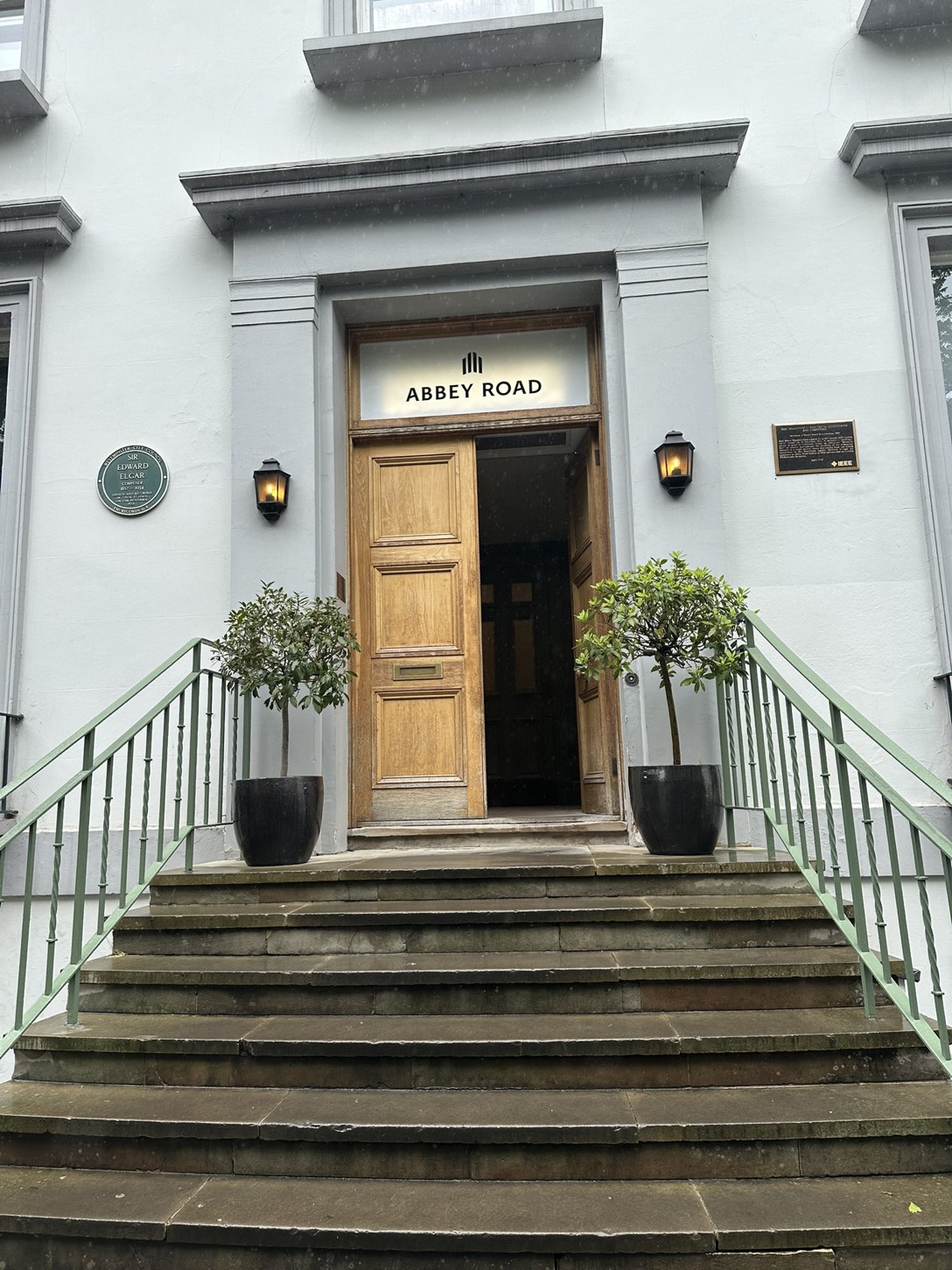


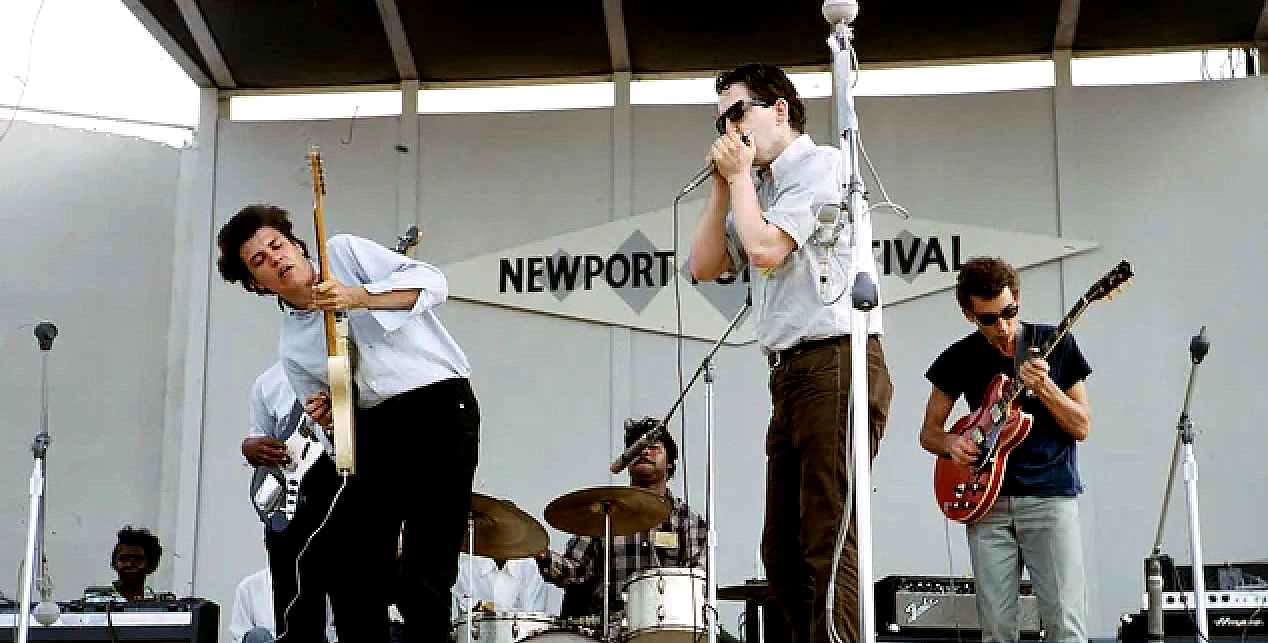
July 1965 Newport Folk Festival - Paul Butterfield Blues Band
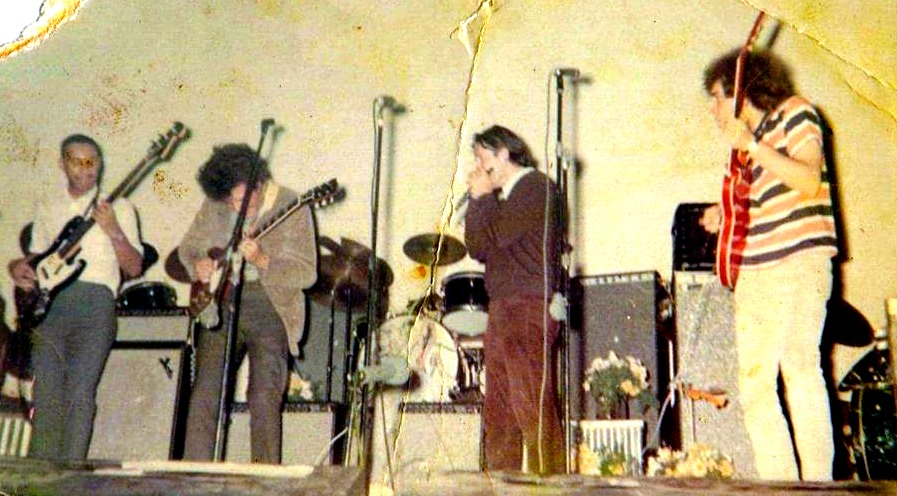
1966
1966 Billy Davenport, Paul Butterfield, Mark Naftalin, Elvin Bishop, Jerome Arnold, Mike Bloomfield at the Living End in Detroit.
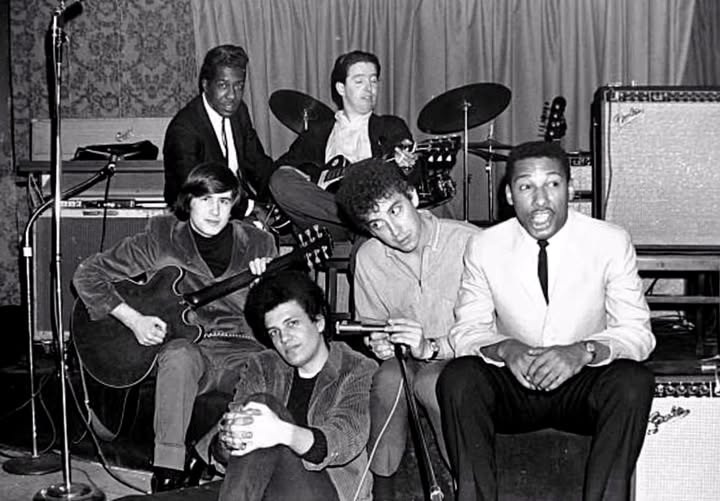
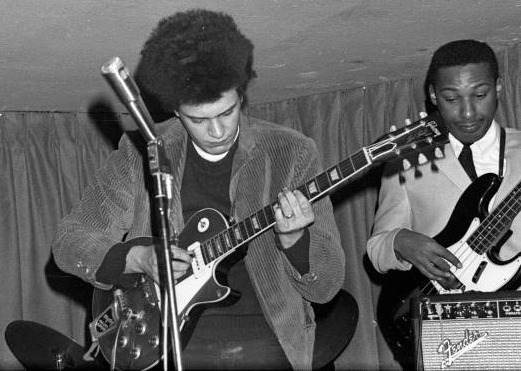
at the Living End in Detroit, taken during their 1st gig at the venue the first week of May '66. Mark Naftalin on keyboards, Paul Butterfield, Billy Davenport on drums, Elvin Bishop and Mike Bloomfield on guitars, Jerome Arnold on bass.
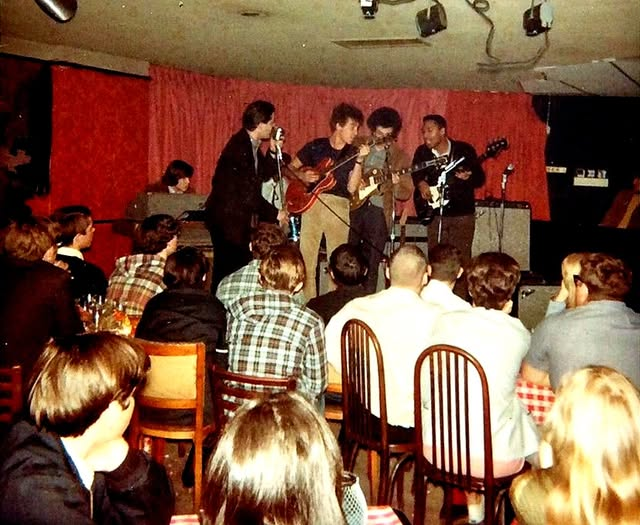
after Sam left the band due to illness.
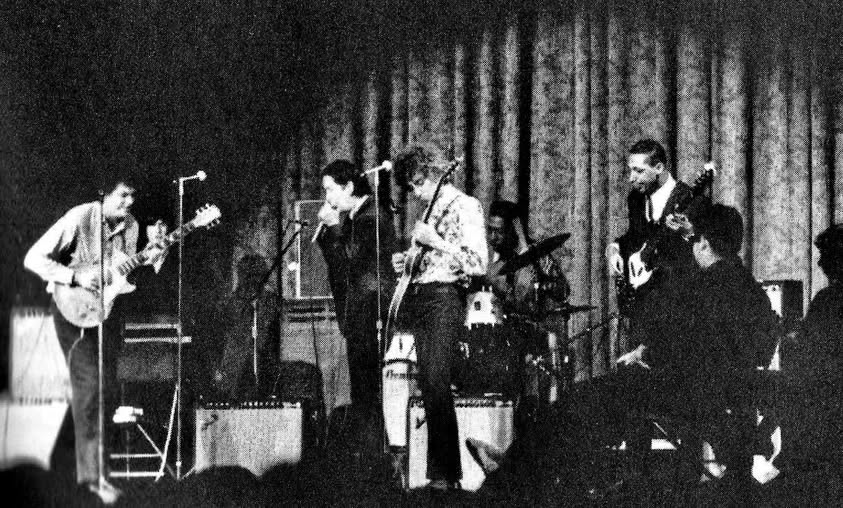
1966
1966 Billy Davenport, Paul Butterfield, Mark Naftalin, Elvin Bishop, Jerome Arnold, Mike Bloomfield at the Living End in Detroit.
at the Living End in Detroit, taken during their 1st gig at the venue the first week of May '66. Mark Naftalin on keyboards, Paul Butterfield, Billy Davenport on drums, Elvin Bishop and Mike Bloomfield on guitars, Jerome Arnold on bass.
after Sam left the band due to illness.
King Crimson, Pete Sinfield with Robert Fripp
In mid-July 1969 a new British band called King Crimson, just signed to Island Records, began recording their debut album, just weeks after playing their first official gig on April 9 and days after supporting The Rolling Stones in front of a crowd of half a million in Hyde Park on July 5. merely 15 days later they had finished recording a remarkable, ground-breaking LP that was sweepingly original, creative, expansive; a true Rock classic that many people consider to be the first true progressive Rock album. When it was released, The Who's Pete Townshend called King Crimson's In The Court Of The Crimson King: An Observation By King Crimson (to give it its full title) "an uncanny masterpiece". And it was. To record their debut, King Crimson had been teamed up with producer Tony Clarke, who had worked with the Moody Blues, including on their massive hit Nights In White Satin, and originally set up at Morgan studios in north-west London. After just a week, however, it was clear to the band that they and Clarke were not singing from the same songbook, and that the partnership was never going to give them the space to fully express and indulge themselves and follow their vision. It was also decided to move operations to Wessex studios which, situated in an old church, had a bigger natural sound. It's where everything on the album was recorded. With Clarke out of the picture, it was decided that the band would produce the album themselves – something that was highly unusual for a first album by a new band. Given the technical capabilities of the band, though, producing themselves turned out not to be that difficult, according to the band's lyricist and co-Producer Peter Sinfield. "We had these fantastic engineers at Wessex, who've never really had the plaudits they deserve, and it was a great studio, with lots of valve mics, which make a difference. It was all done on eight-track, so there was a lot of editing because it was a very fussy band. It's such a blur, because it was so fast, We were all 24, 25, 26, and we'd all been around for quite a while, so we had quite a lot of ideas and bits and pieces to fall back on when the day came that they were required. "I remember when I first met him I thought I'd found Mozart. He's an unbelievable musician. Even to this day I don't really believe that someone can play so many things so well. And the irony is that he only wanted to be Paul McCartney, really, and strum his guitar. We went in and essentially recorded the tracks live, and embellished them from there, taking advantage of the multi-tracking – although we only had eight tracks. We went in and essentially recorded the tracks live, and embellished them from there, taking advantage of the multi-tracking – although we only had eight tracks. We'd record and then go on the road for two or three days then go back to the studio. I'm surprised by the nonchalance that I see in the diary I kept.'' ''It was just so matter-of-fact. It appears to be awash with Mellotron, because two of the big, sweeping orchestral tracks – Epitaph and The Court Of The Crimson King – are, but used, we'd like to think, sensibly. We didn't just plonk down handfuls of chords, we'd record each note and put it all together, and try to pretend it was a bit more like strings than it really was. I didn't want to record the Mellotron in the same way that the Moodys had done," says Ian MacDonald, the man who played it on the record. "So the way we used it was more aggressive, more majestic. And one of the ways I did that was just to blast the Mellotron through a double stack of Marshalls and put a microphone about 20 feet away." Sinfield recalled of the mere days it took to record the album. The recording was completed in 15 days of recording, between July 16 and August 15, with the band doing gigs between sessions. Crimson had rehearsed long and hard prior to entering the studio, and the songs' structures had also been worked up while gigging intensively in the few months the band had been together. The songs they had, that is. A problem they would have to address at some point was that they had barely more than half-an-hour's worth of music prepared. Live, they played a combination of originals and covers, but they were adamant that the album would be all their own work. The shortfall in material, however, didn't seem to be cause for concern. Plus they were all very capable musicians, each with with more than one string to their bow. None more so that Ian MacDonald, who had been in the army and learned horn arranging, and could play brass and woodwind instruments as well as guitar and piano. With much bigger ideas than the budget and very limited time, there was no room for a meticulous piecing together to accommodate what the album might appear to be. "I think the driving force was Ian MacDonald, really, Greg Lake wasn't really capable enough as a musician, or even as a writer. Not that he didn't contribute anything at all, because obviously he did. Fripp was very steady and Robert-ish. Michael Giles [drums/percussion] always wanted to do it as difficult as possible and as jazzy as possible. Ian was the one who just wanted to do anything that we could possibly do within the scope and yet still have people listen to it. And I was the one floating around the outside knowing we should have an extraordinary cover and without the name on, and stuff like that.'' MacDonald: "I don't remember thinking anything like: 'Wow! That's great' or whatever. Except maybe with …Schizoid Man. I remember listening back to that and thinking: 'What the hell is this?!' We weren't the type of band to slap each other on the back. We were very reserved in praising one another or ourselves. We just did it and went on to the next thing." Sinfield: "Maybe at the end. When it was all finished there was a sort of glow of satisfaction – and relief. There was a feeling of: 'Gosh, we've done something and it sounds really rather good, and we're quite proud of that bit, and that bit.' By any standards, there are parts of that album that shine out. And I think it has a timelessness to it as well – which I can tell you by the royalty statements even today."
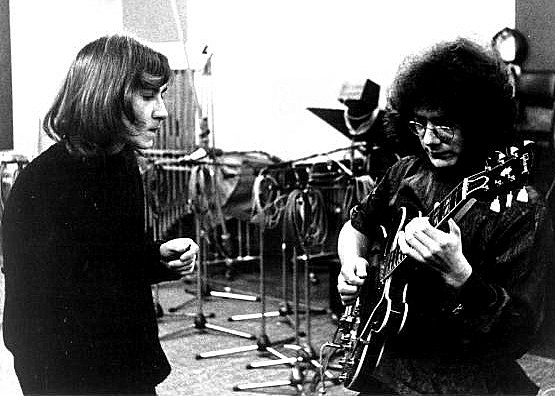
In mid-July 1969 a new British band called King Crimson, just signed to Island Records, began recording their debut album, just weeks after playing their first official gig on April 9 and days after supporting The Rolling Stones in front of a crowd of half a million in Hyde Park on July 5. merely 15 days later they had finished recording a remarkable, ground-breaking LP that was sweepingly original, creative, expansive; a true Rock classic that many people consider to be the first true progressive Rock album. When it was released, The Who's Pete Townshend called King Crimson's In The Court Of The Crimson King: An Observation By King Crimson (to give it its full title) "an uncanny masterpiece". And it was. To record their debut, King Crimson had been teamed up with producer Tony Clarke, who had worked with the Moody Blues, including on their massive hit Nights In White Satin, and originally set up at Morgan studios in north-west London. After just a week, however, it was clear to the band that they and Clarke were not singing from the same songbook, and that the partnership was never going to give them the space to fully express and indulge themselves and follow their vision. It was also decided to move operations to Wessex studios which, situated in an old church, had a bigger natural sound. It's where everything on the album was recorded. With Clarke out of the picture, it was decided that the band would produce the album themselves – something that was highly unusual for a first album by a new band. Given the technical capabilities of the band, though, producing themselves turned out not to be that difficult, according to the band's lyricist and co-Producer Peter Sinfield. "We had these fantastic engineers at Wessex, who've never really had the plaudits they deserve, and it was a great studio, with lots of valve mics, which make a difference. It was all done on eight-track, so there was a lot of editing because it was a very fussy band. It's such a blur, because it was so fast, We were all 24, 25, 26, and we'd all been around for quite a while, so we had quite a lot of ideas and bits and pieces to fall back on when the day came that they were required. "I remember when I first met him I thought I'd found Mozart. He's an unbelievable musician. Even to this day I don't really believe that someone can play so many things so well. And the irony is that he only wanted to be Paul McCartney, really, and strum his guitar. We went in and essentially recorded the tracks live, and embellished them from there, taking advantage of the multi-tracking – although we only had eight tracks. We went in and essentially recorded the tracks live, and embellished them from there, taking advantage of the multi-tracking – although we only had eight tracks. We'd record and then go on the road for two or three days then go back to the studio. I'm surprised by the nonchalance that I see in the diary I kept.'' ''It was just so matter-of-fact. It appears to be awash with Mellotron, because two of the big, sweeping orchestral tracks – Epitaph and The Court Of The Crimson King – are, but used, we'd like to think, sensibly. We didn't just plonk down handfuls of chords, we'd record each note and put it all together, and try to pretend it was a bit more like strings than it really was. I didn't want to record the Mellotron in the same way that the Moodys had done," says Ian MacDonald, the man who played it on the record. "So the way we used it was more aggressive, more majestic. And one of the ways I did that was just to blast the Mellotron through a double stack of Marshalls and put a microphone about 20 feet away." Sinfield recalled of the mere days it took to record the album. The recording was completed in 15 days of recording, between July 16 and August 15, with the band doing gigs between sessions. Crimson had rehearsed long and hard prior to entering the studio, and the songs' structures had also been worked up while gigging intensively in the few months the band had been together. The songs they had, that is. A problem they would have to address at some point was that they had barely more than half-an-hour's worth of music prepared. Live, they played a combination of originals and covers, but they were adamant that the album would be all their own work. The shortfall in material, however, didn't seem to be cause for concern. Plus they were all very capable musicians, each with with more than one string to their bow. None more so that Ian MacDonald, who had been in the army and learned horn arranging, and could play brass and woodwind instruments as well as guitar and piano. With much bigger ideas than the budget and very limited time, there was no room for a meticulous piecing together to accommodate what the album might appear to be. "I think the driving force was Ian MacDonald, really, Greg Lake wasn't really capable enough as a musician, or even as a writer. Not that he didn't contribute anything at all, because obviously he did. Fripp was very steady and Robert-ish. Michael Giles [drums/percussion] always wanted to do it as difficult as possible and as jazzy as possible. Ian was the one who just wanted to do anything that we could possibly do within the scope and yet still have people listen to it. And I was the one floating around the outside knowing we should have an extraordinary cover and without the name on, and stuff like that.'' MacDonald: "I don't remember thinking anything like: 'Wow! That's great' or whatever. Except maybe with …Schizoid Man. I remember listening back to that and thinking: 'What the hell is this?!' We weren't the type of band to slap each other on the back. We were very reserved in praising one another or ourselves. We just did it and went on to the next thing." Sinfield: "Maybe at the end. When it was all finished there was a sort of glow of satisfaction – and relief. There was a feeling of: 'Gosh, we've done something and it sounds really rather good, and we're quite proud of that bit, and that bit.' By any standards, there are parts of that album that shine out. And I think it has a timelessness to it as well – which I can tell you by the royalty statements even today."



Colosseum at Reading Festival June 27 1971. Dave Greenslade on keys, Clem Clemson just before jumping to Humble Pie, Dick Heckstall-Smith, Chris Farlowe, Jon Hiseman, Mark Clarke.
photo by Michael Putland
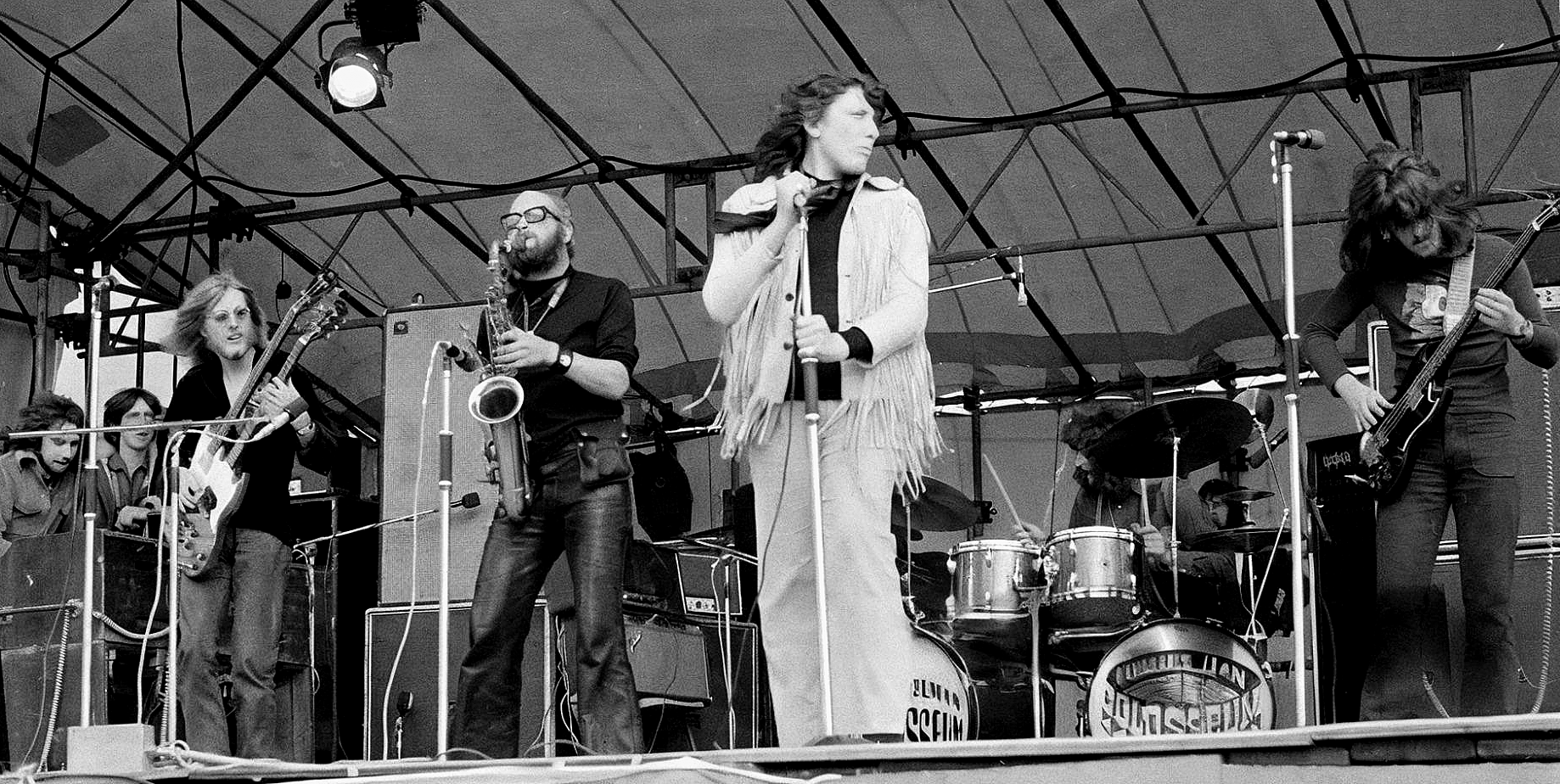
photo by Michael Putland

Mountain - June 6 1970 @ The Warehouse, N'Orleans
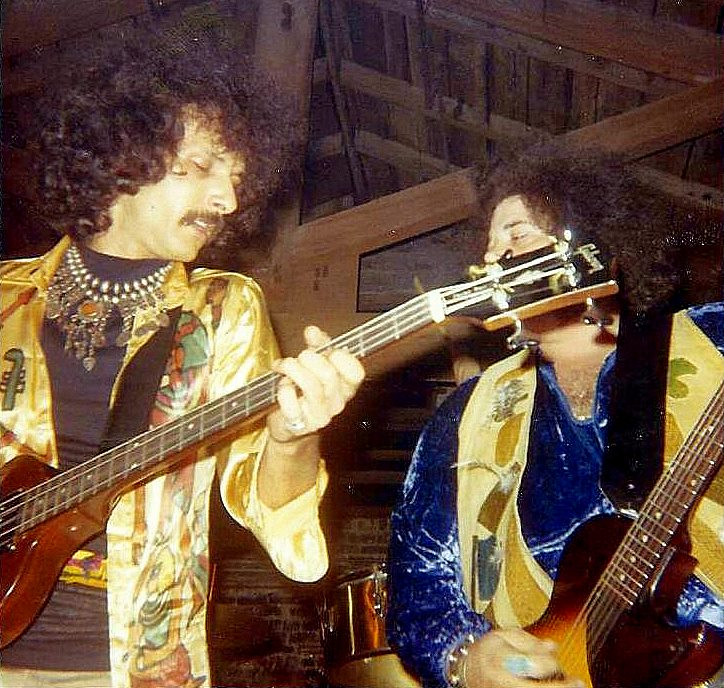
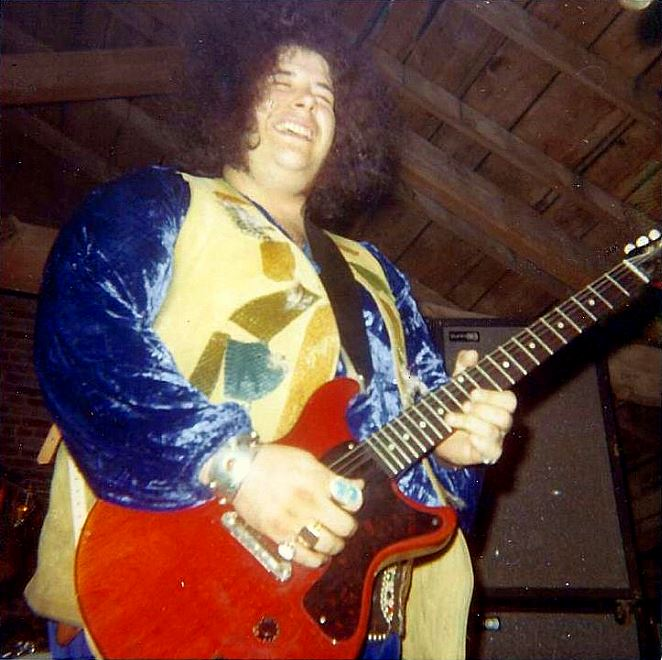
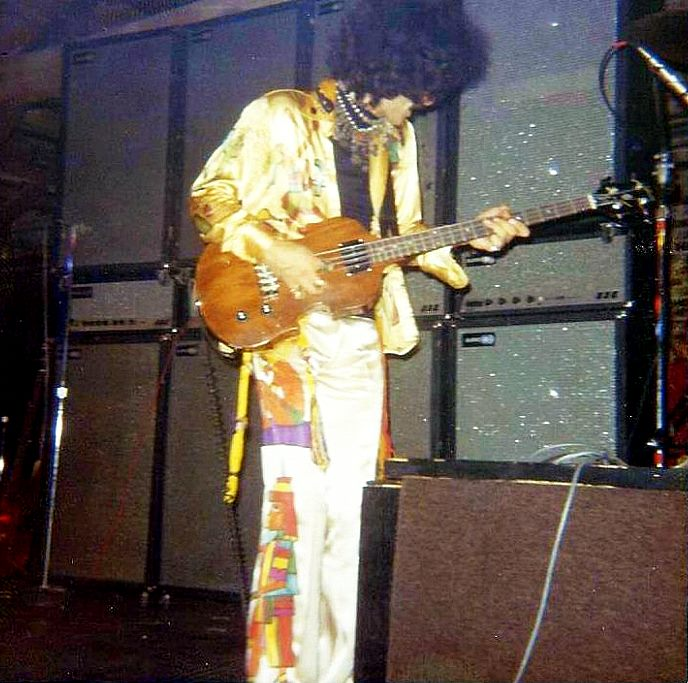
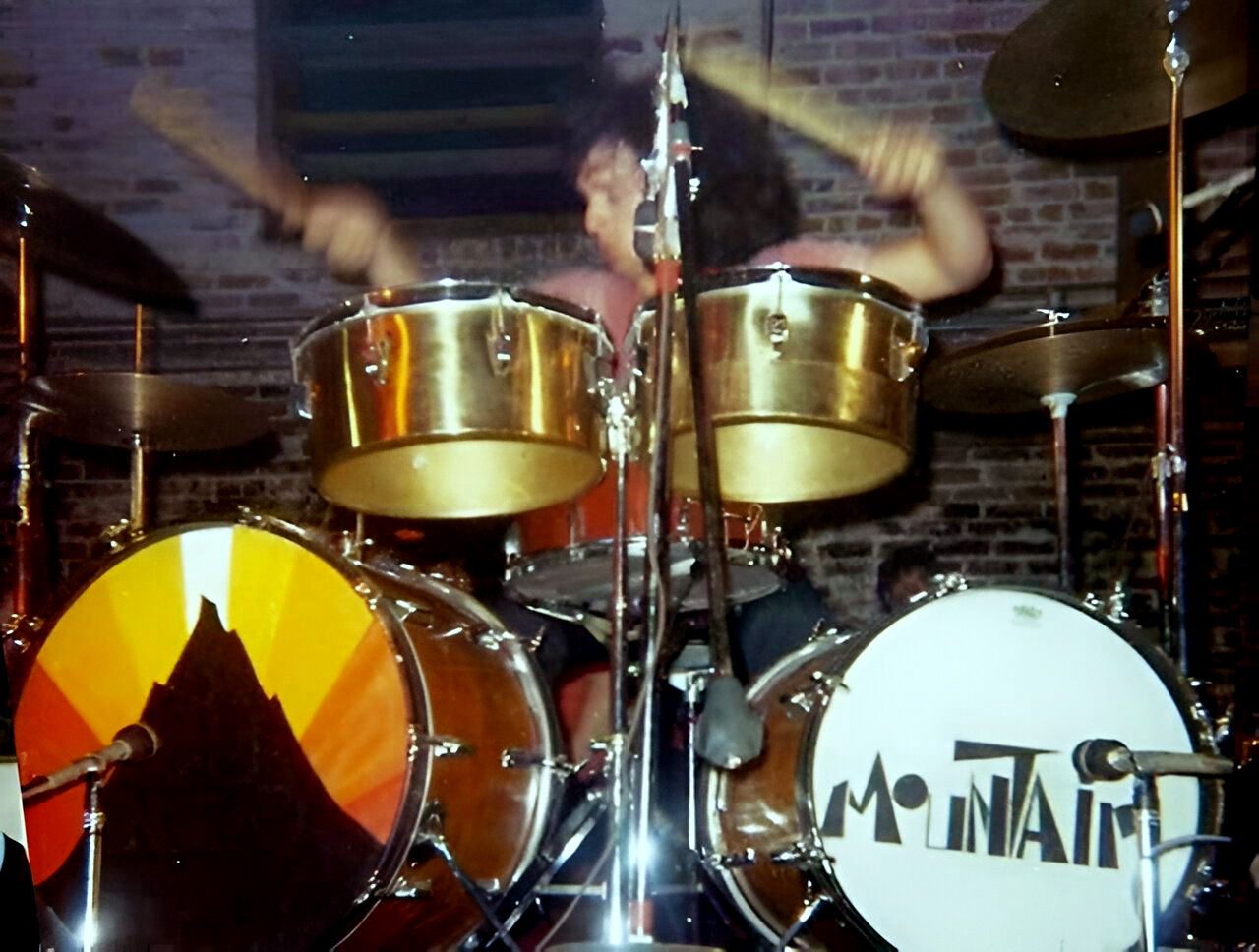
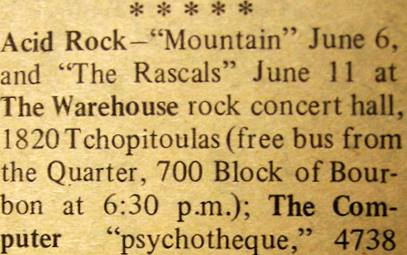
Mountain - June 6 1970 @ The Warehouse, N'Orleans
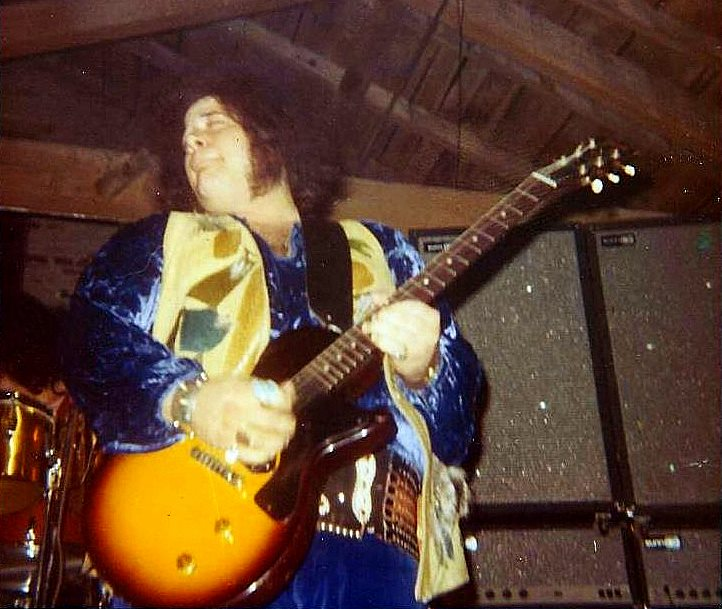
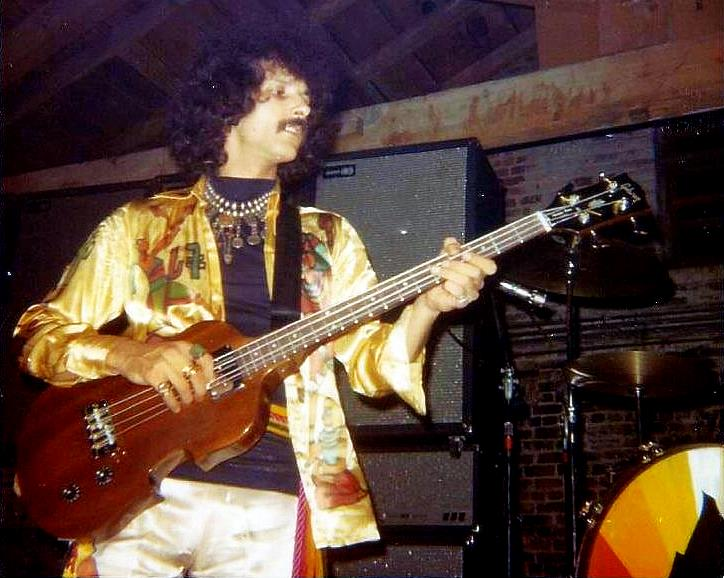
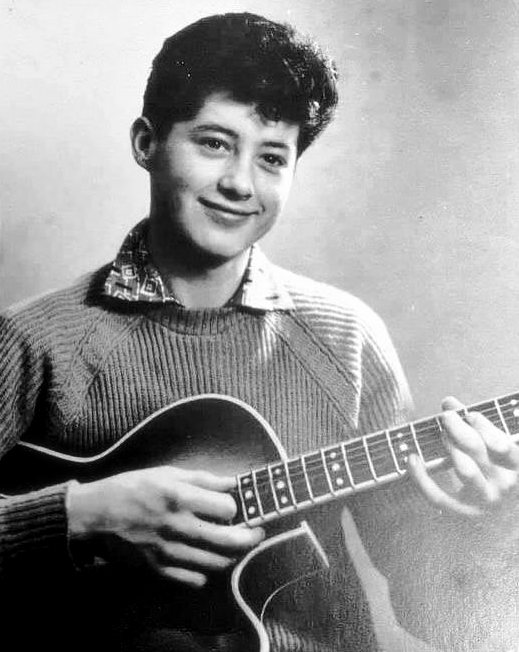
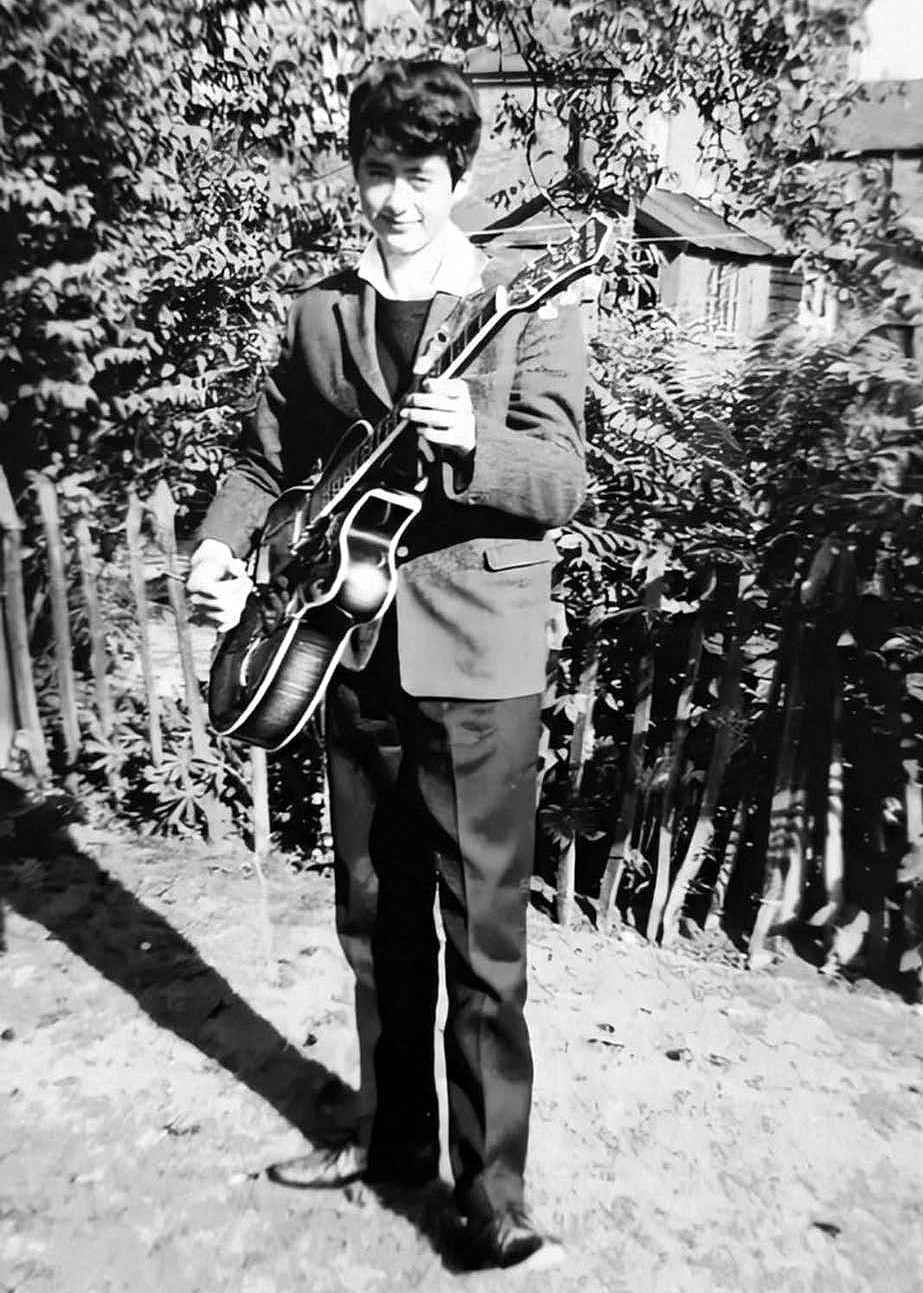
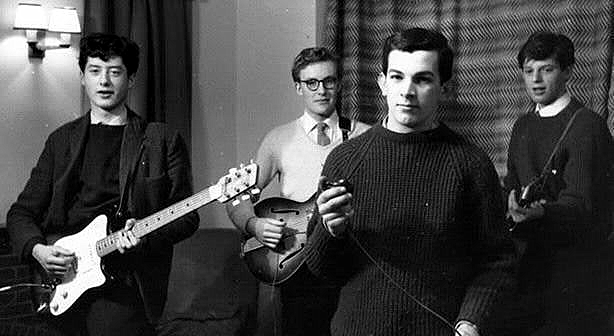
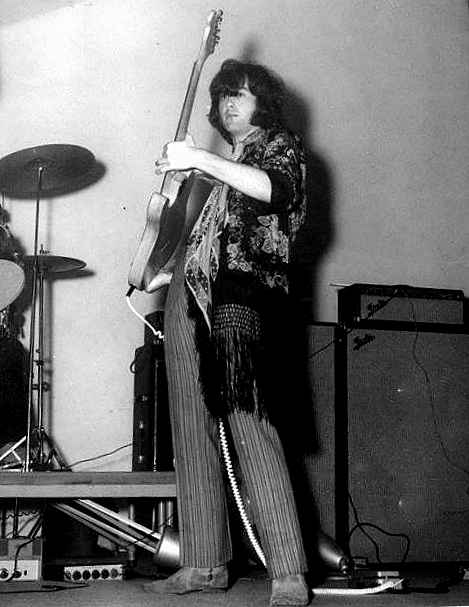
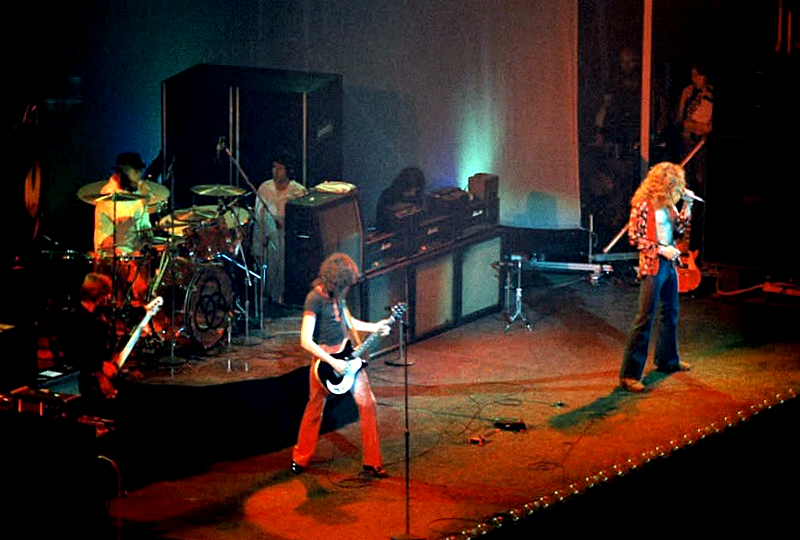
At 18, Jimmy Page was living his dream as a professional guitarist - and it was killing him. By 1960, Page had caught the eye of music manager Chris Tidmarsh, who recruited him for a gang of rockers called Red E. Lewis and the Red Caps. The shows were rowdy and fun - there was a fight almost every time they performed - but 16yr old Jimmy was the star attraction, able to replicate any popular sound with flair. Several months later, Tidmarsh fired the lead singer, made himself the frontman, renamed the band Neil Christian and the Crusaders, and aggressively hit the English club circuit. For the next 2 years, they lived the rock and roll life, but lived out of the back of their van and in the clubs they headlined, sleeping on floors or on top of their instruments, plus it was freezing. "Because of all the traveling and adverse conditions, I kept getting glandular fever," Page later recalled. "After a while, I thought, the hell with it." One night in the summer of 1962, Jimmy Page collapsed after a gig. The diagnosis: mononucleosis, brought on by exhaustion and brutal living conditions. His body had answered the impossible question for him - he couldn't keep doing this and survive. Page gave his notice and quit the band. While recovering, he enrolled in art college and began considering a different path. He loved playing guitar, but his time with Neil Christian had given him serious doubts about making music his career. Maybe there was another way. That "other way" turned out to be session work - playing guitar in recording studios instead of on the road. It seemed like a compromise at the time, a retreat from the dream. soon Eric Clapton would leave The Yardbirds and they asked Jimmy to join, but by then the money was too good to leave studio work. when sessions turned into muzak Page took the band's 2nd offer and took on the bass position briefly before teaming with Jeff Beck on guitars.

Fillmore East closing weekend June 26 1971
photo-Ben Haller
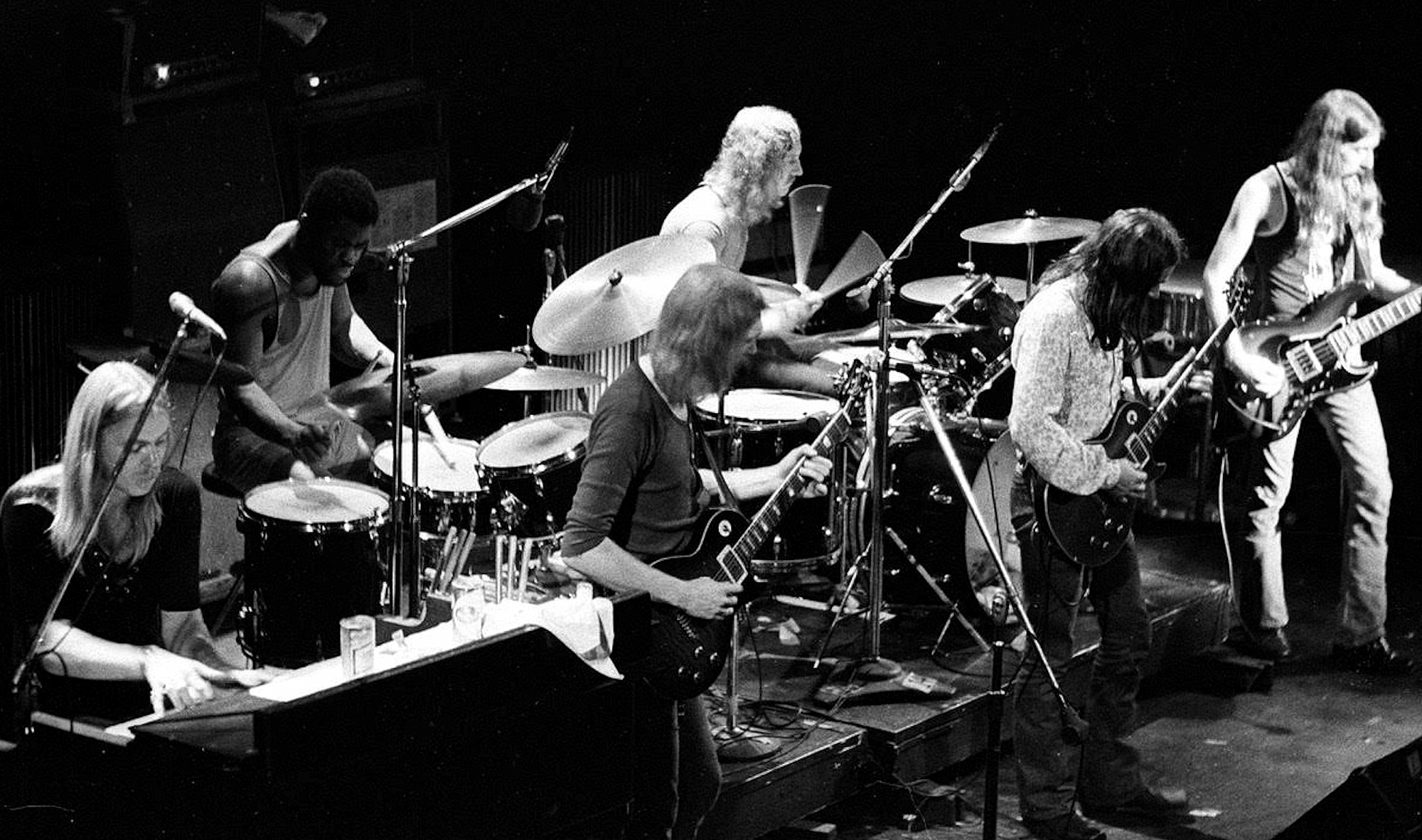
photo-Ben Haller
the original REO Speedwagon playing a Vietnam War protest concert in Daley Center Plaza April 1970. guitarist Steve Scorfina also founded St. Louis' Pavlov's Dog. in recent years he recovered and restored his long lost Epiphone.
photos-Arnie White
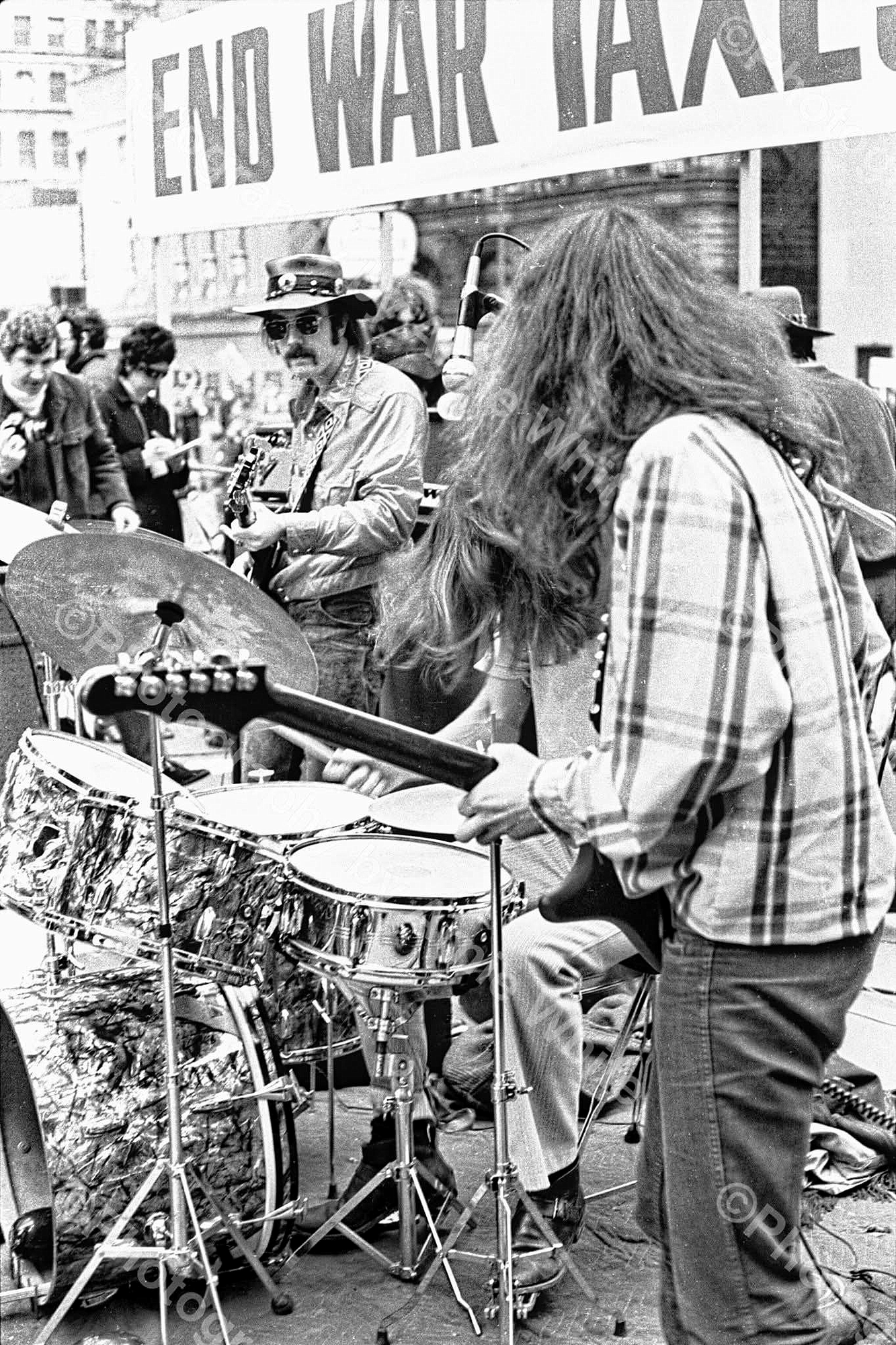
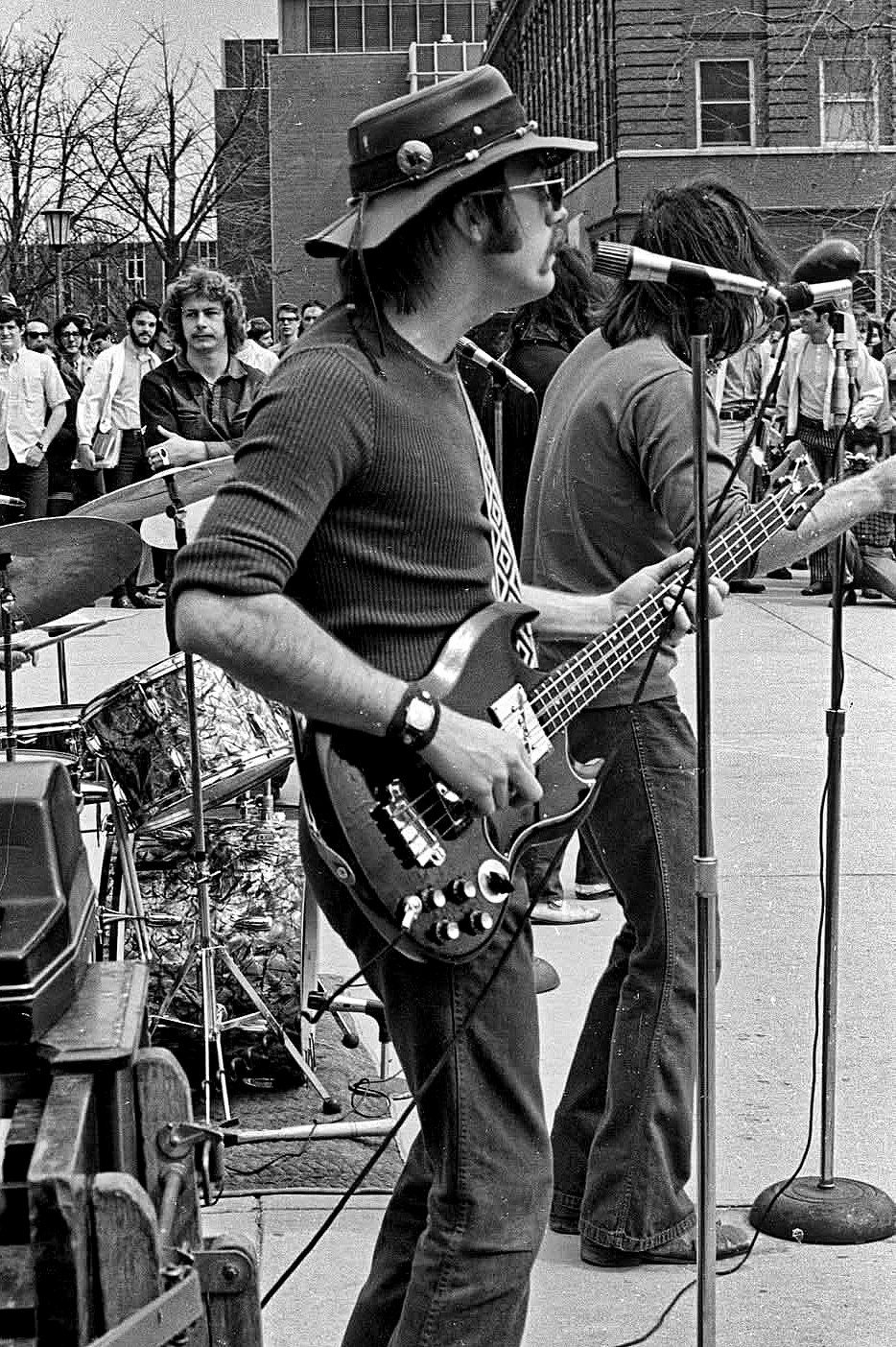
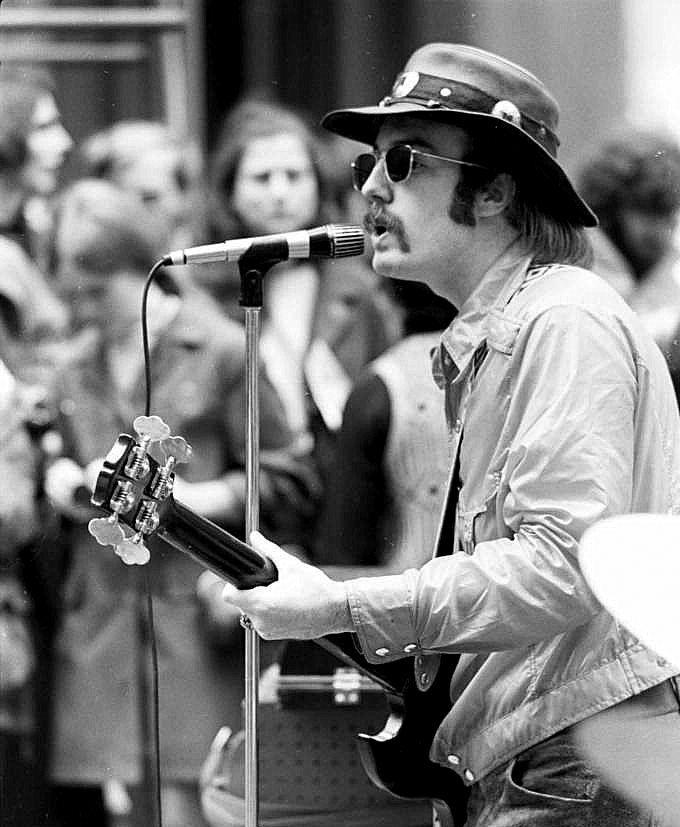
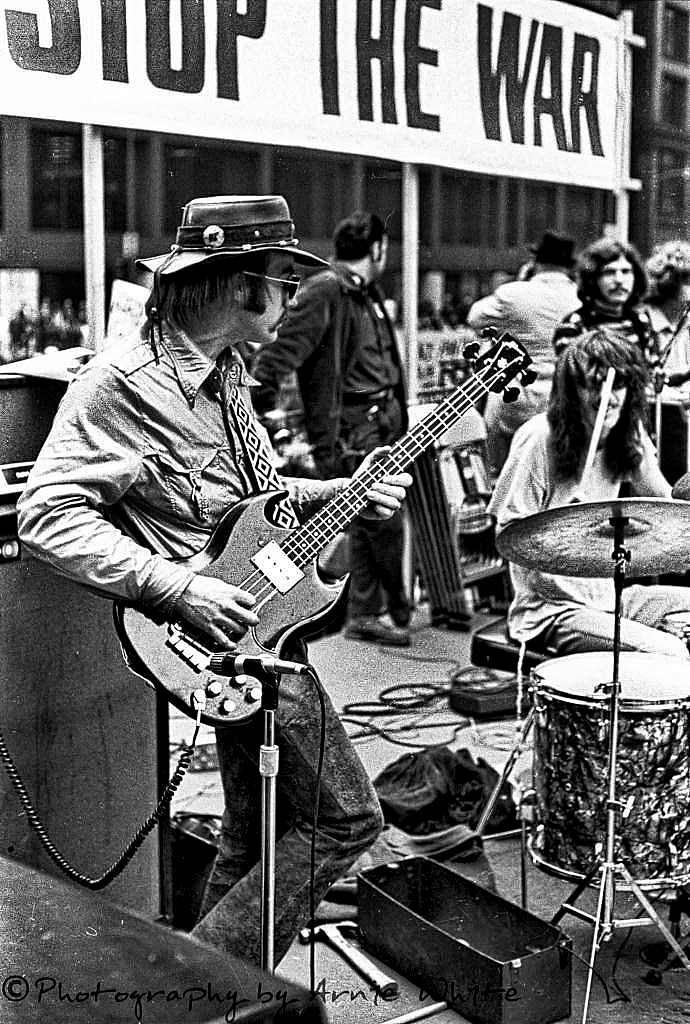
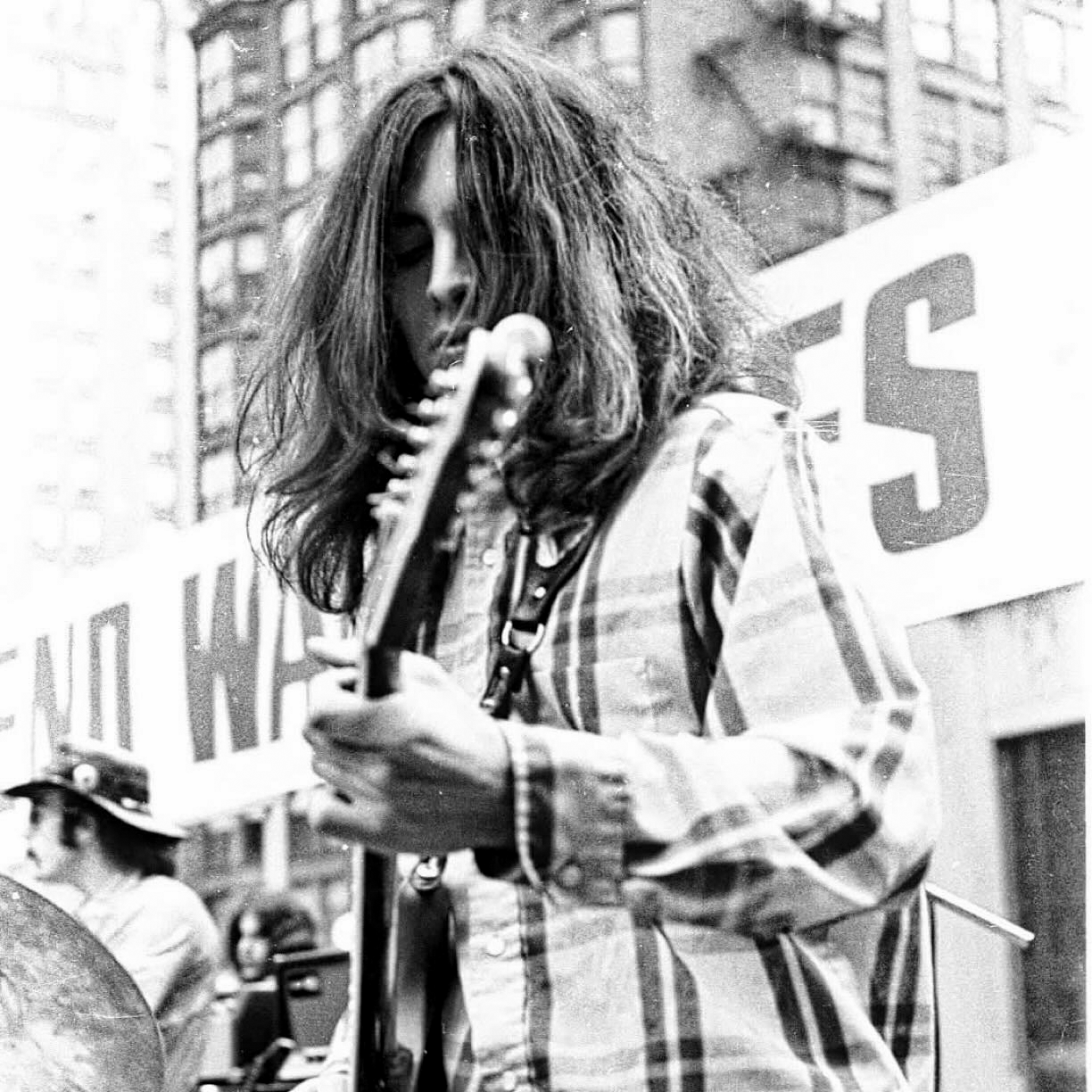
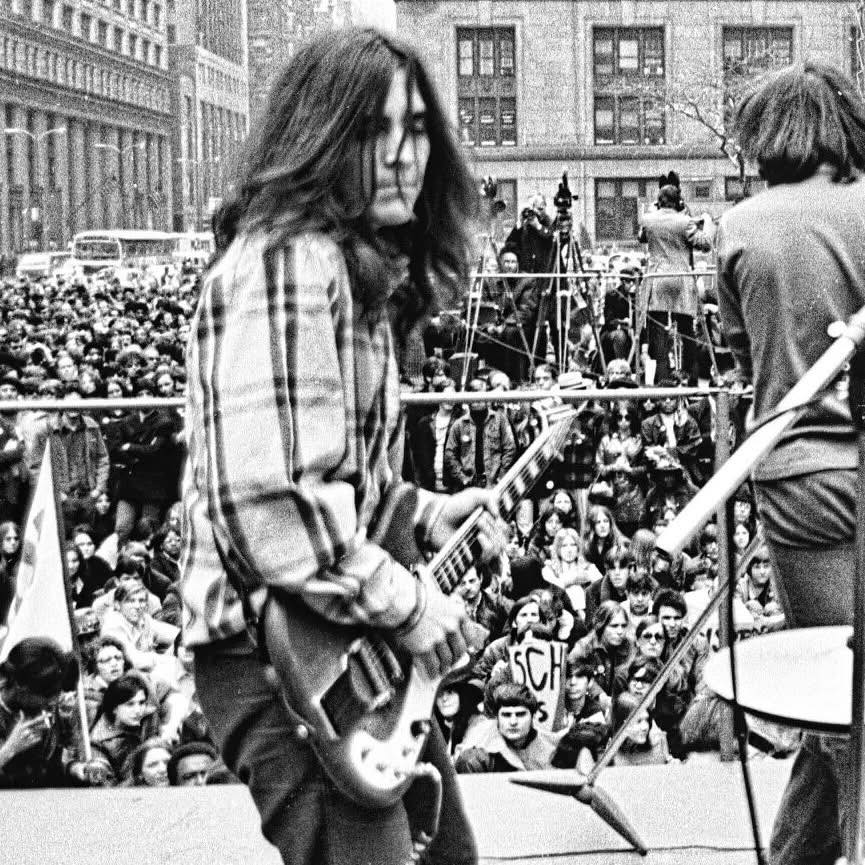
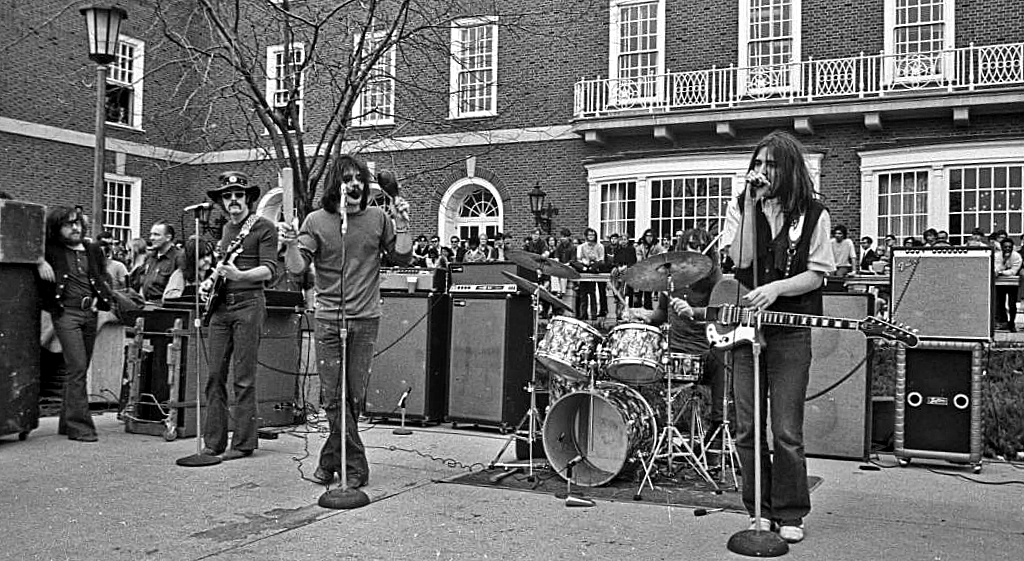
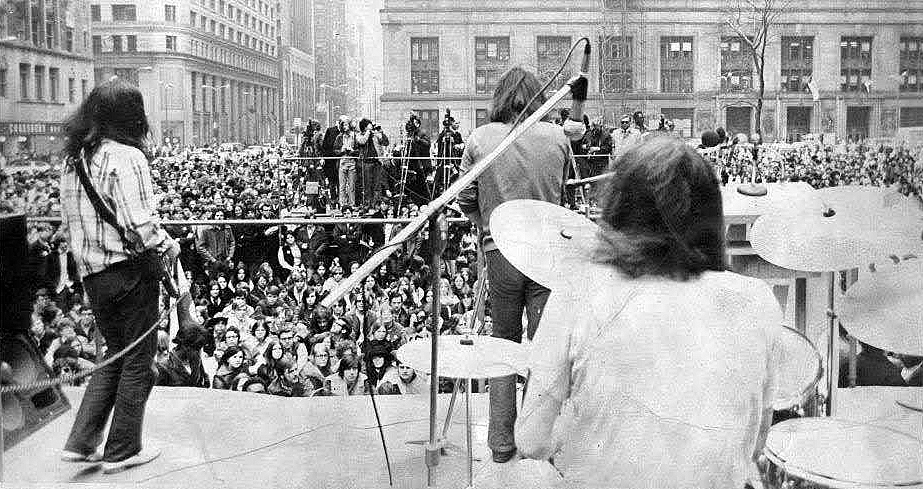
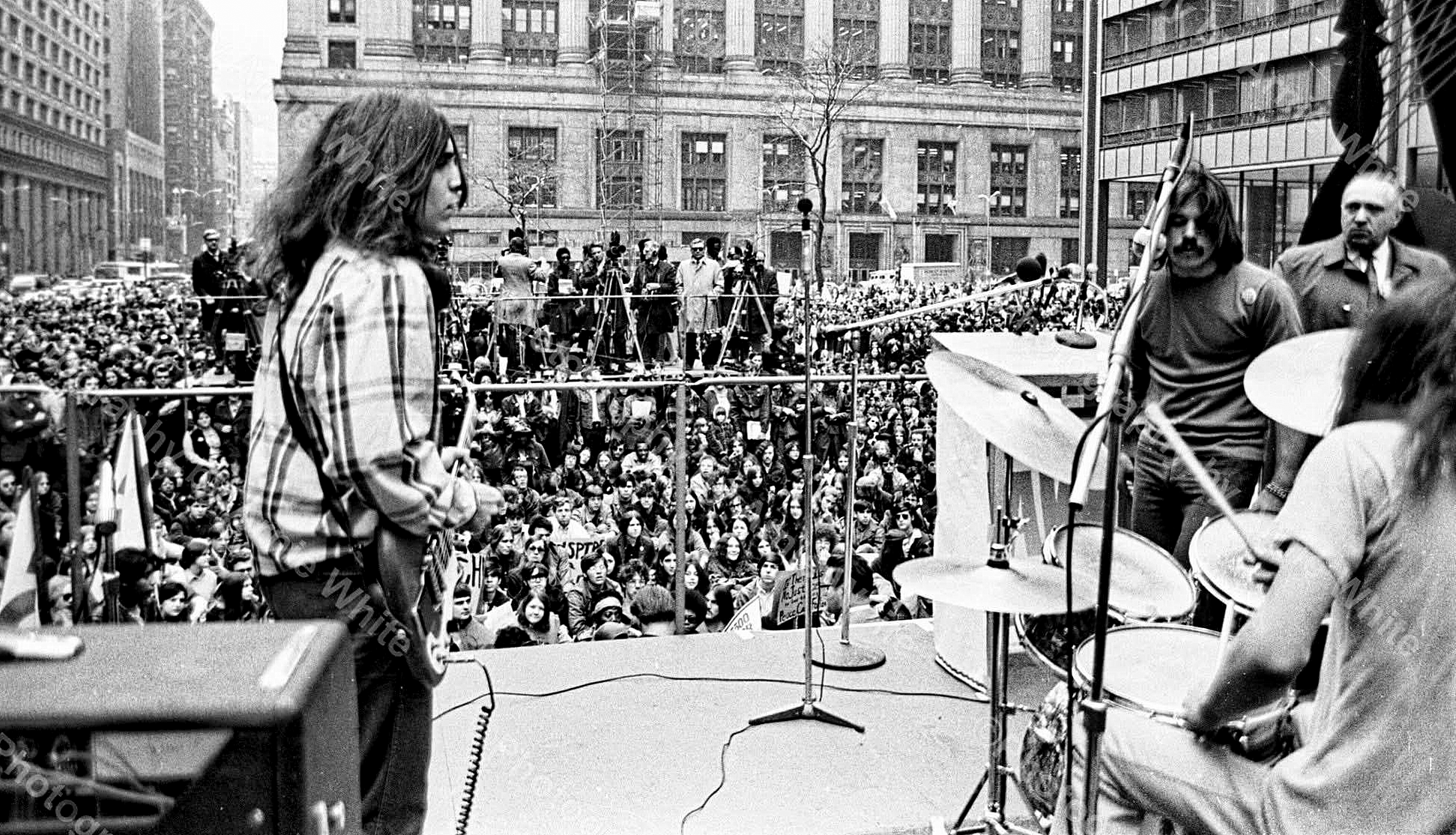
photos-Arnie White
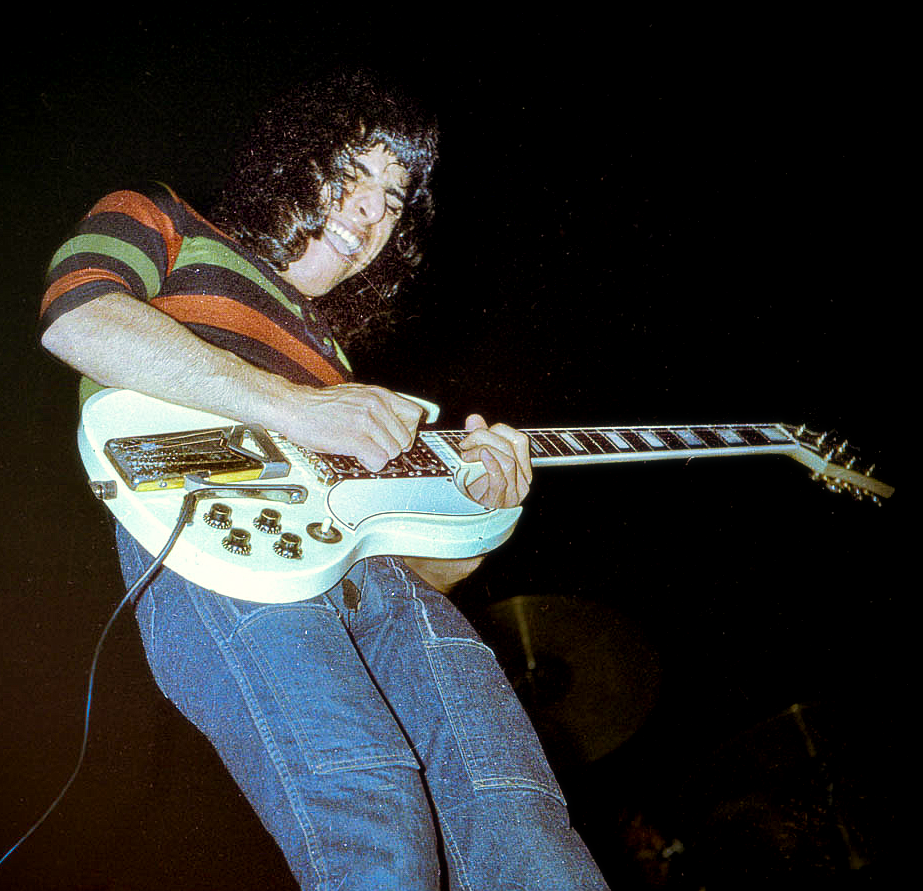
Louis Dambra of Sir Lord Baltimore played Detroit's Easttown Theatre March 12-13 1971 on the bill with Black Sabbath and Fleetwood Mac.
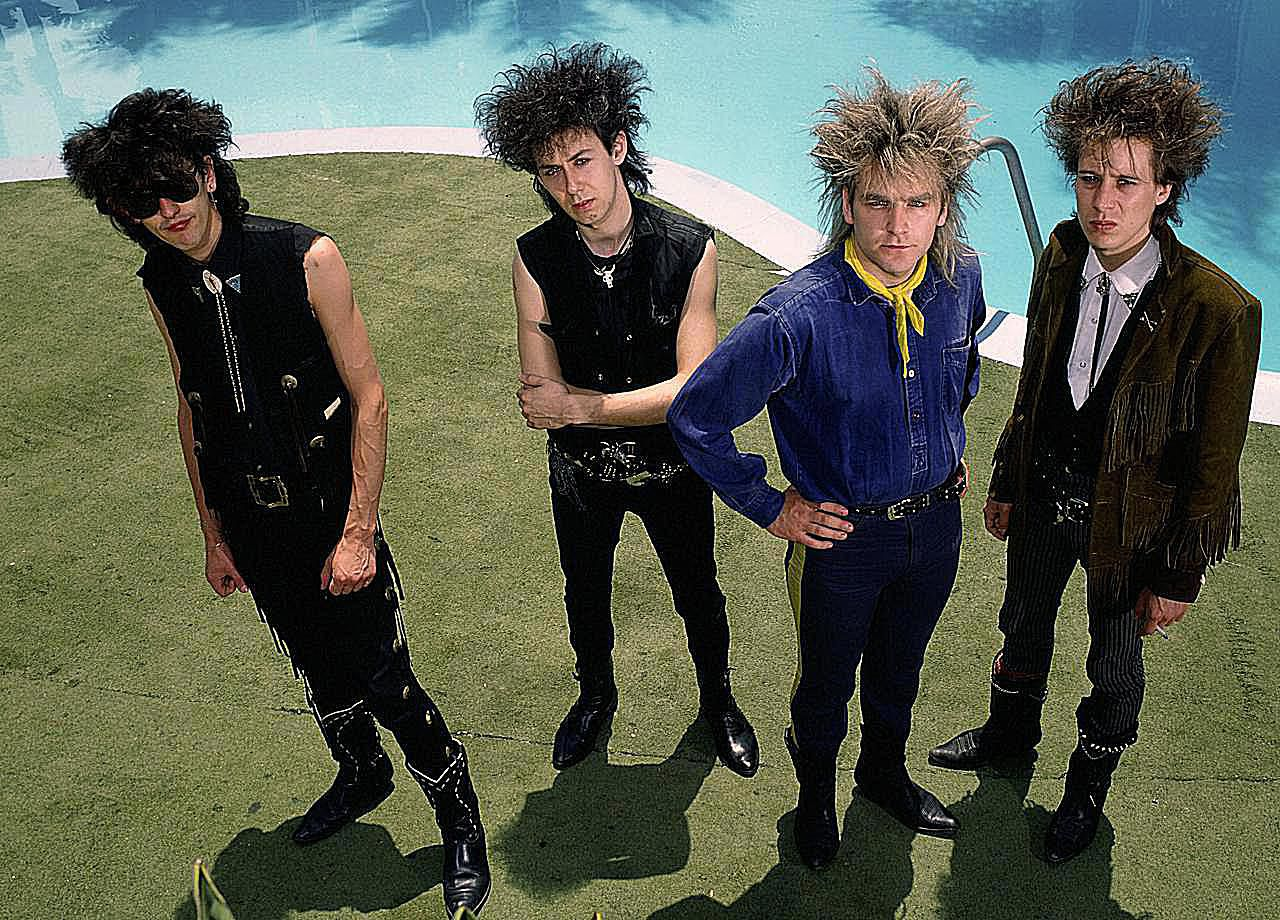
The Alarm
Back when Welsh and Irish hairstyles were more diverting. Here with Bono.
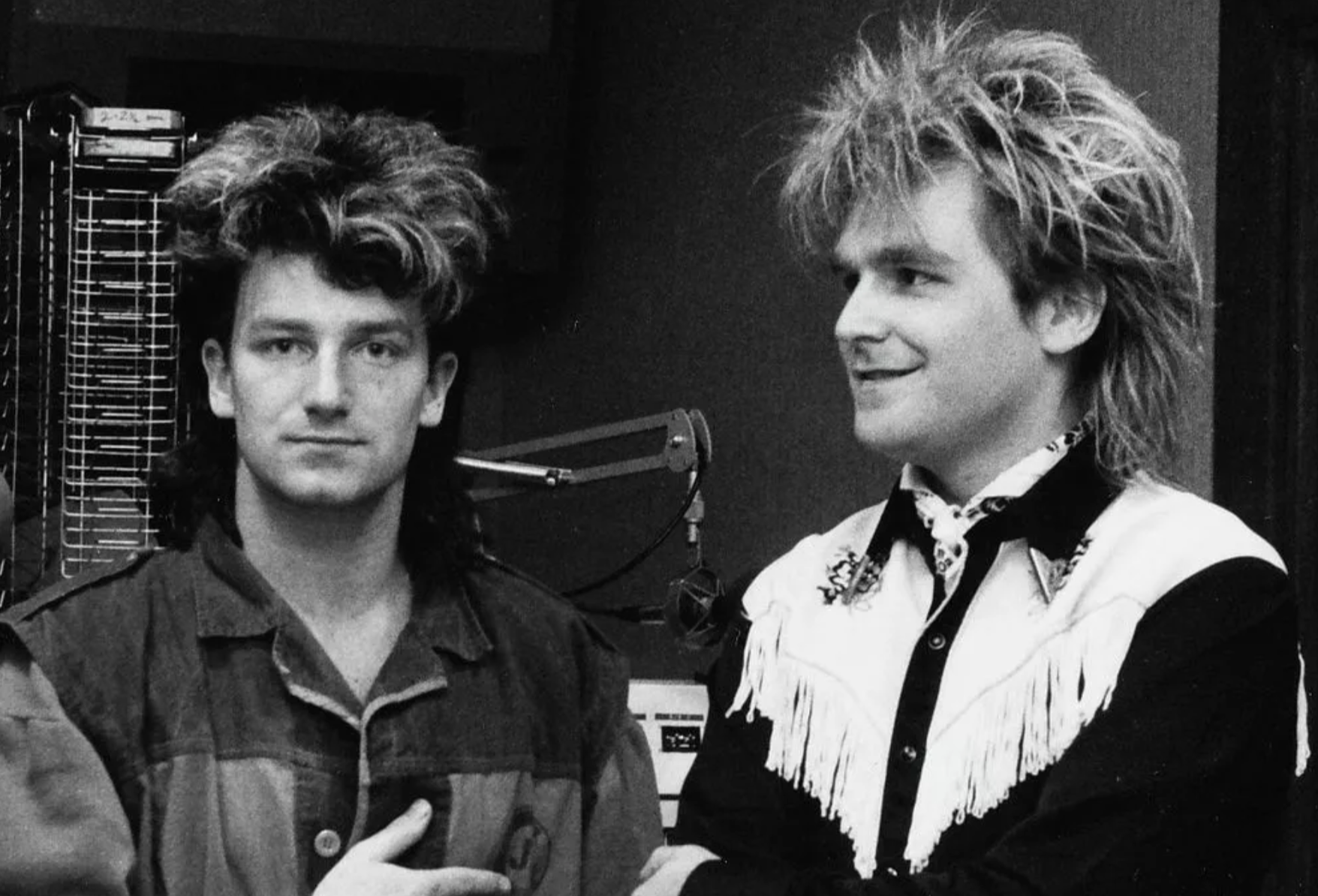
Back when Welsh and Irish hairstyles were more diverting. Here with Bono.


