• TalkBass has been independent since 1998. Add your voice.
    Create a free account to reply to discussions, view embedded media, and browse with fewer display ads.
    Join freeLog in
    Want zero display ads or expanded classifieds tools? Compare plans.

Corrosion issues

Hello all! I am looking for some advice on how to deal with corrosion, both in the cleaning and prevention of.

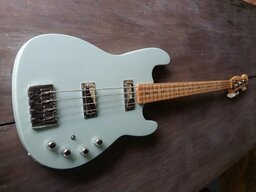
I have several basses, and tend to play each one in spurts of a month or two before getting the urge to play a different one. One of my basses, a Stingray that I've posted my troubles with on here in the past, has started corroding like crazy. Around a year and a half ago I purchased a G&L Kiloton, which more or less took the Stingray's place in my instrument rotation, and lead to the Ray being neglected for probably a year or so. One day this spring I got the urge to break the Ray out and was pretty shocked to see how gunked up all the frets, tuning machines, pole pieces and strap buttons were from corrosion(light film, greenish color, you know the drill). The strap buttons were actually rusting and starting to pit, so I straight up removed them(thinking they might have been the biggest problem). I then spent a couple hours heavily scrubbing, and in a few spots very lightly sanding, the corrosion away and put some fresh silica packets in the case and put fresh strings on the bass(the old ones were extremely corroded as well).

I was pretty pissed about the whole thing, and didn't really feel like playing afterwards, but figured I was good to go for the next time. Tonight was that next time, and it's already nearly as gunked up as it was in the spring. I've never really encountered this kind of persistent corrosion before, so I'm at a loss for what to do next. None of my other basses are effected like this(nor had this bass had any corrosion issues in the previous 15-ish years I've had it), so I'm reasonably certain it's not the general atmosphere of my apartment. I had assumed the case should be fine because of the fresh packets, but perhaps the case itself is the problem? I really figured removing the super corroded strap buttons would solve most of the issue... they had been changed to eye hole screws over a decade ago(by a friend when I "loaned" the bass to him while he went on tour) to interact with carabiners that were run through the strap holes, making a "punk" poor mans strap lock. But obviously there's more to it, and I could use some advice for what to do next.
 
I lived along the Gulf Coast for a long time, but never encountered those depths of problems with humidity, salt air, etc.

While you could carefully sand the frets (I'd far prefer a taped-off fingerboard between the frets and steelwool), steer clear of that on any plated surface ! Easy enough to replace the strap buttons, but I doubt they're 'infecting' the other bright work. I'd clean carefully chrome plated surfaces with a good car wax (And it needs to be wax ONLY, avoid anything worded 'wax polish', etc., as they all have extremely fine grit to cut the painted finish, but you DON'T want that on plated surfaces). This will also tend to seal the parts somewhat from the wax it leaves behind. Or after it's clean, you can apply a thin finish of Alberto VO5 (yep, the old-school hair dressing in the gold tube) which will repel the bad stuff, and it's harmless to paint, plating, and electroncs.

I'd also lightly lube any moving or adjustable parts (the height screws in the bridge saddles for instance) to repel any dampness in those places. I use Break-Free, a firearms wonder lube that you'll only ever need to apply once. It's also benign to paint, plate, and electronics.

If possible at your home, do this and leave it on a stand out of the case for a month or so and see if these problems return, and check the case for any soft spots on the outside (it got wet if it's a wood/tolex case), and check the fur inside for ANY hint of dampness or contamination.

I hear of corrosion this bad and always suspect bogus plating, but surely the keys, plates, and frets were all made different places with differences in plating and alloy content, so that everything is gunked up points to something in the environment where this bass stays as the culprit.

Good Luck !
 
  • Like
Reactions: Schweedy
Sorry to hear about your plight.
I live in a tropical coastal environment and I understand your issues but you seem to have serious problems even by my standards, where do you live?
I found that storing my basses out of a case or gig bag is better regarding stains and corrosion. If it's an option just try that.
I would not take sand paper or other abrasives to any plated surface, that will accelerate corrosion.
On my pole pieces I use a fiberglass pen to remove rust then coat them with clear nail polish to keep them shiny. All other hardware gets a buff up with a dry cotton rag eveey now snd then, that takes care for me.
Good luck!
 
  • Like
Reactions: Schweedy
Thanks for the info folks, I won't resort to sanding again. J Wilson and subdude, I'll give some of your suggestions a try for safer cleaning as well! As for how it got this way to begin with, I do live in a very varied climate: Wisconsin. With cold dry winters through hot humid summers, and Arie for sure my hands do touch all of the infected areas... but I do feel as far as environment and hands are concerned that this would be a more consistent issue if that were the culprit. As stated above none of my other instruments are effected, nor has the Stingray been effected for the 15-ish years of it's life, and neither my hands nor the environment have changed much over that time.

The case itself still seems to be the most likely culprit. It doesn't have a damp feel to it at all, but it does now certainly smell like corrosion. (it's just the 15yo standard MM case it came with)
 
I would venture that it is either some chemical in the case off gassing, or possibly even the bass itself off gassing. I know there was an issue with early pick guard materials back in the 50s and 60s producing similar results when kept in the case and the off gassing fumes couldn’t escape.
 
  • Like
Reactions: Schweedy
it's possible you may have something degrading in your case -maybe the adhesive used on the fabric or the fabric itself? how about giving your bass a good cleaning followed by a protective on the metal parts and a new case or gig bag?

maybe the pickguard on the ray is outgassing? for example, pvc will breakdown and outgass hydrochloric acid fumes.
 
  • Like
Reactions: Schweedy
it's possible you may have something degrading in your case -maybe the adhesive used on the fabric or the fabric itself? how about giving your bass a good cleaning followed by a protective on the metal parts and a new case or gig bag?

maybe the pickguard on the ray is outgassing? for example, pvc will breakdown and outgass hydrochloric acid fumes.
The bass has been deeply cleaned both for the first instance of corrosion earlier this year, and again the other night. It's currently being left out of the case.

If it's the pickguard, that's an easy and cheapish thing to replace.. but I'm not keen on getting rid of the case if I don't have to(though if the case is the culprit, and there's not fixing it, I will). It is the original afterall. But that said, I'm also not really sure how to tackle cleaning it. Any suggestions?
 
Last edited:
I would venture that it is either some chemical in the case off gassing, or possibly even the bass itself off gassing. I know there was an issue with early pick guard materials back in the 50s and 60s producing similar results when kept in the case and the off gassing fumes couldn’t escape.
This is definitely something worth looking in to for sure. It hasn't done this before, but it's getting up there in age now. Is this something that will just pass, or something I'll just have to deal with, and make sure I use it and clean it more often?
 
I had similar issues for years. There was serious corrosion on many of my instruments. What worked for me? I started washing my hands before playing and made sure that my instrument was well wiped-off with a good cloth when I was done with it. There have been no more issue since.
I am definitely aware that this is a huge issue for lots of people, and I am consistently careful to wash my hands before playing my instruments as well usually as wiping them down afterwards(especially my nicer instruments... Ray included). But I do this mostly for string life, and as I said in earlier posts on this thread; none of my other instruments are effected, nor had this bass ever been effected in its previous 15 year history. I get that some of you want to blame my hands, it's just almost certainly not the culprit here.
 
I had minor issues and someone recommended Renaissance Wax. You can use it on any hard surface and it protects from touch.

It's called a polish but there is no abrasive in it. I use it every few months and have no more problems with corrosion.
 
As an Amazon Associate, TalkBass may receive commissions from qualifying purchases made via links on this site.
I had minor issues and someone recommended Renaissance Wax. You can use it on any hard surface and it protects from touch.

It's called a polish but there is no abrasive in it. I use it every few months and have no more problems with corrosion.
Worth looking in to, thanks!
 
As an Amazon Associate, TalkBass may receive commissions from qualifying purchases made via links on this site.
  • Like
Reactions: Gabbs
Thanks for the info folks, I won't resort to sanding again. J Wilson and subdude, I'll give some of your suggestions a try for safer cleaning as well! As for how it got this way to begin with, I do live in a very varied climate: Wisconsin. With cold dry winters through hot humid summers, and Arie for sure my hands do touch all of the infected areas... but I do feel as far as environment and hands are concerned that this would be a more consistent issue if that were the culprit. As stated above none of my other instruments are effected, nor has the Stingray been effected for the 15-ish years of it's life, and neither my hands nor the environment have changed much over that time.

The case itself still seems to be the most likely culprit. It doesn't have a damp feel to it at all, but it does now certainly smell like corrosion. (it's just the 15yo standard MM case it came with)
Try some Autosol to clean up the corrosion, and put some silica gel packets in the case pocket to absorb moisture.
 
Does the bass have the original pickguard on it? If it was replaced it could have a celluloid pickguard on it. Celluloid is nitrocellulose and does gas off corrosively. I've seen an old tool box that had nitro handled wood chisels in it without being opened for years...all the tools were extremely corroded.