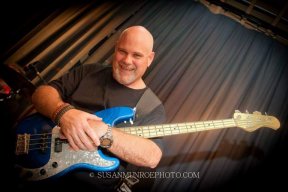
For a little more than a year now, I have been the house bassist at Buck Owens Crystal Palace in Bakersfield CA, and I have had the great fortune of playing with, and hearing a lot of top notch country artists (as well as getting some very handy advice from Buck himself before his passing). I came into this gig from a jazz background and had very, very little experience at playing country (but now greatly enjoy it
it is a LOT trickier than just root/fives on the downbeats
). I have had a lot to learn about playing in this style, and along the way have learned a lot.
The upper echelon Nashville studio players (Michael Rhodes, Glenn Worf, Mike Brigandello, David Hungate, Mike Chapman, Dave Pomeroy) all have really top notch studio racks for tracking (a lot of LA2As, Neve, TubeTech
.vintage Pultec eqs
.all very expensive). These are used for recording, not live gigs. The reason behind this is Nashville has a history or working fast. They dont spend three weeks working on a snare sound
and bassist usually have about ten min working with the engineer, to get the sound. Often tracks are played down live, with a couple of passes being made, and any changes or alterations discussed between takes. Those racks allow the bassist to send a very good +4dB signal direct to tape....and a "quick and good tone" which engineers can deal with without spending hours tweaking....
Live is a different story. Those guys usually do not take to the road with an artist (tho it does, on special occasions happen). And road bands keep things lean, often relying on a rented backline for the bass. Instruments do matter
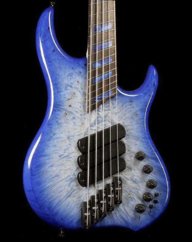
but vary. Popular basses include, of course, Sadowsky, James Tyler, Lakland, vintage (or vintage re-issue) Fender Js and some old Gibson Les Paul Sigs. Lakland HBs are showing up more and more.
There is a definite trend back to flat wound strings
which is an important part of that country bass tone.
And there is a trend towards passive pickups (albeit aided with some outboard preamp: Aguillar and Tri-Logic preamps are the units of choice. The Xotic RC Boost pedal is seen quite a bit as it is a transparent boost which does not detract from the sound of passive pickups.) Compressors are used quite a bit to keep the bass in check
.and I see a few Aphex Punch Factorys, if only because they are quite transparent and easily replaced should they fail or become broken. Demeter Compulators are also quite popular.
Tube DI, for bass, is usually the call--either Demeter Tube Direct or Aguillar, and the Avalon U5 is everywhere!
As I said, bass maps are often rented. EA, Eden, Ampeg
.all get the call. The use of outboard preamps makes the amp not as essential as one might think.
The real magic is in finding tone that fits. Think not so much as something to cut through, as in a rock gig, but rather a tone which fits between the guitars (which can range from chunky to twangy) and the kick drum. It cannot be so middy that it competes with guitars (and often there are bari gtr parts) nor can it be so deep that it masks the kick. The bottom is kept quite tight---not boomy. The lower mids are emphasized as are the upper mids for just a little pressence and subtle bite (and often a tube DI is placed before the amp to get a little drive on the tone---listen to some of the bass tones, for instance in Kenny Chesneys CDs--Larry Paxton and Michael Rhodes--
round, full but a little fury as well). Treble, which equaltes to hiss, string and finger noise, is not emphasized.
And most important
it is all about note selection and note duration (coming from jazz and funk, it was difficult for me to let those quarter and eighth notes ring for their entire length). Placement and feel of the beat is likewise of major importance---often a bass part will sit slightly behind the beat for a verse and move up on top of the beat for a chorus (or vice versa) without speeding up or slowing down. Dotted notes are often held to varying lengths to highlight a vocal. Parts are not notey and extended harmonies are usually shunned, but 3rds and 7ths are used quite a bit to turnaround phrases based on the r/5 movement. The music may be simple, but it is most certainly NOT easy. Your tone should be round and full enough to allow for these distinct stylistic accents
and it should not get in the way. If your bass tone stands out it needs to be dialed back. It needs to sit in the mix. Every now and then there is a few notes, a measure maybe
or a small fill, where the other instruments leave enough space for the bassist to put his/ her signature in there. Your tone, while sitting back in the track for the rest of the tune, will stand out here because the other players are making room for it. Likewise, your tone, throughout a song or set, must be anonymous enough to let the other instruments (and most of all the vocalist) stand out. That is one of the true arts of country music: how each player subtly sculpts out their own sonic space to leave room for others. This allows for sonic clarity, and makes rather simple parts become something entirely complex and sophisticated as they are made part of the whole.
Hope that helps
Max






 All this to say country is not necessarily what it used to be.