• TalkBass has been independent since 1998. Add your voice.
    Create a free account to reply to discussions, view embedded media, and browse with fewer display ads.
    Join freeLog in
    Want zero display ads or expanded classifieds tools? Compare plans.

Crafting bass lines by ear

It’s simply a case of being musically literate.

Linguistically illiterate people don’t read books and you can hear it when they talk.

Learn entire songs on piano- all of the instruments’ parts, not just the bass. Transcribe. Become musically literate.
 
  • Like
Reactions: sheesh and mjnyc
How to create a bass line by ear:

1. Sing it

2. Record your singing

3. Figure out how to play it

As far as using the typical rules, any good melody meets most of the rules already.

Here’s one I think is a great example (apologies to you youngsters who never saw this movie). The entire melody is nothing but fragments of the major scale and most start and end on a chord tone.


The very beginning notes are (chord tone in red):

3 4 5 3
1
2 3 1
 
I...have a lot of trouble going from rule to note quickly enough. I feel like this is a product of how my brain functions.
:laugh: i don't think your brain is functioning that differently than anyone else's --- except for the part where you think you have to follow "rules" to decide the next note. :facepalm:

the advantage for most players who have some knowledge and experience = better ears and more imagination!
 
  • Like
Reactions: mjnyc
I learn or know the chord changes to the tune. When playing with others I then just follow my ear. Sometimes starting on the root, sometimes not. Often playing the 3rd on the 1, instead of starting on the root. Always leading the listener or soloist through the changes in a manner that stays out of their way, while providing motion. I practice a lot by playing songs solo, sometimes as I would as a bass player/accompanist and some as soloist. But always making sure that the song is there at all times.
 
  • Like
Reactions: mambo4 and mjnyc
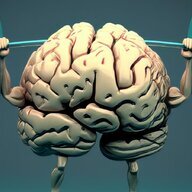
Ideally, I try to use the other side of my brain when crafting a part. I might refer to it as the non-verbal side of my brain, the side where I can't even say the name of a color. Truly inspired parts have come through that side.

If I want to get "cute" or "smart" I'll try to use the other side, the side where I can use language and do such things as say my name or call out the name of a color or name a scale. Truly convoluted Gordian Knots have arisen through that side.

So, it kinda depends on what the overall plan is.
 
  • Like
Reactions: mjnyc
Unless I'm copying the bassline from a popular song that everyone has heard and expects to hear each time the song is played, I pretty much listen to the tempo, the groove, and the direction. Having done that, a complimentary bass line usually presents itself. And when modifications that sound or fit better occur, I add those elements to my original progression.

Thump on,

One_Dude
 
  • Like
Reactions: mjnyc
Theory is good for communicating among musicians, and sometimes experimenting with a technical idea to get to a musical one. But it only describes and does not include a VAST data of musical vocabulary we all learn to some extent...you have to learn music to get that. I'd consider the correct bass line, the one that Fits, as a melody even though it includes harmonies and counterpoints and on bass sometimes The Melody if it's the bass line. All you need is a reference point and that can be your instrument, and not anything verbal or symbolic (writen).
I was just listening to Chet Baker live in Tokio, a famous concert near the end of his life, he's playing on dental implants, I believe, and he can play alternate melodies on chord changes all day and maybe tell you what key it's in. Hein van de Geijn bass solo starts at 5 minutes, Chet's uptempo solo starts at about 9 minute mark.
 
  • Like
Reactions: climber and mjnyc
I'm playing a somewhat complex gypsy jazz tune on an upcoming gig. It's more-or-less I's, IV's and V's, but all minor chords, with a diminished chord in the turnarounds, very uptempo. So, typical walking blues feels won't work- no major pentatonic or mixolydian. Although chromatic passing tones will work in the right places. Avoiding the blues scale as well. So I'm trying to keep that in mind without thinking in terms of 'patterns', in other words, focusing on correct notes, practicing playing lines in all positions, as well as on one string working up the neck. So I guess that's my advice- stay away from thinking in terms of finger patterns, instead focusing on correct notes
 
  • Like
Reactions: mjnyc
I understand the theory behind walking bass lines (scales, arpeggios, approach notes). But do people consciously use these rules in the actual process of creating a bass line?

If I'm following a chord progression and playing the root note on the one (I realize that's not always the case), I feel like I have an easier time making my way to the next root note by ear/imagination. I have a fairly good ear but have a lot of trouble going from rule to note quickly enough. I feel like this is a product of how my brain functions.

Wondering about other people's approach to this. I worry that playing by ear is being lazy, much as I enjoy it.

Michael
I play roots until I know the song, then I build on the bassline by drawing on the major or minor scale.
 
  • Like
Reactions: mjnyc
My mind shifts between a range of different mental processes when when playing. Sometimes I think more about foundational theory concepts. For example I might think about chord tones or the key center and scale. Other times I play by ear. This entails sort of anticipating what comes next harmonically, while simultaneously imagining and playing a line. I find that I can play about 90% of common jazz standards, but many tunes tend to have a couple of points where the changes throw me off. So unfortunately this ties me to the pages of the Real Book.

If I get lost in one process, another process may help me cover. For example if I am playing a jazz standard by ear and get to a point where I don't know what to do next, I simply look at the page and revert back to thinking about chord tones or some other foundational concept. I may play most of the A section of a tune by ear and the need to look at the music to work my way through a few changes. Then I may play through most of the B section by ear, until I need to look at the music again.

My belief is the chord symbols became archetypes. Over the years I have built up a library of automated playing processes and knowledge. When I see a chord symbol it opens up a knowledge-base so I can choose an automate response or thought process.

My ears are always part of the process. I tend to play different in response to others. So, IMHO it's important to listen to what is going on around you, even when reading notes on a page.

When I see a chord symbol, I see small maps layed out in several different areas of my fingerboard; the symbol reduces those maps to an impulse comprising several options.

At least that's how I describe it this week...
 
  • Like
Reactions: Wasnex and mjnyc
:laugh: i don't think your brain is functioning that differently than anyone else's --- except for the part where you think you have to follow "rules" to decide the next note. :facepalm:

the advantage for most players who have some knowledge and experience = better ears and more imagination!

I find that the part of my brain that contains rules is subordinate to other brain functions while playing with others.

When I'm playing with others I am listening intently to what others are playing in the moment, hearing basslines that works in that context, and playing it - all within a split second.

When I'm at home, bass in my lap, pencil in hand, trying to remember what I played and write it down, that's when my brain tends to reference the folders called "rules" and "music theory."

Different "files" are open and in use when I'm alone than when I'm playing with others.

Making the transition from playing alone to playing with others is one of the greatest frustrations, and joys, we read about daily on TalkBass.

This pertains not only to the music we play; it pertains to "bedroom EQ" versus on-stage EQ, and a host of other things we bassists think about.

Personally, I enjoy the sensations I experience when different brain functions are stimulated simultaneously, especially when I'm playing with others; that's when I feel most alive!
 
I don't have a lot of theory background but have been playing jazz for 40+ years. Here are some things that I find to be helpful:

Whether to have the real books on stage or not is a personal choice. But they can be useful as a collection of melodies and changes to practice on, as well as for playing along with recordings. I believe in learning melodies, to the point of being able to play them on the bandstand if asked, or singing them to yourself. Within reason -- there's stuff that I can't play on bass at tempo. Maybe part of it is to develop "melodic thinking" as a bassist. Also, it forces you out of your tired and true fingering patterns.

On stage, I find that if I know the root, then of course I've got the first note in a chord taken care of, without thinking about it, and in that moment, the flavor of the chord will become apparent from listening to everybody else. If the harmony isn't apparent then you don't have to follow it. ;)

I think it helps to get out of thinking in terms of fingering patterns. Playing stuff that isn't meant to be a bass line will help with this -- melodies, etudes, soloing.
 
Thanks to all for great input!

In a book called "The wisdom of crowds", the author relates a 19th century experiment in which a large crowd at an agricultural fair estimates the weight of a bull. The resultant average turned out to be correct within a pound and much closer than any individual estimate.

I feel like TB is often like that. It's great.

Michael
 
I worry that playing by ear is being lazy, much as I enjoy it.

If you are experienced enough, playing by ear means you have all the "rules" and "guidelines" baked into your brain - it is the opposite of being "lazy"

Music theory did not arise before music. People playing drums and singing along tens of thousands of years ago did not have classes in music theory, but they knew what sounded good. Music theory is codifying those things into concepts that you can discuss in abstract, but knowing theory is not necessary for making good music - the majority of the time that music has been around, "music theory" was not a thing.

Some (not all) of the best players do know theory, but when you're on stage, playing music with people, if you're trying to apply "rules" in real time at that point, you're screwed - you just don't think that fast. You need to operate off of things you have baked into your brain. The "baking" (working through how to apply concepts to your playing) is best done at home - that provides insights that you can work with, and add to the stuff in your brain that, once you're practiced it enough, you can access in real time.
 
Thanks to all for great input!

In a book called "The wisdom of crowds", the author relates a 19th century experiment in which a large crowd at an agricultural fair estimates the weight of a bull. The resultant average turned out to be correct within a pound and much closer than any individual estimate.

I feel like TB is often like that. It's great.

Michael

A crowd may have wisdom, but how much depends to some extent on the particular crowd. The crowd at an agricultural fair in the 19th century probably knows a lot more about what a bull weighs than a bunch of New Yorkers does today. If you did that experiment with 100 people at Times Square at New Year's, the answer probably would not have been that close.
 
  • Like
Reactions: oldandbold
A crowd may have wisdom, but how much depends to some extent on the particular crowd. The crowd at an agricultural fair in the 19th century probably knows a lot more about what a bull weighs than a bunch of New Yorkers does today. If you did that experiment with 100 people at Times Square at New Year's, the answer probably would not have been that close.

Absolutely!

I do think that 100 TBers also know more about bass than 100 random New Yorkers. I hope. :)

Michael
 
I’m much more of a rules player. I’ve got my root, and chord tones outlined, those are my “safe notes”. They’re always on the table. Then there’s the passing tones, the semitones that aren’t a part of the chord, but will be fine as long as they’re not on a stressed beat. I use whatever one feels best, or is easiest, to get to the next chord.
 
  • Like
Reactions: mjnyc