• TalkBass has been independent since 1998. Add your voice.
    Create a free account to reply to discussions, view embedded media, and browse with fewer display ads.
    Join freeLog in
    Want zero display ads or expanded classifieds tools? Compare plans.

Crown XLS Drivecore Amps Input Sensitivity

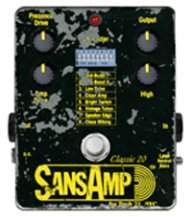
For the technically minded here is the information you requested for the RBI.

With a -10dB 1kz sine wave (which is what Crown uses for the specs) (.3V rms which is an instrument level signal) and all the EQ controls on the RBI set flat, output level at 3 o'clock and the blend off, the output voltage of the RBI is 3.6 V rms.

We did this test with the blend control on the RBI set counterclockwise because the SansAmp circuitry produces "intentional" clipping of the signal. It is designed to be a tone generator and add tube emulation and harmonic content to your bass' signal. There are no industry recognized standards to measure a signal of this type.

While using a 1kz signal may be an accepted method of a basic testing reference for an audio power amp a 1kz signal has little to do with a bass guitar (which note is it?) and even less when you factor in things like tube amp emulation and tonal shaping. We also need to keep in mind that no bass player plays in the same manner as a sine wave. Active pickups, 18 volt preamps, hard or soft playing styles, how the pickups are adjusted etc. must all be factored in to the equation. By the same token the power amp manufacturer realizes that a 32 channel mixer will not put out a constant voltage either which is why there are the attenuators on power amps. These allow for signal peaks from a mixing console that would otherwise overload and distort the input of the power amp. While I don't wish to argue with anyone the way it was explained to me was this. If the attenuator on the front of the power amp is set to say 22dB that means with a +4dB signal the input of the power amp has 18dB of headroom for signal peaks.

Cheers.
 
  • Like
Reactions: BasturdBlaster
For the technically minded here is the information you requested for the RBI.

With a -10dB 1kz sine wave (which is what Crown uses for the specs) (.3V rms which is an instrument level signal) and all the EQ controls on the RBI set flat, output level at 3 o'clock and the blend off, the output voltage of the RBI is 3.6 V rms.

We did this test with the blend control on the RBI set counterclockwise because the SansAmp circuitry produces "intentional" clipping of the signal. It is designed to be a tone generator and add tube emulation and harmonic content to your bass' signal. There are no industry recognized standards to measure a signal of this type.

While using a 1kz signal may be an accepted method of a basic testing reference for an audio power amp a 1kz signal has little to do with a bass guitar (which note is it?) and even less when you factor in things like tube amp emulation and tonal shaping. We also need to keep in mind that no bass player plays in the same manner as a sine wave. Active pickups, 18 volt preamps, hard or soft playing styles, how the pickups are adjusted etc. must all be factored in to the equation. By the same token the power amp manufacturer realizes that a 32 channel mixer will not put out a constant voltage either which is why there are the attenuators on power amps. These allow for signal peaks from a mixing console that would otherwise overload and distort the input of the power amp. While I don't wish to argue with anyone the way it was explained to me was this. If the attenuator on the front of the power amp is set to say 22dB that means with a +4dB signal the input of the power amp has 18dB of headroom for signal peaks.

Cheers.

I dont think im going to argue but if the output volts are 3.6 there should be no problems at all really with all being equal.
 
For the technically minded here is the information you requested for the RBI.

With a -10dB 1kz sine wave (which is what Crown uses for the specs) (.3V rms which is an instrument level signal) and all the EQ controls on the RBI set flat, output level at 3 o'clock and the blend off, the output voltage of the RBI is 3.6 V rms.

We did this test with the blend control on the RBI set counterclockwise because the SansAmp circuitry produces "intentional" clipping of the signal. It is designed to be a tone generator and add tube emulation and harmonic content to your bass' signal. There are no industry recognized standards to measure a signal of this type.

While using a 1kz signal may be an accepted method of a basic testing reference for an audio power amp a 1kz signal has little to do with a bass guitar (which note is it?) and even less when you factor in things like tube amp emulation and tonal shaping. We also need to keep in mind that no bass player plays in the same manner as a sine wave. Active pickups, 18 volt preamps, hard or soft playing styles, how the pickups are adjusted etc. must all be factored in to the equation. By the same token the power amp manufacturer realizes that a 32 channel mixer will not put out a constant voltage either which is why there are the attenuators on power amps. These allow for signal peaks from a mixing console that would otherwise overload and distort the input of the power amp. While I don't wish to argue with anyone the way it was explained to me was this. If the attenuator on the front of the power amp is set to say 22dB that means with a +4dB signal the input of the power amp has 18dB of headroom for signal peaks.

Cheers.

When all is said and done, either we can just plug any bass into your product and adequately drive any power amp, or there is a list of caveats, hedges, asterisked claims, and "data".
 
When all is said and done, either we can just plug any bass into your product and adequately drive any power amp, or there is a list of caveats, hedges, asterisked claims, and "data".

It's always going to depend ultimately on what the bass can put out. It shouldn't be a problem for the vast majority of instruments, but there are bound to be some that are so far out of whack that they won't even reach 3.6 V on the output of an RBI, even if it's dimed.
 
It's always going to depend ultimately on what the bass can put out. It shouldn't be a problem for the vast majority of instruments, but there are bound to be some that are so far out of whack that they won't even reach 3.6 V on the output of an RBI, even if it's dimed.

So unless a bass pickup is "out of whack", it will generate the -10dB signal necessary to make 3.6V on the RBI's output? I would appreciate some clarity.
 
I don't recall seeing this in the thread, so...
I just got the Presonus Studio Channel. If I wanted to boost the signal to the amp, I could buy (another:() small mic preamp and place it between the pre and the power amp right? This is the same thing as sending a hotter signal for the amp to work with?

(Amp is Drivercore 1500)
Thanks.
 
I don't recall seeing this in the thread, so...
I just got the Presonus Studio Channel. If I wanted to boost the signal to the amp, I could buy (another:() small mic preamp and place it between the pre and the power amp right? This is the same thing as sending a hotter signal for the amp to work with?
(Amp is Drivercore 1500)
Thanks.

Hello,

i think, that Presonus Studio Channel should provide enough juice for any power amp including your Drivecore. Technically, it's maximum output level is rated to 22dBu (before clipping output stage) on its XLR output. Besides input gain, there is also compressor makeup gain (max. +10dB), which you could use for additional increasing of signal volume.
So i don't expect any particular volume issue here.

Michal
 
I have the gain around 2/3 up, the makeup gain 2/3 up, and the level maxed. My amp is on 9, sometimes maxed. With these setting with 2 of my basses the VU meter is peaking in the red on hard notes. The bridged output into my 4ohm Aggie 410 is pretty loud, but not ridiculous. Even when I run 2 cabs (with Aggie 212) using the Y output setting, the volume is not over the top.
If I push the gain or the makeup gain further, I am diming the VU. Plus with my amp cranked, the noise increases (even though the Presonus is VERY quiet).
My thought is that I boost the output AFTER the pre, and the amp sees a hotter signal, I get more clean volume, and I can turn everything down on the pre. Correct?
The Presonus does not have the 1.4 output. It's 1.

added: I can dime the VU and get more volume buy adding a little more gain, and it still sounds clean...Is that OK??
 
AFAIK, The VU shows how much compression is happening. *I Think* Even when the compressor is off, it shows how much it "would" be compressing... I'll have to check again, but I do not believe it has anything to do with the input or output gain/level.

I'm not surprised to hear about the studio channel struggling to push the crown poweramp to full output. When I used it with my QSC amp I felt like I was running out of headroom, and the crown is less sensitive. I just ordered a XLS drivecore yesterday though, so I'll get to try it out myself.
 
I have the gain around 2/3 up, the makeup gain 2/3 up, and the level maxed. My amp is on 9, sometimes maxed. With these setting with 2 of my basses the VU meter is peaking in the red on hard notes. The bridged output into my 4ohm Aggie 410 is pretty loud, but not ridiculous. Even when I run 2 cabs (with Aggie 212) using the Y output setting, the volume is not over the top.
If I push the gain or the makeup gain further, I am diming the VU. Plus with my amp cranked, the noise increases (even though the Presonus is VERY quiet).
My thought is that I boost the output AFTER the pre, and the amp sees a hotter signal, I get more clean volume, and I can turn everything down on the pre. Correct?
The Presonus does not have the 1.4 output. It's 1.

added: I can dime the VU and get more volume buy adding a little more gain, and it still sounds clean...Is that OK??

Hello,

i don't have in-hand experience with your exact setup and ridiculous volume rating are pretty subjective.

Few tech notes.
- mentioned 1 and 1.4 ratings applies only to power amp input sensitivity (Crown has its rated output to 8ohm, if you provide it 1,4V RMS on input). Preamps outputs levels are usually described by maximum peak (there is difference) values, before output stage starts to clip (Presonus has 22dBu which translates to cca 10V peak). For sure, there are also differences between pres in internal gain staging.
- VU meter has two functions on unit (output level and gain reduction meter on compressor), so for reading of output level, "GR->Meter" button should be disengaged (that way, you shouldn't dim VU values as you increasing gain). In that mode, meter value 5-6dB briefly corresponds to average voltage, you'll need for Crowns rated sensitivity (1.4V RMS).
Anyway, averaging VU meter looks nice, but IMO doesn't have so much meaning here (red area shouldn't do any harm). Peaking clip indicators should be much more practical on live instrument pre.

If i would like to test max level of this setup (eg. brigged mode 4x10 aggie).. i will try to
- bypass EQ and Compressor modules (for beginning)
- bypass power amp limiter (for beginning)
- adjust pre input gain until hearing of any clipping during loud notes (it could be fully clockwise)
- set power amps channel level on max
- adjust pre output level to taste (and watch LED indicators on power amp for clip and farting of speakers)
For more makeup gain with compressor engaged
- set treshold fully clockwise (+20dB) to don't do any actual gain reduction
- makeup gain sould give another 0-10dB (from noon to full clockwise)

I think that way, you should be able to get quite magnificent volume from both your setups 4x10 and 2 2x12, but of course YMMW.
Additional line level preamp isn't typical solution.

Michal

P.S.: Happy new year and cheers to Ohio.. :-)
 
  • Like
Reactions: BasturdBlaster
Awesome information there. Making all of the different gain and level adjustments is tricky, due to the VU's being affected by all 3 adjustments. The first thing I did do was shut off the compressor, and adjust the gain by ear until it was just shy of distortion. Then increasing the output level to higher settings, I am getting very good volume. I have to say that the VU's are dimed early by even breathing on the output levels. It is not possible to get serious volume in any way that I can see, while playing nice with the VU's. If I add compression with some makeup gain, the VU's are bouncing off the peg on the lightest of notes. I suppose I can just set the VU to view the compression, instead of output, but in the back of my head, I know the meter is screaming at me!
In a nutshell, I can get serious volume here, with 1 or 2 cabs. As long as someone tells me I won't do any harm by ignoring the VU's I'm good. Thanks for the help, and happy new year!

ps: msmucr - the czech's make some fine firearms over there. they are some of my favorites.
 
Just to chime in here I am running a para driver to an xls 1000, it more than does the job of driving the amp. Silly volume and headroom. i do have a question for anyone else who owns one. Does your fan run all the time or just come on when it gets hot, or if it gets hot? I thought fans always ran, mine come on for a sec on power up then stops, and for 20-30 mins of use it never came on again.
 
So you ran your's pretty much the same way? No harm done right?

Yeah. But my presonus unit developed a problem and it's just been lying around, waiting to send it back for repair.... dunno if it was related to this issue or not. I'm really gonna try to send it back next week lol (I hate shipping). I can comment on it further when I finally get it back again, cuz I now have an xls1500. I also just snatched an ART tube channel from ebay, so I'll be doing some comparisons.
 
Just to chime in here I am running a para driver to an xls 1000, it more than does the job of driving the amp. Silly volume and headroom. i do have a question for anyone else who owns one. Does your fan run all the time or just come on when it gets hot, or if it gets hot? I thought fans always ran, mine come on for a sec on power up then stops, and for 20-30 mins of use it never came on again.

Mine isn't running while listening to music recordings at a low volume.

Btw this amp is great, I haven't pushed it hard yet with bass, but I love that I can just plug my mp3 player straight into it. Even without a preamp, I can't max out the gain or it would easily be too loud for my apartment.

There is a noticable improvement in sound quality from running mp3s thru the aux send of my genz shuttle. More depth to the sound. ;)
 
I think it is fine to run the pre with the VU meter in the red all the time as long as you aren't hearing any distortion in the signal - it should be no problem.

I personally don't trust those VU meters like I trust a clip light. If you are running the pre full in the red and the there is no distortion and the clip light on the poweramp is not going red (or is it orange?) then you are totally fine IMO